



Fish and Wildlife Disease
Fish and Wildlife Disease
Filter Total Items: 23
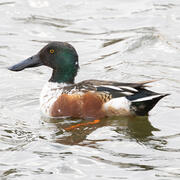
Developing Waterfowl Distribution and Abundance Models to Inform Avian Influenza Transmission Risk
USGS researchers are developing novel methods to improve our understanding of waterfowl distributions and abundance across the United States to inform a variety of ongoing disease studies. Understanding the distribution of wild waterfowl is a critical component to assessing avian influenza transmission risks across the landscape.

Understanding Avian Influenza Exposure and Antibodies in Understudied Species
Recent outbreaks of highly pathogenic avian influenza have impacted a dramatically wider range of bird hosts than ever before. USGS researchers are working to identify which bird species have been exposed, which have developed immune responses, and how these species may influence viral ecology to inform risk management activities.

Understanding Avian Influenza Infection and Movement Behavior of Wild Birds
This project focuses on improving our understanding of how current and previous infection with avian influenza viruses impact the movement ecology of wild bird species.

Investigating Blotchy Bass Syndrome in Black Basses (Micropterus spp)
USGS is studying the spread and effects of “blotchy bass syndrome” on black basses ( Micropterus spp). USGS and state agencies have partnered with citizen scientists and recreational organizations to create a continent-wide biosurveillance network to monitor the syndrome.

AquaDePTH-Aquatic Disease and Pathogen Repository
The Aquatic Disease and Pathogen Repository (AquaDePTH) will be a public-facing national repository to support biosurveillance of aquatic animal diseases and pathogens. By collating historically published data, plus new aquatic pathogen and disease information, stakeholders will be able monitor fish kill and aquatic pathogen trends spatially and temporally in freshwater and marine environments...

Northeast Amphibian Research and Monitoring Initiative
The U.S. Geological Survey’s Eastern Ecological Science Center is home to the Northeast Amphibian Research and Monitoring Initiative (NEARMI), one of 7 ARMI regions across the United States. NEARMI works on public lands in thirteen states from Maine to Virginia, including many National Parks and National Wildlife Refuges.

A case study of temporal trends in risk factors associated with endocrine disruption in smallmouth bass
Issue The USGS has a long-term research effort that identified endocrine disruption in smallmouth bass (SMB) in the Chesapeake Bay watershed. Endocrine disruption can cause many changes in fish, including intersex characteristics where fish develop characteristics of the other sex, such as immature eggs forming in males. An overview by USGS of endocrine disruption in fish found the condition...

Agricultural best management practices can improve water quality and conditions for fisheries in the Chesapeake Bay Watershed
Issue Partners in the Chesapeake Bay Program (CBP) are implementing best management practices (BMPs) to prevent nutrient and sediment from entering waterways across the Chesapeake watershed and reduce loads to the Bay. In addition to reducing nutrients, CBP partners want to better understand how BMPs can provide additional benefits for addressing toxic contaminants, such as pesticides, hormones...

Fish and Aquatic Animal Health Publications, 2021 – 2022
Below are journal articles about fish and aquatic animal health from the Eastern Ecological Science Center published in 2021 and 2022.

Invasive Blue Catfish Science to Support Conservation and Fisheries Management
Dietary analyses, health, and reproduction of blue catfish in tributaries of the Chesapeake Bay inform ecosystem impacts and mitigation strategies for this aquatic nuisance species.

Decision Science Support for SARS-CoV-2 Risk to North American Bats
The Eastern Ecological Science Center is working closely with federal, state, and tribal partners to help inform decisions that reduce the risk of SARS-CoV-2 transmission from humans to North American wildlife, including bats.