U.S. flag

An official website of the United States government

Species at Risk

Filter Total Items: 28

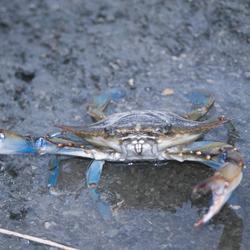
EESC Makes an Impact: Restoring the Chesapeake Bay Watershed

The Chesapeake Bay provides over $100 billion in annual economic value and is home to 18 million people. The USGS, including scientists from the Eastern Ecological Science Center (EESC), works with Federal, State, local, and academic partners to provide research and monitoring and to communicate results to inform management for the Chesapeake and other important landscapes across the Nation.
EESC Makes an Impact: Restoring the Chesapeake Bay Watershed

EESC Makes an Impact: Restoring the Chesapeake Bay Watershed

The Chesapeake Bay provides over $100 billion in annual economic value and is home to 18 million people. The USGS, including scientists from the Eastern Ecological Science Center (EESC), works with Federal, State, local, and academic partners to provide research and monitoring and to communicate results to inform management for the Chesapeake and other important landscapes across the Nation.
Learn More

EESC Makes an Impact: Preserving our Hunting Resources

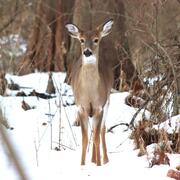
Hunting is an economic engine for the U.S. and responsible management of these resources directly supports 45.2 billion dollars spent by hunters annually. Conservation and management of hunting resources also contributes substantially to the 394.8 billion dollars spent on all wildlife-related recreation. Hunting traditions are an integral component of our American heritage, with 14.4 million...
EESC Makes an Impact: Preserving our Hunting Resources

EESC Makes an Impact: Preserving our Hunting Resources

Hunting is an economic engine for the U.S. and responsible management of these resources directly supports 45.2 billion dollars spent by hunters annually. Conservation and management of hunting resources also contributes substantially to the 394.8 billion dollars spent on all wildlife-related recreation. Hunting traditions are an integral component of our American heritage, with 14.4 million...
Learn More

EESC Makes an Impact: Reducing Management Costs and Increasing Efficiency

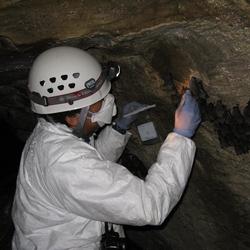
Decision analysis is widely used in business applications to improve cost saving and increase efficiency under uncertainty. Scientists at the U.S. Geological Survey Eastern Ecological Science Center (EESC) include world-renowned experts who use data, mathematics, statistics, and computer science to help frame and solve decision problems to support U.S. national security, public health, wildlife...
EESC Makes an Impact: Reducing Management Costs and Increasing Efficiency

EESC Makes an Impact: Reducing Management Costs and Increasing Efficiency

Decision analysis is widely used in business applications to improve cost saving and increase efficiency under uncertainty. Scientists at the U.S. Geological Survey Eastern Ecological Science Center (EESC) include world-renowned experts who use data, mathematics, statistics, and computer science to help frame and solve decision problems to support U.S. national security, public health, wildlife...
Learn More

Genomics to Aid Conservation and restoration of the Yellow Lampmussel (Lampsilis cariosa) and Tidewater Mucket (Atlanticoncha ochracea)

Due to the rapid decline in abundance of Yellow Lampmussel ( Lampsilis cariosa) and Tidewater Mucket ( Atlanticoncha ochracea), USGS and partners at the U.S. Fish and Wildlife Service (USFWS) and Central Michigan University (CMU) are conducting an assessment of genetic diversity and population structure to inform appropriate recommendations for conservation and management of each species. These...
Genomics to Aid Conservation and restoration of the Yellow Lampmussel (Lampsilis cariosa) and Tidewater Mucket (Atlanticoncha ochracea)

Genomics to Aid Conservation and restoration of the Yellow Lampmussel (Lampsilis cariosa) and Tidewater Mucket (Atlanticoncha ochracea)

Due to the rapid decline in abundance of Yellow Lampmussel ( Lampsilis cariosa) and Tidewater Mucket ( Atlanticoncha ochracea), USGS and partners at the U.S. Fish and Wildlife Service (USFWS) and Central Michigan University (CMU) are conducting an assessment of genetic diversity and population structure to inform appropriate recommendations for conservation and management of each species. These...
Learn More

Supporting Interstate Conservation of Atlantic Sturgeon (Acipenser o. oxyrinchus) Using Genetics, Telemetry, and Side-scan Sonar

USGS scientists are using innovative combinations of telemetry, genetics, and side-scan Sonar to support conservation of endangered Atlantic sturgeon ( Acipenser o. oxyrinchus).
Supporting Interstate Conservation of Atlantic Sturgeon (Acipenser o. oxyrinchus) Using Genetics, Telemetry, and Side-scan Sonar

Supporting Interstate Conservation of Atlantic Sturgeon (Acipenser o. oxyrinchus) Using Genetics, Telemetry, and Side-scan Sonar

USGS scientists are using innovative combinations of telemetry, genetics, and side-scan Sonar to support conservation of endangered Atlantic sturgeon ( Acipenser o. oxyrinchus).
Learn More

Conservation Genetics of American Shad (Alosa sapidissima) and River Herring (Alosa aestivalis and Alosa pseudoharengus)

USGS scientists are studying American shad ( Alosa sapidissima), blueback herring ( Alosa aestivalis), and alewife ( Alosa pseudoharengus; collectively “alosines”) to develop robust genetic baselines that will inform management practices for individual species.
Conservation Genetics of American Shad (Alosa sapidissima) and River Herring (Alosa aestivalis and Alosa pseudoharengus)

Conservation Genetics of American Shad (Alosa sapidissima) and River Herring (Alosa aestivalis and Alosa pseudoharengus)

USGS scientists are studying American shad ( Alosa sapidissima), blueback herring ( Alosa aestivalis), and alewife ( Alosa pseudoharengus; collectively “alosines”) to develop robust genetic baselines that will inform management practices for individual species.
Learn More

Fish Passage Research to Identify the Ideal Fishway Entrance for River Herring (Alosa spp)

USGS is working to identify an improved fishway entrance design for two at-risk species, blueback herring ( Alosa aestivalis) and alewife ( Alosa pseudoharengus).
Fish Passage Research to Identify the Ideal Fishway Entrance for River Herring (Alosa spp)

Fish Passage Research to Identify the Ideal Fishway Entrance for River Herring (Alosa spp)

USGS is working to identify an improved fishway entrance design for two at-risk species, blueback herring ( Alosa aestivalis) and alewife ( Alosa pseudoharengus).
Learn More

Development and Evaluation of the Novel East Coast Fish Ladder

USGS is working to establish a new East Coast fish ladder design that would help a multitude of aquatic species move easier in our waterways.
Development and Evaluation of the Novel East Coast Fish Ladder

Development and Evaluation of the Novel East Coast Fish Ladder

USGS is working to establish a new East Coast fish ladder design that would help a multitude of aquatic species move easier in our waterways.
Learn More

Production, Behavior, and Survival of Juvenile Shad and River Herring

USGS is conducting research to better understand biology, behavior, and survival of juvenile fishes that travel between fresh and saltwater to complete their lifecycles. Migratory fishes as such as herring and shad are vital components in riverine and coastal ecosystems, transporting food and nutrients between fresh rivers and the ocean. They are also an important forage fish for predators in...
Production, Behavior, and Survival of Juvenile Shad and River Herring

Production, Behavior, and Survival of Juvenile Shad and River Herring

USGS is conducting research to better understand biology, behavior, and survival of juvenile fishes that travel between fresh and saltwater to complete their lifecycles. Migratory fishes as such as herring and shad are vital components in riverine and coastal ecosystems, transporting food and nutrients between fresh rivers and the ocean. They are also an important forage fish for predators in...
Learn More

Passage, Migration and Critical Habitat of Atlantic (Acipenser oxyrhinchus oxyrhinchus) and Shortnose (Acipenser brevirostrum) Sturgeons in New England Waters

USGS scientists are studying the passage, migration and critical habitat of the Atlantic ( Acipenser oxyrhinchus oxyrhinchus) and shortnose ( Acipenser brevirostrum) sturgeon in New England waters to provide managers with population-specific details upon which effective steps can be taken to protect these endangered species.
Passage, Migration and Critical Habitat of Atlantic (Acipenser oxyrhinchus oxyrhinchus) and Shortnose (Acipenser brevirostrum) Sturgeons in New England Waters

Passage, Migration and Critical Habitat of Atlantic (Acipenser oxyrhinchus oxyrhinchus) and Shortnose (Acipenser brevirostrum) Sturgeons in New England Waters

USGS scientists are studying the passage, migration and critical habitat of the Atlantic ( Acipenser oxyrhinchus oxyrhinchus) and shortnose ( Acipenser brevirostrum) sturgeon in New England waters to provide managers with population-specific details upon which effective steps can be taken to protect these endangered species.
Learn More

Using Multiple Indicators to Assess Stream Condition in the Chesapeake Bay

USGS is working with federal, state and local partners to develop multiple assessments of stream and river conditions in non-tidal areas of the Chesapeake Bay watershed. These assessments will help managers preserve stream health and improve biological conditions in impaired streams as the human population and climate continue to change in this region.
Using Multiple Indicators to Assess Stream Condition in the Chesapeake Bay

Using Multiple Indicators to Assess Stream Condition in the Chesapeake Bay

USGS is working with federal, state and local partners to develop multiple assessments of stream and river conditions in non-tidal areas of the Chesapeake Bay watershed. These assessments will help managers preserve stream health and improve biological conditions in impaired streams as the human population and climate continue to change in this region.
Learn More

Advancing the Environmental DNA Toolkit for Ecosystem Monitoring and Management

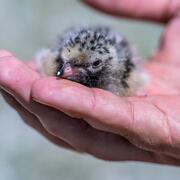
The emerging field of Environmental DNA (eDNA) analysis allows characterization of species presence and community biodiversity by identifying trace amounts of genetic material left behind as organisms move through their environments. EESC scientists have been using eDNA technologies to detect native and rare species and as community biomonitoring tools.
Advancing the Environmental DNA Toolkit for Ecosystem Monitoring and Management

Advancing the Environmental DNA Toolkit for Ecosystem Monitoring and Management

The emerging field of Environmental DNA (eDNA) analysis allows characterization of species presence and community biodiversity by identifying trace amounts of genetic material left behind as organisms move through their environments. EESC scientists have been using eDNA technologies to detect native and rare species and as community biomonitoring tools.
Learn More
Was this page helpful?