



North American Bat Monitoring Program (NABat)
Bats are essential contributing members of healthy, functioning ecosystems. They perform numerous ecosystem services like insect pest control and plant pollination, and provide enormous economic benefits through ecotourism, medical research, and novel biotechnologies. North American bats face unprecedented threats including habitat loss and fragmentation, white-nose syndrome, and wind energy development. However, it is difficult to evaluate the impacts of these threats due to a lack of basic information about the distribution and abundance of bats across the continent.
The North American Bat Monitoring Program (NABat) was established in 2015 as a multi-national, multi-agency coordinated bat population monitoring program. NABat was designed to unify and enable a dispersed community to practicably monitor an entire continent at repeated intervals, assemble data from individual efforts in a centralized database and deliver status and trends for one of North America’s critical resources – bats.
Main website for the North American Bat Monitoring Program (NABat)

Learn more about NABat, find ways to connect with the NABat community, request NABat user support, and check out all the resources NABat has to offer.
The NABat Partner Portal
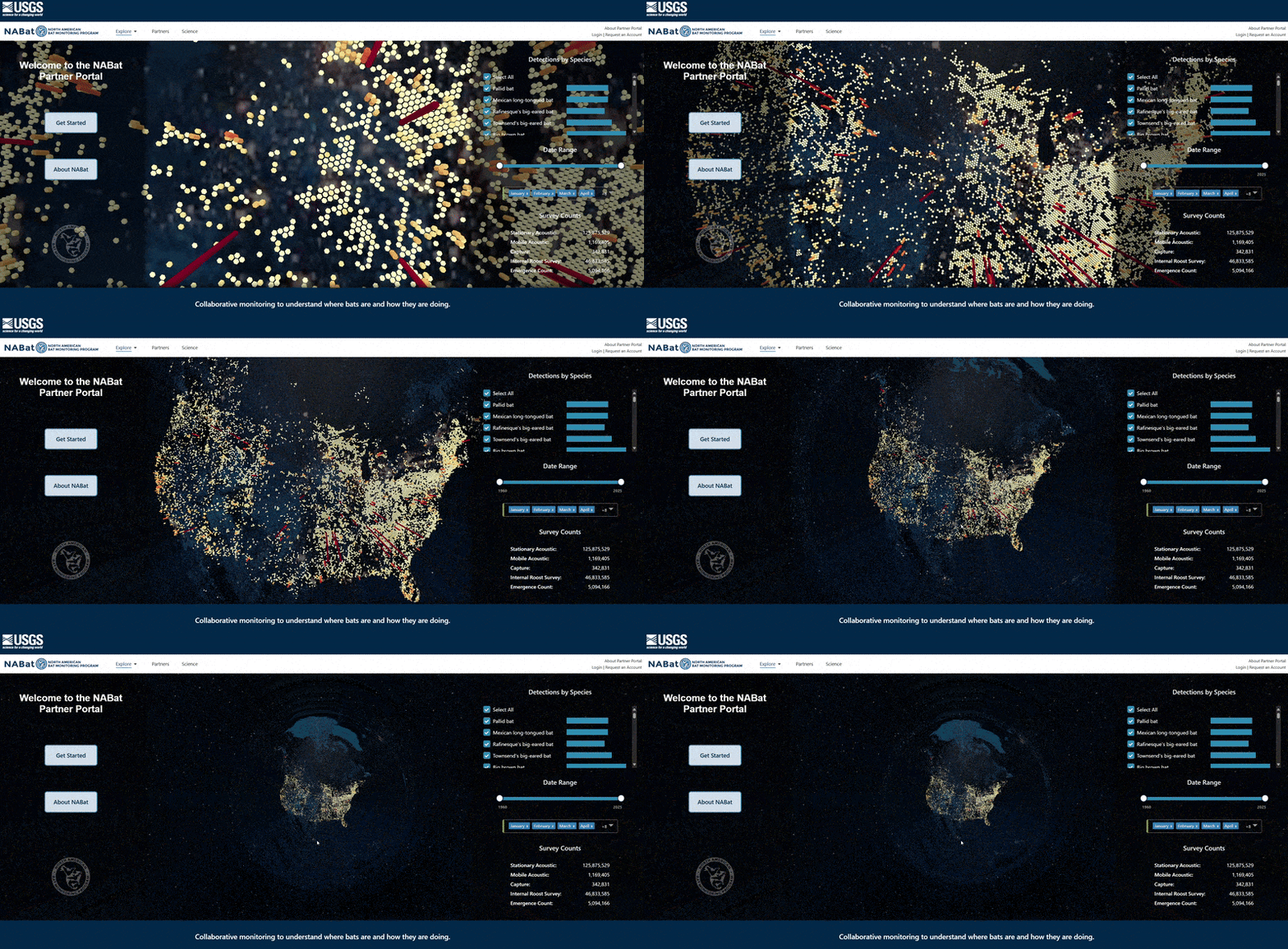
The NABat Partner Portal serves as the interface between NABat partners and the NABat database, enabling users to upload, archive, and access their own data or request data from other NABat partners. The Partner Portal also features a variety of web-based tools to assist users in project planning and mapping.
About NABat

Population status and trends and other analytical outputs provide resource managers with key information for managing bat populations. Data collected and assembled by NABat partners can be used to improve our understanding of species distributions, detect signs of population declines, assess species vulnerability to potential threats, measure recovery, and much more. To facilitate the delivery of such information, the primary goals of the NABat program are to:
- Increase the quantity and quality of available data on North American bats
- Make data available for addressing bat conservation problems and management needs
- Use these data to provide regular updates on species status and trends
Now, ten years in, NABat serves as the information system for 47 North American bat species, supporting informed decision-making through robust data collection, data management, and analysis.
Progress to date has been achieved by leaning on 5 key pillars:
- A network of collaborative scientists, resource managers, policy makers, and conservationists who share data and knowledge
- Protocols and guidance that are consistent, yet flexible
- A probabilistic sample design that helps optimize the use of limited resources
- A centralized database that facilitates best practice for data management
- Analytical support and products providing multiple lines of evidence to fill local and range-wide information needs


NABat by the Numbers
In 2025, NABat contains records from stationary acoustic surveys, mobile acoustic surveys, capture surveys, internal roost counts, and emergence counts from over 480 different partner organizations and 2400 users. As policy and partner needs evolve, the NABat database will as well.
Over the course of 5 years, the NABat database has grown to over 170,000,000 data records. In accordance with FAIR Guiding Principles these data conform to data standards for submission such that they may be collated in a common format, useful queries may be employed, and provenance is preserved.
Data in the NABat database are accessed to deliver bat population status and trends and provide technical assistance to partner agencies and are available for third parties to request. As of 2025, NABat has received over 400 third-party data requests.

Behind the Models
Explore the methods NABat scientists are using to build acoustic models.
-
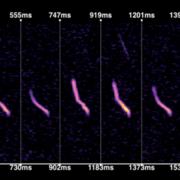
Training an Open-Source Foundation Model for Bat Acoustics Using Data from the North American Bat Monitoring Program (NABat) Training an Open-Source Foundation Model for Bat Acoustics Using Data from the North American Bat Monitoring Program (NABat)
This page describes the motivation, inputs, procedures, and experiments that have been performed towards a spectrogram-based foundation model for high-frequency biological datasets on bats at the U.S. Geological Survey (USGS).


Connect with NABat

Introduction to NABat
Introduction to the North American Bat Monitoring Program, including a short history of the program, a review of key program components, and highlights of program outcomes and products.
Bats are essential contributing members of healthy, functioning ecosystems. They perform numerous ecosystem services like insect pest control and plant pollination, and provide enormous economic benefits through ecotourism, medical research, and novel biotechnologies. North American bats face unprecedented threats including habitat loss and fragmentation, white-nose syndrome, and wind energy development. However, it is difficult to evaluate the impacts of these threats due to a lack of basic information about the distribution and abundance of bats across the continent.
The North American Bat Monitoring Program (NABat) was established in 2015 as a multi-national, multi-agency coordinated bat population monitoring program. NABat was designed to unify and enable a dispersed community to practicably monitor an entire continent at repeated intervals, assemble data from individual efforts in a centralized database and deliver status and trends for one of North America’s critical resources – bats.
Main website for the North American Bat Monitoring Program (NABat)
Learn more about NABat, find ways to connect with the NABat community, request NABat user support, and check out all the resources NABat has to offer.
The NABat Partner Portal
The NABat Partner Portal serves as the interface between NABat partners and the NABat database, enabling users to upload, archive, and access their own data or request data from other NABat partners. The Partner Portal also features a variety of web-based tools to assist users in project planning and mapping.
About NABat
Population status and trends and other analytical outputs provide resource managers with key information for managing bat populations. Data collected and assembled by NABat partners can be used to improve our understanding of species distributions, detect signs of population declines, assess species vulnerability to potential threats, measure recovery, and much more. To facilitate the delivery of such information, the primary goals of the NABat program are to:
- Increase the quantity and quality of available data on North American bats
- Make data available for addressing bat conservation problems and management needs
- Use these data to provide regular updates on species status and trends
Now, ten years in, NABat serves as the information system for 47 North American bat species, supporting informed decision-making through robust data collection, data management, and analysis.
Progress to date has been achieved by leaning on 5 key pillars:
- A network of collaborative scientists, resource managers, policy makers, and conservationists who share data and knowledge
- Protocols and guidance that are consistent, yet flexible
- A probabilistic sample design that helps optimize the use of limited resources
- A centralized database that facilitates best practice for data management
- Analytical support and products providing multiple lines of evidence to fill local and range-wide information needs
NABat by the Numbers
In 2025, NABat contains records from stationary acoustic surveys, mobile acoustic surveys, capture surveys, internal roost counts, and emergence counts from over 480 different partner organizations and 2400 users. As policy and partner needs evolve, the NABat database will as well.
Over the course of 5 years, the NABat database has grown to over 170,000,000 data records. In accordance with FAIR Guiding Principles these data conform to data standards for submission such that they may be collated in a common format, useful queries may be employed, and provenance is preserved.
Data in the NABat database are accessed to deliver bat population status and trends and provide technical assistance to partner agencies and are available for third parties to request. As of 2025, NABat has received over 400 third-party data requests.
Behind the Models
Explore the methods NABat scientists are using to build acoustic models.
-
-
Training an Open-Source Foundation Model for Bat Acoustics Using Data from the North American Bat Monitoring Program (NABat) Training an Open-Source Foundation Model for Bat Acoustics Using Data from the North American Bat Monitoring Program (NABat)
This page describes the motivation, inputs, procedures, and experiments that have been performed towards a spectrogram-based foundation model for high-frequency biological datasets on bats at the U.S. Geological Survey (USGS).
Connect with NABat
Introduction to NABat
Introduction to the North American Bat Monitoring Program, including a short history of the program, a review of key program components, and highlights of program outcomes and products.