U.S. flag

An official website of the United States government

Multimedia

Images

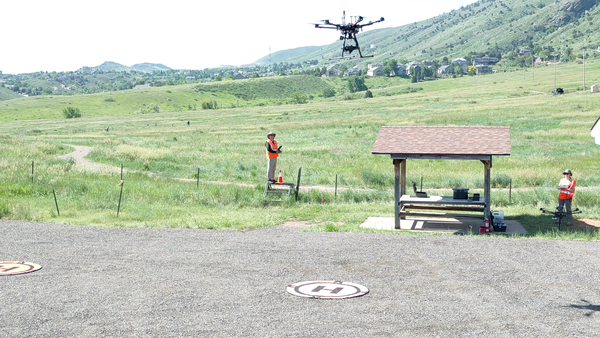
USGS drone pilot flies craft over reservoir
Flying UAS over Willow Creek Reservoir, Colorado

USGS National Uncrewed Systems Office (NUSO) remote pilot flies an uncrewed aircraft system (UAS) carrying a hyperspectral imaging payload at Willow Creek Reservoir near Granby, Colorado. This data collection supported harmful algae bloom and water quality research led by the Colorado Water Science Center.

USGS National Uncrewed Systems Office (NUSO) remote pilot flies an uncrewed aircraft system (UAS) carrying a hyperspectral imaging payload at Willow Creek Reservoir near Granby, Colorado. This data collection supported harmful algae bloom and water quality research led by the Colorado Water Science Center.

UAS personnel stand next to their vehicles as they control drone above reservoir
UAS operations at Willow Creek Reservoir

USGS remote pilots fly uncrewed aircraft systems to capture hyperspectral imagery and video footage at Willow Creek Reservoir in support of harmful algae bloom and water quality research led by the Colorado Water Science Center.

USGS remote pilots fly uncrewed aircraft systems to capture hyperspectral imagery and video footage at Willow Creek Reservoir in support of harmful algae bloom and water quality research led by the Colorado Water Science Center.

Overhead view of reservoir shore showing calibration/validation equipment used by drone sensors.
Tarps and targets used in UAS calibration and validation

Greyscale tarps and ground control points were placed on land during harmful algae mapping fieldwork at Willow Creek Reservoir near Granby, CO. These targets enable calibration and validation of hyperspectral data captured by uncrewed aircraft systems (UAS) to study water quality and algae conditions across the reservoir. 


Greyscale tarps and ground control points were placed on land during harmful algae mapping fieldwork at Willow Creek Reservoir near Granby, CO. These targets enable calibration and validation of hyperspectral data captured by uncrewed aircraft systems (UAS) to study water quality and algae conditions across the reservoir. 


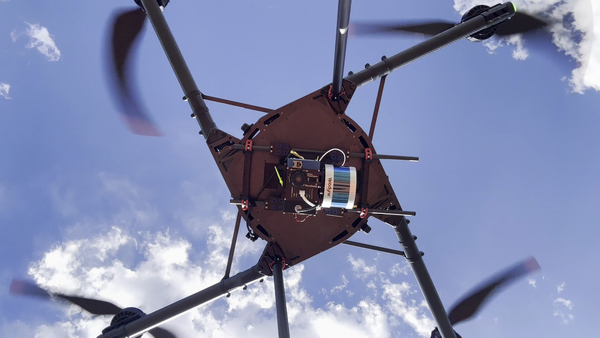
Overhead view of Willow Creek Reservoir, Colorado with drone craft flying above it.
Willow Creek Reservoir, Colorado with UAS craft

An uncrewed aircraft system (UAS) flies over the open water at Willow Creek Reservoir during a harmful algae bloom research campaign.

Drone aircraft flies above the surface of Willow Creek Reservoir
UAS over Willow Creek Reservoir, Colorado

An uncrewed aircraft system (UAS) flies over the open water at Willow Creek Reservoir during a harmful algae bloom research campaign.

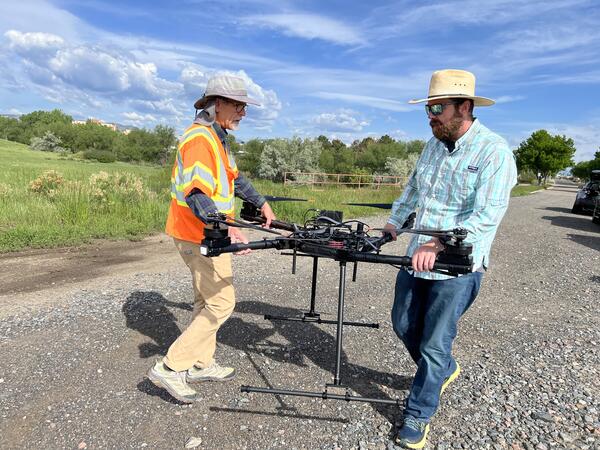
USGS drone pilot squatting by craft on landing pad located along dirt road with mountains in the distance.
Preparing drone for data collection at Willow Creek Reservoir near Granby, Colorado

USGS National Uncrewed Systems Office (NUSO) remote pilot prepares an uncrewed aircraft system (UAS) for hyperspectral data collection at Willow Creek Reservoir near Granby, Colorado. This data collection supported harmful algae bloom and water quality research led by the Colorado Water Science Center.

USGS National Uncrewed Systems Office (NUSO) remote pilot prepares an uncrewed aircraft system (UAS) for hyperspectral data collection at Willow Creek Reservoir near Granby, Colorado. This data collection supported harmful algae bloom and water quality research led by the Colorado Water Science Center.

Videos

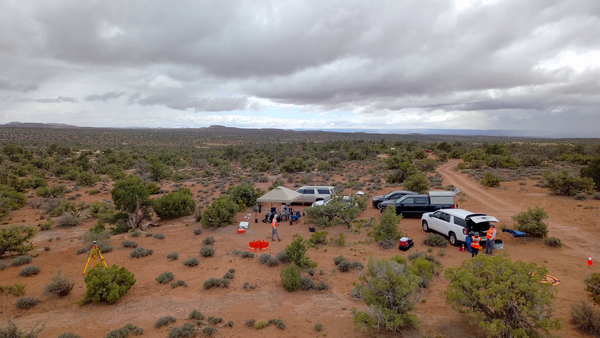
Overhead view taken by drone of a USGS fieldwork site in Moab with multiple cars and a tent shelter Overhead view taken by drone of a USGS fieldwork site in Moab with multiple cars and a tent shelter
B-Roll: Field and drone remote sensing operations near Moab, Utah – May 2025

In May 2025, the U.S. Geological Survey (USGS) National Uncrewed Systems Office (NUSO) collected uncrewed aircraft system (UAS, also known as drone) data to support a collaborative field campaign led by Sasha Reed of the Southwest Biological Science Center (SBSC) and Miguel Villarreal of the Western Geographic Science Center (WGSC) near Moab, Utah.

In May 2025, the U.S. Geological Survey (USGS) National Uncrewed Systems Office (NUSO) collected uncrewed aircraft system (UAS, also known as drone) data to support a collaborative field campaign led by Sasha Reed of the Southwest Biological Science Center (SBSC) and Miguel Villarreal of the Western Geographic Science Center (WGSC) near Moab, Utah.

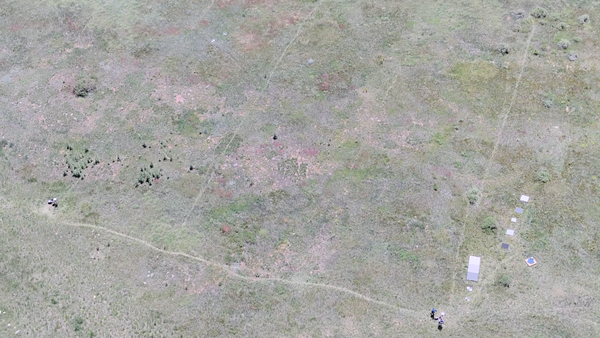
Aerial photo looking down at a field with drone operator and reference objects used for calibration of payload instruments Aerial photo looking down at a field with drone operator and reference objects used for calibration of payload instruments
B-Roll: 2025 UAS radiometric calibration and validation research in Golden, Colorado

Calibration and validation (cal/val) are essential steps to ensure that remotely sensed data are reliable for scientific use. Radiometric cal/val involves converting digital image pixel values to meaningful units and assessing their accuracy.  

The Evolution of UAS Platforms at USGS

The Department of the Interior (DOI) and U.S. Geological Survey (USGS) took an interest in uncrewed aircraft system (UAS) technologies in the early 2000s, when UAS were predominantly being used for military applications.

The Department of the Interior (DOI) and U.S. Geological Survey (USGS) took an interest in uncrewed aircraft system (UAS) technologies in the early 2000s, when UAS were predominantly being used for military applications.

UAS operations near Moab, Utah for carbon sequestration research on public lands UAS operations near Moab, Utah for carbon sequestration research on public lands
UAS Operations for Carbon Sequestration Research on Public Lands near Moab, Utah in May 2023

In support of U.S. Geological Survey (USGS) Southwest Biological Science Center research, the USGS National Uncrewed Systems Office (NUSO) conducted uncrewed aircraft systems (UAS) remote sensing flights near Moab, Utah in May 2023 for multi-scale carbon sequestration research on public lands.  


In support of U.S. Geological Survey (USGS) Southwest Biological Science Center research, the USGS National Uncrewed Systems Office (NUSO) conducted uncrewed aircraft systems (UAS) remote sensing flights near Moab, Utah in May 2023 for multi-scale carbon sequestration research on public lands.  


Image of the Perry Victory and International Peace Memorial taken from a drone Image of the Perry Victory and International Peace Memorial taken from a drone
Perry Victory and International Peace Memorial Taken by Drone

The NUSO and the National Park Service (NPS) Heritage Document Programs partnered in May 2024 to perform a UAS-based 3D scan of Perry’s Victory and International Peace Memorial. 

Was this page helpful?