



Investigating PCB, PFAS, and Microplastics in Urban Runoff Contributing to the Rio Grande near Albuquerque, New Mexico
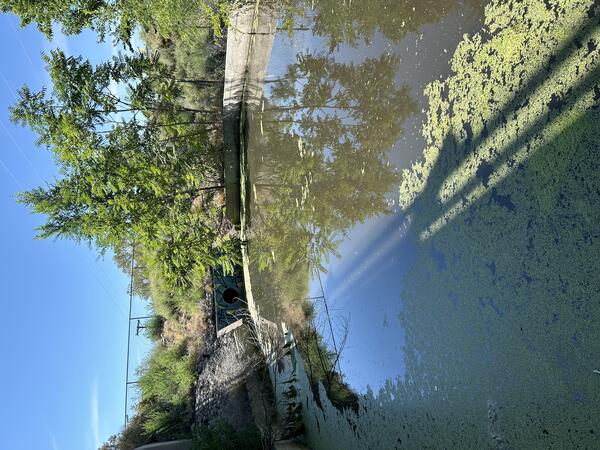
Stormwater outfalls in Albuquerque collect urban runoff from precipitation events which include physical materials and chemical contaminants that contribute directly into the Rio Grande. Among these contaminants are polychlorinated biphenyls (PCB), and per- and polyfluoroalkyl substances (PFAS), present in consumer and industrial products, some of which were banned decades ago but are still found in the environment. Both PCB and PFAS are persistent in the environment, allowing them to accumulate in sediments and aquatic organisms, posing risks to ecosystems and potentially human health. In addition, microplastics are increasingly recognized as a significant pollutant in aquatic environments.
While previous studies have detected PCB and PFAS in Albuquerque’s stormwater, the extent and variability of these contaminants remain poorly understood. Microplastics are also an emerging concern, yet they are only beginning to be characterized in Albuquerque and the arid southwest. This project seeks to fill that gap by monitoring water quality and evaluating green infrastructure solutions to reduce pollutant loads to the Rio Grande.
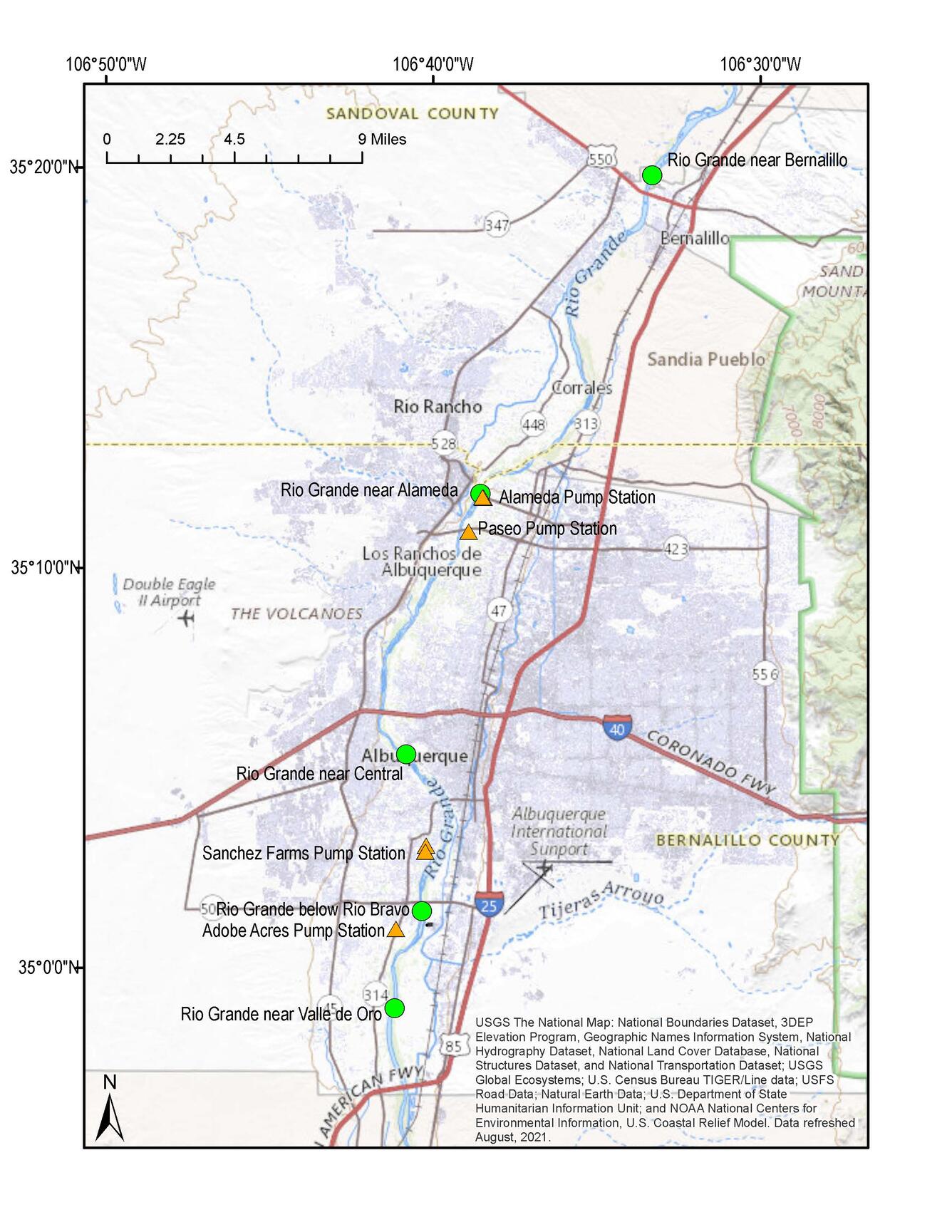
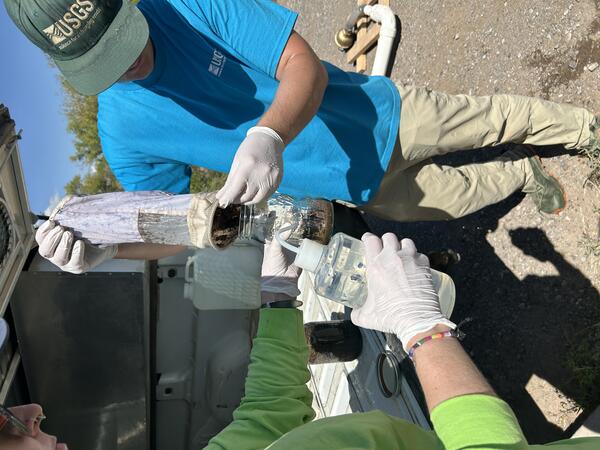
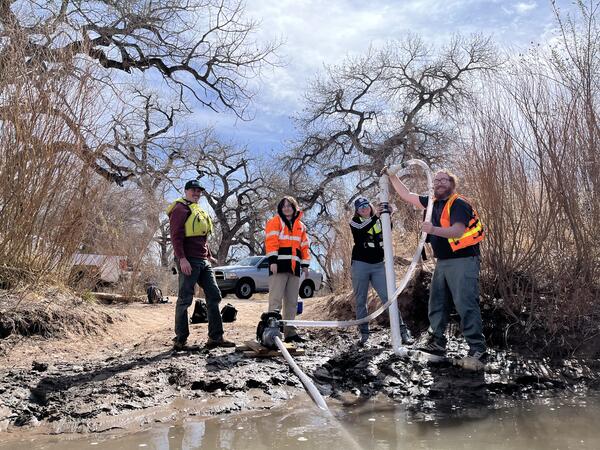
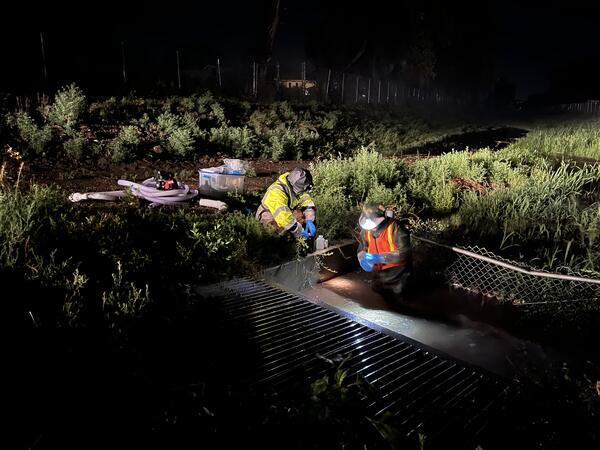
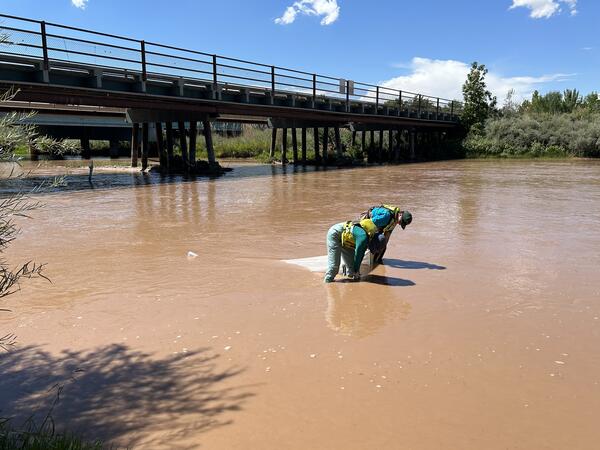
The objective of this work is to assess the presence, concentration, and variability of PCB, PFAS, and microplastics in urban stormwater outfalls that contribute to the Rio Grande and the Rio Grande directly as it flows through Albuquerque. Beginning in 2024, water and sediment samples were collected from storm drain outfalls and multiple locations along the Rio Grande. The samples will provide an opportunity to assess current conditions to be able to compare with future changes such as the installation of green stormwater features including bioswales. Analytical results will help evaluate the effectiveness of these infrastructure updates and inform strategies to reduce contaminant loads to the river. All data generated by this project will be made publicly available through the USGS National Water Information System (NWIS) and ScienceBase data repository. Data collection will conclude in 2026, with an interpretive report anticipated by fall 2027.

Assessment of Per- and Polyfluoroalkyl Substances in Water Resources of New Mexico
Stormwater outfalls in Albuquerque collect urban runoff from precipitation events which include physical materials and chemical contaminants that contribute directly into the Rio Grande. Among these contaminants are polychlorinated biphenyls (PCB), and per- and polyfluoroalkyl substances (PFAS), present in consumer and industrial products, some of which were banned decades ago but are still found in the environment. Both PCB and PFAS are persistent in the environment, allowing them to accumulate in sediments and aquatic organisms, posing risks to ecosystems and potentially human health. In addition, microplastics are increasingly recognized as a significant pollutant in aquatic environments.
While previous studies have detected PCB and PFAS in Albuquerque’s stormwater, the extent and variability of these contaminants remain poorly understood. Microplastics are also an emerging concern, yet they are only beginning to be characterized in Albuquerque and the arid southwest. This project seeks to fill that gap by monitoring water quality and evaluating green infrastructure solutions to reduce pollutant loads to the Rio Grande.
The objective of this work is to assess the presence, concentration, and variability of PCB, PFAS, and microplastics in urban stormwater outfalls that contribute to the Rio Grande and the Rio Grande directly as it flows through Albuquerque. Beginning in 2024, water and sediment samples were collected from storm drain outfalls and multiple locations along the Rio Grande. The samples will provide an opportunity to assess current conditions to be able to compare with future changes such as the installation of green stormwater features including bioswales. Analytical results will help evaluate the effectiveness of these infrastructure updates and inform strategies to reduce contaminant loads to the river. All data generated by this project will be made publicly available through the USGS National Water Information System (NWIS) and ScienceBase data repository. Data collection will conclude in 2026, with an interpretive report anticipated by fall 2027.