U.S. flag

An official website of the United States government

Images

Pacific Coastal and Marine Science Center images.

Filter Total Items: 1361
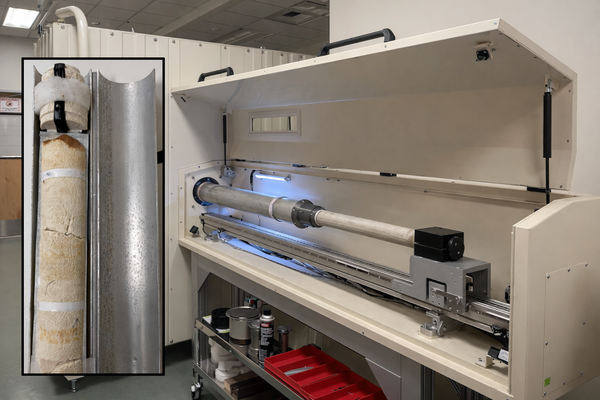
Rotating x-ray computed tomography scanner with coral core

Rotating x-ray computed tomography scanner with coral core. Inset photograph shows a coral core (Orbicella spp.) inside an aluminum sleeve together with coral density standards on the top used for calibration.

Rotating x-ray computed tomography scanner with coral core. Inset photograph shows a coral core (Orbicella spp.) inside an aluminum sleeve together with coral density standards on the top used for calibration.

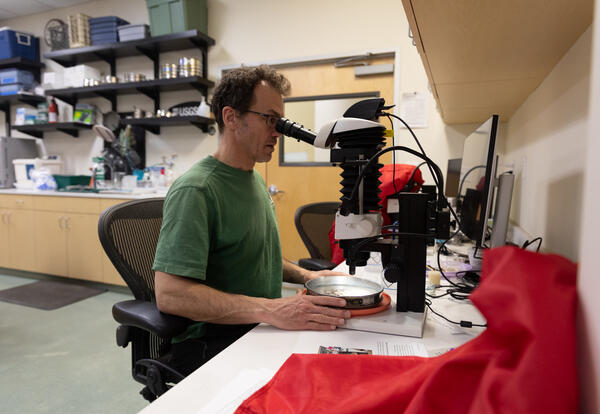
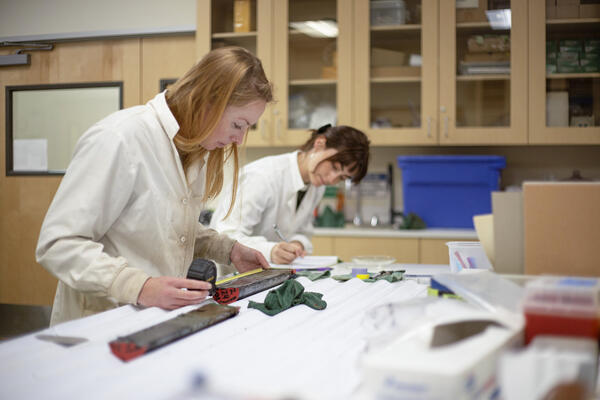
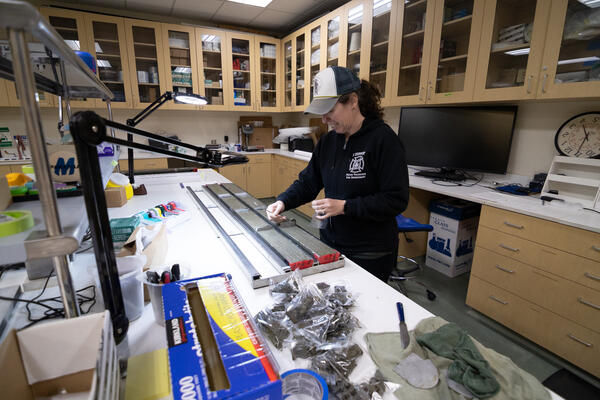
Scientists analyzing material extracted from sediment cores

USGS scientists collect core samples from estuaries, lakes, coasts, and marine environments to study a range of physical and chemical properties preserved in sediments over time. They process and analyze these core samples in the Pacific Coastal and Marine Science Center’s Core Labs.

USGS scientists collect core samples from estuaries, lakes, coasts, and marine environments to study a range of physical and chemical properties preserved in sediments over time. They process and analyze these core samples in the Pacific Coastal and Marine Science Center’s Core Labs.

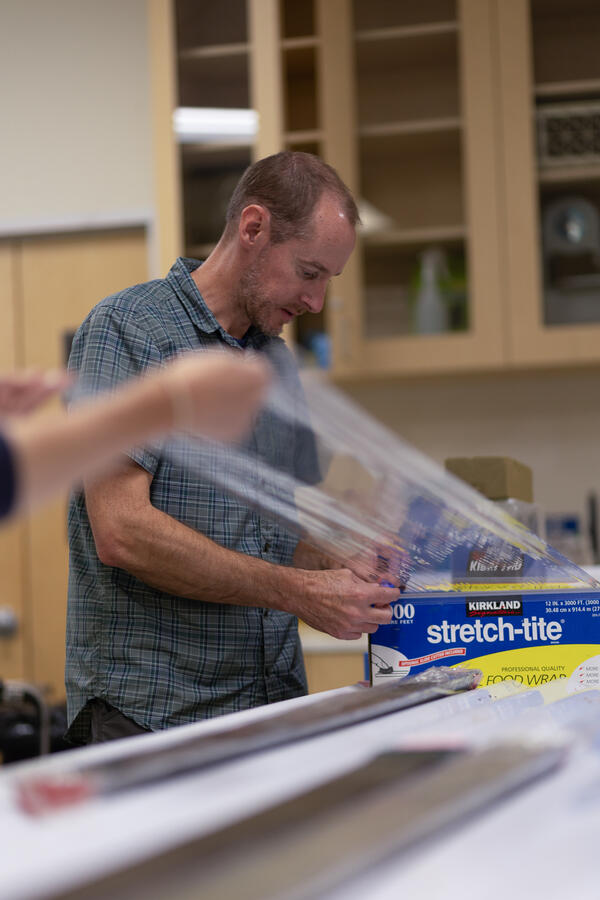
Scientists wrapping a split sediment core in plastic

USGS scientists collect core samples from estuaries, lakes, coasts, and marine environments to study a range of physical and chemical properties preserved in sediments over time. They process and analyze these core samples in the Pacific Coastal and Marine Science Center’s Core Labs.

USGS scientists collect core samples from estuaries, lakes, coasts, and marine environments to study a range of physical and chemical properties preserved in sediments over time. They process and analyze these core samples in the Pacific Coastal and Marine Science Center’s Core Labs.

Scientists sub-sampling split sediment cores
Scientists sub-sampling split sediment cores_2

USGS scientists collect core samples from estuaries, lakes, coasts, and marine environments to study a range of physical and chemical properties preserved in sediments over time. They process and analyze these core samples in the Pacific Coastal and Marine Science Center’s Core Labs.

USGS scientists collect core samples from estuaries, lakes, coasts, and marine environments to study a range of physical and chemical properties preserved in sediments over time. They process and analyze these core samples in the Pacific Coastal and Marine Science Center’s Core Labs.

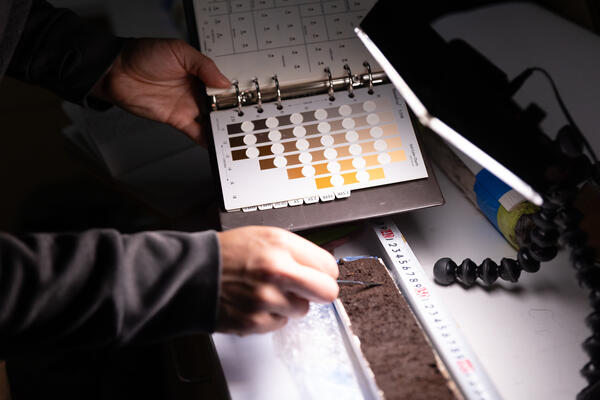
Scientists analyzing material extracted from sediment cores
Scientists analyzing material extracted from sediment cores_3

USGS scientists collect core samples from estuaries, lakes, coasts, and marine environments to study a range of physical and chemical properties preserved in sediments over time. They process and analyze these core samples in the Pacific Coastal and Marine Science Center’s Core Labs. 

USGS scientists collect core samples from estuaries, lakes, coasts, and marine environments to study a range of physical and chemical properties preserved in sediments over time. They process and analyze these core samples in the Pacific Coastal and Marine Science Center’s Core Labs. 

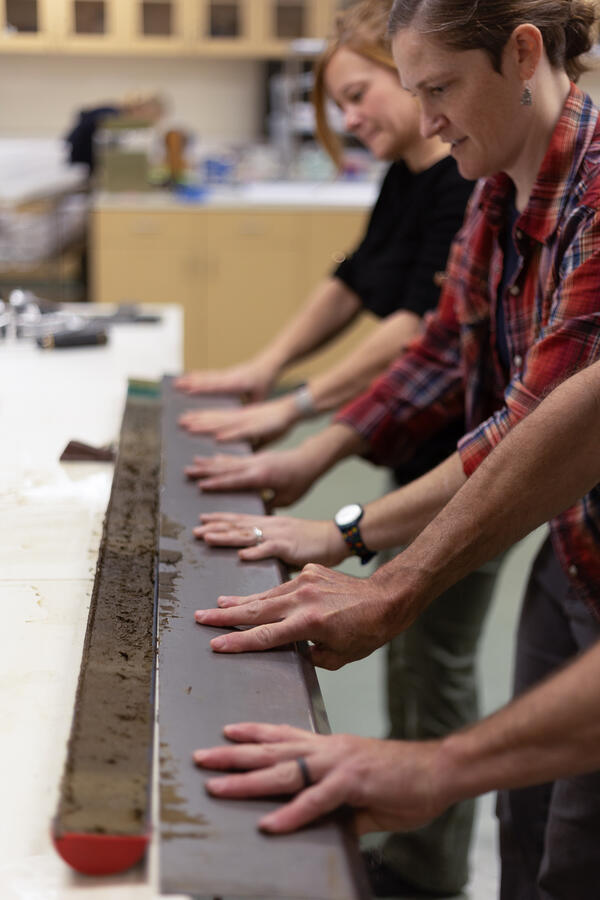
Scientists separating a sediment core split lengthwise
Scientists separating a sediment core split lengthwise_2

USGS scientists collect core samples from estuaries, lakes, coasts, and marine environments to study a range of physical and chemical properties preserved in sediments over time. They process and analyze these core samples in the Pacific Coastal and Marine Science Center’s Core Labs.

USGS scientists collect core samples from estuaries, lakes, coasts, and marine environments to study a range of physical and chemical properties preserved in sediments over time. They process and analyze these core samples in the Pacific Coastal and Marine Science Center’s Core Labs.

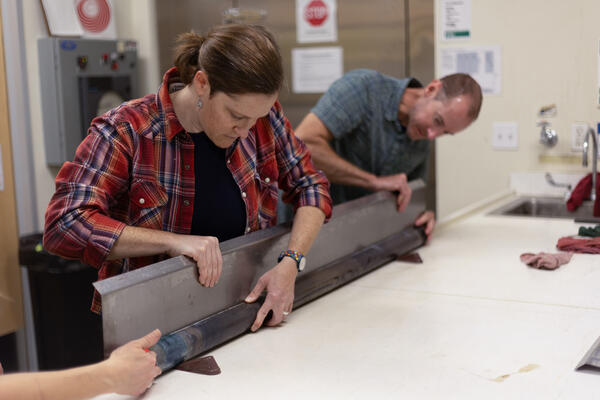
Scientists separating a sediment core split lengthwise

USGS scientists collect core samples from estuaries, lakes, coasts, and marine environments to study a range of physical and chemical properties preserved in sediments over time. They process and analyze these core samples in the Pacific Coastal and Marine Science Center’s Core Labs.

USGS scientists collect core samples from estuaries, lakes, coasts, and marine environments to study a range of physical and chemical properties preserved in sediments over time. They process and analyze these core samples in the Pacific Coastal and Marine Science Center’s Core Labs.

Scientists sub-sampling split sediment cores

USGS scientists collect core samples from estuaries, lakes, coasts, and marine environments to study a range of physical and chemical properties preserved in sediments over time. They process and analyze these core samples in the Pacific Coastal and Marine Science Center’s Core Labs. 

USGS scientists collect core samples from estuaries, lakes, coasts, and marine environments to study a range of physical and chemical properties preserved in sediments over time. They process and analyze these core samples in the Pacific Coastal and Marine Science Center’s Core Labs. 

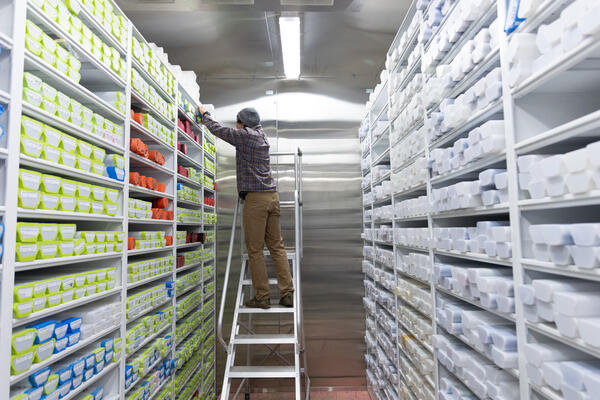
Scientist retrieving a sediment core from the refrigerated core repository

USGS scientists collect core samples from estuaries, lakes, coasts, and marine environments to study a range of physical and chemical properties preserved in sediments over time. They process and analyze these core samples in the Pacific Coastal and Marine Science Center’s Core Labs. 

USGS scientists collect core samples from estuaries, lakes, coasts, and marine environments to study a range of physical and chemical properties preserved in sediments over time. They process and analyze these core samples in the Pacific Coastal and Marine Science Center’s Core Labs. 

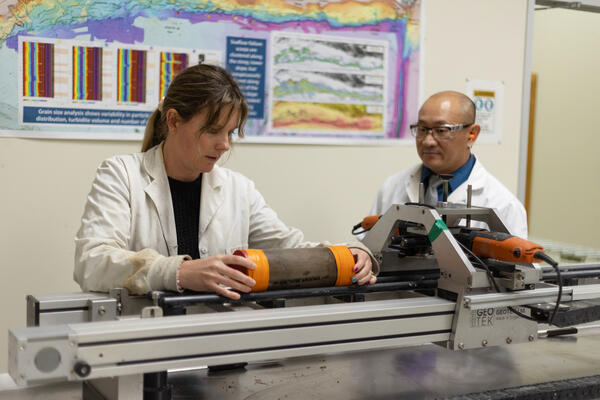
Scientists splitting a sediment core with the GeoTek core splitter
Scientists splitting a sediment core with the GeoTek core splitter_2

USGS scientists collect core samples from estuaries, lakes, coasts, and marine environments to study a range of physical and chemical properties preserved in sediments over time. They process and analyze these core samples in the Pacific Coastal and Marine Science Center’s Core Labs.

USGS scientists collect core samples from estuaries, lakes, coasts, and marine environments to study a range of physical and chemical properties preserved in sediments over time. They process and analyze these core samples in the Pacific Coastal and Marine Science Center’s Core Labs.

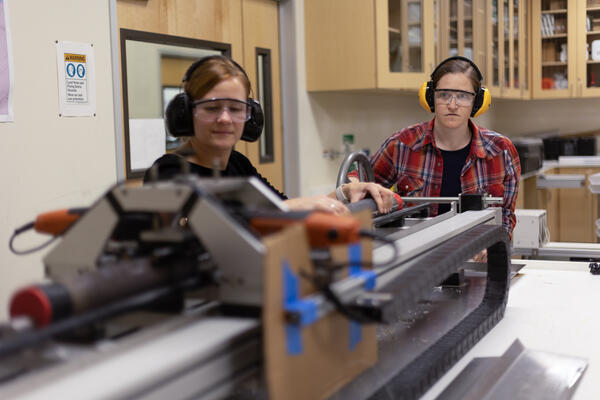
Scientists splitting a sediment core with the GeoTek core splitter

USGS scientists collect core samples from estuaries, lakes, coasts, and marine environments to study a range of physical and chemical properties preserved in sediments over time. They process and analyze these core samples in the Pacific Coastal and Marine Science Center’s Core Labs.

USGS scientists collect core samples from estuaries, lakes, coasts, and marine environments to study a range of physical and chemical properties preserved in sediments over time. They process and analyze these core samples in the Pacific Coastal and Marine Science Center’s Core Labs.

Scientists separating a sediment core split lengthwise
Scientists separating a sediment core split lengthwise_3

USGS scientists collect core samples from estuaries, lakes, coasts, and marine environments to study a range of physical and chemical properties preserved in sediments over time. They process and analyze these core samples in the Pacific Coastal and Marine Science Center’s Core Labs.

USGS scientists collect core samples from estuaries, lakes, coasts, and marine environments to study a range of physical and chemical properties preserved in sediments over time. They process and analyze these core samples in the Pacific Coastal and Marine Science Center’s Core Labs.

Scientists sub-sampling split sediment cores
Scientists sub-sampling split sediment cores_3

USGS scientists collect core samples from estuaries, lakes, coasts, and marine environments to study a range of physical and chemical properties preserved in sediments over time. They process and analyze these core samples in the Pacific Coastal and Marine Science Center’s Core Labs. 

USGS scientists collect core samples from estuaries, lakes, coasts, and marine environments to study a range of physical and chemical properties preserved in sediments over time. They process and analyze these core samples in the Pacific Coastal and Marine Science Center’s Core Labs. 

Scientist placing a sediment core in the rotating x-ray computed tomography system

USGS scientists collect core samples from estuaries, lakes, coasts, and marine environments to study a range of physical and chemical properties preserved in sediments over time. They process and analyze these core samples in the Pacific Coastal and Marine Science Center’s Core Labs.

USGS scientists collect core samples from estuaries, lakes, coasts, and marine environments to study a range of physical and chemical properties preserved in sediments over time. They process and analyze these core samples in the Pacific Coastal and Marine Science Center’s Core Labs.

Scientist operating the multi-sensor core logger

USGS scientists collect core samples from estuaries, lakes, coasts, and marine environments to study a range of physical and chemical properties preserved in sediments over time. They process and analyze these core samples in the Pacific Coastal and Marine Science Center’s Core Labs.

USGS scientists collect core samples from estuaries, lakes, coasts, and marine environments to study a range of physical and chemical properties preserved in sediments over time. They process and analyze these core samples in the Pacific Coastal and Marine Science Center’s Core Labs.

Scientists splitting a sediment core with the GeoTek core splitter
Scientists splitting a sediment core with the GeoTek core splitter_3

USGS scientists collect core samples from estuaries, lakes, coasts, and marine environments to study a range of physical and chemical properties preserved in sediments over time. They process and analyze these core samples in the Pacific Coastal and Marine Science Center’s Core Labs. 

USGS scientists collect core samples from estuaries, lakes, coasts, and marine environments to study a range of physical and chemical properties preserved in sediments over time. They process and analyze these core samples in the Pacific Coastal and Marine Science Center’s Core Labs. 

Scientists analyzing material extracted from sediment cores
Scientists analyzing material extracted from sediment cores_2

USGS scientists collect core samples from estuaries, lakes, coasts, and marine environments to study a range of physical and chemical properties preserved in sediments over time. They process and analyze these core samples in the Pacific Coastal and Marine Science Center’s Core Labs.

USGS scientists collect core samples from estuaries, lakes, coasts, and marine environments to study a range of physical and chemical properties preserved in sediments over time. They process and analyze these core samples in the Pacific Coastal and Marine Science Center’s Core Labs.

Bathymetric map of Ozette Lake in Washington State
Was this page helpful?