Sediment berm along the northern Chandeleur Islands, Louisiana
Sediment berm along the northern Chandeleur Islands, LouisianaSediment berm placement in the shoreface of northern Chandeleur Islands, Louisiana


Official websites use .gov
A .gov website belongs to an official government organization in the United States.

Secure .gov websites use HTTPS
A lock () or https:// means you’ve safely connected to the .gov website. Share sensitive information only on official, secure websites.

St. Petersburg Coastal and Marine Science Center images.

Sediment berm placement in the shoreface of northern Chandeleur Islands, Louisiana
Sediment berm placement in the shoreface of northern Chandeleur Islands, Louisiana
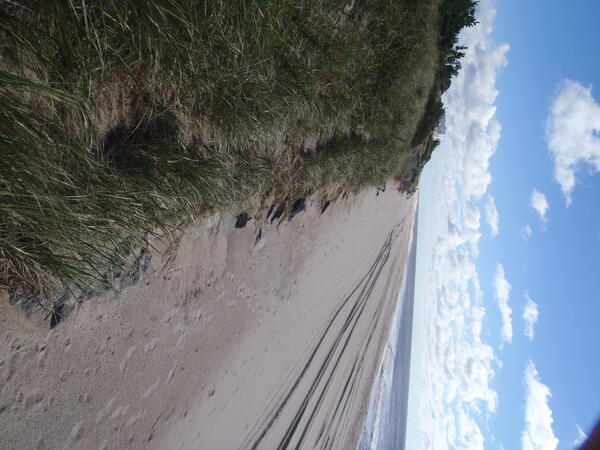
Slightly exposed rip-rap seawall at the base of the dune (the "dune toe") after dune erosion. Small seawalls are created using large rocks (rip-rap) at the dune toe to fortify the dune, reduce dune erosion from elevated water levels and storms, and help to protect property.
Slightly exposed rip-rap seawall at the base of the dune (the "dune toe") after dune erosion. Small seawalls are created using large rocks (rip-rap) at the dune toe to fortify the dune, reduce dune erosion from elevated water levels and storms, and help to protect property.

Bleaching colony of massive starlet coral, Siderastrea siderea, Florida Keys. When corals are stressed, the symbiosis between the coral animal and its photosynthetic algal symbionts (zooxanthellae) breaks down and the zooxanthellae are expelled from the coral tissue.
Bleaching colony of massive starlet coral, Siderastrea siderea, Florida Keys. When corals are stressed, the symbiosis between the coral animal and its photosynthetic algal symbionts (zooxanthellae) breaks down and the zooxanthellae are expelled from the coral tissue.

Bleaching colony of elliptical star coral, Dichocoenia stokesii, Florida Keys. When corals are stressed, the symbiosis between the coral animal and its photosynthetic algal symbionts (zooxanthellae) breaks down and the zooxanthellae are expelled from the coral tissue.
Bleaching colony of elliptical star coral, Dichocoenia stokesii, Florida Keys. When corals are stressed, the symbiosis between the coral animal and its photosynthetic algal symbionts (zooxanthellae) breaks down and the zooxanthellae are expelled from the coral tissue.

Bleaching colony of symmetrical brain coral, Diploria strigosa, Florida Keys. When corals are stressed, the symbiosis between the coral animal and its photosynthetic algal symbionts (zooxanthellae) breaks down and the zooxanthellae are expelled from the coral tissue.
Bleaching colony of symmetrical brain coral, Diploria strigosa, Florida Keys. When corals are stressed, the symbiosis between the coral animal and its photosynthetic algal symbionts (zooxanthellae) breaks down and the zooxanthellae are expelled from the coral tissue.

Bleaching colony of great star coral, Montastraea cavernosa, with polyps extended, Florida Keys. When corals are stressed, the symbiosis between the coral animal and its photosynthetic algal symbionts (zooxanthellae) breaks down and the zooxanthellae are expelled from the coral tissue.
Bleaching colony of great star coral, Montastraea cavernosa, with polyps extended, Florida Keys. When corals are stressed, the symbiosis between the coral animal and its photosynthetic algal symbionts (zooxanthellae) breaks down and the zooxanthellae are expelled from the coral tissue.

Bleaching colony of blushing star coral, Stephanocoenia intersepta/michelinii. When corals are stressed, the symbiosis between the coral animal and its photosynthetic algal symbionts (zooxanthellae) breaks down and the zooxanthellae are expelled from the coral tissue.
Bleaching colony of blushing star coral, Stephanocoenia intersepta/michelinii. When corals are stressed, the symbiosis between the coral animal and its photosynthetic algal symbionts (zooxanthellae) breaks down and the zooxanthellae are expelled from the coral tissue.

Bleaching colony of blushing star coral, Stephanocoenia intersepta/michelinii.
Bleaching colony of blushing star coral, Stephanocoenia intersepta/michelinii.

Bleaching colony of massive starlet coral, Siderastrea siderea, Florida Keys. When corals are stressed, the symbiosis between the coral animal and its photosynthetic algal symbionts (zooxanthellae) breaks down and the zooxanthellae are expelled from the coral tissue.
Bleaching colony of massive starlet coral, Siderastrea siderea, Florida Keys. When corals are stressed, the symbiosis between the coral animal and its photosynthetic algal symbionts (zooxanthellae) breaks down and the zooxanthellae are expelled from the coral tissue.

Bleaching colony of lobed star coral, Montastraea annularis, Florida Keys. When corals are stressed, the symbiosis between the coral animal and its photosynthetic algal symbionts (zooxanthellae) breaks down and the zooxanthellae are expelled from the coral tissue.
Bleaching colony of lobed star coral, Montastraea annularis, Florida Keys. When corals are stressed, the symbiosis between the coral animal and its photosynthetic algal symbionts (zooxanthellae) breaks down and the zooxanthellae are expelled from the coral tissue.

Bleaching colonies of mountainous star coral, Montastraea faveolata, Florida Keys. When corals are stressed, the symbiosis between the coral animal and its photosynthetic algal symbionts (zooxanthellae) breaks down and the zooxanthellae are expelled from the coral tissue.
Bleaching colonies of mountainous star coral, Montastraea faveolata, Florida Keys. When corals are stressed, the symbiosis between the coral animal and its photosynthetic algal symbionts (zooxanthellae) breaks down and the zooxanthellae are expelled from the coral tissue.

Bleaching colony of symmetrical brain coral, Diploria strigosa, Florida Keys. When corals are stressed, the symbiosis between the coral animal and its photosynthetic algal symbionts (zooxanthellae) breaks down and the zooxanthellae are expelled from the coral tissue.
Bleaching colony of symmetrical brain coral, Diploria strigosa, Florida Keys. When corals are stressed, the symbiosis between the coral animal and its photosynthetic algal symbionts (zooxanthellae) breaks down and the zooxanthellae are expelled from the coral tissue.

Bleaching colony of great star coral, Montastraea cavernosa, Florida Keys. When corals are stressed, the symbiosis between the coral animal and its photosynthetic algal symbionts (zooxanthellae) breaks down and the zooxanthellae are expelled from the coral tissue.
Bleaching colony of great star coral, Montastraea cavernosa, Florida Keys. When corals are stressed, the symbiosis between the coral animal and its photosynthetic algal symbionts (zooxanthellae) breaks down and the zooxanthellae are expelled from the coral tissue.

Bleaching colonies of mustard hill coral, Porites astreoides, both green and brown color morphs, Florida Keys. When corals are stressed, the symbiosis between the coral animal and its photosynthetic algal symbionts (zooxanthellae) breaks down and the zooxanthellae are expelled from the coral tissue.
Bleaching colonies of mustard hill coral, Porites astreoides, both green and brown color morphs, Florida Keys. When corals are stressed, the symbiosis between the coral animal and its photosynthetic algal symbionts (zooxanthellae) breaks down and the zooxanthellae are expelled from the coral tissue.

Bleaching colony of mustard hill coral, Porites astreoides, Florida Keys. When corals are stressed, the symbiosis between the coral animal and its photosynthetic algal symbionts (zooxanthellae) breaks down and the zooxanthellae are expelled from the coral tissue.
Bleaching colony of mustard hill coral, Porites astreoides, Florida Keys. When corals are stressed, the symbiosis between the coral animal and its photosynthetic algal symbionts (zooxanthellae) breaks down and the zooxanthellae are expelled from the coral tissue.

Bleaching colony of elliptical star coral, Dichocoenia stokesii, Florida Keys. When corals are stressed, the symbiosis between the coral animal and its photosynthetic algal symbionts (zooxanthellae) breaks down and the zooxanthellae are expelled from the coral tissue.
Bleaching colony of elliptical star coral, Dichocoenia stokesii, Florida Keys. When corals are stressed, the symbiosis between the coral animal and its photosynthetic algal symbionts (zooxanthellae) breaks down and the zooxanthellae are expelled from the coral tissue.

A colony of symmetrical brain coral, Diploria strigosa, affected by black-band disease (BBD), Florida Keys.
A colony of symmetrical brain coral, Diploria strigosa, affected by black-band disease (BBD), Florida Keys.

A colony of mountainous star coral, Montastraea faveolata, affected by black-band disease (BBD), Florida Keys.
A colony of mountainous star coral, Montastraea faveolata, affected by black-band disease (BBD), Florida Keys.

A colony of knobby brain coral, Diploria clivosa, affected by black-band disease (BBD), Florida Keys.
A colony of knobby brain coral, Diploria clivosa, affected by black-band disease (BBD), Florida Keys.

A colony of elliptical star coral, Dichocoenia stokesii, affected by black-band disease (BBD), Florida Keys.
A colony of elliptical star coral, Dichocoenia stokesii, affected by black-band disease (BBD), Florida Keys.

Close-up of the interface between bleached polyps of the great star coral, Montastraea cavernosa, and black-band disease (BBD), Florida Keys. The dead coral skeleton behind the black band has become overgrown with green algae.
Close-up of the interface between bleached polyps of the great star coral, Montastraea cavernosa, and black-band disease (BBD), Florida Keys. The dead coral skeleton behind the black band has become overgrown with green algae.