U.S. flag

An official website of the United States government

Images

Volcano Science Center images.

Filter Total Items: 551
Kullenberg coring platform from the University of Minnesota-Twin Cities Continental Scientific Drilling facility

Kullenberg coring platform from the University of Minnesota-Twin Cities Continental Scientific Drilling facility used to collect long (up to 12 m, or 40 feet) sediment cores from Yellowstone Lake.  Photo taken in September 2016 by Lisa Morgan.

Cut polycarbonate sections of sediment core from Yellowstone Lake

Cut polycarbonate sections of sediment core collected from core YL16-3A from the Deep Hole, the deepest part of Yellowstone Lake at about 119 m (390 feet) depth, southeast of Stevenson Island. Photo taken in September 2016 by Lisa Morgan.

Cut polycarbonate sections of sediment core collected from core YL16-3A from the Deep Hole, the deepest part of Yellowstone Lake at about 119 m (390 feet) depth, southeast of Stevenson Island. Photo taken in September 2016 by Lisa Morgan.

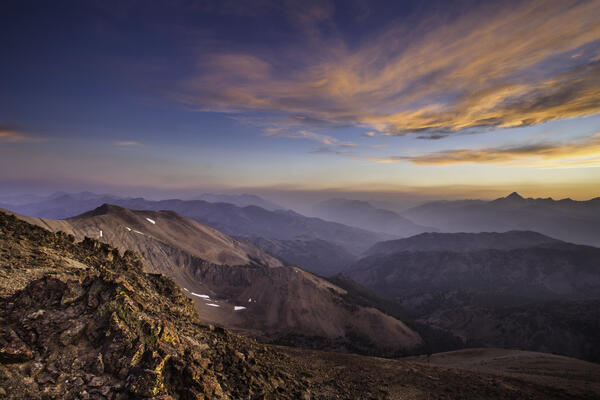
Beartooth Mountains looking west northwest from near Beartooth Pass

Beartooth Mountains looking west northwest from near Beartooth Pass, Wyoming. Photo by Jeff Havig, University of Minnesota, July 20, 2016.

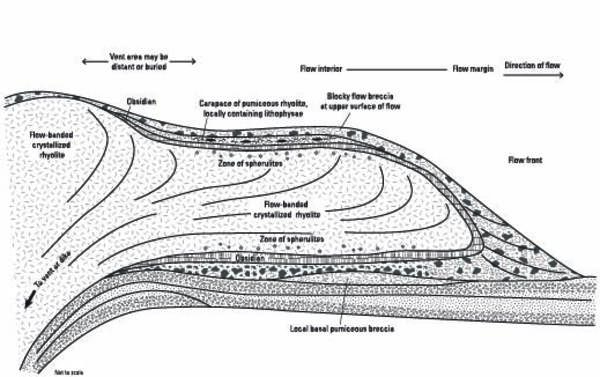
cartoon showing internal structure of a rhyolite lava flow
Schematic cartoon showing internal structure of a rhyolite lava flow
Aerial thermal infrared images of Yellowstone National Park from the 2000s

Top: Thermographic mosaic of Yellowstone acquired by the NASA’s MODIS-ASTER Airborne Simulator (MASTER), a thermal infrared scanner, in September 2006.  Dark shades indicate cool temperatures and bright are warm; this reflects not only hydrothermal activity, but also types of ground cover.

Top: Thermographic mosaic of Yellowstone acquired by the NASA’s MODIS-ASTER Airborne Simulator (MASTER), a thermal infrared scanner, in September 2006.  Dark shades indicate cool temperatures and bright are warm; this reflects not only hydrothermal activity, but also types of ground cover.

Data from GPS station AB53 near the peak of a mountain on Mitkof Island, Alaska, including measured snow depth

Data from GPS station AB53 near the peak of a mountain on Mitkof Island, Alaska, including measured snow depth down at the base of the mountain. Notice how the North (top), east (second from the top), and vertical (third from the top) positions are impacted by the presence of snow. This is an extreme example of the influence of snow on GPS data.

Data from GPS station AB53 near the peak of a mountain on Mitkof Island, Alaska, including measured snow depth down at the base of the mountain. Notice how the North (top), east (second from the top), and vertical (third from the top) positions are impacted by the presence of snow. This is an extreme example of the influence of snow on GPS data.

Map of the Heart Mountain slide block

Map of the Heart Mountain slide block. From Mitchell et al., 2015 ("Catastrophic emplacement of giant landslides aided by thermal decomposition: Heart Mountain, Wyoming." Earth and Planetary Science Letters 411: 199-207), modified from Anders et al. (2010).

Big Southern Butte, Idaho

Big Southern Butte, Idaho.  The butte is among the largest rhyolite domes in the world and is located in the eastern Snake River Plain. Photo by James Neeley, BLM (https://flic.kr/p/CsA4TV).

Big Southern Butte, Idaho.  The butte is among the largest rhyolite domes in the world and is located in the eastern Snake River Plain. Photo by James Neeley, BLM (https://flic.kr/p/CsA4TV).

Lidar coverage of the Hebgen and Red Canyon faults collected in 2014

Lidar coverage of the Hebgen and Red Canyon faults collected in 2014. Magenta lines show fault scarps mapped by USGS geologists shortly after the 1959 earthquake. Yellow lines show fault scarps interpreted from lidar data 55 years after the earthquake.

Lidar coverage of the Hebgen and Red Canyon faults collected in 2014. Magenta lines show fault scarps mapped by USGS geologists shortly after the 1959 earthquake. Yellow lines show fault scarps interpreted from lidar data 55 years after the earthquake.

Lava Mountain, Wyoming

Lava Mountain, Wyoming.  (A) View from Dubois, WY, in the Wind River basin looking northwest ~30 km toward Lava Mountain.

Lava Mountain, Wyoming.  (A) View from Dubois, WY, in the Wind River basin looking northwest ~30 km toward Lava Mountain.

Schematic cross section of the magmatic and hydrothermal systems underlying Yellowstone Caldera

Schematic cross section of the magmatic and hydrothermal systems underlying Yellowstone Caldera, showing magmatic volatiles emitted during crystallization of the rhyolitic magma and/or from basalt intrusions or convection, and the hypothesized relation with earthquake swarms on the caldera margins.  The exsolved fluids accumulate at lithostatic pressures in the

Schematic cross section of the magmatic and hydrothermal systems underlying Yellowstone Caldera, showing magmatic volatiles emitted during crystallization of the rhyolitic magma and/or from basalt intrusions or convection, and the hypothesized relation with earthquake swarms on the caldera margins.  The exsolved fluids accumulate at lithostatic pressures in the

Frosted trees in the Fairy Falls area of Yellowstone National Park near the Firehole River
Boiling dark gray mud splashing within a small depression
Mud Pot within the Mud Volcano thermal area of Yellowstone National Park

A mud pot in the Obsidian Pool Thermal Area, near Mud Volcano. The large amounts of suspended sediment make the thermal water much more viscous than pure water. Photo by Shaul Hurwitz, September 2014.

Photo of the Old Faithful Inn lobby

Photo of the Old Faithful Inn lobby, which features a six-story-tall fireplace and chimney made from rocks quarried form a rhyolite lava flow in Yellowstone.  NPS photo by Jim Peaco, July 22, 2013.

Photo of the Old Faithful Inn lobby, which features a six-story-tall fireplace and chimney made from rocks quarried form a rhyolite lava flow in Yellowstone.  NPS photo by Jim Peaco, July 22, 2013.

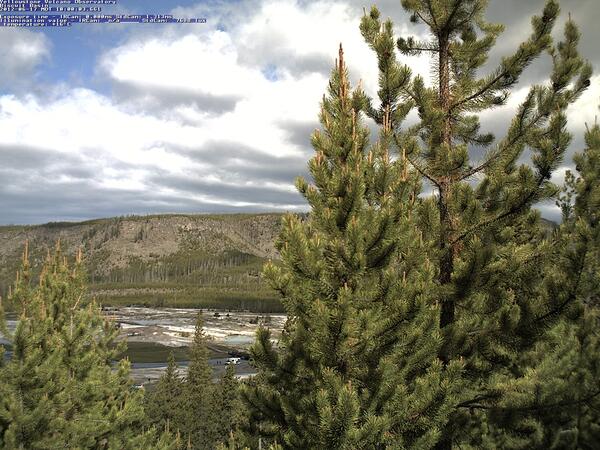
A geyser basin and hill in the distance, with pine trees in the foreground, under a mostly cloudy sky
Image of Biscuit Basin (visible between the trees) captured by the YVO mobile webcam on June 17, 2012
View north along U.S. Route 20 from near Ashton, ID, at the margin of the Huckleberry Ridge Tuff in the distance

Google maps photo taken just north of Ashton, ID, along U.S. Route 20. The photo was taken looking north towards Island Park, ID. The forested ridge in the distance marks the margin of a caldera that formed 2.08 million years ago, when the Huckleberry Ridge Tuff erupted.

black bulbous rock sample on white tubing resting on a barren, pale, sandy surface
Sulfur “cinder” from Cinder Pool in Norris Geyser Basin, Yellowstone National Park

Sulfur “cinder” attached to a sampling tube that was extracted from Cinder Pool in Norris Geyser Basin.  The “cinder” is sulfur that existed as a molten layer at the bottom of the pool and was carried upward by gas and solidified.  The black color is due to the presence of finely dispersed pyrite.

Sulfur “cinder” attached to a sampling tube that was extracted from Cinder Pool in Norris Geyser Basin.  The “cinder” is sulfur that existed as a molten layer at the bottom of the pool and was carried upward by gas and solidified.  The black color is due to the presence of finely dispersed pyrite.

Looking west from the intersection of U.S. Route 20 and Old Hwy 47, in Idaho, at lava flows associated with the Henrys Fork caldera

Google Maps photo taken at the intersection of U.S. Route 20 and Old Hwy 47 in Idaho, looking west. The tops of Moonshine Mountain and Silver Lake dome, rhyolite lava flows located inside the caldera, are indicated with a dashed black line.

Two elk standing in from of burned trees, with a lake shoreline in the distance under a cloudy sky
Image of elk captured by the YVO mobile webcam on June 25, 2010

Image of elk captured by the YVO mobile webcam on June 25, 2010, when it was positioned atop Lake Butte with a view of the north side of Yellowstone Lake.

Blue pools surrounded by beige and reddish mud and otherwise mostly barren ground. Pine trees and a lake are in the distance.
Overview of central West Thumb Geyser Basin

Overview of central West Thumb Geyser Basin.  USGS photo by Pat Shanks, 2009. 

Was this page helpful?