Fort Belknap Reservation groundwater monitoring well
Fort Belknap Reservation groundwater monitoring wellNorthward view of USGS well 482914108453801 (ANC MW-5) during a groundwater well inventory on the Fort Belknap Reservation.


Official websites use .gov
A .gov website belongs to an official government organization in the United States.

Secure .gov websites use HTTPS
A lock () or https:// means you’ve safely connected to the .gov website. Share sensitive information only on official, secure websites.

Explore our multimedia below. You can filter and search by clicking "View All".
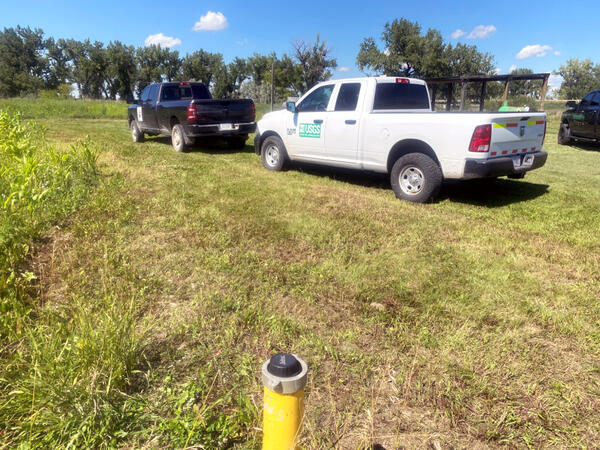
Northward view of USGS well 482914108453801 (ANC MW-5) during a groundwater well inventory on the Fort Belknap Reservation.
Northward view of USGS well 482914108453801 (ANC MW-5) during a groundwater well inventory on the Fort Belknap Reservation.
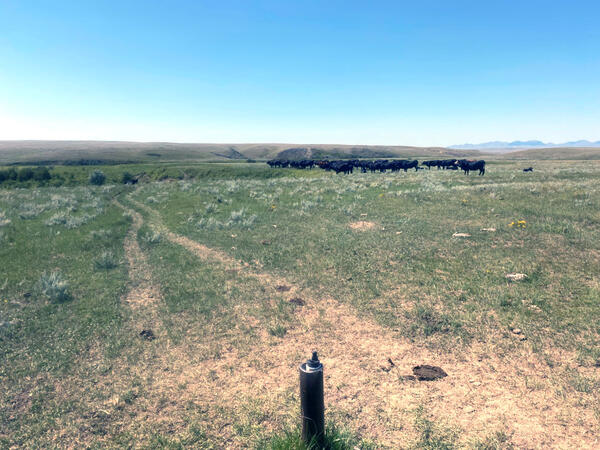
West-facing view of USGS monitoring well O-30 (480612108440501) on the Fort Belknap Reservation, Montana, with cattle visible in the background. The photograph was taken during a groundwater well inventory.
West-facing view of USGS monitoring well O-30 (480612108440501) on the Fort Belknap Reservation, Montana, with cattle visible in the background. The photograph was taken during a groundwater well inventory.
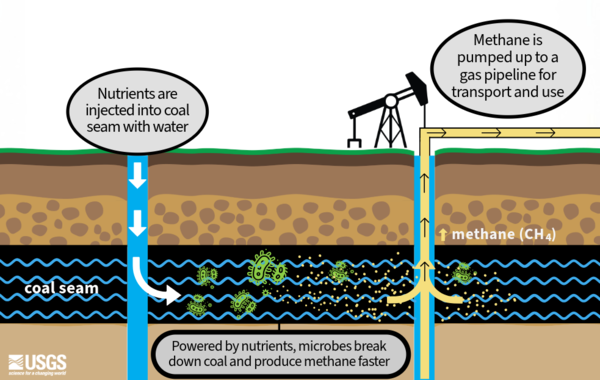
A graphic showing the process of enhancing microbial methane production with the addition of nutrients to underground coal formations.
A graphic showing the process of enhancing microbial methane production with the addition of nutrients to underground coal formations.

A graphic showing the process of enhanced microbial methane production. Nutrients are added to underground coalbeds, where they cause microbes to produce methane faster. This methane is then pumped up to the surface for transport and use.
A graphic showing the process of enhanced microbial methane production. Nutrients are added to underground coalbeds, where they cause microbes to produce methane faster. This methane is then pumped up to the surface for transport and use.

An image of the Bozeman Field Office site for the Wyoming-Montana Water Science Center.
An image of the Bozeman Field Office site for the Wyoming-Montana Water Science Center.

A graphic showing microbes consuming nutrients and releasing (or farting) methane (CH4) out in the process.
A graphic showing microbes consuming nutrients and releasing (or farting) methane (CH4) out in the process.

Ice jam was holding on upstream side of bridge an suddenly broke lose while in the process of making a streamflow measurement. Equipment pulled to safety, and this video taken about 5 minutes later.
Ice jam was holding on upstream side of bridge an suddenly broke lose while in the process of making a streamflow measurement. Equipment pulled to safety, and this video taken about 5 minutes later.

Elliott Barnhart, a hydrologist with the USGS Wyoming-Montana Water Science Center, describes his work developing what could be a cleaner way to develop coal.
Elliott Barnhart, a hydrologist with the USGS Wyoming-Montana Water Science Center, describes his work developing what could be a cleaner way to develop coal.
