U.S. flag

An official website of the United States government

Arctic

Filter Total Items: 25

Tracking Data for Buff-Breasted Sandpipers (Calidris subruficollis)

Available here are tracking data of buff-breasted sandpiper, a shorebird species that breeds only in Arctic Alaska and Canada, spending the winter in the grasslands of Brazil, Uruguay, and Argentina after a lengthy migration. These data were collected to determine range-wide migratory routes, migratory timing, and stopover habitats of this species.
Tracking Data for Buff-Breasted Sandpipers (Calidris subruficollis)

Tracking Data for Buff-Breasted Sandpipers (Calidris subruficollis)

Available here are tracking data of buff-breasted sandpiper, a shorebird species that breeds only in Arctic Alaska and Canada, spending the winter in the grasslands of Brazil, Uruguay, and Argentina after a lengthy migration. These data were collected to determine range-wide migratory routes, migratory timing, and stopover habitats of this species.
Learn More

Tracking Data for Pacific Walrus (Odobenus rosmarus divergens)

Available here are tracking data of Pacific walrus, a marine mammal that ranges between the Alaska Peninsula, up through the Bering and Chukchi seas, and over to Russia. These data were collected from animals marked in the northern Bering and Chuckchi sea to understand seasonal movement patterns, use of coastal haulouts in northwestern Alaska, and determine estimates of abundance in autumn.
Tracking Data for Pacific Walrus (Odobenus rosmarus divergens)

Tracking Data for Pacific Walrus (Odobenus rosmarus divergens)

Available here are tracking data of Pacific walrus, a marine mammal that ranges between the Alaska Peninsula, up through the Bering and Chukchi seas, and over to Russia. These data were collected from animals marked in the northern Bering and Chuckchi sea to understand seasonal movement patterns, use of coastal haulouts in northwestern Alaska, and determine estimates of abundance in autumn.
Learn More

Nearshore Marine Ecosystem Research

Nearshore ecosystems include many resources that are of high ecological, recreational, subsistence, and economic value. They also are subject to influences from a wide variety of natural and human-caused perturbations, which can originate in terrestrial or oceanic environments. Our research is designed to evaluate sources of variation in the nearshore and how they influence resources of high...
Nearshore Marine Ecosystem Research

Nearshore Marine Ecosystem Research

Nearshore ecosystems include many resources that are of high ecological, recreational, subsistence, and economic value. They also are subject to influences from a wide variety of natural and human-caused perturbations, which can originate in terrestrial or oceanic environments. Our research is designed to evaluate sources of variation in the nearshore and how they influence resources of high...
Learn More

The Rusting of Arctic Rivers: Freshwater Ecosystems Respond to Rapidly Uptaking Metals

The water quality of streams and rivers in the Arctic is sensitive to rapid climate change and altered disturbance regimes.
The Rusting of Arctic Rivers: Freshwater Ecosystems Respond to Rapidly Uptaking Metals

The Rusting of Arctic Rivers: Freshwater Ecosystems Respond to Rapidly Uptaking Metals

The water quality of streams and rivers in the Arctic is sensitive to rapid climate change and altered disturbance regimes.
Learn More

Walrus Research

The USGS Alaska Science Center conducts long-term research on the Pacific walrus to provide scientific information to Department of Interior management agencies and Alaska Native co-management partners. In addition, the USGS Pacific walrus research program collaborates with the U.S. Fish and Wildlife Service (USFWS) and the State of Alaska’s Department of Fish and Game and Alaska Native co...
Walrus Research

Walrus Research

The USGS Alaska Science Center conducts long-term research on the Pacific walrus to provide scientific information to Department of Interior management agencies and Alaska Native co-management partners. In addition, the USGS Pacific walrus research program collaborates with the U.S. Fish and Wildlife Service (USFWS) and the State of Alaska’s Department of Fish and Game and Alaska Native co...
Learn More

Polar Bear Research

Polar bears ( Ursus maritimus) are one of 4 marine mammal species managed by the U.S. Department of Interior. The USGS Alaska Science Center leads long–term research on polar bears to inform local, state, national and international policy makers regarding conservation of the species and its habitat. Our studies, ongoing since 1985, are focused on population dynamics, health and energetics...
Polar Bear Research

Polar Bear Research

Polar bears ( Ursus maritimus) are one of 4 marine mammal species managed by the U.S. Department of Interior. The USGS Alaska Science Center leads long–term research on polar bears to inform local, state, national and international policy makers regarding conservation of the species and its habitat. Our studies, ongoing since 1985, are focused on population dynamics, health and energetics...
Learn More

Avian Influenza Research

Since 2006, the USGS Alaska Science Center has been part of the State and Federal interagency team for the detection and response to highly pathogenic (HPAI) viruses in North America. Avian influenza or "bird flu" is a viral disease that primarily infects domestic poultry and wild birds. Avian influenza viruses are naturally occurring in wild birds such as ducks, geese, swans, and gulls. These...
Avian Influenza Research

Avian Influenza Research

Since 2006, the USGS Alaska Science Center has been part of the State and Federal interagency team for the detection and response to highly pathogenic (HPAI) viruses in North America. Avian influenza or "bird flu" is a viral disease that primarily infects domestic poultry and wild birds. Avian influenza viruses are naturally occurring in wild birds such as ducks, geese, swans, and gulls. These...
Learn More

Changing Arctic Ecosystems

Arctic regions of Alaska are important for cultural and economic sustainability and host a wide variety of wildlife species, many of which are of conservation and management interest to the U.S. Department of the Interior. The USGS and collaborators provide information about Arctic ecosystems that are used by Arctic residents, management agencies, and industry.
Changing Arctic Ecosystems

Changing Arctic Ecosystems

Arctic regions of Alaska are important for cultural and economic sustainability and host a wide variety of wildlife species, many of which are of conservation and management interest to the U.S. Department of the Interior. The USGS and collaborators provide information about Arctic ecosystems that are used by Arctic residents, management agencies, and industry.
Learn More

Tracking Data for Caribou (Rangifer tarandus granti)

Available here are tracking data of Caribou, an ungulate that ranges between the Alaska Peninsula, up through interior Alaska and the Arctic Coastal Plain, and over to the Yukon Territory. These data were collected from animals living in three different herds including the Fortymile herd, Nelchina herd, and Denali herd.
Tracking Data for Caribou (Rangifer tarandus granti)

Tracking Data for Caribou (Rangifer tarandus granti)

Available here are tracking data of Caribou, an ungulate that ranges between the Alaska Peninsula, up through interior Alaska and the Arctic Coastal Plain, and over to the Yukon Territory. These data were collected from animals living in three different herds including the Fortymile herd, Nelchina herd, and Denali herd.
Learn More

ASC Ecosystems Data Releases

Alaska Science Center Ecosystems data releases are grouped by topic: Terrestrial Ecosystems, Aquatic Ecosystems, Wildlife Health and Genetics, Environmental Health and eDNA, Habitat and Landscape Change, and Ecosystem Analytics.
ASC Ecosystems Data Releases

ASC Ecosystems Data Releases

Alaska Science Center Ecosystems data releases are grouped by topic: Terrestrial Ecosystems, Aquatic Ecosystems, Wildlife Health and Genetics, Environmental Health and eDNA, Habitat and Landscape Change, and Ecosystem Analytics.
Learn More

Tracking Data for Polar Bear (Ursus maritimus)

Available here are tracking data of Polar Bear. Research focuses on the two polar bear subpopulation’s whose range includes Alaska: the Southern Beaufort Sea subpopulation that ranges between the North Slope of Alaska and western Canada and the Chukchi Sea or Alaska-Chukotka subpopulation that ranges between the northwest coast of Alaska and eastern Russia.
Tracking Data for Polar Bear (Ursus maritimus)

Tracking Data for Polar Bear (Ursus maritimus)

Available here are tracking data of Polar Bear. Research focuses on the two polar bear subpopulation’s whose range includes Alaska: the Southern Beaufort Sea subpopulation that ranges between the North Slope of Alaska and western Canada and the Chukchi Sea or Alaska-Chukotka subpopulation that ranges between the northwest coast of Alaska and eastern Russia.
Learn More

U.S. Fish and Wildlife Service Tracking Data for Lesser Yellowlegs (Tringa flavipes)

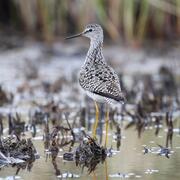
Available here are tracking data of Lesser Yellowlegs ( Tringa flavipes). These data were collected to inform the spatiotemporal migratory patterns of Lesser Yellowlegs between subarctic breeding areas in Alaska and Canada and wintering areas in South America, the Caribbean, Central America, and the contiguous United States.
U.S. Fish and Wildlife Service Tracking Data for Lesser Yellowlegs (Tringa flavipes)

U.S. Fish and Wildlife Service Tracking Data for Lesser Yellowlegs (Tringa flavipes)

Available here are tracking data of Lesser Yellowlegs ( Tringa flavipes). These data were collected to inform the spatiotemporal migratory patterns of Lesser Yellowlegs between subarctic breeding areas in Alaska and Canada and wintering areas in South America, the Caribbean, Central America, and the contiguous United States.
Learn More
Was this page helpful?