Women in Science Podcast
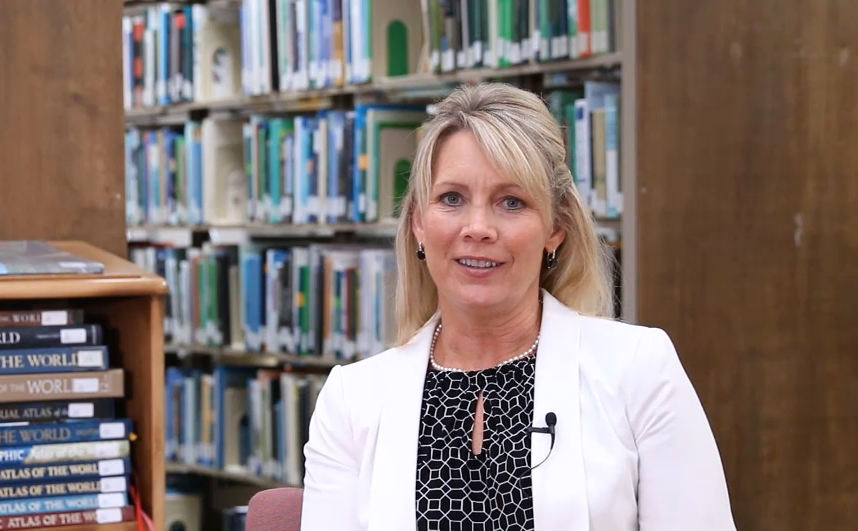
The podcast she took part in, Episode 115—Women in Science at EROS, brings together the voices of Thormodsgard and eight other women, most currently working in science at the Center, located in Sioux Falls, South Dakota. The combination of new interviews and excerpts from previous podcasts includes stories about women at the center but focuses equally on the science they contributed to.
Thormodsgard’s story about her time at the center kicks off the podcast, and her advice for women in science closes the recording. The other podcast guests, each a scientist in her own right, benefited from her leadership. Here are the memories and comments they shared about Thormodsgard’s long-lasting legacy.
“June is the one that hired me as an intern back in 1991 and then helped get me on as a full-time employee once I graduated. June was a great science leader at EROS and a big supporter of women in science at EROS. With her encouragement and support, I went back to school and got my master’s degree from SDSU while working full-time at EROS. She always provided support and flexibility to me whenever I needed it to complete my degree. She really was a great mentor to all the women at EROS and not just the science staff.”
—Kristi Sayler is a supervisor for the Integrated Science and Applications Branch (ISAB) and the project manager for both the LSDS Science Research & Development (LSRD) project and the Climate and Global Issues (CGI) project.
“June actually started the first women's support group at EROS. This was years prior to Employee Resource Groups and the formulation of the Women in Science Dialogue (WiSDom) being established. At the time, there was a lack of advocacy for underrepresented areas, and even pushback to have such a forum for women. However, June fought to keep the group active, and it was a source of support for many future leaders of the organization. She has also always been such a strong advocate for the science. When some of us on the satellite side of the ‘house’ would focus too much on the engineering aspects, she would remind us of our true mission at EROS—the science.”
—Jenn Lacey came to EROS in 1994 and had held a variety of positions by the time she left in 2020 to begin filling regional leadership roles in the USGS. Now she is a regional director for the USGS.
“June’s commitment to EROS science is evidenced by her energy and genuine enthusiasm to advocate for good people doing good work. She helped raise the bar that set EROS apart from other organizations as an authoritative source of remote sensing science expertise.”
—Calli Jenkerson arrived in 1999 at EROS and now manages the TSSC science division at EROS.
“I was a contractor on another science team early in my career, so I didn’t work directly with June. It was after her retirement that I had an opportunity to get to know her better. She has always been very supportive and kindhearted. On many occasions throughout my career, I’ve had conversations with female colleagues about June’s contributions to EROS. She is the best of the best! As I’m sure others have mentioned, as branch chief, she only raised her voice when she reminded us to attend the noon seminar!”
—Jen Rover has focused on multiple areas of land change since starting her career at EROS in 2006. She is currently the supervisory geographer of a team in the science branch and works with synthetic aperture radar to map burn severity after a wildfire.
“She was still working when I started, but I never worked with her, unfortunately. But I remember her always being very nice to me in the hallways and gave great seminars that inspired me to do more in science, and that it’s not scary at all, and women can do it, too.”
—Stefanie Kagone has worked at EROS since 2009. She is a geospatial information scientist who supports the efforts of the Famine Early Warning Systems Network (FEWS NET) and WaterSMART projects.
“When I think about June, I think about passion and connection. She’s extremely passionate about the EROS mission and about USGS as a whole, but especially remote sensing, and she has always been that way. June loves to make connections between people. She would come into my office and ask, ‘Do you know what so and so is doing? Is there a connection there?’ It also was very inspiring, as a woman in science, to see June—along with Joy Hood—in leadership positions. If you can see somebody else doing it, then you can imagine it for yourself.”
—Jess Brown is leading the effort to make significant improvements to the National Land Cover Database (NLCD). She started at EROS as an intern in 1989 and became involved in a significant landscape mapping effort at a 1-kilometer resolution that showed people what covered the ground around the entire globe.
Here’s a look at the other podcast guests and their roles at EROS:
- Heather Tollerud has focused on land change mapping since coming to EROS in 2015. She’s currently working on the National Land Cover Database (NLCD) and previously worked in Land Change Monitoring, Assessment and Projection (LCMAP), which is integrating with NLCD.
- Birgit Peterson has worked to find better ways to map burn severity after wildfires since starting at EROS in 2009. She is currently leading multiple research efforts to improve understanding of forest change after disturbance utilizing LiDAR and other imagery.
To listen to the podcast, click here. To see more podcast episodes, click here.