



Vaccines
Vaccines
Filter Total Items: 5

White-nose syndrome vaccine updates
Since its emergence in 2006, white-nose syndrome (WNS) continues to spread in North America and has substantially impacted hibernating bat populations, contributing to declines of over 90% in northern long-eared ( Myotis septentrionalis), little brown ( Myotis lucifugus), and tri-colored bat ( Perimyotis subflavus) populations. We are developing tools and management strategies to protect bat...
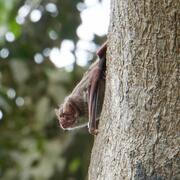
Dynamics of Rabies Transmission in Vampire Bats (Desmodus rotundus) and Potential for Control Through Vaccination
Vampire bats ( Desmodus rotundus) are the primary spreader of rabies, a lethal disease that harms livestock and people across Latin America. Growth of the livestock industry and environmental changes in this region are leading to the expansion of vampire bats’ habitat range, and it is considered likely this species will move into the southern United States.

Field trials for testing of white-nose syndrome vaccine candidates
White-nose syndrome (WNS), caused by the fungus Pseudogymnoascus destructans (Pd), continues to decimate bat populations in North America, and efforts to develop treatment options have intensified. One potential method for controlling WNS is vaccination of bats with specific antigens to elicit a protective immune response.

Development of SARS-CoV-2 vaccine to support black-footed ferret conservation
The SARS-CoV-2 virus is known to infect and cause severe disease, such as respiratory distress and death, in mustelids, including farm-raised mink ( Mustela lutreola and Neovison vison) and domestic ferrets ( M. putorius). This raised concern that the virus may also pose a threat to endangered black-footed ferrets ( Mustela nigripes) managed in captivity for breeding and recovery purposes.

Vaccines
The USGS National Wildlife Health Center (NWHC) works on developing various disease management tools, including the development of vaccines. Our current work focuses on vaccines for sylvatic plague, white-nose syndrome, and rabies as disease control strategies.