



Biological Soil Crust ("Biocrust") Science
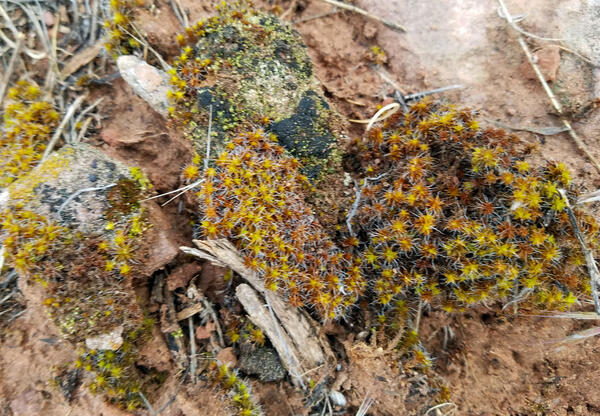
Biological soil crusts (biocrusts) are commonly found on the soil surface in arid and semi-arid ecosystems (collectively called drylands). Biocrusts can consist of mosses, cyanobacteria, lichens, algae, and microfungi, and they strongly interact with the soil. These organisms or consortium of disparate organisms, depending on the specific biocrust, are important to the functioning of ecosystems and to the organization of plant and soil communities.
Fact Sheet: Biological Soil Crusts—Webs of Life in the Desert
Mapping and Monitoring Biological Soil Crusts with Unmanned Aerial Systems (UAS)
Interview with Dr. Sasha Reed on biocrusts and restoration
USGS b-roll video: "Mapping biocrust with UAS technology in Moab, Utah"
Biological Soil Crust Research in Western US Drylands
Biocrusts are consortia of bacteria, cyanobacteria, fungi, lichens, and mosses that occupy the interface between soil and atmosphere in most drylands, providing critical ecosystem functions such as stabilizing soils and increasing fertility. Because drylands are our planet’s largest terrestrial biome, ecosystem health in drylands is globally important. Biocrust communities have been lost or degraded across the U.S. Southwest and Intermountain West due to land use practices such as grazing and energy development.
The loss of biocrusts drives reduced carbon uptake and soil fertility in the ecosystem, and decreased soil stability and water infiltration. A reduction in soil stability is especially troublesome, as destabilized soils can result in increases in dust production — a critical problem in the Southwest. These impacts magnify the effect of warming and drying on Colorado Plateau ecosystems in the absence of active adaptation measures to restore biocrusts in degraded areas. The biggest challenge is how to restore ecosystem function associated with biocrust in a way that will be successful now and, in the future.
Biocrust Restoration
Biological soil crust restoration aims to re-establish ecosystem function and build resilience across ecologically disturbed drylands through cultivating and restoring biological soil crust (biocrust) communities.
Biocrust organisms are essential for dryland ecosystems. They form the dominant land cover in many drylands and are crucial for increasing soil stability and reducing erosion in ecosystems that would otherwise rapidly lose their topsoil layer as wind-blown dust.
They also increase soil fertility by increasing soil organic matter and nutrient content which are essential for plant growth and health. When we think about restoration in drylands, we think of biocrusts first; they are essential for reclaiming a disturbed area to a functioning ecosystem.

The world’s first-ever Biocrust Farm is located at the Mayberry Native Plant Propagation Center in Castle Valley, Utah. Here scientists and volunteers work together to grow biocrust communities until they are healthy and strong enough to be transplanted to restoration sites.
We began to develop a new method of biocrust restoration, using a liquid cyanobacterial slurry to disperse inoculum for biocrusts on a larger scale. We hope the development of this method can be used for reclaiming large, disturbed sites that are too large to restore with dry inoculum, such as those affected by oil and gas development throughout the Southwest.
The biocrust we propagate are salvaged from hotter deserts to the south and west, such that the organisms are adapted to hotter and drier conditions that are likely in a climate changing world. Because of their high visibility, and intersection with lands managed by a wide cross-section of public and private landholders, the restoration sites provide a strong platform for engagement and outreach regarding climate adaptive biocrust restoration.
We monitor both the growth of biocrust and the associated ecosystem functions (soil stability, water infiltration, and soil fertility) over time to help evaluate project success. In addition, we measure soil stability and infiltration, as well as collect surface soil samples to measure the total carbon and nitrogen content, and plant available nitrogen content.
The goal of biocrust restoration is to increase the presence of these biocrust microbial communities in the soil to increase the stability, health, and fertility of desert soil ecosystems.
The earliest successional communities of cyanobacteria are fundamental for establishing a healthy biocrust community. They are the first soil colonizers and hold soil particles together with their filamentous biomass.

USGS Outstanding in the Field: Biocrusts (Ep. 9)
Welcome to another episode of Outstanding in the Field, the U.S. Geological Survey’s podcast series produced by the Ecosystems Mission Area. We highlight our fun and fascinating fieldwork studying ecosystems across the country. Today we’ll be discussing tiny communities that are found on the surface of the soil in the harsh environments of cold and hot deserts. These often-overlooked communities...
Biological soil crusts (biocrusts) are commonly found on the soil surface in arid and semi-arid ecosystems (collectively called drylands). Biocrusts can consist of mosses, cyanobacteria, lichens, algae, and microfungi, and they strongly interact with the soil. These organisms or consortium of disparate organisms, depending on the specific biocrust, are important to the functioning of ecosystems and to the organization of plant and soil communities.
Fact Sheet: Biological Soil Crusts—Webs of Life in the Desert
Mapping and Monitoring Biological Soil Crusts with Unmanned Aerial Systems (UAS)
Interview with Dr. Sasha Reed on biocrusts and restoration
USGS b-roll video: "Mapping biocrust with UAS technology in Moab, Utah"
Biological Soil Crust Research in Western US Drylands
Biocrusts are consortia of bacteria, cyanobacteria, fungi, lichens, and mosses that occupy the interface between soil and atmosphere in most drylands, providing critical ecosystem functions such as stabilizing soils and increasing fertility. Because drylands are our planet’s largest terrestrial biome, ecosystem health in drylands is globally important. Biocrust communities have been lost or degraded across the U.S. Southwest and Intermountain West due to land use practices such as grazing and energy development.
The loss of biocrusts drives reduced carbon uptake and soil fertility in the ecosystem, and decreased soil stability and water infiltration. A reduction in soil stability is especially troublesome, as destabilized soils can result in increases in dust production — a critical problem in the Southwest. These impacts magnify the effect of warming and drying on Colorado Plateau ecosystems in the absence of active adaptation measures to restore biocrusts in degraded areas. The biggest challenge is how to restore ecosystem function associated with biocrust in a way that will be successful now and, in the future.
Biocrust Restoration
Biological soil crust restoration aims to re-establish ecosystem function and build resilience across ecologically disturbed drylands through cultivating and restoring biological soil crust (biocrust) communities.
Biocrust organisms are essential for dryland ecosystems. They form the dominant land cover in many drylands and are crucial for increasing soil stability and reducing erosion in ecosystems that would otherwise rapidly lose their topsoil layer as wind-blown dust.
They also increase soil fertility by increasing soil organic matter and nutrient content which are essential for plant growth and health. When we think about restoration in drylands, we think of biocrusts first; they are essential for reclaiming a disturbed area to a functioning ecosystem.
The world’s first-ever Biocrust Farm is located at the Mayberry Native Plant Propagation Center in Castle Valley, Utah. Here scientists and volunteers work together to grow biocrust communities until they are healthy and strong enough to be transplanted to restoration sites.
We began to develop a new method of biocrust restoration, using a liquid cyanobacterial slurry to disperse inoculum for biocrusts on a larger scale. We hope the development of this method can be used for reclaiming large, disturbed sites that are too large to restore with dry inoculum, such as those affected by oil and gas development throughout the Southwest.
The biocrust we propagate are salvaged from hotter deserts to the south and west, such that the organisms are adapted to hotter and drier conditions that are likely in a climate changing world. Because of their high visibility, and intersection with lands managed by a wide cross-section of public and private landholders, the restoration sites provide a strong platform for engagement and outreach regarding climate adaptive biocrust restoration.
We monitor both the growth of biocrust and the associated ecosystem functions (soil stability, water infiltration, and soil fertility) over time to help evaluate project success. In addition, we measure soil stability and infiltration, as well as collect surface soil samples to measure the total carbon and nitrogen content, and plant available nitrogen content.
The goal of biocrust restoration is to increase the presence of these biocrust microbial communities in the soil to increase the stability, health, and fertility of desert soil ecosystems.
The earliest successional communities of cyanobacteria are fundamental for establishing a healthy biocrust community. They are the first soil colonizers and hold soil particles together with their filamentous biomass.
USGS Outstanding in the Field: Biocrusts (Ep. 9)
Welcome to another episode of Outstanding in the Field, the U.S. Geological Survey’s podcast series produced by the Ecosystems Mission Area. We highlight our fun and fascinating fieldwork studying ecosystems across the country. Today we’ll be discussing tiny communities that are found on the surface of the soil in the harsh environments of cold and hot deserts. These often-overlooked communities...