
U.S. flag

An official website of the United States government

Sagebrush Ecosystems

Filter Total Items: 68

Assessing the Proliferation, Connectivity, and Consequences of Invasive Fine Fuels on the Sagebrush Biome

Invasive annual grasses can replace native vegetation and alter fire behavior, impacting a range of habitats and species. A team of researchers from the U.S. Geological Survey, Colorado State University, the Bureau of Land Management, and the U.S. Fish and Wildlife Service are working to identify factors that influence changes in the distribution and abundance of invasive annual grasses (IAGs)...
Assessing the Proliferation, Connectivity, and Consequences of Invasive Fine Fuels on the Sagebrush Biome

Assessing the Proliferation, Connectivity, and Consequences of Invasive Fine Fuels on the Sagebrush Biome

Invasive annual grasses can replace native vegetation and alter fire behavior, impacting a range of habitats and species. A team of researchers from the U.S. Geological Survey, Colorado State University, the Bureau of Land Management, and the U.S. Fish and Wildlife Service are working to identify factors that influence changes in the distribution and abundance of invasive annual grasses (IAGs)...
Learn More

Building a Framework to Assess Restoration Outcomes for the Department of the Interior

Bureaus within the Department of the Interior are working together to build a framework to assess restoration outcomes. USGS is leading this effort that will inform landscape-level resource management and increase benefits from restoration investments.
Building a Framework to Assess Restoration Outcomes for the Department of the Interior

Building a Framework to Assess Restoration Outcomes for the Department of the Interior

Bureaus within the Department of the Interior are working together to build a framework to assess restoration outcomes. USGS is leading this effort that will inform landscape-level resource management and increase benefits from restoration investments.
Learn More

Conservation Efforts Database

The Conservation Efforts Database (CED) is a secure online data repository that collects, stores, and retrieves spatially explicit, spatially obscure, and non-spatial information on species and habitat conservation and management actions. The CED is designed to allow data collection from all interested partners including federal, state, local, non-government organizations, universities, private...
Conservation Efforts Database

Conservation Efforts Database

The Conservation Efforts Database (CED) is a secure online data repository that collects, stores, and retrieves spatially explicit, spatially obscure, and non-spatial information on species and habitat conservation and management actions. The CED is designed to allow data collection from all interested partners including federal, state, local, non-government organizations, universities, private...
Learn More

Sagebrush Trends Tool

This web-based mapping tool, released in 2024, enables users to identify which threats are driving the current status of Sagebrush Ecological Integrity (SEI), assess if SEI and associated threats, such as invasive annual grass, conifer encroachment, human modification - have changed over time, and visualize spatial trends in SEI and threats. The Sagebrush Ecosystem Trends Module supports managers...
Sagebrush Trends Tool

Sagebrush Trends Tool

This web-based mapping tool, released in 2024, enables users to identify which threats are driving the current status of Sagebrush Ecological Integrity (SEI), assess if SEI and associated threats, such as invasive annual grass, conifer encroachment, human modification - have changed over time, and visualize spatial trends in SEI and threats. The Sagebrush Ecosystem Trends Module supports managers...
Learn More

Gunnison Sage-Grouse Recovery Module

The CED Gunnison Sage-grouse Recovery Module was released in 2020 and is designed to capture any effort designed to benefit Gunnison sage-grouse recovery. This includes habitat restoration and any activities that contribute to the recovery of Gunnison sage-grouse, a federally listed threatened species. While similar to the Sagebrush Module, The Gunnison Sage-Grouse Recovery module contains fields...
Gunnison Sage-Grouse Recovery Module

Gunnison Sage-Grouse Recovery Module

The CED Gunnison Sage-grouse Recovery Module was released in 2020 and is designed to capture any effort designed to benefit Gunnison sage-grouse recovery. This includes habitat restoration and any activities that contribute to the recovery of Gunnison sage-grouse, a federally listed threatened species. While similar to the Sagebrush Module, The Gunnison Sage-Grouse Recovery module contains fields...
Learn More

Sagebrush Module

The CED Sagebrush Module, first released in 2014, captures any conservation effort, enhancement, restoration, plan, or action related to the sagebrush landscape or activities that benefit sagebrush-dependent species. The CED was originally focused only on greater sage-grouse and thus, most of the records currently in our database are related to this species, but, starting in 2019, we expanded our...
Sagebrush Module

Sagebrush Module

The CED Sagebrush Module, first released in 2014, captures any conservation effort, enhancement, restoration, plan, or action related to the sagebrush landscape or activities that benefit sagebrush-dependent species. The CED was originally focused only on greater sage-grouse and thus, most of the records currently in our database are related to this species, but, starting in 2019, we expanded our...
Learn More

Greater Sage-Grouse Population Monitoring Framework: Cheat Sheet

The Greater Sage-grouse Population Monitoring Framework fills a prominent information gap to help inform current assessments of sage-grouse population trends at nested spatial and temporal scales. It is centered on four objectives: (1) create a standardized database of lek counts; (2) develop spatial population structures by clustering leks; (3) estimate spatial trends at different temporal...
Greater Sage-Grouse Population Monitoring Framework: Cheat Sheet

Greater Sage-Grouse Population Monitoring Framework: Cheat Sheet

The Greater Sage-grouse Population Monitoring Framework fills a prominent information gap to help inform current assessments of sage-grouse population trends at nested spatial and temporal scales. It is centered on four objectives: (1) create a standardized database of lek counts; (2) develop spatial population structures by clustering leks; (3) estimate spatial trends at different temporal...
Learn More

Greater Sage-Grouse Population Monitoring Framework: Targeted Annual Warning System Information Sheet

The Greater Sage-grouse Population Monitoring Framework fills a prominent information gap to aid current assessments of sage-grouse population trends across spatial and temporal scales. It centers on four objectives: 1) create a standardized database of lek counts; 2) cluster leks to develop spatial population structures; 3) estimate spatial trends across temporal extents; and 4) develop a system...
Greater Sage-Grouse Population Monitoring Framework: Targeted Annual Warning System Information Sheet

Greater Sage-Grouse Population Monitoring Framework: Targeted Annual Warning System Information Sheet

The Greater Sage-grouse Population Monitoring Framework fills a prominent information gap to aid current assessments of sage-grouse population trends across spatial and temporal scales. It centers on four objectives: 1) create a standardized database of lek counts; 2) cluster leks to develop spatial population structures; 3) estimate spatial trends across temporal extents; and 4) develop a system...
Learn More

Greater Sage-Grouse Population Monitoring Framework: Glossary of Terms

The Greater Sage-grouse Population Monitoring Framework fills a prominent information gap to aid current assessments of sage-grouse population trends across spatial and temporal scales. It centers on four objectives: 1) create a standardized database of lek counts; 2) cluster leks to develop spatial population structures; 3) estimate spatial trends across temporal extents; and 4) develop a system...
Greater Sage-Grouse Population Monitoring Framework: Glossary of Terms

Greater Sage-Grouse Population Monitoring Framework: Glossary of Terms

The Greater Sage-grouse Population Monitoring Framework fills a prominent information gap to aid current assessments of sage-grouse population trends across spatial and temporal scales. It centers on four objectives: 1) create a standardized database of lek counts; 2) cluster leks to develop spatial population structures; 3) estimate spatial trends across temporal extents; and 4) develop a system...
Learn More

Greater Sage-Grouse Population Monitoring Framework: Frequently Asked Questions

The Greater Sage-grouse Population Monitoring Framework fills a prominent information gap to aid current assessments of sage-grouse population trends across spatial and temporal scales. It centers on four objectives: 1) create a standardized database of lek counts; 2) cluster leks to develop spatial population structures; 3) estimate spatial trends across temporal extents; and 4) develop a system...
Greater Sage-Grouse Population Monitoring Framework: Frequently Asked Questions

Greater Sage-Grouse Population Monitoring Framework: Frequently Asked Questions

The Greater Sage-grouse Population Monitoring Framework fills a prominent information gap to aid current assessments of sage-grouse population trends across spatial and temporal scales. It centers on four objectives: 1) create a standardized database of lek counts; 2) cluster leks to develop spatial population structures; 3) estimate spatial trends across temporal extents; and 4) develop a system...
Learn More

Greater Sage-Grouse Population Monitoring Framework Data Inputs Information Sheet

To support management decisions, western state wildlife agencies identified the need for a range-wide database that tracks annual counts of greater sage-grouse ( Centrocercus urophasianus; sage-grouse) at leks (breeding sites), recorded since the early 1950s. Researchers at Colorado State University (CSU) and U.S. Geological Survey (USGS) worked with state wildlife agencies to 1) construct this...
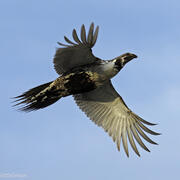
Greater Sage-Grouse Population Monitoring Framework Data Inputs Information Sheet

Greater Sage-Grouse Population Monitoring Framework Data Inputs Information Sheet

To support management decisions, western state wildlife agencies identified the need for a range-wide database that tracks annual counts of greater sage-grouse ( Centrocercus urophasianus; sage-grouse) at leks (breeding sites), recorded since the early 1950s. Researchers at Colorado State University (CSU) and U.S. Geological Survey (USGS) worked with state wildlife agencies to 1) construct this...
Learn More

Greater Sage-Grouse Population Monitoring Framework: Trends Analysis Information Sheet

Land and wildlife managers require accurate estimates of sensitive species’ trends to help guide conservation decisions that maintain biodiversity and promote healthy ecosystems. Accurately assessing greater sage-grouse ( Centrocercus urophasianus; sage-grouse) population trends can be difficult because (1) missing lek counts or incomplete repeat counts, (2) variation in counts of sage-grouse from...
Greater Sage-Grouse Population Monitoring Framework: Trends Analysis Information Sheet

Greater Sage-Grouse Population Monitoring Framework: Trends Analysis Information Sheet

Land and wildlife managers require accurate estimates of sensitive species’ trends to help guide conservation decisions that maintain biodiversity and promote healthy ecosystems. Accurately assessing greater sage-grouse ( Centrocercus urophasianus; sage-grouse) population trends can be difficult because (1) missing lek counts or incomplete repeat counts, (2) variation in counts of sage-grouse from...
Learn More
Was this page helpful?