



Health Risks
Health Risks
Filter Total Items: 104

PFAS Transport, Exposure, and Effects
The team is determining the movement and behavior of per- and poly-fluoroalkyl substances (PFAS) from their sources in the environment, as they move through exposure pathways in ecosystems including watersheds and aquifers, their incorporation into food webs, and molecular to population scale effects on fish and wildlife. These studies are accomplished at a variety of spatial scales from regional...
Toxins and Harmful Algal Blooms Science Team
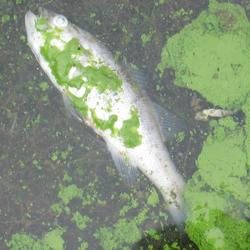
The team develops advanced methods to study factors driving algal toxin production, how and where wildlife or humans are exposed to toxins, and ecotoxicology. That information is used to develop decision tools to understand if toxin exposure leads to adverse health effects in order to protect human and wildlife health.

Scientists Provide an Understanding of Anticoagulant Rodenticide Exposure in Non-Target Bird Species
U.S. Geological Survey scientists and their partners utilize laboratory and field studies and existing information to improve understanding of anticoagulant rodenticide exposure and effects to wild birds.

Advanced PFAS Measurement Methods
Environmental Health Program scientists, in collaboration with other USGS scientists, are developing complementary field and laboratory methods and capabilities to detect and quantify a range of target and nontarget per- and polyfluoroalkyl substances (PFAS) and indicator compounds at low levels (parts per trillion) in a variety of environmental matrices. The PFAS Integrated Science Team is...

Bioaccumulation of Mercury in Fish Varied by Species and Location in the Chesapeake Bay Watershed—Summary of Existing Data and a Roadmap for Integrated Monitoring
Fish mercury data from State monitoring programs and research studies within the Chesapeake Bay were compiled and summarized to provide a comprehensive overview of the variation in fish mercury concentrations among species and habitats within the watershed. These data are put into context with existing health benchmarks for humans, birds, and fish. Scientists also provide a roadmap for an...

How are Mercury Sources Determined?
USGS scientists use innovative isotopic identification methods to determine mercury sources in air, water, sediments, and wildlife.

Satellite Data Used to Estimate and Rank Cyanobacterial Bloom Magnitude in Florida and Ohio Lakes—Developing Tools to Protect Human and Wildlife Health from Cyanotoxin Exposure
Cyanobacterial bloom magnitude during 2003–11 was quantified and ranked in Florida and Ohio lakes with a newly developed modelling tool that allows for the use of multiple satellite data sources and user-defined thresholds. This tool was designed to identify the magnitude of algal blooms, but one metric alone cannot adequately represent the severity of a bloom of interest in terms of toxicity. The...

Mixtures of Algal Toxins Present Prior to and After Formation of Visible Algal Blooms—Science to Inform the Timing of Algal Toxin Exposure
Cyanobacteria with toxin-producing potential, genes indicating an ability for toxin synthesis, or cyanotoxins were present before and after formation of a visible algal bloom in Kabetogama Lake, a popular recreation area in Voyageurs National Park that lies along the border of Minnesota and Canada. The temporal patterns observed in this study indicate that sampling only when there is a visible...

Sublethal Effects of Contaminants in Aquatic Food Webs—Research Challenges and Considerations for Future Studies
U.S. Geological Survey (USGS) and academic scientists partnered to identify challenges and provide considerations for future scientific study designs to advance our understanding of the often subtle sublethal effects of contaminants on individuals, populations, communities, and entire aquatic food webs.

Pilot Study Provides Information on Contaminant Exposure from Tap Water at Residential and Workplace Sites in the United States
The U.S. Geological Survey (USGS), in collaboration with National Institutes of Health, U.S. Environmental Protection Agency, and academia, completed a pilot study to provide information on contaminant exposure from tap water at 26 locations including public and private supplies. Public-supply tap water generally met enforceable standards for those compounds with standards. Samples consisted of...

Novel Approach Improves Understanding of Virus Occurrence in Drinking Water
Waterborne viruses, one of the leading causes of gastrointestinal illnesses, were measured in United States drinking water sources and finished water. Scientists used a combination of measurement and statistical techniques to overcome limitations to quantifying these viruses, thus offering an enhanced method for virus monitoring.
Is Uranium in Water Resources near the Grand Canyon a Health Hazard?
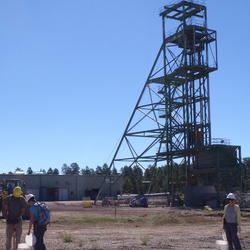
The public is concerned that uranium in natural geologic formations, mine tailings, dusts, water, and other geologic materials can pose a health hazard to humans and wildlife. Our specialized teams of hydrologists, chemists, and geologists working together at a field site in the Grand Canyon region of the United States have shown: Elevated uranium concentrations (above the drinking water standard)...