Version 2.0 of the Cooperative National Geologic Map
Includes Alaska, Hawaii, and most U.S. territories
Includes Alaska, Hawaii, and most U.S. territories
Alaska Park Science
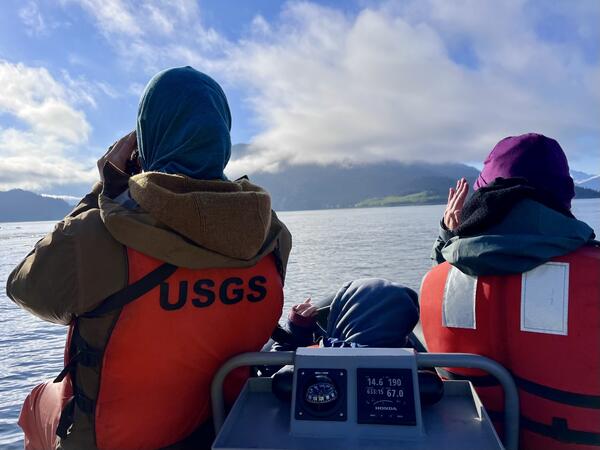
Learn about collaborative research between USGS and the National Park Service
Learn about collaborative research between USGS and the National Park Service
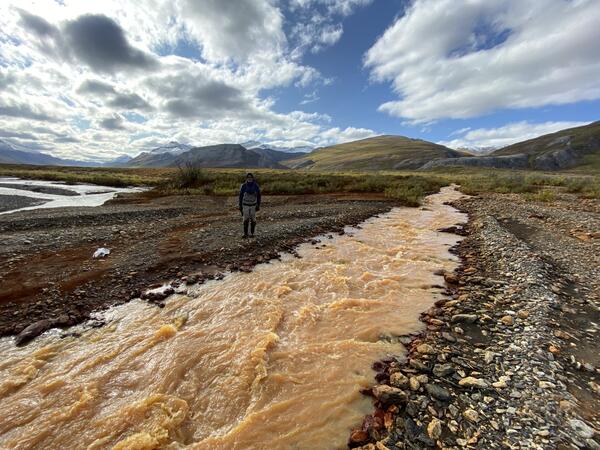
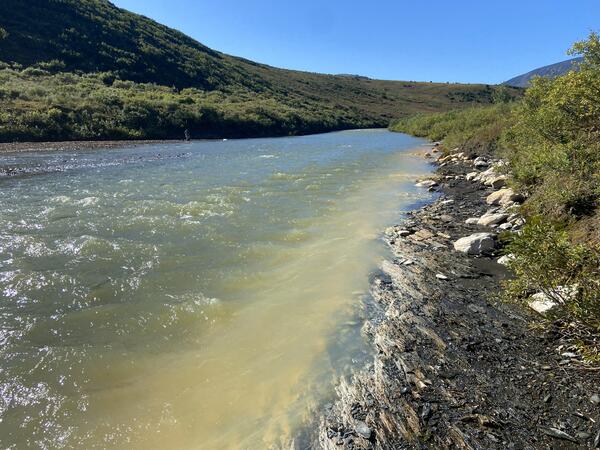
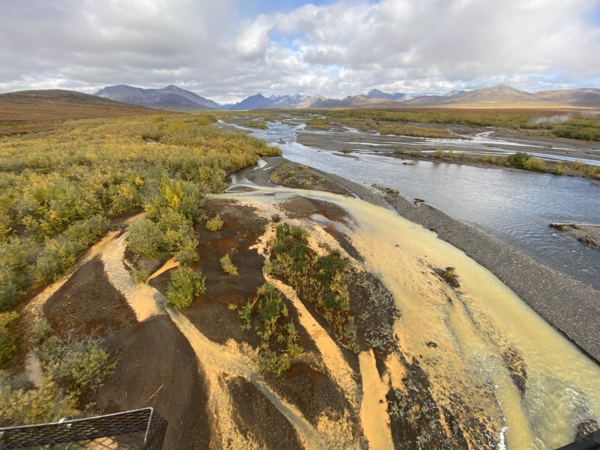
Rusting Rivers: Heavy Metals and Visible Color Changes
Q&A: USGS Ecosystems Provides Objective Science to Manage Lands, Fish, and Wildlife
Alaska Critical Mineral Resource Assessments
Alaska has potential for a wide range of critical minerals including, but not limited to, graphite, lithium, tin, tungsten, rare earth elements, and platinum-group elements.
Alaska has potential for a wide range of critical minerals including, but not limited to, graphite, lithium, tin, tungsten, rare earth elements, and platinum-group elements.
Alaska Science Center
The mission of the Alaska Science Center (ASC) is to provide objective and timely data, information, and research findings about the earth and its flora and fauna to Federal, State, and local resource managers and the public to support sound decisions regarding natural resources, natural hazards, and ecosystems in Alaska and circumpolar regions. We have offices in Anchorage, Juneau, and Fairbanks.
Science Spotlight
Science Spotlight
Geologic Map of Alaska
In January 2016, the U.S. Geological Survey released the first ever digital geologic map of Alaska. The interactive Alaska geologic map reflects more than a century of work and provides a visual context for the abundant mineral and energy resources found throughout the state.
News
September is National Preparedness Month
September is National Preparedness Month
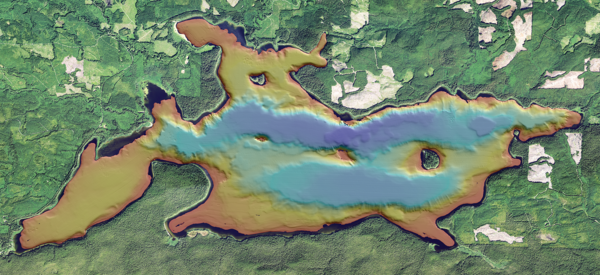
Science Spotlight: USGS Monitoring of Glacial Outburst Flood in Juneau Alaska
Science Spotlight: USGS Monitoring of Glacial Outburst Flood in Juneau Alaska
USGS Scientist and National Weather Service and University of Alaska Southeast colleagues receive Alaska State Legislature Recognition for Response to Juneau’s annual Suicide Basin Outburst Floods
USGS Scientist and National Weather Service and University of Alaska Southeast colleagues receive Alaska State Legislature Recognition for Response to Juneau’s annual Suicide Basin Outburst Floods
Publications
Validating antler- and movement-based estimates of caribou reproduction using video camera collars Validating antler- and movement-based estimates of caribou reproduction using video camera collars
Wildlife agencies invest substantial resources in monitoring ungulate reproductive rates given ongoing concerns about population trends and their implications for management. For barren-ground caribou (Rangifer tarandus) in the North American Arctic, data on parturition and neonate survival have traditionally been collected using visual observations of antler retention and calf presence...
Potential warming-induced changes in stream water sources between proglacial and non-glacial streams, south-central Alaska Potential warming-induced changes in stream water sources between proglacial and non-glacial streams, south-central Alaska
Snow and ice-melt are essential for global water resources. Rising air temperatures are causing vegetation encroachment and shrubification of previously snow- and ice-covered landscapes, and precipitation regimes are changing. Collectively, these changes will likely affect the hydrology of mountain environments, although the exact ways in which the hydrology will change are poorly...
Integrating detrital magnetite geochemistry and (U-Th)/He chronometry as a sediment provenance tool in geologic and metallogenic terranes Integrating detrital magnetite geochemistry and (U-Th)/He chronometry as a sediment provenance tool in geologic and metallogenic terranes
Magnetite is ubiquitous in porphyry Cu systems and in sediment sourcing both barren and mineralized regions, with potential as an indicator mineral in concealed and coarsely-mapped terranes. We develop and test a workflow for integrated geochemistry and (U–Th)/He (He) dating for inferring detrital magnetite (DMt) provenance in these settings. The ca. 70 Ma Taurus porphyry Cu–Mo(–Au)...
Science

Geologic Map of Alaska
In January 2016, the U.S. Geological Survey released the first ever digital geologic map of Alaska. This map reflects more than a century of work and provides a visual context for the abundant mineral and energy resources found throughout the state. The map also is available to use in three different formats: a professional GIS database, a public interactive version via a web browser, and an...

Alaska Mine Waste
Critical minerals are essential to the U.S. economy and national security, have a supply chain that is vulnerable to disruption, and serve an essential function in the manufacturing of many products. Often, critical minerals are found as co- or by-products in deposits mined for precious or base metals.

The Rusting of Arctic Rivers: Freshwater Ecosystems Respond to Rapidly Uptaking Metals
The water quality of streams and rivers in the Arctic is sensitive to rapid climate change and altered disturbance regimes.