Image shows equipment for analysis of targeted and non-targeted organic contaminants at the OGRL located at the KS WSC.
Images
See our science through the images below.
Image shows equipment for analysis of targeted and non-targeted organic contaminants at the OGRL located at the KS WSC.
Northern Arizona University graduate students monitor seedling emergence in a northern Arizona RestoreNet site
Northern Arizona University graduate students monitor seedling emergence in a northern Arizona RestoreNet siteNorthern Arizona University graduate students monitor seedling emergence in a northern Arizona RestoreNet site. Photo by Laura Shriver.
Northern Arizona University graduate students monitor seedling emergence in a northern Arizona RestoreNet site
Northern Arizona University graduate students monitor seedling emergence in a northern Arizona RestoreNet siteNorthern Arizona University graduate students monitor seedling emergence in a northern Arizona RestoreNet site. Photo by Laura Shriver.
A Northern Arizona University graduate student collects soil for RestoreNet greenhouse inoculation experiments
A Northern Arizona University graduate student collects soil for RestoreNet greenhouse inoculation experimentsNorthern Arizona University graduate student Ri Corwin collects soil for greenhouse inoculation experiments. Photo by Laura Shriver.
A Northern Arizona University graduate student collects soil for RestoreNet greenhouse inoculation experiments
A Northern Arizona University graduate student collects soil for RestoreNet greenhouse inoculation experimentsNorthern Arizona University graduate student Ri Corwin collects soil for greenhouse inoculation experiments. Photo by Laura Shriver.
Loʻipūnāwai on the southern coast of Moloka‘i, Hawaiʻi
Loʻipūnāwai on the southern coast of Moloka‘i, HawaiʻiKaupapaloʻi o Kaʻamola
Fish, mussels, and passive samplers in an exposure tank housed inside of a mobile laboratory
Fish, mussels, and passive samplers in an exposure tank housed inside of a mobile laboratoryFathead minnows (Pimephales promelas), pond mussel (Ligumia subrostrata), and passive samplers in an exposure tank housed inside of a mobile laboratory at the legacy fire-training area contaminated by PFAS derived from aqueous film-forming foams on Cape Cod, Massachusetts.
Fish, mussels, and passive samplers in an exposure tank housed inside of a mobile laboratory
Fish, mussels, and passive samplers in an exposure tank housed inside of a mobile laboratoryFathead minnows (Pimephales promelas), pond mussel (Ligumia subrostrata), and passive samplers in an exposure tank housed inside of a mobile laboratory at the legacy fire-training area contaminated by PFAS derived from aqueous film-forming foams on Cape Cod, Massachusetts.
Mail in deceased butterflies, moths, and skippers and help United States Geological Survey(USGS) scientists establish a Lepidoptera Research Collection (LRC). Specimens will help USGS scientists identify contaminants and environmental factors which may be contributing to the decline of insect populations.
This is the instrument laboratory of the Organic Geochemistry Research Laboratory located in the KS WSC.
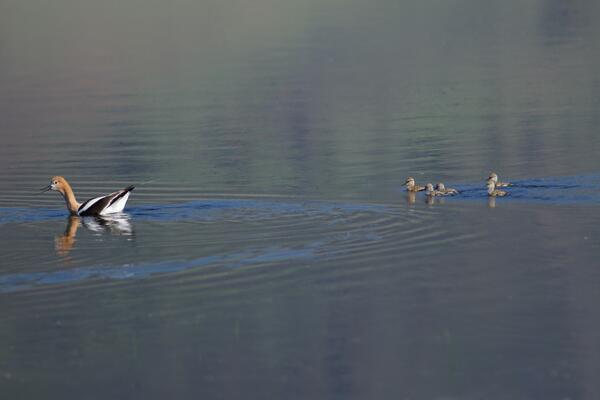
Photograph of Summer Lake Wildlife Area, an important stopping spot for migratory birds on their spring and fall migration flights.
A close up of Sonoran Desert native wildflowers/forbs, including California poppy, lupines, and purple owl's clover
A close up of Sonoran Desert native wildflowers/forbs, including California poppy, lupines, and purple owl's cloverClose up of Sonoran Desert flowers, including California poppy, lupines, and purple owl's clover. Photo by Laura Shriver.
A close up of Sonoran Desert native wildflowers/forbs, including California poppy, lupines, and purple owl's clover
A close up of Sonoran Desert native wildflowers/forbs, including California poppy, lupines, and purple owl's cloverClose up of Sonoran Desert flowers, including California poppy, lupines, and purple owl's clover. Photo by Laura Shriver.
Northern Rocky Mountain Science Center scientist examining a snow sample while standing in a snow pit to better understand snowpack characteristics that lead to avalanches.
Biologists from RAMPS and McDowell Sonoran Preserve monitor a RestoreNet site in the Sonoran Desert
Biologists from RAMPS and McDowell Sonoran Preserve monitor a RestoreNet site in the Sonoran DesertBiologists from RAMPS and McDowell Sonoran Preserve monitor a RestoreNet restoration site in the Sonoran Desert. Photo by Laura Shriver.
Biologists from RAMPS and McDowell Sonoran Preserve monitor a RestoreNet site in the Sonoran Desert
Biologists from RAMPS and McDowell Sonoran Preserve monitor a RestoreNet site in the Sonoran DesertBiologists from RAMPS and McDowell Sonoran Preserve monitor a RestoreNet restoration site in the Sonoran Desert. Photo by Laura Shriver.
Purple owl's clover blooming at a Sonoran Desert RestoreNet site
Purple owl's clover blooming at a Sonoran Desert RestoreNet siteThe RestoreNet plot at McDowell Sonoran Preserve was surrounded by blooming native wildflowers, including purple owl's clover (Castillejia exserta). Photo by Laura Shriver.
Purple owl's clover blooming at a Sonoran Desert RestoreNet site
Purple owl's clover blooming at a Sonoran Desert RestoreNet siteThe RestoreNet plot at McDowell Sonoran Preserve was surrounded by blooming native wildflowers, including purple owl's clover (Castillejia exserta). Photo by Laura Shriver.
Sphaeralcea ambigua thriving at a Sonoran Desert RestoreNet site
Sphaeralcea ambigua thriving at a Sonoran Desert RestoreNet siteSphaeralcea ambigua, a native plant seeded during RestoreNet experiments, thriving at the Lake Pleasant RestoreNet site in the Sonoran Desert. Photo by Laura Shriver.
Sphaeralcea ambigua thriving at a Sonoran Desert RestoreNet site
Sphaeralcea ambigua thriving at a Sonoran Desert RestoreNet siteSphaeralcea ambigua, a native plant seeded during RestoreNet experiments, thriving at the Lake Pleasant RestoreNet site in the Sonoran Desert. Photo by Laura Shriver.
Image of numerous bottles of water used increasingly as an alternative drinking water source.
A graphic created for the 2023 National Invasive Species Awareness Week social media campaign
Climate Connections: Avian Malaria & Hawaiian Forest Birds
Climate Connections: Avian Malaria & Hawaiian Forest BirdsAn overview of the effects of climate change on the spread of avian malaria and its subsequent impacts on Hawaiian forest birds.
Climate Connections: Avian Malaria & Hawaiian Forest Birds
Climate Connections: Avian Malaria & Hawaiian Forest BirdsAn overview of the effects of climate change on the spread of avian malaria and its subsequent impacts on Hawaiian forest birds.
Ecosystems Land Change Science Program Word Cloud 2023
Ecosystems Land Change Science Program Word Cloud 2023Word cloud of science keywords from the USGS Ecosystems Land Change Science Program. Larger words were submitted more often and from multiple projects whereas smaller words were submitted less frequently. Words in the word cloud, listed in order from largest (used most often) to smallest (used least often) and the number of times each were submitted are below:
Ecosystems Land Change Science Program Word Cloud 2023
Ecosystems Land Change Science Program Word Cloud 2023Word cloud of science keywords from the USGS Ecosystems Land Change Science Program. Larger words were submitted more often and from multiple projects whereas smaller words were submitted less frequently. Words in the word cloud, listed in order from largest (used most often) to smallest (used least often) and the number of times each were submitted are below:
Ecosystems Land Change Science Program Word Cloud 2023
Ecosystems Land Change Science Program Word Cloud 2023Word cloud of science keywords from the USGS Ecosystems Land Change Science Program. Larger words were submitted more often and from multiple projects whereas smaller words were submitted less frequently. Words in the word cloud, listed in order from largest (used most often) to smallest (used least often) and the number of times each were submitted are below:
Ecosystems Land Change Science Program Word Cloud 2023
Ecosystems Land Change Science Program Word Cloud 2023Word cloud of science keywords from the USGS Ecosystems Land Change Science Program. Larger words were submitted more often and from multiple projects whereas smaller words were submitted less frequently. Words in the word cloud, listed in order from largest (used most often) to smallest (used least often) and the number of times each were submitted are below:
RestoreNet ConMod with flowers in the Sonoran Desert
RestoreNet ConMod with flowers in the Sonoran DesertDiverse plants growing in a connectivity modified (ConMod) treatment in the Sonoran Desert. Photo by Molly McCormick.
RestoreNet ConMod with flowers in the Sonoran Desert
RestoreNet ConMod with flowers in the Sonoran DesertDiverse plants growing in a connectivity modified (ConMod) treatment in the Sonoran Desert. Photo by Molly McCormick.
This USGS map shows the number of PFAS detected in tap water samples from select sites across the nation. The findings are based on a USGS study of samples taken between 2016 and 2021 from private and public supplies at 716 locations. The map does not represent the only locations in the U.S. with PFAS.
Donovan Maude, University of Idaho graduate student, capturing white sturgeon
Donovan Maude, University of Idaho graduate student, capturing white sturgeonDonovan Maude, University of Idaho graduate student, capturing white sturgeon (Acipenser transmontanus), Snake River, Idaho. White Sturgeon is an important species, unfortunately, little is known about their population ecology and whether current monitoring metrics are adequate for evaluating management and conservation success. We are working with the U.S.
Donovan Maude, University of Idaho graduate student, capturing white sturgeon
Donovan Maude, University of Idaho graduate student, capturing white sturgeonDonovan Maude, University of Idaho graduate student, capturing white sturgeon (Acipenser transmontanus), Snake River, Idaho. White Sturgeon is an important species, unfortunately, little is known about their population ecology and whether current monitoring metrics are adequate for evaluating management and conservation success. We are working with the U.S.