



Permanent Site: A1 West Transect; Depth: 8.5 Meters (28.0 Feet); Distance from river mouth: 1.9 Kilometers (1.2 Miles) West; Pre/Post Dam Removal: 2 years post-dam removal; Lat/Long: 48.13870775, -123.586203; Site Description: Transect is in eastern part of Freshwater Bay. Sediment is primarily sand/sandy mud with patches of boulders. Seaweeds are absent this year.
Videos
See our science in action.
Filter Total Items: 550

A1 West Transect – 2013
Permanent Site: A1 West Transect; Depth: 8.5 Meters (28.0 Feet); Distance from river mouth: 1.9 Kilometers (1.2 Miles) West; Pre/Post Dam Removal: 2 years post-dam removal; Lat/Long: 48.13870775, -123.586203; Site Description: Transect is in eastern part of Freshwater Bay. Sediment is primarily sand/sandy mud with patches of boulders. Seaweeds are absent this year.

F1 West Transect – 2013
Permanent Site: F1 West Transect; Depth: 6.5 Meters (21.2 Feet); Distance from river mouth: 1.3 Kilometers (0.8 Miles) east; Pre/Post Dam Removal: 2 years post-dam removal; Lat/Long: 48.15292999, -123.55078602; Site Description: This is a shallow site with gravel/cobble substrate and an occasional boulder. Woody debris is present (0:14, 0:24seconds).
Permanent Site: F1 West Transect; Depth: 6.5 Meters (21.2 Feet); Distance from river mouth: 1.3 Kilometers (0.8 Miles) east; Pre/Post Dam Removal: 2 years post-dam removal; Lat/Long: 48.15292999, -123.55078602; Site Description: This is a shallow site with gravel/cobble substrate and an occasional boulder. Woody debris is present (0:14, 0:24seconds).

F1 East Transect – 2013
Permanent Site: F1 East Transect; Depth: 6.3 Meters (20.7 Feet); Distance from river mouth: 1.3 Kilometers (0.8 Miles) east; Pre/Post Dam Removal: 2 years post-dam removal; Lat/Long: 48.15292999, -123.55011402; Site Description: This is a shallow site with gravel/cobble substrate. Woody debris is present (0:16, 0:38 seconds).
Permanent Site: F1 East Transect; Depth: 6.3 Meters (20.7 Feet); Distance from river mouth: 1.3 Kilometers (0.8 Miles) east; Pre/Post Dam Removal: 2 years post-dam removal; Lat/Long: 48.15292999, -123.55011402; Site Description: This is a shallow site with gravel/cobble substrate. Woody debris is present (0:16, 0:38 seconds).

C1 West Transect – 2013
Permanent Site: C1 West Transect; Depth: Meters (Feet); Distance from river mouth: 0.7 Kilometers (0.4 Miles); Pre/Post Dam Removal: 2 years post-dam removal; Lat/Long: 48.14525225,-123.57361291; Site Description: Substrate is entirely sand. All seaweeds are absent. Woody debris is scattered along entire transect (0:21 0:34, 0:59 seconds).
Permanent Site: C1 West Transect; Depth: Meters (Feet); Distance from river mouth: 0.7 Kilometers (0.4 Miles); Pre/Post Dam Removal: 2 years post-dam removal; Lat/Long: 48.14525225,-123.57361291; Site Description: Substrate is entirely sand. All seaweeds are absent. Woody debris is scattered along entire transect (0:21 0:34, 0:59 seconds).

F2 West Transect – 2013
Permanent Site: F2 West Transect; Depth: 12.3 Meters (40.3 Feet); Distance from river mouth: 1.5 Kilometers (0.9 Miles) east; Pre/Post Dam Removal: 2 years post-dam removal; Lat/Long: 48.15672004,-123.55036603; Site Description: Substrate is mainly gravel mixed with a little cobble and an occasional boulder.
Permanent Site: F2 West Transect; Depth: 12.3 Meters (40.3 Feet); Distance from river mouth: 1.5 Kilometers (0.9 Miles) east; Pre/Post Dam Removal: 2 years post-dam removal; Lat/Long: 48.15672004,-123.55036603; Site Description: Substrate is mainly gravel mixed with a little cobble and an occasional boulder.

K1 East Transect – 2013
Permanent Site: K1 East Transect; Depth: 6.2 Meters (20.4 Feet) & 6.6 Meters (21.5 Feet); Distance from river mouth: 4.5 Kilometers (2.8 Miles) east; Pre/Post Dam Removal: 2 years post-dam removal; Lat/Long: 48.13592923,-123.5101581; Site Description: This is a shallow site. Sediment is a gravel/sand mixture.
Permanent Site: K1 East Transect; Depth: 6.2 Meters (20.4 Feet) & 6.6 Meters (21.5 Feet); Distance from river mouth: 4.5 Kilometers (2.8 Miles) east; Pre/Post Dam Removal: 2 years post-dam removal; Lat/Long: 48.13592923,-123.5101581; Site Description: This is a shallow site. Sediment is a gravel/sand mixture.

K1 West Transect – 2013
Permanent Site: K1 West Transect; Depth: 5.8 Meters (19 Feet) & 5.6 Meters (18.4 Feet); Distance from river mouth: 4.5 Kilometers (2.8 Miles) east; Pre/Post Dam Removal: 2 years post-dam removal; Lat/Long: 48.13592923,-123.51082988; Site Description: This is a shallow site. Sediment is a gravel/sand mixture.
Permanent Site: K1 West Transect; Depth: 5.8 Meters (19 Feet) & 5.6 Meters (18.4 Feet); Distance from river mouth: 4.5 Kilometers (2.8 Miles) east; Pre/Post Dam Removal: 2 years post-dam removal; Lat/Long: 48.13592923,-123.51082988; Site Description: This is a shallow site. Sediment is a gravel/sand mixture.
Climate, Water Quality, Toxic Blooms of Golden Alga in Texas
Climate, Water Quality, Toxic Blooms of Golden Alga in TexasThis webinar, Climate, Water Quality, Toxic Blooms of Golden Alga in Texas, was presented by Reynaldo Patino from the USGS Texas Cooperative Fish and Wildlife Research Unit.
By
Climate, Water Quality, Toxic Blooms of Golden Alga in Texas
Climate, Water Quality, Toxic Blooms of Golden Alga in TexasThis webinar, Climate, Water Quality, Toxic Blooms of Golden Alga in Texas, was presented by Reynaldo Patino from the USGS Texas Cooperative Fish and Wildlife Research Unit.
By

A2 East Transect – 2013
Permanent Site: A2 East Transect; Depth: 12.8 Meters (Feet 42); Distance from river mouth: Kilometers 1.8 (1.1 Miles); Pre/Post Dam Removal: 2 years post-dam removal; Lat/Long: 48.14130295, -123.58766124; Site Description: One of our deeper sites at over 40 feet. Sediment is primarily sand/sandy mud. Seaweeds are absent this year.
Permanent Site: A2 East Transect; Depth: 12.8 Meters (Feet 42); Distance from river mouth: Kilometers 1.8 (1.1 Miles); Pre/Post Dam Removal: 2 years post-dam removal; Lat/Long: 48.14130295, -123.58766124; Site Description: One of our deeper sites at over 40 feet. Sediment is primarily sand/sandy mud. Seaweeds are absent this year.

H1 East Transect – 2014
Permanent Site: H1 East Transect; Depth: 5.5 Meters (Feet 17.8); Distance from river mouth: 2.4 Kilometers (1.5 Miles) east; Pre/Post Dam Removal: 3 years post-dam removal; Lat/Long: 48.1479177,-123.53472865; Site Description: This is a shallow site and one of the farthest removed from the effects of the sediment plume outside of the control sites.
Permanent Site: H1 East Transect; Depth: 5.5 Meters (Feet 17.8); Distance from river mouth: 2.4 Kilometers (1.5 Miles) east; Pre/Post Dam Removal: 3 years post-dam removal; Lat/Long: 48.1479177,-123.53472865; Site Description: This is a shallow site and one of the farthest removed from the effects of the sediment plume outside of the control sites.
Can Camouflage Keep up With Climate Change?
This presentation, ‘Can Camouflage Keep up With Climate Change?
By
This presentation, ‘Can Camouflage Keep up With Climate Change?
By
Ecological Monitoring at Idaho's Silver Creek Preserve
Ecological Monitoring at Idaho's Silver Creek PreserveThis time lapse video, composed of daily still photographs, shows a dry year in the life of The Nature Conservancy's Silver Creek Preserve near Picabo, Idaho. Climate variability and other factors raise concerns about elevated stream temperatures that stress fish and other aquatic life.
By
Ecological Monitoring at Idaho's Silver Creek Preserve
Ecological Monitoring at Idaho's Silver Creek PreserveThis time lapse video, composed of daily still photographs, shows a dry year in the life of The Nature Conservancy's Silver Creek Preserve near Picabo, Idaho. Climate variability and other factors raise concerns about elevated stream temperatures that stress fish and other aquatic life.
By
Bat Investigation of Turbine Nacelle Area
This clip shows a Hawaiian hoary bat (Lasiurus cinereus semotus)flying near a turbine as imaged with a thermal camera. The recording shows the bat investigating the area immediately around the turbine nacelle. This activity is of particular interest to researchers because it provides a window into behavior that places bats at risk from turbine strikes.
By
This clip shows a Hawaiian hoary bat (Lasiurus cinereus semotus)flying near a turbine as imaged with a thermal camera. The recording shows the bat investigating the area immediately around the turbine nacelle. This activity is of particular interest to researchers because it provides a window into behavior that places bats at risk from turbine strikes.
By

Impacts of Melting Glaciers on Gulf of Alaska
For questions about this project, please contact the speaker, John Crusius at jcrusius@usgs.gov, (206) 543-6978. The northern Gulf of Alaska (GoA) maintains a productive ecosystem, with commercially important fisheries.
By
For questions about this project, please contact the speaker, John Crusius at jcrusius@usgs.gov, (206) 543-6978. The northern Gulf of Alaska (GoA) maintains a productive ecosystem, with commercially important fisheries.
By
The Nations Fish Habitat in a Changing Climate Part 2
The Nations Fish Habitat in a Changing Climate Part 2The effects of climate change on fish habitat will be scale-and system-dependent. Our work demonstrates how climate change affects fish habitat nationwide, and stream flow, water temperature, and coldwater lakes in the Upper Midwest. Projected changes in fish habitat varied across ecoregions nationally.
By
The Nations Fish Habitat in a Changing Climate Part 2
The Nations Fish Habitat in a Changing Climate Part 2The effects of climate change on fish habitat will be scale-and system-dependent. Our work demonstrates how climate change affects fish habitat nationwide, and stream flow, water temperature, and coldwater lakes in the Upper Midwest. Projected changes in fish habitat varied across ecoregions nationally.
By
Fish Habitat and Climate Change Part 1
The effects of climate change on freshwater fishes and their habitats will likely not be consistent among species or habitats so region or species-specific effects of climate change may help managers focus conservation efforts.
By
The effects of climate change on freshwater fishes and their habitats will likely not be consistent among species or habitats so region or species-specific effects of climate change may help managers focus conservation efforts.
By
A Land of Flowers on a Latitude of Deserts
This webinar gives an overview of the preliminary results from the project "La Florida: A Land of Flowers on a Latitude of Deserts". This webinar is a part of the "Climate Change and Management Webinar series" that is a partnership between the USGS National Climate Change and Wildlife Science Center and the FWS National Conservation Training Center.
By
This webinar gives an overview of the preliminary results from the project "La Florida: A Land of Flowers on a Latitude of Deserts". This webinar is a part of the "Climate Change and Management Webinar series" that is a partnership between the USGS National Climate Change and Wildlife Science Center and the FWS National Conservation Training Center.
By
Team Manatee: A Community Working Together
Team Manatee: A Community Working Together to Assess and Protect Manatee Health and Habitat
By
Team Manatee: A Community Working Together to Assess and Protect Manatee Health and Habitat
By
Influence of Changing Climate on Inland Native Trout
Influence of Changing Climate on Inland Native TroutThis project addresses the need for more complete evidence and more accurate vulnerability assessments to show how salmonid populations are adjusting to climate change.
By
Influence of Changing Climate on Inland Native Trout
Influence of Changing Climate on Inland Native TroutThis project addresses the need for more complete evidence and more accurate vulnerability assessments to show how salmonid populations are adjusting to climate change.
By
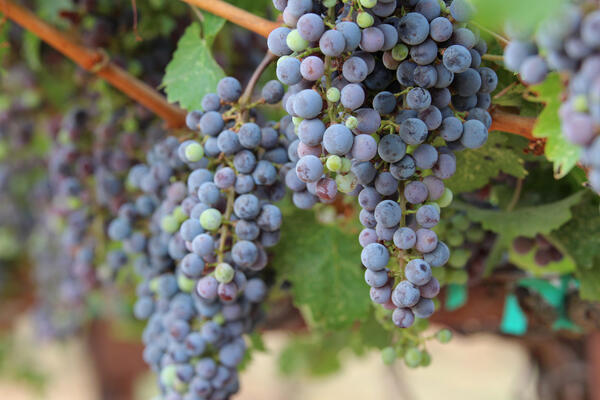
The Science of Good Taste -- Geology, Wine and Food
The Science of Good Taste -- Geology, Wine and FoodNovember public lecture, "The Science of Good Taste -- Geology, Wine and Food"presented by Larry Meinert, Ph.D.
The Science of Good Taste -- Geology, Wine and Food
The Science of Good Taste -- Geology, Wine and FoodNovember public lecture, "The Science of Good Taste -- Geology, Wine and Food"presented by Larry Meinert, Ph.D.
Bat Activity Behind Turbine Rotor Swept Area
This clip shows a bat (not identified to species) flying near a turbine as imaged with a thermal camera. The recording shows the bat making numerous repeated passes behind the rotor swept area of a turbine. This activity is of particular interest to researchers because it provides a window into behavior that places bats at risk from turbine strikes.
By
This clip shows a bat (not identified to species) flying near a turbine as imaged with a thermal camera. The recording shows the bat making numerous repeated passes behind the rotor swept area of a turbine. This activity is of particular interest to researchers because it provides a window into behavior that places bats at risk from turbine strikes.
By