



DSAS version 6.2 combines all prior functionality including: regression metrics and distance measurements; FDGC-consistent metadata; a summary report; shoreline forecasting; the application of the proxy-datum bias; data editing options; and enhanced data visualization options.
Multimedia
The Coastal and Marine Hazards and Resources Program shares a wide range of resources to help explain and illustrate scientific concepts, our scientific activities, expertise, technology, tools, and other educational resources. Through newsletters, multimedia resources, special events, and other products, you can learn more about the many ways our science supports the Nation.
Images
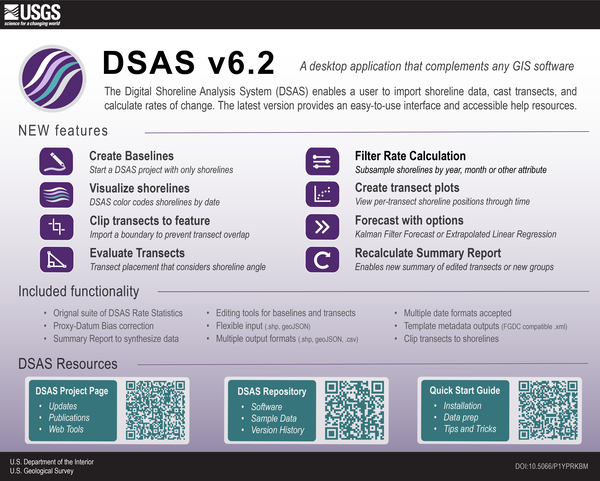
DSAS v6.2
DSAS version 6.2 combines all prior functionality including: regression metrics and distance measurements; FDGC-consistent metadata; a summary report; shoreline forecasting; the application of the proxy-datum bias; data editing options; and enhanced data visualization options.
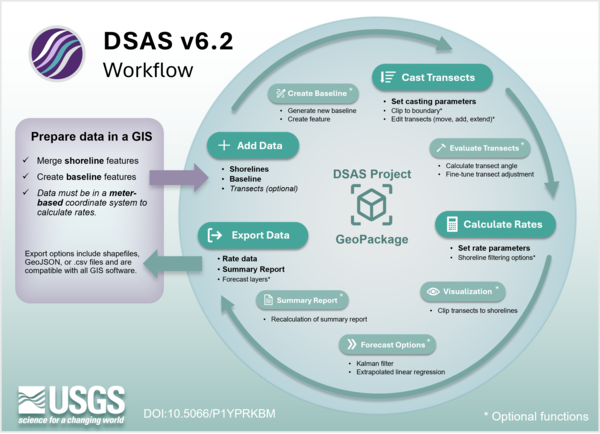
DSAS v6.2 workflow
DSAS version 6.2 combines all prior functionality including: regression metrics and distance measurements; FDGC-consistent metadata; a summary report; shoreline forecasting; the application of the proxy-datum bias; data editing options; and enhanced data visualization options.
DSAS version 6.2 combines all prior functionality including: regression metrics and distance measurements; FDGC-consistent metadata; a summary report; shoreline forecasting; the application of the proxy-datum bias; data editing options; and enhanced data visualization options.
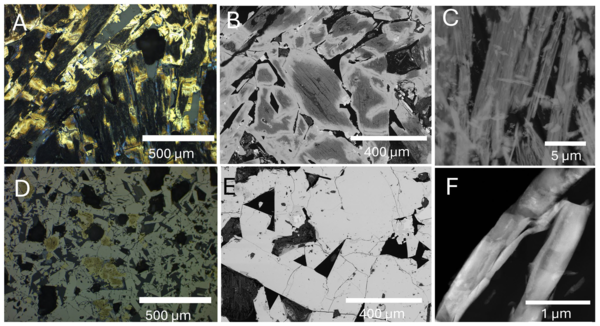
Petrographic, SEM, and STEM images of bladed marcasite and bladed pyrrhotite
Petrographic, SEM, and STEM images of bladed marcasite and bladed pyrrhotitePetrographic (A, D) SEM (B, E) and STEM (C, F) images of bladed marcasite (A, B,C) and bladed pyrrhotite (D,E,F). The petrographic images are reflected light under plane polarization. The brassy minerals in D are isocubanite being replaced by chalcopyrite.
Petrographic, SEM, and STEM images of bladed marcasite and bladed pyrrhotite
Petrographic, SEM, and STEM images of bladed marcasite and bladed pyrrhotitePetrographic (A, D) SEM (B, E) and STEM (C, F) images of bladed marcasite (A, B,C) and bladed pyrrhotite (D,E,F). The petrographic images are reflected light under plane polarization. The brassy minerals in D are isocubanite being replaced by chalcopyrite.
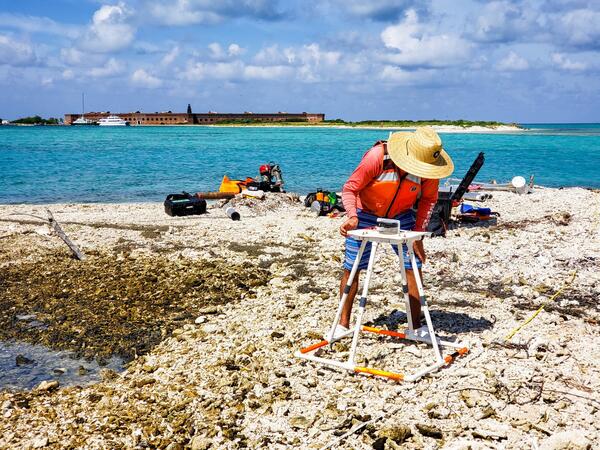
SPCMSC Scientists Perform Fieldwork on the Coral-Rubble Keys Protecting Dry Tortugas National Park
SPCMSC Scientists Perform Fieldwork on the Coral-Rubble Keys Protecting Dry Tortugas National ParkSPCMSC scientist Anastasios Stathakopoulos performs surveys on the coral-rubble keys in Dry Tortugas National Park. View is looking west from Long Key with Fort Jefferson in the background.
SPCMSC Scientists Perform Fieldwork on the Coral-Rubble Keys Protecting Dry Tortugas National Park
SPCMSC Scientists Perform Fieldwork on the Coral-Rubble Keys Protecting Dry Tortugas National ParkSPCMSC scientist Anastasios Stathakopoulos performs surveys on the coral-rubble keys in Dry Tortugas National Park. View is looking west from Long Key with Fort Jefferson in the background.
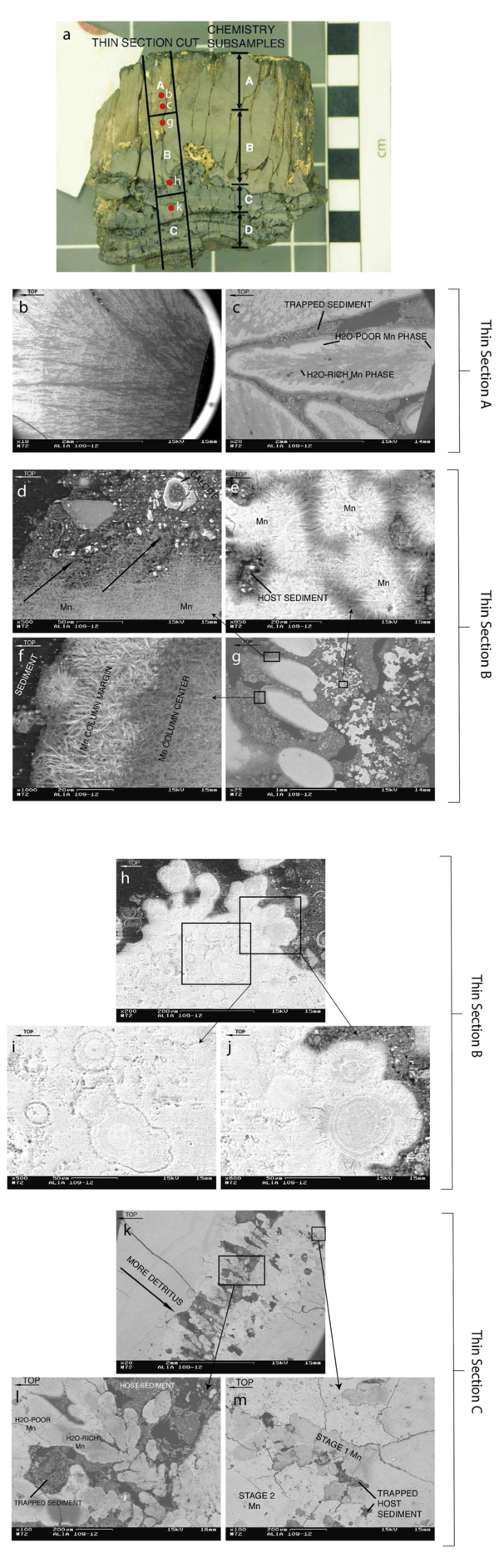
A stratigraphic scanning electron microscope tour showing the evolution of manganese-oxide mineralization of host sediment
A stratigraphic scanning electron microscope tour showing the evolution of manganese-oxide mineralization of host sedimentA stratigraphic scanning electron microscope tour showing the evolution of manganese-oxide mineralization of host sediment.
A stratigraphic scanning electron microscope tour showing the evolution of manganese-oxide mineralization of host sediment
A stratigraphic scanning electron microscope tour showing the evolution of manganese-oxide mineralization of host sedimentA stratigraphic scanning electron microscope tour showing the evolution of manganese-oxide mineralization of host sediment.
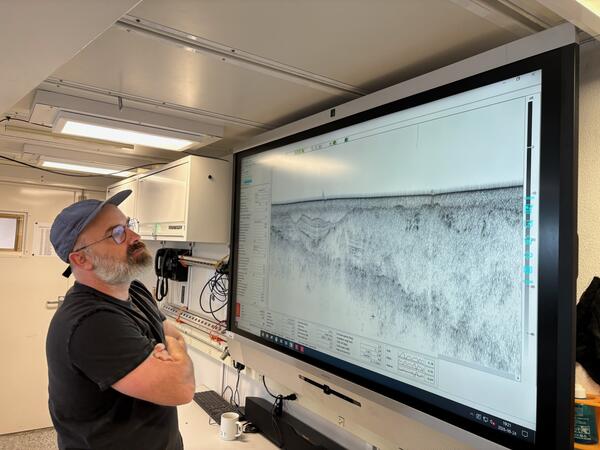
Search for a Fallen Meteorite
Eric Moore studies subbottom profile data as they scroll across the large screen in the R/V Neil Armstrong's dry lab. Eric is looking at a portion of the seafloor where meteorites were predicted to land.
Eric Moore studies subbottom profile data as they scroll across the large screen in the R/V Neil Armstrong's dry lab. Eric is looking at a portion of the seafloor where meteorites were predicted to land.
Videos
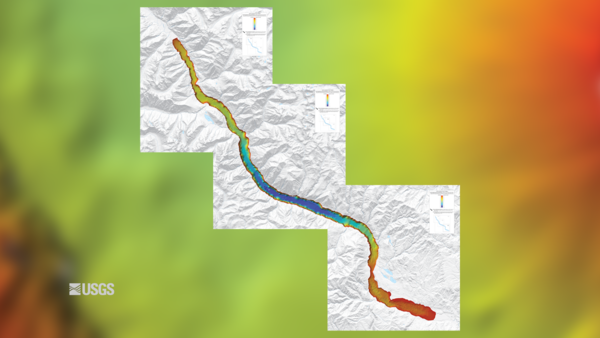
Lake Chelan Mapping and Sediment Coring
In 2023, scientists with the USGS Pacific Coastal and Marine Science Center completed a 3-week field operation in Lake Chelan, Washington, the third deepest lake in the conterminous United States, to acquire sediment cores, high-resolution bathymetry data, and chirp sub-bottom profiles.
In 2023, scientists with the USGS Pacific Coastal and Marine Science Center completed a 3-week field operation in Lake Chelan, Washington, the third deepest lake in the conterminous United States, to acquire sediment cores, high-resolution bathymetry data, and chirp sub-bottom profiles.
Lake Chelan Mapping and Sediment Coring (AD)
In 2023, scientists with the USGS Pacific Coastal and Marine Science Center completed a 3-week field operation in Lake Chelan, Washington, the third deepest lake in the conterminous United States, to acquire sediment cores, high-resolution bathymetry data, and chirp sub-bottom profiles.
In 2023, scientists with the USGS Pacific Coastal and Marine Science Center completed a 3-week field operation in Lake Chelan, Washington, the third deepest lake in the conterminous United States, to acquire sediment cores, high-resolution bathymetry data, and chirp sub-bottom profiles.
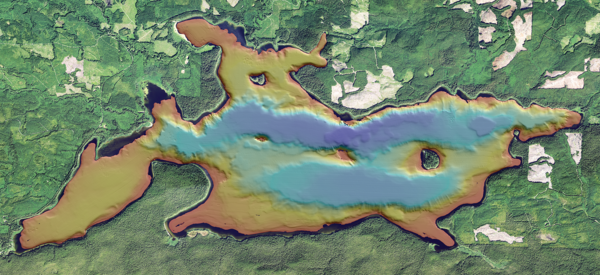
Ozette Lake Paleoseismology
Ozette Lake is located above the locked portion of the northern Cascadia megathrust and is relatively isolated from other active faults.
Ozette Lake is located above the locked portion of the northern Cascadia megathrust and is relatively isolated from other active faults.
Ozette Lake Paleoseismology (AD)
Ozette Lake is located above the locked portion of the northern Cascadia megathrust and is relatively isolated from other active faults.
Ozette Lake is located above the locked portion of the northern Cascadia megathrust and is relatively isolated from other active faults.
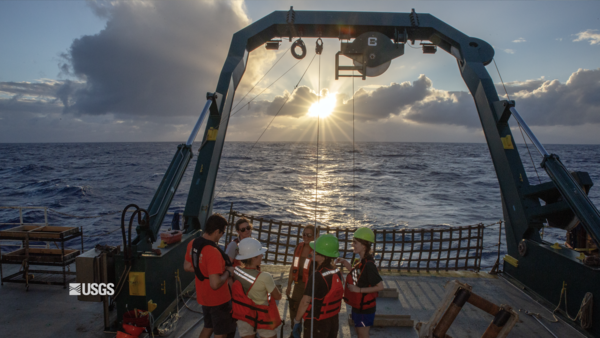
Hawai'i Abyssal Nodules Expedition (AD)
In Fall 2025 the Hawaiʻi Abyssal Nodules and Associated Ecosystems Expedition, led by USGS scientists, will investigate the geology, minerals, and environmental setting of the deep seabed offshore Moku o Keawe (Hawaiʻi Island) in the U.S. Exclusive Economic Zone. This work is part of ongoing collaborative efforts with BOEM and NOAA.
In Fall 2025 the Hawaiʻi Abyssal Nodules and Associated Ecosystems Expedition, led by USGS scientists, will investigate the geology, minerals, and environmental setting of the deep seabed offshore Moku o Keawe (Hawaiʻi Island) in the U.S. Exclusive Economic Zone. This work is part of ongoing collaborative efforts with BOEM and NOAA.

USGS Coastal and Marine Field Operations (AD)
To conduct the science needed to understand coastal and marine geohazards, support habitat and resource management, and monitor how these environments change over time, the USGS Coastal and Marine Hazards and Resources Program relies on engineering, mechanical, and electronics expertise for field operations along the coast, in the nearshore environment, and in the d
To conduct the science needed to understand coastal and marine geohazards, support habitat and resource management, and monitor how these environments change over time, the USGS Coastal and Marine Hazards and Resources Program relies on engineering, mechanical, and electronics expertise for field operations along the coast, in the nearshore environment, and in the d
Webcams

Sand Key, Florida
Most recent time-averaged image from Sand Key, Florida. The images are used to examine a range of coastal processes including shoreline position, the presence of an offshore sandbar, and the extent of wave runup on the beach. Camera hosted by Dan's Island Condo.
Most recent time-averaged image from Sand Key, Florida. The images are used to examine a range of coastal processes including shoreline position, the presence of an offshore sandbar, and the extent of wave runup on the beach. Camera hosted by Dan's Island Condo.

Madeira Beach
A coastal camera located on Medeira Beach, Florida near the Shoreline Island Resort.
A coastal camera located on Medeira Beach, Florida near the Shoreline Island Resort.

Time-averaged image at Madeira Beach, Florida, Camera 2
Time-averaged image at Madeira Beach, Florida, Camera 2Time-averaged images, which represent the time-mean of all the images collected during a video, are used to identify areas where waves are breaking, which show up as bright white bands in the image.
Time-averaged image at Madeira Beach, Florida, Camera 2
Time-averaged image at Madeira Beach, Florida, Camera 2Time-averaged images, which represent the time-mean of all the images collected during a video, are used to identify areas where waves are breaking, which show up as bright white bands in the image.
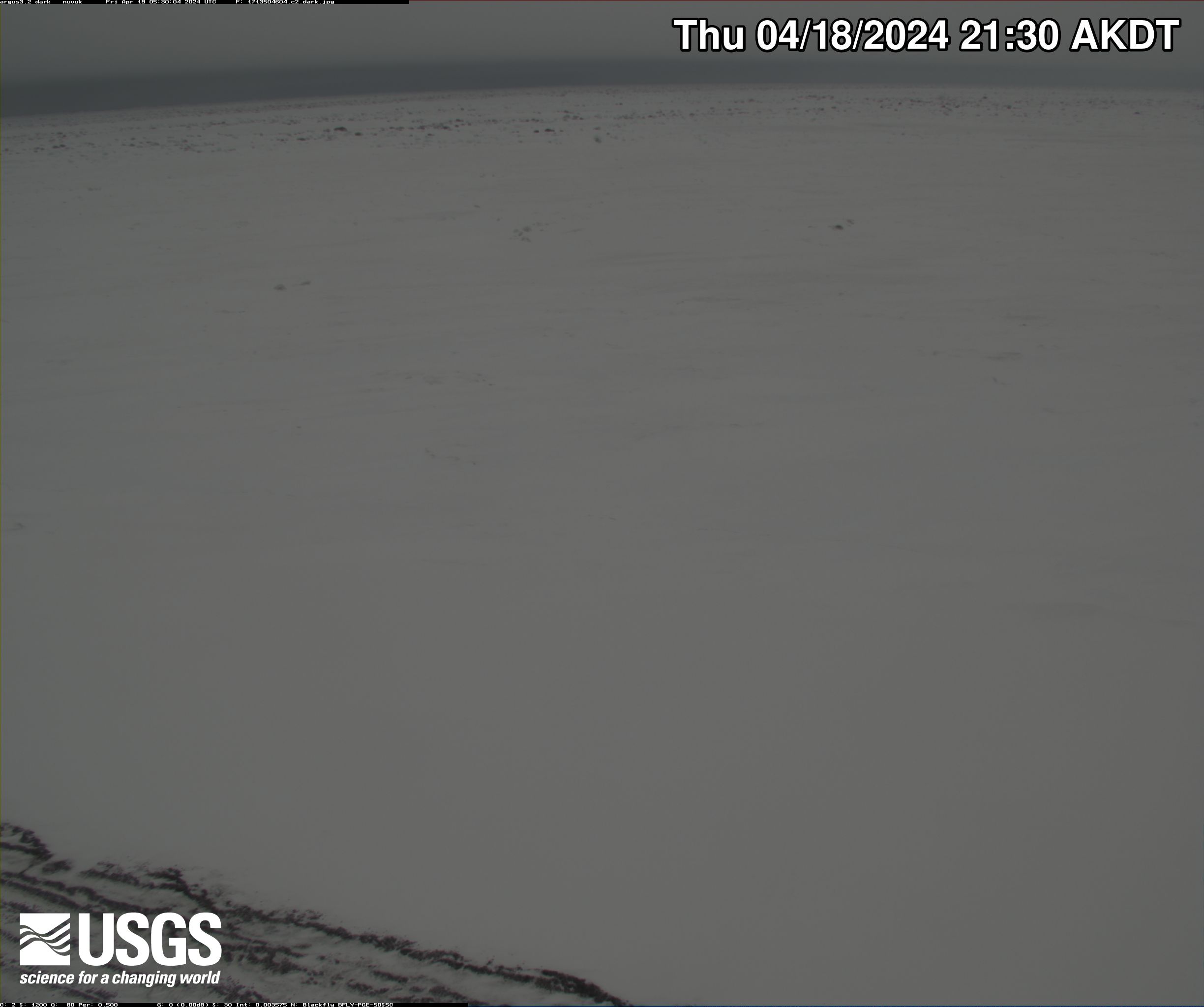
Nuvuk video camera 2 dark image
Two video cameras are installed atop a utility pole near the northernmost point of land in the United States at Nuvuk (Point Barrow), Alaska. The cameras point northwest toward the Arctic Ocean and the boundary between the Chukchi and Beaufort Seas. Every half hour during daylight hours, the cameras collect snapshots and video for 10 minutes.
Two video cameras are installed atop a utility pole near the northernmost point of land in the United States at Nuvuk (Point Barrow), Alaska. The cameras point northwest toward the Arctic Ocean and the boundary between the Chukchi and Beaufort Seas. Every half hour during daylight hours, the cameras collect snapshots and video for 10 minutes.

Nuvuk video camera 2 bright image
Two video cameras are installed atop a utility pole near the northernmost point of land in the United States at Nuvuk (Point Barrow), Alaska. The cameras point northwest toward the Arctic Ocean and the boundary between the Chukchi and Beaufort Seas. Every half hour during daylight hours, the cameras collect snapshots and video for 10 minutes.
Two video cameras are installed atop a utility pole near the northernmost point of land in the United States at Nuvuk (Point Barrow), Alaska. The cameras point northwest toward the Arctic Ocean and the boundary between the Chukchi and Beaufort Seas. Every half hour during daylight hours, the cameras collect snapshots and video for 10 minutes.

Nuvuk video camera 1 dark image
Two video cameras are installed atop a utility pole near the northernmost point of land in the United States at Nuvuk (Point Barrow), Alaska. The cameras point northwest toward the Arctic Ocean and the boundary between the Chukchi and Beaufort Seas. Every half hour during daylight hours, the cameras collect snapshots and video for 10 minutes.
Two video cameras are installed atop a utility pole near the northernmost point of land in the United States at Nuvuk (Point Barrow), Alaska. The cameras point northwest toward the Arctic Ocean and the boundary between the Chukchi and Beaufort Seas. Every half hour during daylight hours, the cameras collect snapshots and video for 10 minutes.