



Avian Influenza Research
Avian Influenza: Research by the USGS and Partners
Since Public Law 109-148, USGS has partnered with state and federal agencies to conduct science to support the national response to highly pathogenic avian influenza (HPAI). In 2014, the first reports of HPAI in US wild birds came from USGS cause-of-death investigations confirmed by the USDA.
Avian influenza is a global viral disease that is threatening wildlife, agriculture, and human health. Avian influenza viruses occur naturally in wild birds such as ducks, geese, swans, and gulls. The traditional view was that avian influenza viruses generally do not cause illness in wild birds, but they can become highly pathogenic, causing illness and death in backyard birds and commercial poultry. But during this current outbreak, highly pathogenic avian influenza has resulted in illness and death in wild birds and mammals in addition to infecting dairy cattle and other food animals
The USGS conducts research on avian influenza to understand its effects on wild bird populations and ecosystems. Leveraging ecological, genomic, and veterinary diagnostic data, USGS supports USDA’s national HPAI surveillance in wild birds and investigates the implications for wildlife health and biodiversity. The USGS Avian Influenza Science Team provides objective and rigorous scientific data for inferring:
- the utility of new methods to detect and characterize AIVs including those maintained in wildlife and the environment,
- impacts of HPAI to wildlife,
- spatiotemporal patterns of wildlife host and avian influenza virus dispersal, (iv) the occurrence and persistence of AIVs in the environment,
- how HPAI in wildlife influences consumptive and non-consumptive utilization of wildlife, (vi) how new tools and scientific methods may promote sound natural resource management decisions for HPAI in wildlife, particularly species of conservation concern, and
- the combined effects of HPAI and other stressors on ecosystem health and resiliency.
This research is crucial for informing wildlife management practices and public health policies, as avian influenza can also impact domestic poultry and pose risks to human health.
Following are a few significant contributions USGS science has made towards a better understanding of highly pathogenic avian influenza.
Agricultural Industry Support
By the end of 2015, losses associated with this highly pathogenic avian influenza outbreak exceeded 50 million poultry, resulting in over $3 billion dollars in economic impacts to the U.S. poultry industry.
In 2022, before the ongoing dairy cattle outbreak, a USGS study reviewed telemetry data (2015-2020) of wild migratory birds in California’s Central Valley. The results provided the first scientific evidence that wild birds (in this study, mallard, northern pintail, and cinnamon teal) do go onto dairy and poultry operations.
USGS scientists studied wild bird use of retention ponds on poultry operations in the Delmarva Peninsula on the East Coast. Using six months of data, they found that several wild bird species used retention ponds. While more research is needed, the study resulted in two key findings: (1) Temporal trends aligned with migratory pulses in local wild bird abundance and (2) wild bird use appeared to be related to vegetation surrounding ponds. Most waterfowl preferred open habitat with sparse vegetation except for wood ducks that preferred tree-dominated sites. This suggests that vegetation management might help reduce the risk of avian influenza spread through this interface.
USGS risk assessment tools and mathematical modeling framework for the wild bird-poultry interface were used by the USDA in the early HPAI response in 2022 to identify spillover risk from wild bird to poultry, helping safeguard the \$240-billion U.S. poultry industry from economic losses.

Disease Surveillance
- For wild bird cause-of-death investigations, the USGS National Wildlife Health Center routinely tests samples from wild birds for avian influenza viruses. The USDA recognizes the USGS National Wildlife Health Center, which has conducted wild bird cause-of-death investigations since 1975, as their “primary partner for performing diagnostics related to [wild bird] morbidity/mortality events.” In fact, the 2014 first reports of HPAI in U.S. wild birds resulted from NWHC diagnostics confirmed by USDA (publication). trace
- USGS Eastern Ecological Science Center diving duck HPAI science, in collaboration with the USDA, led to revision of the USDA's list of wild bird species in their national HPAI surveillance plan. The USDA regularly collaborates with USGS Alaska Science Center for wild bird HPAI surveillance, viral genomics, and HPAI traceback investigations due to strong local partnerships there and long-term avian influenza surveillance and ecological research at Izembek National Wildlife Refuge, a wetland of international importance. Notably, USGS science identified multiple introductions of HPAI into Alaska from Asia during the current outbreak as well as evidence for viral spread between wild birds, domestic poultry, and wild mammals in Alaska.

Environmental Persistence
- After determining that HPAI viruses can persist in natural surface waters, the USGS collaborated with the Center for Disease Control to operationalize water surveillance, identifying infectious HPAI in four Iowa wetlands. USGS scientists are now working with the U.S. Fish and Wildlife Service to understand the potential of using water manipulation to reduce HPAI in the environment.

Utilization of HPAI Vaccines in Wildlife
- In spring 2023, an HPAI outbreak began affecting California condors, mobilizing USGS wildlife vaccine experts to collaborate with USFWS and USDA to evaluate the safety and immunogenicity of a poultry HPAI vaccine for critically endangered California condors. A surrogate species (Black Vultures, Coragyps atratus) was utilized for initial vaccine trials, which were successful. Subsequently, a trial with captive California Condors was conducted with no serious adverse reactions and good immunological responses. Based on these results, a two-dose vaccination protocol was initiated for free-flying California condors.


Avian Influenza Research
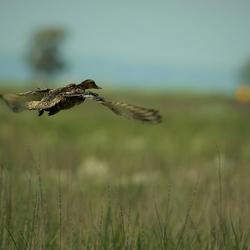
Avian Influenza Spread, Prevalence and Persistence

Avian Influenza Dynamics in the Chesapeake Bay Region
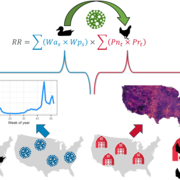
Advancing Risk Modeling for Highly Pathogenic Avian Influenza
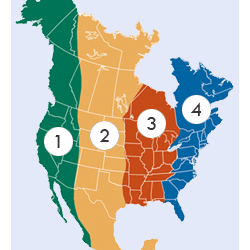
Understanding Circulating Avian Influenza Viruses and How They Spread

Pathogens in the Aquatic Environment – Waterfowl, Avian Influenza

USGS Wild Bird Avian Influenza Program – Studies from Endemic Regions of Eurasia

Using Global Telemetry to Understand Avian Movement and Migration

Avian Influenza Viral Pathogenicity
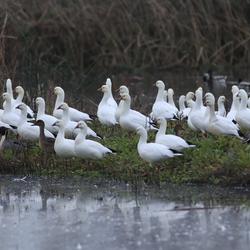
Identifying Spatial and Temporal Trends in Avian Influenza Prevalence in Wild Waterfowl Across the United States

Deriving Spatial and Temporal Waterfowl Inputs for Disease Risk Modeling
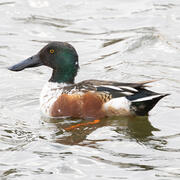
Developing Waterfowl Distribution and Abundance Models to Inform Avian Influenza Transmission Risk
Since Public Law 109-148, USGS has partnered with state and federal agencies to conduct science to support the national response to highly pathogenic avian influenza (HPAI). In 2014, the first reports of HPAI in US wild birds came from USGS cause-of-death investigations confirmed by the USDA.
Avian influenza is a global viral disease that is threatening wildlife, agriculture, and human health. Avian influenza viruses occur naturally in wild birds such as ducks, geese, swans, and gulls. The traditional view was that avian influenza viruses generally do not cause illness in wild birds, but they can become highly pathogenic, causing illness and death in backyard birds and commercial poultry. But during this current outbreak, highly pathogenic avian influenza has resulted in illness and death in wild birds and mammals in addition to infecting dairy cattle and other food animals
The USGS conducts research on avian influenza to understand its effects on wild bird populations and ecosystems. Leveraging ecological, genomic, and veterinary diagnostic data, USGS supports USDA’s national HPAI surveillance in wild birds and investigates the implications for wildlife health and biodiversity. The USGS Avian Influenza Science Team provides objective and rigorous scientific data for inferring:
- the utility of new methods to detect and characterize AIVs including those maintained in wildlife and the environment,
- impacts of HPAI to wildlife,
- spatiotemporal patterns of wildlife host and avian influenza virus dispersal, (iv) the occurrence and persistence of AIVs in the environment,
- how HPAI in wildlife influences consumptive and non-consumptive utilization of wildlife, (vi) how new tools and scientific methods may promote sound natural resource management decisions for HPAI in wildlife, particularly species of conservation concern, and
- the combined effects of HPAI and other stressors on ecosystem health and resiliency.
This research is crucial for informing wildlife management practices and public health policies, as avian influenza can also impact domestic poultry and pose risks to human health.
Following are a few significant contributions USGS science has made towards a better understanding of highly pathogenic avian influenza.
Agricultural Industry Support
By the end of 2015, losses associated with this highly pathogenic avian influenza outbreak exceeded 50 million poultry, resulting in over $3 billion dollars in economic impacts to the U.S. poultry industry.
In 2022, before the ongoing dairy cattle outbreak, a USGS study reviewed telemetry data (2015-2020) of wild migratory birds in California’s Central Valley. The results provided the first scientific evidence that wild birds (in this study, mallard, northern pintail, and cinnamon teal) do go onto dairy and poultry operations.
USGS scientists studied wild bird use of retention ponds on poultry operations in the Delmarva Peninsula on the East Coast. Using six months of data, they found that several wild bird species used retention ponds. While more research is needed, the study resulted in two key findings: (1) Temporal trends aligned with migratory pulses in local wild bird abundance and (2) wild bird use appeared to be related to vegetation surrounding ponds. Most waterfowl preferred open habitat with sparse vegetation except for wood ducks that preferred tree-dominated sites. This suggests that vegetation management might help reduce the risk of avian influenza spread through this interface.
USGS risk assessment tools and mathematical modeling framework for the wild bird-poultry interface were used by the USDA in the early HPAI response in 2022 to identify spillover risk from wild bird to poultry, helping safeguard the \$240-billion U.S. poultry industry from economic losses.
Disease Surveillance
- For wild bird cause-of-death investigations, the USGS National Wildlife Health Center routinely tests samples from wild birds for avian influenza viruses. The USDA recognizes the USGS National Wildlife Health Center, which has conducted wild bird cause-of-death investigations since 1975, as their “primary partner for performing diagnostics related to [wild bird] morbidity/mortality events.” In fact, the 2014 first reports of HPAI in U.S. wild birds resulted from NWHC diagnostics confirmed by USDA (publication). trace
- USGS Eastern Ecological Science Center diving duck HPAI science, in collaboration with the USDA, led to revision of the USDA's list of wild bird species in their national HPAI surveillance plan. The USDA regularly collaborates with USGS Alaska Science Center for wild bird HPAI surveillance, viral genomics, and HPAI traceback investigations due to strong local partnerships there and long-term avian influenza surveillance and ecological research at Izembek National Wildlife Refuge, a wetland of international importance. Notably, USGS science identified multiple introductions of HPAI into Alaska from Asia during the current outbreak as well as evidence for viral spread between wild birds, domestic poultry, and wild mammals in Alaska.
Environmental Persistence
- After determining that HPAI viruses can persist in natural surface waters, the USGS collaborated with the Center for Disease Control to operationalize water surveillance, identifying infectious HPAI in four Iowa wetlands. USGS scientists are now working with the U.S. Fish and Wildlife Service to understand the potential of using water manipulation to reduce HPAI in the environment.
Utilization of HPAI Vaccines in Wildlife
- In spring 2023, an HPAI outbreak began affecting California condors, mobilizing USGS wildlife vaccine experts to collaborate with USFWS and USDA to evaluate the safety and immunogenicity of a poultry HPAI vaccine for critically endangered California condors. A surrogate species (Black Vultures, Coragyps atratus) was utilized for initial vaccine trials, which were successful. Subsequently, a trial with captive California Condors was conducted with no serious adverse reactions and good immunological responses. Based on these results, a two-dose vaccination protocol was initiated for free-flying California condors.
Avian Influenza Research
Avian Influenza Spread, Prevalence and Persistence
Avian Influenza Dynamics in the Chesapeake Bay Region
Advancing Risk Modeling for Highly Pathogenic Avian Influenza
Understanding Circulating Avian Influenza Viruses and How They Spread
Pathogens in the Aquatic Environment – Waterfowl, Avian Influenza
USGS Wild Bird Avian Influenza Program – Studies from Endemic Regions of Eurasia
Using Global Telemetry to Understand Avian Movement and Migration
Avian Influenza Viral Pathogenicity
Identifying Spatial and Temporal Trends in Avian Influenza Prevalence in Wild Waterfowl Across the United States
Deriving Spatial and Temporal Waterfowl Inputs for Disease Risk Modeling