



Organic Geochemistry Research Core Technology Team
Pressurized fluid extractor used to extract organic compounds
Time-of-flight mass spectrometer used for the analysis of pesticides
New (2018) instrument laboratory at the OGRL
New (2018) sample processing laboratory at the OGRL
About the Research
The Organic Geochemistry Research Laboratory Core Technology Team (CTT) as part of the Environmental Health Program works to develop targeted and non-targeted analytical methods for the identification and quantitation of chemicals that can impact the health of humans and other organisms, and uses bioassays to screen for receptor inhibition.

The Organic Geochemistry Research Laboratory (OGRL) CTT focuses on contributing new knowledge on the distribution, fate, and transport of new and understudied organic compounds.
Compounds and contaminants studied by the CTT are suspected of causing undesired effects on animal, human, and ecosystem health. Routine methods of analysis include antibiotics, artificial sweeteners, endocrine disrupting hormones, mycotoxins, and pesticides in surface water, wastewater, drinking water, manures, soils, and sediments. Capabilities include sampling logistics, sample preparation techniques (ASE, EDGE, SPE, and extractions for biological assays), and trace-level targeted analysis (LC-MS/MS). The OGRL CTT is continuously expanding capabilities and offers custom method development for new compounds and matrices, and as such is able to address emerging issues like microplastics and tire wear particles.
Key Analytical Capabilities
- Antibiotics
- Artificial Sweeteners
- Hormones and Endocrine Disrupting Compounds
- Mycotoxins
- Pharmaceuticals
- Pesticides (glyphosate, aminomethylphosphonic acid, glufosinate, atrazine)
- Tire Related Chemicals
Key Instrumentation
- Sample preparation techniques (ASE, EDGE, SPE, and extractions for biological assays)
- Targeted analysis LC-MS/MS
- Three bioinert liquid chromatography/triple quadrupole mass spectrometers
- Two bioinert liquid chromatography/accurate mass spectrometers to understand complexity of chemical mixtures and for identification of unknown chemicals
- Automated bioassay plate reader and Fourier Transform Infrared spectrophotometer for measuring receptor inhibition and chemical screening
- Solid phase and pressurized fluid extraction for working with a variety of liquid and solid samples
† Hypertext links to non-USGS products and services; and the use of trade names, trademarks, company names, or other references to non-USGS products and services are provided for information only and do not constitute endorsement or warranty by the U.S. Geological Survey (USGS), U.S. Department of the Interior, or U.S. Government.


Environmental Health Integrated Science Team Collaborators
-

Food Resources Lifecycle Integrated Science Team
The team studies the movement of toxicants and pathogens that could originate from the growing, raising, and processing/manufacturing of plant and animal products through the environment where exposure can occur. This information is used to understand if there are adverse effects upon exposure and to develop decision tools to protect health.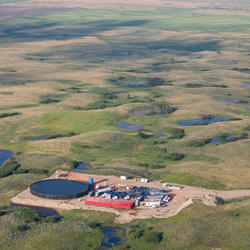
Energy Resources Life Cycle Integrated Science Team
The Energy Resources Life Cycle Integrated Science Team focuses on the potential for environmental contaminant exposures that might originate from energy resource activities including extraction, production, transportation, storage, waste management, and restoration. Perceived health risks to humans and other organisms will be distinguished from actual risks, if any. If actual risks are identified...
Drinking Water and Wastewater Infrastructure Science Team
The team studies toxicants and pathogens in water resources from their sources, through watersheds, aquifers, and infrastructure to human and wildlife exposures. That information is used to develop decision tools that protect human and wildlife health.
About the Research
The Organic Geochemistry Research Laboratory Core Technology Team (CTT) as part of the Environmental Health Program works to develop targeted and non-targeted analytical methods for the identification and quantitation of chemicals that can impact the health of humans and other organisms, and uses bioassays to screen for receptor inhibition.
The Organic Geochemistry Research Laboratory (OGRL) CTT focuses on contributing new knowledge on the distribution, fate, and transport of new and understudied organic compounds.
Compounds and contaminants studied by the CTT are suspected of causing undesired effects on animal, human, and ecosystem health. Routine methods of analysis include antibiotics, artificial sweeteners, endocrine disrupting hormones, mycotoxins, and pesticides in surface water, wastewater, drinking water, manures, soils, and sediments. Capabilities include sampling logistics, sample preparation techniques (ASE, EDGE, SPE, and extractions for biological assays), and trace-level targeted analysis (LC-MS/MS). The OGRL CTT is continuously expanding capabilities and offers custom method development for new compounds and matrices, and as such is able to address emerging issues like microplastics and tire wear particles.
Key Analytical Capabilities
- Antibiotics
- Artificial Sweeteners
- Hormones and Endocrine Disrupting Compounds
- Mycotoxins
- Pharmaceuticals
- Pesticides (glyphosate, aminomethylphosphonic acid, glufosinate, atrazine)
- Tire Related Chemicals
Key Instrumentation
- Sample preparation techniques (ASE, EDGE, SPE, and extractions for biological assays)
- Targeted analysis LC-MS/MS
- Three bioinert liquid chromatography/triple quadrupole mass spectrometers
- Two bioinert liquid chromatography/accurate mass spectrometers to understand complexity of chemical mixtures and for identification of unknown chemicals
- Automated bioassay plate reader and Fourier Transform Infrared spectrophotometer for measuring receptor inhibition and chemical screening
- Solid phase and pressurized fluid extraction for working with a variety of liquid and solid samples
† Hypertext links to non-USGS products and services; and the use of trade names, trademarks, company names, or other references to non-USGS products and services are provided for information only and do not constitute endorsement or warranty by the U.S. Geological Survey (USGS), U.S. Department of the Interior, or U.S. Government.
Environmental Health Integrated Science Team Collaborators
-
-
Food Resources Lifecycle Integrated Science Team
The team studies the movement of toxicants and pathogens that could originate from the growing, raising, and processing/manufacturing of plant and animal products through the environment where exposure can occur. This information is used to understand if there are adverse effects upon exposure and to develop decision tools to protect health. -
Energy Resources Life Cycle Integrated Science Team
The Energy Resources Life Cycle Integrated Science Team focuses on the potential for environmental contaminant exposures that might originate from energy resource activities including extraction, production, transportation, storage, waste management, and restoration. Perceived health risks to humans and other organisms will be distinguished from actual risks, if any. If actual risks are identified... -
Drinking Water and Wastewater Infrastructure Science Team
The team studies toxicants and pathogens in water resources from their sources, through watersheds, aquifers, and infrastructure to human and wildlife exposures. That information is used to develop decision tools that protect human and wildlife health.