



Science Technology
How do I search for and download Landsat data?
What is remote sensing and what is it used for?
Why does the USGS use uncrewed aircraft systems?
Are Landsat data in the cloud still considered to be within the public domain?
Science Technology

How do Landsat Collection 2 Level-2 products compare with products from Collection 1? How do Landsat Collection 2 Level-2 products compare with products from Collection 1?
Landsat Collection 2 Level-2 Surface Reflectance and Surface Temperature science products are scene-based, produced within the standard processing system, and available to download directly from EarthExplorer. Collection 2 Level-2 products are available for Landsat 4-5 TM, Landsat 7 ETM+, and Landsat 8-9 OLI/TIRS data acquired from 1982 to present. Landsat MSS 1-5 data are not currently available...

How long does it take to create Landsat Collection 2 Level-2 products after a Landsat scene is acquired? How long does it take to create Landsat Collection 2 Level-2 products after a Landsat scene is acquired?
Landsat Collection 2 Level-2 Surface Reflectance and Surface Temperature products require Landsat Level-1 data that have been processed to Tier 1 or Tier 2 products, as well as additional auxiliary data. The Landsat Collection 2 Product Generation Timeline below gives a graphical view of this typical product generation timeframe. The timeframe for Landsat Collection 2 product generation varies due...

Why are the fill values and scaling factors of Landsat Collection 2 Level-2 products different from those products in Collection 1? Why are the fill values and scaling factors of Landsat Collection 2 Level-2 products different from those products in Collection 1?
The fill values and scale factors of Landsat Collection 2 Level-2 products were updated to be consistent with that of Landsat Collection 2 Level-1 data, while using the unsigned integer data type more efficiently. As shown in the table below, the fill value of the Surface Reflectance and Surface Temperature bands were changed from “-9999” in Collection 1, to “0” in Collection 2 to be consistent...

How do I search and download Landsat Collection 2 data products? How do I search and download Landsat Collection 2 data products?
Landsat Collection 2 Level-1 and Level-2 products can be searched using EarthExplorer, the primary portal used to search all data held in the USGS EROS archives. Landsat Collection 2 products are processed and stored in the USGS Cloud Hosting Solution (CHS) environment; downloads are managed through EarthExplorer. The USGS Landsat no-cost open data policy remains intact since its inception in 2008...
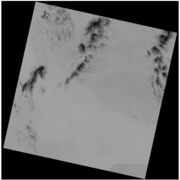
What are Landsat Collection 2 Full Resolution Browse Images? What are Landsat Collection 2 Full Resolution Browse Images?
Similar to Landsat Collection 1 LandsatLook Images, the Landsat Collection 2 Full Resolution Browse Images are .JPG and .TIF images with geographic referencing that are compressed and stretched to create an image optimized for image selection and visual interpretation. They are derived from Landsat Collection 2 Level-1 data and are available to download from EarthExplorer. Learn more: Landsat Full...

How does data from Sentinel-2A’s MultiSpectral Instrument compare to Landsat data? How does data from Sentinel-2A’s MultiSpectral Instrument compare to Landsat data?
The Sentinel-2A MultiSpectral Instrument (MSI) data has spectral bands very similar to Landsat 8 and 9 (excluding the thermal bands of Thermal Infrared Sensor (TIRS)). All Sentinel-2 data are freely available from the Copernicus Open Access Hub; therefore, users are encouraged to download the data via https://dataspace.copernicus.eu/explore-data/data-collections/sentinel-…. To learn...

Why do Landsat scenes in the Southern Hemisphere display negative UTM values? Why do Landsat scenes in the Southern Hemisphere display negative UTM values?
Traditional Universal Transverse Mercator (UTM) convention distinguishes between the Northern and Southern Hemispheres. In the Northern Hemisphere, the UTM zone is a positive value or identified as UTM North. In the Southern Hemisphere, the UTM zone is a negative value or identified as UTM South. UTM North scenes in this convention have a false northing value of 0, while UTM South scenes have a...

How do I search for and download Landsat data? How do I search for and download Landsat data?
Landsat data products held in the USGS archives can be searched and downloaded at no charge from a variety of sources. Visit Landsat Data Access for information about how Landsat data products can be downloaded individually or in bulk. Landsat imagery not found in the USGS archive might have been collected by one of the USGS International Cooperator ground stations, each of which are the primary...

How is the Landsat 8 and Landsat 9 Cirrus Band 9 used? How is the Landsat 8 and Landsat 9 Cirrus Band 9 used?
The Operational Land Imager’s Band 9 1.360-1.390 µm on Landsat 8 and Landsat 9 detects thin, high-altitude clouds composed of ice crystals that might not be visible in other spectral bands. In Band 9, cirrus clouds appear bright while most land surfaces appear dark through an otherwise cloud-free atmosphere containing water vapor. Learn more: Landsat 8 Mission Landsat 9 Mission Landsat 8 & 9 bands...

How is the Landsat 8 and Landsat 9 Coastal/Aerosol Band 1 used? How is the Landsat 8 and Landsat 9 Coastal/Aerosol Band 1 used?
The Operational Land Imager Band 1 ( 0.433-0.453 µm) on Landsat 8 and Landsat 9 is useful for imaging shallow water and tracking fine atmospheric particles like dust and smoke. Band 1 reflects blues and violets, where light is scattered by dust, smoke, and water particles in the air. Collecting data with enough sensitivity at this spectrum is difficult. Since water absorbs and scatters light...

How can I tell the difference between Landsat Collections data and Landsat data I have downloaded in the past? How can I tell the difference between Landsat Collections data and Landsat data I have downloaded in the past?
Data that is processed to meet Collections specifications has a Landsat Product Identifier, as opposed to the historical Landsat Scene ID. Along with information inherited from the Scene ID, the Landsat Product Identifier includes the processing level, processing date, collection number, and collection category (bolded below). Scene ID Landsat Product Identifier LXSPPPRRRYYYYDDDGSIVV LXSS_LLL...

What are the Landsat Collection 1 Level-1 data product file sizes? What are the Landsat Collection 1 Level-1 data product file sizes?
The file sizes of Landsat Collection 1 Level-1 data products are listed below: Sensor Compressed file Uncompressed file Landsat 8 OLI/TIRS 919 MB 1.61 GB Landsat 7 ETM+ 235 MB 785 MB Landsat 4-5 TM 150 MB 500 MB Landsat 1-5 MSS 20 MB 75 MB