



From volcanologists to oceanographers, biologists to paleontologists, the U.S. Geological Survey employs thousands of scientists across the Earth sciences. Each has a unique role in supporting the bureau’s mission of providing “science that matters” to the American people.
Climate 101
You have questions? We have answers!
Check out our Frequently Asked Questions surrounding climate and land use changes.
Check out our Frequently Asked Questions surrounding climate and land use changes.
Climate Research and Development Program
This program looks ahead at what might happen next with climate and land use change and works on solutions to address such changes.
This program looks ahead at what might happen next with climate and land use change and works on solutions to address such changes.
Climate Adaptation Science Centers
This partnership-driven program teams scientists with resource managers to address climate change and its impact on the environment.
This partnership-driven program teams scientists with resource managers to address climate change and its impact on the environment.
Want to Stay Up to Date on USGS Climate News?
Find us on Twitter and Instagram at @usgs_climate!
Find us on Twitter and Instagram at @usgs_climate!
Curious about the realities of climate change? Here are a few things you should know about climate change and how it impacts our planet.
Climate Change 101
When discussing climate change, things can get very complicated, very quickly. To help, here are some basic insights about what “the science” actually says.
First and foremost, climate change is real and it is being driven by human activities. The science is conclusive that the planet has warmed and the climate around the world has changed in response. The current rate of rising global temperatures is not natural nor normal. This plays out in temperature records, more volatile and intense weather patterns (e.g. drought and flooding), and numerous secondary changes like thinning sea ice and the spread of invasive species into previously uninhabitable areas. For answers to some of the most frequently asked questions about climate change, check out our FAQs on Climate and Land Use Change
Science plays an essential role in helping people understand climate change, anticipate future effects, and prepare for those changes.
On this page, learn about:
-
Greenhouse Gases are the Problem
-
Human Emissions and the Colors of Carbon
-
Long-Term Weather Patterns
-
What's in a Name?


Sources/Usage: Public Domain. View Media Details
The referenced media source is missing and needs to be re-embedded.
Greenhouse Gases are the Problem
“Greenhouse” gases occur naturally in the Earth’s atmosphere. They help regulate the planet’s temperature, like how the glass in a greenhouse retains heat or a blanket reflects your body heat to keep you warm. Adding more greenhouse gases into the atmosphere, like we do when burning fossil fuels, acts like putting a thicker blanket on the planet. The thicker the blanket of greenhouse gases, the less heat escapes into space. This causes the planet to get warmer.
Common greenhouse gases include:
- Carbon dioxide (CO2)
- Methane (CH4)
- Nitrous oxide (N2O)
- Fluorinated gases such as hydrofluorocarbons, perfluorocarbons, sulfur hexafluoride, and nitrogen trifluoride
- Water vapor (H2O)
There are also natural sources of greenhouse gases, including volcanic eruptions, geologic seeps from features like hot springs and geothermal vents, thawing permafrost, and forest fires. Climate change and human activities can accelerate natural emissions. Warmer temperatures defrost permafrost and heat up oceans, releasing the carbon long stored in these systems. Wetlands drained for agriculture can rapidly switch from being carbon sinks to being carbon sources. And human ignitions and climate-driven dryness mean long, intense fire seasons, releasing billions of metric tons of carbon dioxide around the world each year.
To learn more about how carbon dioxide and other greenhouse gases affect climate, check out Greenhouse Gases and Carbon Storage.
Media

Sources/Usage: Public Domain. View Media Details
Human Emissions and the Colors of Carbon
The main contributor to climate change is human emissions. Although the greenhouse gases responsible for causing climate change do occur naturally in our atmosphere, the concentrations have been increasing significantly since the 1880s. The increase in the amount of carbon dioxide, in particular, is the biggest culprit that has led to a 1.9-degrees Fahrenheit in the planet’s average global temperature since the Industrial Revolution.
One characteristic of climate change that continues to evolve is how we discuss the different factors that contribute to it. Historically, the burning of fossils fuels was the primary focus, as that is the key driver of increased greenhouse gases, particularly carbon. However, as researchers learn more about the ways carbon cycles through the atmosphere, a more nuanced picture is beginning to form. Scientists use color to classify carbon at different points in the carbon cycle based on carbon function, characteristics, and location. This creates a more descriptive framework than traditional "organic" and "inorganic" labels - a carbon rainbow, so to speak.
The "Colors of Carbon" include:
- Purple: Carbon captured through the air or industrial emissions
- Blue: Carbon stored in ocean plants and sediments
- Teal: Carbon stored in freshwater and wetland environments
- Green: Carbon stored in terrestrial plants
- Black: Carbon released through burning fossil fuels
- Gray: Carbon released through industrial emissions
- Brown: Carbon released by incomplete combustion of organic matter
- Red: Carbon released through biological particles on snow and ice that reduce albedo
Long-term Weather Patterns
Sometimes people may be confused by the difference between weather and climate. A single snowstorm or cold spell does not disprove global warming. Weather refers to short-term atmospheric conditions, while climate is the weather of a specific region averaged over a long period of time. While we expect the weather to change almost daily, a region’s climate is normally stable over time. For example, Florida is generally warmer and rainier than Montana, even if on a particular day it is raining in Montana but not in Florida. Climate change refers to long-term changes in a region’s climate. In recent years, parts of the country are frequently experiencing higher temperatures than they used to, like regular 100-degree days in Colorado that used to be an extreme outlier. Places are also seeing weather patterns that are completely out of sync with their historical climate. In fact, a consequence of climate change is more erratic weather patterns, including wild snowstorms and anomalies like the polar vortex reaching farther south or a heatwave in the Pacific Northwest that rivals temperatures typically seen in Death Valley, California.
Media

Sources/Usage: Public Domain. View Media Details
What’s in a Name?
Global warming. Climate change. Climate crisis. No matter how you refer to the threat, they are all related. The average temperature of the Earth’s surface has increased significantly since the 1880s (i.e., global warming). This has led to significant changes to the long-term weather patterns, or climate, of regions across the globe (i.e., climate change). And due to the consequences of climate change (e.g., drought, flooding, melting sea ice, disease, etc.), some consider the threat a genuine global crisis (i.e., climate crisis). No matter what we call it, the science is clear that our world is changing because of increased greenhouse gases in the atmosphere.
Want to learn more about Climate Change?
Explore all the amazing climate change research the USGS is doing through the Climate Science Explorer page.
Still, have more questions? The USGS has entire programs dedicated to studying climate change impacts and developing climate change management strategies. Learn more about their work below!
Other USGS centers also do large amounts of climate change research, including:
- Geosciences and Environmental Change Science Center
- Wetland and Aquatic Research Center
- Geology, Minerals, Energy, and Geophysics Science Center
Have even more questions? Check out some of the other awesome resources created by our federal partners!
Science

Climate Change
The impacts of a changing climate on wildlife and associated ecosystems have yet to be fully determined but changes are clearly underway as are a variety of investigations to assess how we can best preserve key resources while effectively managing others. Using a variety of tools and a combination of studies including adaptive management, long-term monitoring, mathematical modeling, and...
Multimedia

Climate Science Champions: Introduction
From volcanologists to oceanographers, biologists to paleontologists, the U.S. Geological Survey employs thousands of scientists across the Earth sciences. Each has a unique role in supporting the bureau’s mission of providing “science that matters” to the American people.

Climate Science Champions, Season 1: Steve Matsuoka, Research Wildlife Biologist
Climate Science Champions, Season 1: Steve Matsuoka, Research Wildlife BiologistResearch Wildlife Biologist Steve Matsuoka explores how climate change affects the reproductive success of Alaska’s diverse bird communities, which include more than 100 species that migrate to Alaska each year world to breed.
Climate Science Champions, Season 1: Steve Matsuoka, Research Wildlife Biologist
Climate Science Champions, Season 1: Steve Matsuoka, Research Wildlife BiologistResearch Wildlife Biologist Steve Matsuoka explores how climate change affects the reproductive success of Alaska’s diverse bird communities, which include more than 100 species that migrate to Alaska each year world to breed.

Climate Science Champions, Season 2: Ann Gibbs, Geologist
Climate Science Champions, Season 2: Ann Gibbs, GeologistGeologist Ann Gibbs studies the vulnerability of the rapidly-warming Alaska coast to climate change effects like sea level rise and permafrost thawing.
Climate Science Champions, Season 2: Ann Gibbs, Geologist
Climate Science Champions, Season 2: Ann Gibbs, GeologistGeologist Ann Gibbs studies the vulnerability of the rapidly-warming Alaska coast to climate change effects like sea level rise and permafrost thawing.

Climate Science Champions, Season 1: Vanessa von Biela, Research Fish Biologist
Climate Science Champions, Season 1: Vanessa von Biela, Research Fish BiologistResearch Fish Biologist Vanessa von Biela investigates how heatwaves and other climate-driven stressors may affect Alaska’s spawning Pacific salmon in the future.
Climate Science Champions, Season 1: Vanessa von Biela, Research Fish Biologist
Climate Science Champions, Season 1: Vanessa von Biela, Research Fish BiologistResearch Fish Biologist Vanessa von Biela investigates how heatwaves and other climate-driven stressors may affect Alaska’s spawning Pacific salmon in the future.

Climate Science Champions, Season 1: Vijay Patil, Wildlife Biologist
Climate Science Champions, Season 1: Vijay Patil, Wildlife BiologistWildlife Biologist Vijay Patil explores the effects of climate change and shifting seasons on Arctic-nesting waterfowl.
Climate Science Champions, Season 1: Vijay Patil, Wildlife Biologist
Climate Science Champions, Season 1: Vijay Patil, Wildlife BiologistWildlife Biologist Vijay Patil explores the effects of climate change and shifting seasons on Arctic-nesting waterfowl.

Climate Science Champions, Season 2: Ferdinand Oberle, Research Geologist
Climate Science Champions, Season 2: Ferdinand Oberle, Research GeologistAlong reef-lined shores of the Pacific Islands, USGS Research Geologist and Oceanographer Ferdinand Oberle studies how warming surface waters, nutrient runoff, and increasingly powerful storms impact coral reefs.
Climate Science Champions, Season 2: Ferdinand Oberle, Research Geologist
Climate Science Champions, Season 2: Ferdinand Oberle, Research GeologistAlong reef-lined shores of the Pacific Islands, USGS Research Geologist and Oceanographer Ferdinand Oberle studies how warming surface waters, nutrient runoff, and increasingly powerful storms impact coral reefs.

Climate Science Champions, Season 2: Kira Mizell, Research Oceanographer
Climate Science Champions, Season 2: Kira Mizell, Research OceanographerResearch Oceanographer Kira Mizell studies change in ocean chemistry by collecting marine minerals, looking for insights into past climate conditions and geologic history.
Climate Science Champions, Season 2: Kira Mizell, Research Oceanographer
Climate Science Champions, Season 2: Kira Mizell, Research OceanographerResearch Oceanographer Kira Mizell studies change in ocean chemistry by collecting marine minerals, looking for insights into past climate conditions and geologic history.

Climate Science Champions, Season 1: Mike Carey, Research Fish Ecologist
Climate Science Champions, Season 1: Mike Carey, Research Fish EcologistFish Ecologist Mike Carey studies the impacts beavers have on warming Alaskan permafrost landscapes.
Climate Science Champions, Season 1: Mike Carey, Research Fish Ecologist
Climate Science Champions, Season 1: Mike Carey, Research Fish EcologistFish Ecologist Mike Carey studies the impacts beavers have on warming Alaskan permafrost landscapes.

Climate Science Champions, Season 1: Heather Johnson, Research Wildlife Biologist
Climate Science Champions, Season 1: Heather Johnson, Research Wildlife BiologistUSGS Wildlife Research Biologist Heather Johnson uses collar-mounted video cameras to peer into the lives of climate-threatened caribou.
Climate Science Champions, Season 1: Heather Johnson, Research Wildlife Biologist
Climate Science Champions, Season 1: Heather Johnson, Research Wildlife BiologistUSGS Wildlife Research Biologist Heather Johnson uses collar-mounted video cameras to peer into the lives of climate-threatened caribou.
The USGS has been studying climate change for a long time! Check out our new Climate Science Champions series highlighting USGS's diverse climate change researchers, as well as some of our oldies-but-goodies Climate Connections Q&As with USGS scientists!

Climate Science Champions: Introduction
From volcanologists to oceanographers, biologists to paleontologists, the U.S. Geological Survey employs thousands of scientists across the Earth sciences. Each has a unique role in supporting the bureau’s mission of providing “science that matters” to the American people. Here are the stories of the USGS scientists working to address a defining challenge of our time: climate change.
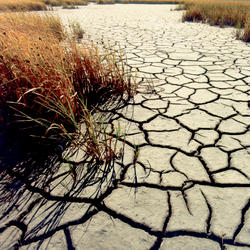
What are some of the signs of climate change? What are some of the signs of climate change?
• Temperatures are rising world-wide due to greenhouse gases trapping more heat in the atmosphere. • Droughts are becoming longer and more extreme around the world. • Tropical storms becoming more severe due to warmer ocean water temperatures. • As temperatures rise there is less snowpack in mountain ranges and polar areas and the snow melts faster. • Overall, glaciers are melting at a faster rate...

How can climate change affect natural disasters? How can climate change affect natural disasters?
With increasing global surface temperatures the possibility of more droughts and increased intensity of storms will likely occur. As more water vapor is evaporated into the atmosphere it becomes fuel for more powerful storms to develop. More heat in the atmosphere and warmer ocean surface temperatures can lead to increased wind speeds in tropical storms. Rising sea levels expose higher locations...
Curious about the realities of climate change? Here are a few things you should know about climate change and how it impacts our planet.
Climate Change 101
When discussing climate change, things can get very complicated, very quickly. To help, here are some basic insights about what “the science” actually says.
First and foremost, climate change is real and it is being driven by human activities. The science is conclusive that the planet has warmed and the climate around the world has changed in response. The current rate of rising global temperatures is not natural nor normal. This plays out in temperature records, more volatile and intense weather patterns (e.g. drought and flooding), and numerous secondary changes like thinning sea ice and the spread of invasive species into previously uninhabitable areas. For answers to some of the most frequently asked questions about climate change, check out our FAQs on Climate and Land Use Change
Science plays an essential role in helping people understand climate change, anticipate future effects, and prepare for those changes.
On this page, learn about:
-
Greenhouse Gases are the Problem
-
Human Emissions and the Colors of Carbon
-
Long-Term Weather Patterns
-
What's in a Name?
Sources/Usage: Public Domain. View Media Details
The referenced media source is missing and needs to be re-embedded.
Greenhouse Gases are the Problem
“Greenhouse” gases occur naturally in the Earth’s atmosphere. They help regulate the planet’s temperature, like how the glass in a greenhouse retains heat or a blanket reflects your body heat to keep you warm. Adding more greenhouse gases into the atmosphere, like we do when burning fossil fuels, acts like putting a thicker blanket on the planet. The thicker the blanket of greenhouse gases, the less heat escapes into space. This causes the planet to get warmer.
Common greenhouse gases include:
- Carbon dioxide (CO2)
- Methane (CH4)
- Nitrous oxide (N2O)
- Fluorinated gases such as hydrofluorocarbons, perfluorocarbons, sulfur hexafluoride, and nitrogen trifluoride
- Water vapor (H2O)
There are also natural sources of greenhouse gases, including volcanic eruptions, geologic seeps from features like hot springs and geothermal vents, thawing permafrost, and forest fires. Climate change and human activities can accelerate natural emissions. Warmer temperatures defrost permafrost and heat up oceans, releasing the carbon long stored in these systems. Wetlands drained for agriculture can rapidly switch from being carbon sinks to being carbon sources. And human ignitions and climate-driven dryness mean long, intense fire seasons, releasing billions of metric tons of carbon dioxide around the world each year.
To learn more about how carbon dioxide and other greenhouse gases affect climate, check out Greenhouse Gases and Carbon Storage.
Media
Sources/Usage: Public Domain. View Media Details
Human Emissions and the Colors of Carbon
The main contributor to climate change is human emissions. Although the greenhouse gases responsible for causing climate change do occur naturally in our atmosphere, the concentrations have been increasing significantly since the 1880s. The increase in the amount of carbon dioxide, in particular, is the biggest culprit that has led to a 1.9-degrees Fahrenheit in the planet’s average global temperature since the Industrial Revolution.
One characteristic of climate change that continues to evolve is how we discuss the different factors that contribute to it. Historically, the burning of fossils fuels was the primary focus, as that is the key driver of increased greenhouse gases, particularly carbon. However, as researchers learn more about the ways carbon cycles through the atmosphere, a more nuanced picture is beginning to form. Scientists use color to classify carbon at different points in the carbon cycle based on carbon function, characteristics, and location. This creates a more descriptive framework than traditional "organic" and "inorganic" labels - a carbon rainbow, so to speak.
The "Colors of Carbon" include:
- Purple: Carbon captured through the air or industrial emissions
- Blue: Carbon stored in ocean plants and sediments
- Teal: Carbon stored in freshwater and wetland environments
- Green: Carbon stored in terrestrial plants
- Black: Carbon released through burning fossil fuels
- Gray: Carbon released through industrial emissions
- Brown: Carbon released by incomplete combustion of organic matter
- Red: Carbon released through biological particles on snow and ice that reduce albedo
Long-term Weather Patterns
Sometimes people may be confused by the difference between weather and climate. A single snowstorm or cold spell does not disprove global warming. Weather refers to short-term atmospheric conditions, while climate is the weather of a specific region averaged over a long period of time. While we expect the weather to change almost daily, a region’s climate is normally stable over time. For example, Florida is generally warmer and rainier than Montana, even if on a particular day it is raining in Montana but not in Florida. Climate change refers to long-term changes in a region’s climate. In recent years, parts of the country are frequently experiencing higher temperatures than they used to, like regular 100-degree days in Colorado that used to be an extreme outlier. Places are also seeing weather patterns that are completely out of sync with their historical climate. In fact, a consequence of climate change is more erratic weather patterns, including wild snowstorms and anomalies like the polar vortex reaching farther south or a heatwave in the Pacific Northwest that rivals temperatures typically seen in Death Valley, California.
Media
Sources/Usage: Public Domain. View Media Details
What’s in a Name?
Global warming. Climate change. Climate crisis. No matter how you refer to the threat, they are all related. The average temperature of the Earth’s surface has increased significantly since the 1880s (i.e., global warming). This has led to significant changes to the long-term weather patterns, or climate, of regions across the globe (i.e., climate change). And due to the consequences of climate change (e.g., drought, flooding, melting sea ice, disease, etc.), some consider the threat a genuine global crisis (i.e., climate crisis). No matter what we call it, the science is clear that our world is changing because of increased greenhouse gases in the atmosphere.
Want to learn more about Climate Change?
Explore all the amazing climate change research the USGS is doing through the Climate Science Explorer page.
Still, have more questions? The USGS has entire programs dedicated to studying climate change impacts and developing climate change management strategies. Learn more about their work below!
Other USGS centers also do large amounts of climate change research, including:
- Geosciences and Environmental Change Science Center
- Wetland and Aquatic Research Center
- Geology, Minerals, Energy, and Geophysics Science Center
Have even more questions? Check out some of the other awesome resources created by our federal partners!
Science
Climate Change
The impacts of a changing climate on wildlife and associated ecosystems have yet to be fully determined but changes are clearly underway as are a variety of investigations to assess how we can best preserve key resources while effectively managing others. Using a variety of tools and a combination of studies including adaptive management, long-term monitoring, mathematical modeling, and...
Multimedia
Climate Science Champions: Introduction
From volcanologists to oceanographers, biologists to paleontologists, the U.S. Geological Survey employs thousands of scientists across the Earth sciences. Each has a unique role in supporting the bureau’s mission of providing “science that matters” to the American people.
From volcanologists to oceanographers, biologists to paleontologists, the U.S. Geological Survey employs thousands of scientists across the Earth sciences. Each has a unique role in supporting the bureau’s mission of providing “science that matters” to the American people.
Climate Science Champions, Season 1: Steve Matsuoka, Research Wildlife Biologist
Climate Science Champions, Season 1: Steve Matsuoka, Research Wildlife BiologistResearch Wildlife Biologist Steve Matsuoka explores how climate change affects the reproductive success of Alaska’s diverse bird communities, which include more than 100 species that migrate to Alaska each year world to breed.
Climate Science Champions, Season 1: Steve Matsuoka, Research Wildlife Biologist
Climate Science Champions, Season 1: Steve Matsuoka, Research Wildlife BiologistResearch Wildlife Biologist Steve Matsuoka explores how climate change affects the reproductive success of Alaska’s diverse bird communities, which include more than 100 species that migrate to Alaska each year world to breed.
Climate Science Champions, Season 2: Ann Gibbs, Geologist
Climate Science Champions, Season 2: Ann Gibbs, GeologistGeologist Ann Gibbs studies the vulnerability of the rapidly-warming Alaska coast to climate change effects like sea level rise and permafrost thawing.
Climate Science Champions, Season 2: Ann Gibbs, Geologist
Climate Science Champions, Season 2: Ann Gibbs, GeologistGeologist Ann Gibbs studies the vulnerability of the rapidly-warming Alaska coast to climate change effects like sea level rise and permafrost thawing.
Climate Science Champions, Season 1: Vanessa von Biela, Research Fish Biologist
Climate Science Champions, Season 1: Vanessa von Biela, Research Fish BiologistResearch Fish Biologist Vanessa von Biela investigates how heatwaves and other climate-driven stressors may affect Alaska’s spawning Pacific salmon in the future.
Climate Science Champions, Season 1: Vanessa von Biela, Research Fish Biologist
Climate Science Champions, Season 1: Vanessa von Biela, Research Fish BiologistResearch Fish Biologist Vanessa von Biela investigates how heatwaves and other climate-driven stressors may affect Alaska’s spawning Pacific salmon in the future.
Climate Science Champions, Season 1: Vijay Patil, Wildlife Biologist
Climate Science Champions, Season 1: Vijay Patil, Wildlife BiologistWildlife Biologist Vijay Patil explores the effects of climate change and shifting seasons on Arctic-nesting waterfowl.
Climate Science Champions, Season 1: Vijay Patil, Wildlife Biologist
Climate Science Champions, Season 1: Vijay Patil, Wildlife BiologistWildlife Biologist Vijay Patil explores the effects of climate change and shifting seasons on Arctic-nesting waterfowl.
Climate Science Champions, Season 2: Ferdinand Oberle, Research Geologist
Climate Science Champions, Season 2: Ferdinand Oberle, Research GeologistAlong reef-lined shores of the Pacific Islands, USGS Research Geologist and Oceanographer Ferdinand Oberle studies how warming surface waters, nutrient runoff, and increasingly powerful storms impact coral reefs.
Climate Science Champions, Season 2: Ferdinand Oberle, Research Geologist
Climate Science Champions, Season 2: Ferdinand Oberle, Research GeologistAlong reef-lined shores of the Pacific Islands, USGS Research Geologist and Oceanographer Ferdinand Oberle studies how warming surface waters, nutrient runoff, and increasingly powerful storms impact coral reefs.
Climate Science Champions, Season 2: Kira Mizell, Research Oceanographer
Climate Science Champions, Season 2: Kira Mizell, Research OceanographerResearch Oceanographer Kira Mizell studies change in ocean chemistry by collecting marine minerals, looking for insights into past climate conditions and geologic history.
Climate Science Champions, Season 2: Kira Mizell, Research Oceanographer
Climate Science Champions, Season 2: Kira Mizell, Research OceanographerResearch Oceanographer Kira Mizell studies change in ocean chemistry by collecting marine minerals, looking for insights into past climate conditions and geologic history.
Climate Science Champions, Season 1: Mike Carey, Research Fish Ecologist
Climate Science Champions, Season 1: Mike Carey, Research Fish EcologistFish Ecologist Mike Carey studies the impacts beavers have on warming Alaskan permafrost landscapes.
Climate Science Champions, Season 1: Mike Carey, Research Fish Ecologist
Climate Science Champions, Season 1: Mike Carey, Research Fish EcologistFish Ecologist Mike Carey studies the impacts beavers have on warming Alaskan permafrost landscapes.
Climate Science Champions, Season 1: Heather Johnson, Research Wildlife Biologist
Climate Science Champions, Season 1: Heather Johnson, Research Wildlife BiologistUSGS Wildlife Research Biologist Heather Johnson uses collar-mounted video cameras to peer into the lives of climate-threatened caribou.
Climate Science Champions, Season 1: Heather Johnson, Research Wildlife Biologist
Climate Science Champions, Season 1: Heather Johnson, Research Wildlife BiologistUSGS Wildlife Research Biologist Heather Johnson uses collar-mounted video cameras to peer into the lives of climate-threatened caribou.
The USGS has been studying climate change for a long time! Check out our new Climate Science Champions series highlighting USGS's diverse climate change researchers, as well as some of our oldies-but-goodies Climate Connections Q&As with USGS scientists!
Climate Science Champions: Introduction
From volcanologists to oceanographers, biologists to paleontologists, the U.S. Geological Survey employs thousands of scientists across the Earth sciences. Each has a unique role in supporting the bureau’s mission of providing “science that matters” to the American people. Here are the stories of the USGS scientists working to address a defining challenge of our time: climate change.
What are some of the signs of climate change? What are some of the signs of climate change?
• Temperatures are rising world-wide due to greenhouse gases trapping more heat in the atmosphere. • Droughts are becoming longer and more extreme around the world. • Tropical storms becoming more severe due to warmer ocean water temperatures. • As temperatures rise there is less snowpack in mountain ranges and polar areas and the snow melts faster. • Overall, glaciers are melting at a faster rate...
How can climate change affect natural disasters? How can climate change affect natural disasters?
With increasing global surface temperatures the possibility of more droughts and increased intensity of storms will likely occur. As more water vapor is evaporated into the atmosphere it becomes fuel for more powerful storms to develop. More heat in the atmosphere and warmer ocean surface temperatures can lead to increased wind speeds in tropical storms. Rising sea levels expose higher locations...