



A native Colorado bee on a yellow wildflower.
Mark Vandever
Mark is a rangeland specialist at the Fort Collins Science Center, where he leads the agricultural practices science team supporting habitat management and the restoration of grasslands across the Northern and Southern Plains.
Mark Vandever has done extensive, multi-state field studies evaluating how grassland vegetation responds to disturbance—particularly haying and grazing during periods of drought—and how these management actions influence habitat quality for pollinators, grassland birds, and other wildlife. With over 30 years experience working on the U.S. Farm Bill's conservation title, Mark specializes in understanding the long-term conservation outcomes in Conservation Reserve Program grasslands. This includes everything from national scale assessments on establishment of conservation practices to farm-level scale field studies on pollinator friendly plant communities. Collectively, Mark's portfolio advances science-based approaches for improving grassland resilience under drought, optimizing CRP management for ecological benefits, and supporting land managers and federal agencies with clear, actionable information for sustaining the health and productivity of working landscapes.
Science and Products

Conservation Practices in Agriculturally Dominated Landscapes
Agricultural land use accounts for over 50 percent of the surface area of the contiguous United States. How these lands are managed has direct and indirect implications for wildlife, water quality, and air quality in terrestrial, aquatic, and marine ecosystems locally and far beyond their extent. This project is focused on ways to greater maximize the potential of the US Department of Agriculture...

Agricultural Practices
Agricultural lands account for more than 50% of the lower 48 states and the effects of agricultural land use reach beyond individual fields and farms affecting terrestrial and migratory wildlife. Thus, it is important to know what long-term benefits US Department of Agriculture (USDA) conservation programs and policies have on wildlife habitat and the American public. The USDAs Conservation...

Native Pollinators in Agricultural Ecosystems
Beginning in 2012, the USGS collaborated with the USDA to assess the effectiveness of pollinator plantings and how alteration of landscapes has affected native pollinators and potentially contributed to their decline. The 2008 Farm Bill recognized contributions made by pollinators and made conservation of pollinator habitat a priority. The USGS is assessing native bee habitat, diversity, and...
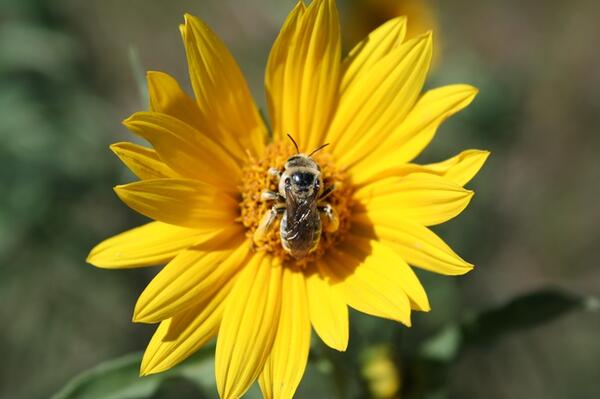
Bee on Flower by Mark Vandever
A native Colorado bee on a yellow wildflower.

An agricultural barn with farming equipment stored outside in Colorado
An agricultural barn with farming equipment stored outside in ColoradoAn agricultural barn with farming equipment stored outside in Colorado.
An agricultural barn with farming equipment stored outside in Colorado
An agricultural barn with farming equipment stored outside in ColoradoAn agricultural barn with farming equipment stored outside in Colorado.

a bumble bee in an alfalfa field
A bumble bee in an alfalfa field.
A bumble bee in an alfalfa field.

Running the Bee Traps
USGS technicians check bee traps from a harvested wheat field in Colorado. Credit: Mark Vandever, USGS.
USGS technicians check bee traps from a harvested wheat field in Colorado. Credit: Mark Vandever, USGS.

Running the Bee Traps
A USGS technician checks bee traps from a harvested wheat field in Colorado. Credit: Mark Vandever, USGS.
A USGS technician checks bee traps from a harvested wheat field in Colorado. Credit: Mark Vandever, USGS.

Native Bee Pollinating a Prickly Pear
A native bee pollinates a prickly pear cactus in Colorado. Credit: Mark Vandever, USGS.
A native bee pollinates a prickly pear cactus in Colorado. Credit: Mark Vandever, USGS.

Bee Trap in Grassland
A blue bee trap is located in a Colorado grassland. These are used to collect bee specimens for lab study. Credit: Mark Vandever, USGS.
A blue bee trap is located in a Colorado grassland. These are used to collect bee specimens for lab study. Credit: Mark Vandever, USGS.

Native Bee Pollinates Native Flower
A macrophotography image showing a native bee pollinating a native flower.
A macrophotography image showing a native bee pollinating a native flower.
Science and Products
Conservation Practices in Agriculturally Dominated Landscapes
Agricultural land use accounts for over 50 percent of the surface area of the contiguous United States. How these lands are managed has direct and indirect implications for wildlife, water quality, and air quality in terrestrial, aquatic, and marine ecosystems locally and far beyond their extent. This project is focused on ways to greater maximize the potential of the US Department of Agriculture...
Agricultural Practices
Agricultural lands account for more than 50% of the lower 48 states and the effects of agricultural land use reach beyond individual fields and farms affecting terrestrial and migratory wildlife. Thus, it is important to know what long-term benefits US Department of Agriculture (USDA) conservation programs and policies have on wildlife habitat and the American public. The USDAs Conservation...
Native Pollinators in Agricultural Ecosystems
Beginning in 2012, the USGS collaborated with the USDA to assess the effectiveness of pollinator plantings and how alteration of landscapes has affected native pollinators and potentially contributed to their decline. The 2008 Farm Bill recognized contributions made by pollinators and made conservation of pollinator habitat a priority. The USGS is assessing native bee habitat, diversity, and...
Bee on Flower by Mark Vandever
A native Colorado bee on a yellow wildflower.
A native Colorado bee on a yellow wildflower.
An agricultural barn with farming equipment stored outside in Colorado
An agricultural barn with farming equipment stored outside in ColoradoAn agricultural barn with farming equipment stored outside in Colorado.
An agricultural barn with farming equipment stored outside in Colorado
An agricultural barn with farming equipment stored outside in ColoradoAn agricultural barn with farming equipment stored outside in Colorado.
a bumble bee in an alfalfa field
A bumble bee in an alfalfa field.
A bumble bee in an alfalfa field.
Running the Bee Traps
USGS technicians check bee traps from a harvested wheat field in Colorado. Credit: Mark Vandever, USGS.
USGS technicians check bee traps from a harvested wheat field in Colorado. Credit: Mark Vandever, USGS.
Running the Bee Traps
A USGS technician checks bee traps from a harvested wheat field in Colorado. Credit: Mark Vandever, USGS.
A USGS technician checks bee traps from a harvested wheat field in Colorado. Credit: Mark Vandever, USGS.
Native Bee Pollinating a Prickly Pear
A native bee pollinates a prickly pear cactus in Colorado. Credit: Mark Vandever, USGS.
A native bee pollinates a prickly pear cactus in Colorado. Credit: Mark Vandever, USGS.
Bee Trap in Grassland
A blue bee trap is located in a Colorado grassland. These are used to collect bee specimens for lab study. Credit: Mark Vandever, USGS.
A blue bee trap is located in a Colorado grassland. These are used to collect bee specimens for lab study. Credit: Mark Vandever, USGS.
Native Bee Pollinates Native Flower
A macrophotography image showing a native bee pollinating a native flower.
A macrophotography image showing a native bee pollinating a native flower.