



During a monitoring overflight at 7:15 a.m. HST on April 9, 2025, USGS Hawaiian Volcano Observatory field crews observed Pāhoehoe flows on the floor of Halema‘uma‘u crater at the summit of Kīlauea. These flows were fed by the south vent fountains, which ceased activity around 9:45 a.m. this morning, April 9, marking the end of episode 17. USGS photo by E.
Images
Kīlauea images of eruptive activity, field work, and more.
Filter Total Items: 3252

April 9, 2025 — Kīlauea lava flows
During a monitoring overflight at 7:15 a.m. HST on April 9, 2025, USGS Hawaiian Volcano Observatory field crews observed Pāhoehoe flows on the floor of Halema‘uma‘u crater at the summit of Kīlauea. These flows were fed by the south vent fountains, which ceased activity around 9:45 a.m. this morning, April 9, marking the end of episode 17. USGS photo by E.

April 9, 2025 — Aerial view of the eruptive vents at Kīlauea
April 9, 2025 — Aerial view of the eruptive vents at KīlaueaDuring a monitoring overflight on April 9, 2025, USGS Hawaiian Volcano Observatory field crews observed that the ponded lava in the north vent from April 8 had drained and/or collapsed. The south vent was still active, with fountaining sending lava flows across the floor of Halema‘uma‘u. USGS photo by K. Lynn.
April 9, 2025 — Aerial view of the eruptive vents at Kīlauea
April 9, 2025 — Aerial view of the eruptive vents at KīlaueaDuring a monitoring overflight on April 9, 2025, USGS Hawaiian Volcano Observatory field crews observed that the ponded lava in the north vent from April 8 had drained and/or collapsed. The south vent was still active, with fountaining sending lava flows across the floor of Halema‘uma‘u. USGS photo by K. Lynn.

April 9, 2025 — Thermal map of episode 17 lava flow at Kīlauea summit
April 9, 2025 — Thermal map of episode 17 lava flow at Kīlauea summitThis thermal map was taken on the 7 a.m. overflight of Kīlauea summit on April 9, 2025, and shows the expansive lava flow covering the floor of Halema‘uma‘u, supplied by lava fountains at the vent. As in earlier episodes, the lava exited the vent into a short channel that fed a broad perched lava pond.
April 9, 2025 — Thermal map of episode 17 lava flow at Kīlauea summit
April 9, 2025 — Thermal map of episode 17 lava flow at Kīlauea summitThis thermal map was taken on the 7 a.m. overflight of Kīlauea summit on April 9, 2025, and shows the expansive lava flow covering the floor of Halema‘uma‘u, supplied by lava fountains at the vent. As in earlier episodes, the lava exited the vent into a short channel that fed a broad perched lava pond.
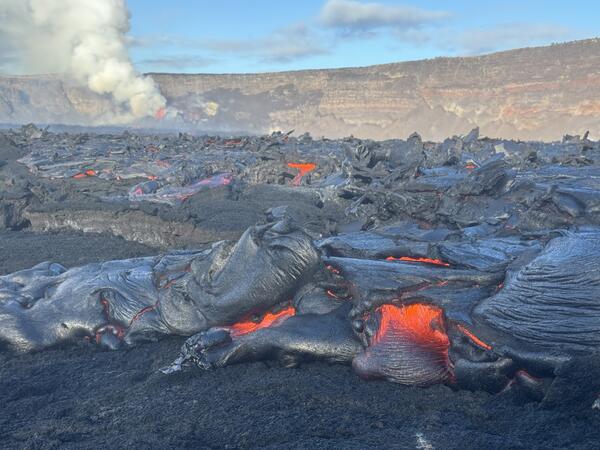
April 9, 2025 — Kīlauea lava flow
Lava fountains during episode 17 supplied lava into a broad lava flow field covering much of the Halema‘uma‘u crater floor. Here, a small lobe of pāhoehoe breaks out at the far eastern end of the crater. The lava fountain and its degassing plume are visible in the distance. USGS photo by M. Patrick
Lava fountains during episode 17 supplied lava into a broad lava flow field covering much of the Halema‘uma‘u crater floor. Here, a small lobe of pāhoehoe breaks out at the far eastern end of the crater. The lava fountain and its degassing plume are visible in the distance. USGS photo by M. Patrick
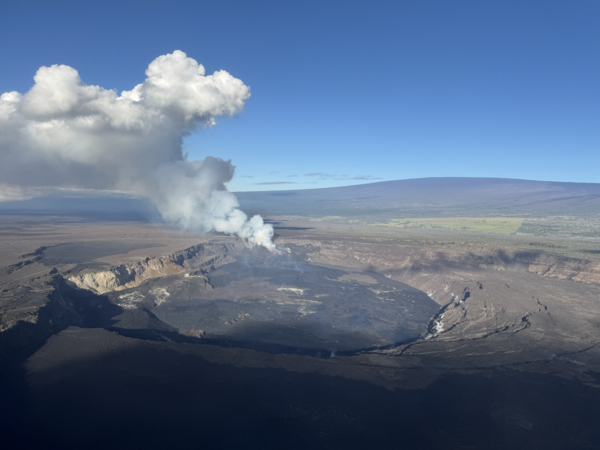
April 9, 2025 — Kīlauea summit eruption episode 17 overview
April 9, 2025 — Kīlauea summit eruption episode 17 overviewA helicopter overflight the morning of April 9, 2025, at 7 a.m. HST provided views of the episode 17 lava fountaining at the summit of Kīlauea just a few hours before it ended. The lava fountains were supplying lava into a flow that covered much of the Halema‘uma‘u crater floor. The fountains also produced a towering outgassing plume above the summit.
April 9, 2025 — Kīlauea summit eruption episode 17 overview
April 9, 2025 — Kīlauea summit eruption episode 17 overviewA helicopter overflight the morning of April 9, 2025, at 7 a.m. HST provided views of the episode 17 lava fountaining at the summit of Kīlauea just a few hours before it ended. The lava fountains were supplying lava into a flow that covered much of the Halema‘uma‘u crater floor. The fountains also produced a towering outgassing plume above the summit.
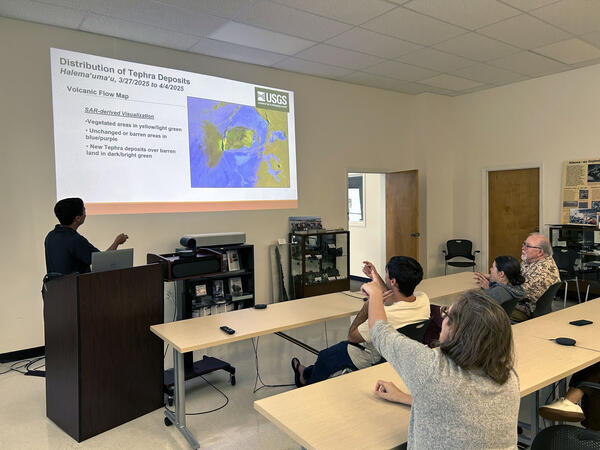
Visualization of volcanic hazards
A USGS IT Specialist presents a visualization of volcanic hazards derived via satellite radar systems. IT systems facilitating the swift and accurate production of such solutions will be vital to the success of NVEWS. USGS image.
A USGS IT Specialist presents a visualization of volcanic hazards derived via satellite radar systems. IT systems facilitating the swift and accurate production of such solutions will be vital to the success of NVEWS. USGS image.
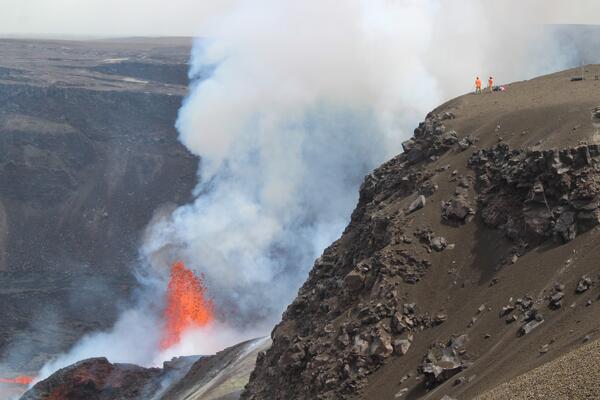
April 8, 2025 — Geologists on western rim of Halemaʻumaʻu
April 8, 2025 — Geologists on western rim of HalemaʻumaʻuIn the afternoon of April 8, USGS Hawaiian Volcano Observatory geologists visited the western rim of Halemaʻumaʻu crater to observe the ongoing Kīlauea summit eruption during its seventeenth episode. This telephoto view of the geologists shows them taking laser rangefinder measurements of lava fountains at the active eruptive vent below them within the crater.
April 8, 2025 — Geologists on western rim of Halemaʻumaʻu
April 8, 2025 — Geologists on western rim of HalemaʻumaʻuIn the afternoon of April 8, USGS Hawaiian Volcano Observatory geologists visited the western rim of Halemaʻumaʻu crater to observe the ongoing Kīlauea summit eruption during its seventeenth episode. This telephoto view of the geologists shows them taking laser rangefinder measurements of lava fountains at the active eruptive vent below them within the crater.
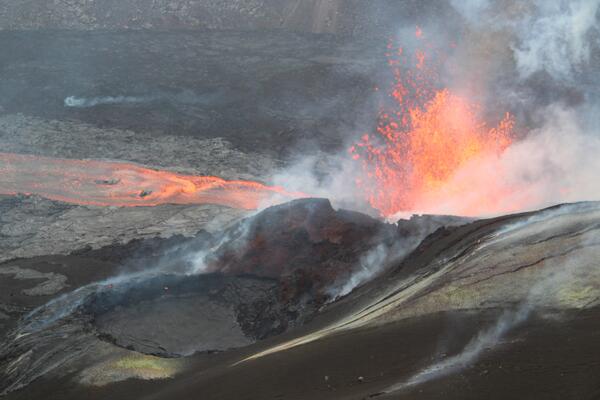
April 8, 2025 — Inactive north vent in Halemaʻumaʻu
April 8, 2025 — Inactive north vent in HalemaʻumaʻuAs the day progressed on April 8, despite continued lava fountaining at the south vent (background right), activity declined at the north vent (foreground left). This afternoon photo captured from the western rim of Halemaʻumaʻu crater—looking to the south—shows the north vent's lava pond fully crusted over and sitting lower within the spatter cone.
April 8, 2025 — Inactive north vent in Halemaʻumaʻu
April 8, 2025 — Inactive north vent in HalemaʻumaʻuAs the day progressed on April 8, despite continued lava fountaining at the south vent (background right), activity declined at the north vent (foreground left). This afternoon photo captured from the western rim of Halemaʻumaʻu crater—looking to the south—shows the north vent's lava pond fully crusted over and sitting lower within the spatter cone.
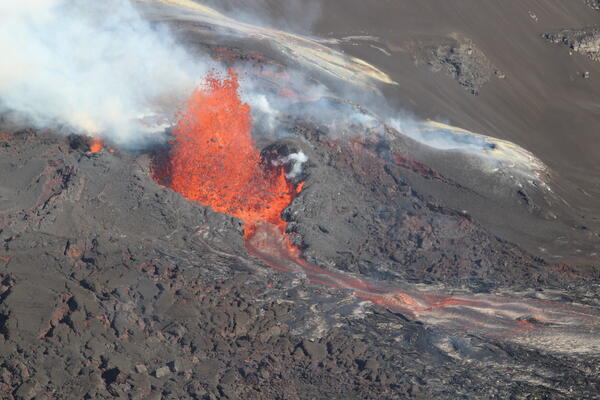
April 8, 2025 — Lava fountain in south vent
Following the onset of the Kīlauea summit eruption's seventeenth episode in the late evening of April 7, USGS Hawaiian Volcano Observatory geologists visited the southern rim of Halemaʻumʻau crater on the morning of April 8 to observe vent activity.
Following the onset of the Kīlauea summit eruption's seventeenth episode in the late evening of April 7, USGS Hawaiian Volcano Observatory geologists visited the southern rim of Halemaʻumʻau crater on the morning of April 8 to observe vent activity.
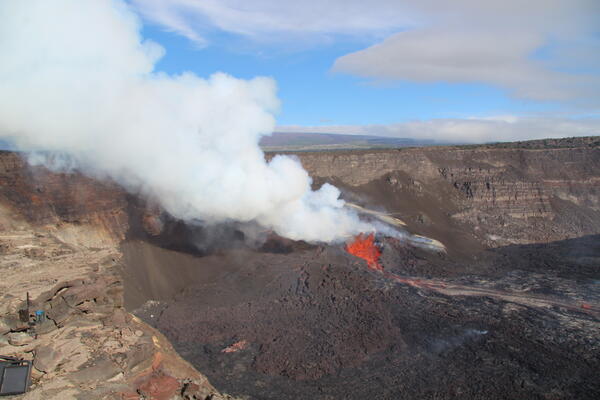
April 8, 2025 — Episode 17 of Kīlauea summit eruption
April 8, 2025 — Episode 17 of Kīlauea summit eruptionEpisode 17 of the ongoing Halemaʻumaʻu eruption at the summit of Kīlauea began last night, April 7, with lava flows erupting from the south vent at 10:15 p.m. HST. Low lava fountaining (100 feet, or 30 meters) was active overnight and continues this afternoon, feeding a lava flow on the crater floor. USGS photo by M. Zoeller.
April 8, 2025 — Episode 17 of Kīlauea summit eruption
April 8, 2025 — Episode 17 of Kīlauea summit eruptionEpisode 17 of the ongoing Halemaʻumaʻu eruption at the summit of Kīlauea began last night, April 7, with lava flows erupting from the south vent at 10:15 p.m. HST. Low lava fountaining (100 feet, or 30 meters) was active overnight and continues this afternoon, feeding a lava flow on the crater floor. USGS photo by M. Zoeller.

April 1 and 2, 2025 — Thermal maps of episode 16 summit activity at Kīlauea
April 1 and 2, 2025 — Thermal maps of episode 16 summit activity at KīlaueaThis set of thermal maps shows activity near the beginning and just after the end of episode 16 lava fountaining at the summit of Kīlauea. On April 1, lava fountaining was reaching over 200 meters (660 feet) and was beginning to produce a lava flow covering the western portion of the crater floor.
April 1 and 2, 2025 — Thermal maps of episode 16 summit activity at Kīlauea
April 1 and 2, 2025 — Thermal maps of episode 16 summit activity at KīlaueaThis set of thermal maps shows activity near the beginning and just after the end of episode 16 lava fountaining at the summit of Kīlauea. On April 1, lava fountaining was reaching over 200 meters (660 feet) and was beginning to produce a lava flow covering the western portion of the crater floor.

April 2, 2025 — Annotated thermal map of Kīlauea summit
April 2, 2025 — Annotated thermal map of Kīlauea summitThis close-up thermal map shows the crater floor at the summit of Kīlauea just an hour after the end of episode 16 lava fountaining on April 2. This map provides a good example of the different zones of lava flow activity on the crater floor that have been observed in many of the eruptive episodes.
April 2, 2025 — Annotated thermal map of Kīlauea summit
April 2, 2025 — Annotated thermal map of Kīlauea summitThis close-up thermal map shows the crater floor at the summit of Kīlauea just an hour after the end of episode 16 lava fountaining on April 2. This map provides a good example of the different zones of lava flow activity on the crater floor that have been observed in many of the eruptive episodes.
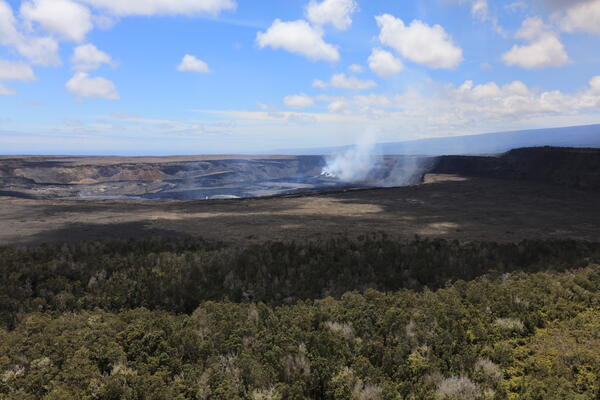
April 2, 2025 — Aerial view of Kaluapele, the caldera at the summit of Kīlauea
April 2, 2025 — Aerial view of Kaluapele, the caldera at the summit of KīlaueaAerial view of Kaluapele, the summit caldera of Kīlauea, hours after the end of episode 16 of the ongoing eruption in Halemaʻumaʻu. USGS photo by K. Lynn.
April 2, 2025 — Aerial view of Kaluapele, the caldera at the summit of Kīlauea
April 2, 2025 — Aerial view of Kaluapele, the caldera at the summit of KīlaueaAerial view of Kaluapele, the summit caldera of Kīlauea, hours after the end of episode 16 of the ongoing eruption in Halemaʻumaʻu. USGS photo by K. Lynn.
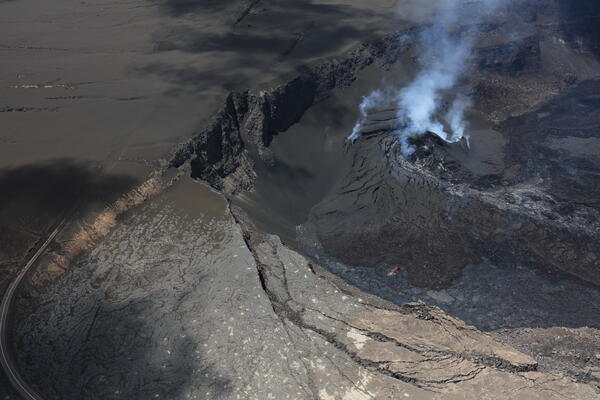
April 2, 2025 — Aerial view of eruptive vents and tephra deposit at Kīlauea's summit
April 2, 2025 — Aerial view of eruptive vents and tephra deposit at Kīlauea's summitUSGS Hawaiian Volcano Observatory geologists captured this view during a monitoring overflight just after noon on April 2, 2025, following the end of episode 16 of the ongoing eruption in Halemaʻumaʻu.
April 2, 2025 — Aerial view of eruptive vents and tephra deposit at Kīlauea's summit
April 2, 2025 — Aerial view of eruptive vents and tephra deposit at Kīlauea's summitUSGS Hawaiian Volcano Observatory geologists captured this view during a monitoring overflight just after noon on April 2, 2025, following the end of episode 16 of the ongoing eruption in Halemaʻumaʻu.
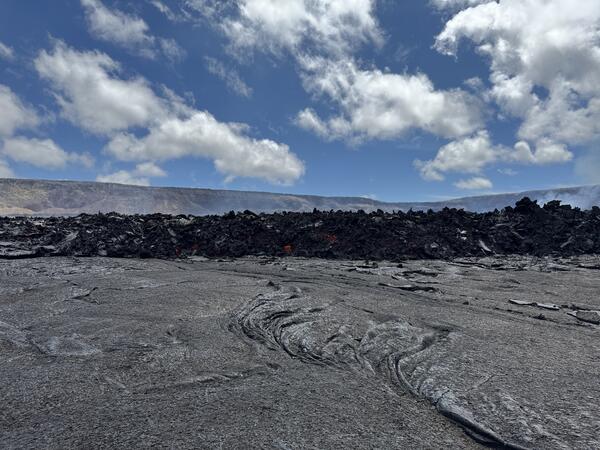
April 2, 2025 — Active lava within Halemaʻumaʻu, Kīlauea's summit
April 2, 2025 — Active lava within Halemaʻumaʻu, Kīlauea's summitUSGS Hawaiian Volcano Observatory geologists landed briefly on the floor of Halemaʻumaʻu crater and captured this image of an active ʻaʻā lava flow. Episode 16 of the ongoing eruption at Kīlaeua summit had ended a couple of hours prior to this photo being taken, and several lava flows retained residual activity at the time of the monitoring overflight.
April 2, 2025 — Active lava within Halemaʻumaʻu, Kīlauea's summit
April 2, 2025 — Active lava within Halemaʻumaʻu, Kīlauea's summitUSGS Hawaiian Volcano Observatory geologists landed briefly on the floor of Halemaʻumaʻu crater and captured this image of an active ʻaʻā lava flow. Episode 16 of the ongoing eruption at Kīlaeua summit had ended a couple of hours prior to this photo being taken, and several lava flows retained residual activity at the time of the monitoring overflight.
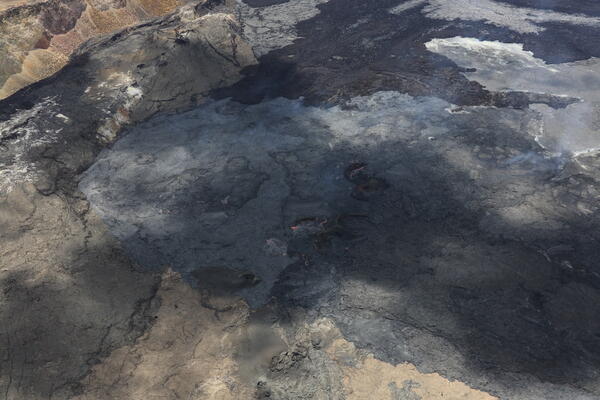
April 2, 2025 — Aerial view of active lava flows at Kīlauea's summit
April 2, 2025 — Aerial view of active lava flows at Kīlauea's summitEpisode 16 of the ongoing eruption in Halemaʻumaʻu stopped just after noon today, April 2, 2025. On a USGS Hawaiian Volcano Observatory monitoring overflight within the hours following its end, the crater floor was a patchwork of active and inactive lava flows.
April 2, 2025 — Aerial view of active lava flows at Kīlauea's summit
April 2, 2025 — Aerial view of active lava flows at Kīlauea's summitEpisode 16 of the ongoing eruption in Halemaʻumaʻu stopped just after noon today, April 2, 2025. On a USGS Hawaiian Volcano Observatory monitoring overflight within the hours following its end, the crater floor was a patchwork of active and inactive lava flows.
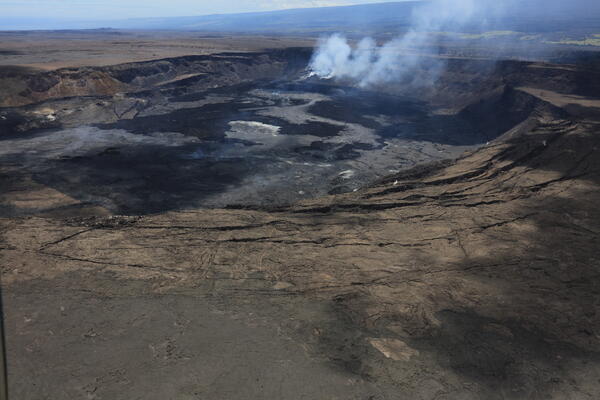
April 2, 2025 — Aerial overview of Kīlauea's summit
April 2, 2025 — Aerial overview of Kīlauea's summitDuring a monitoring flight on April 2, 2025, USGS Hawaiian Volcano Observatory geologists captured this aerial view of Halemaʻumaʻu, within Kaluapele (Kīlauea summit caldera), just after the end of episode 16 of the ongoing eruption.
April 2, 2025 — Aerial overview of Kīlauea's summit
April 2, 2025 — Aerial overview of Kīlauea's summitDuring a monitoring flight on April 2, 2025, USGS Hawaiian Volcano Observatory geologists captured this aerial view of Halemaʻumaʻu, within Kaluapele (Kīlauea summit caldera), just after the end of episode 16 of the ongoing eruption.
April 2, 2025 — Growing tephra deposit at Kīlauea's summit
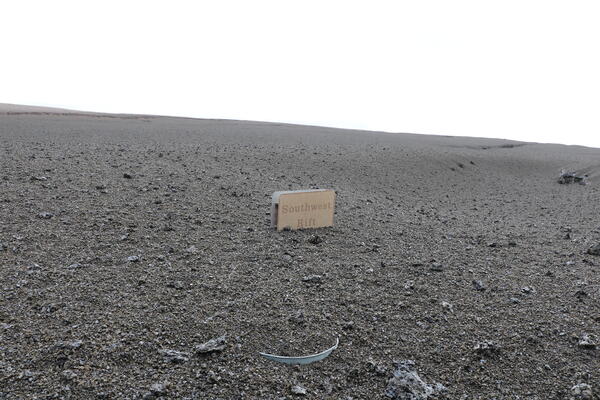
April 2, 2025 — Growing tephra deposit at Kīlauea's summitDuring each eruptive episode in Halemaʻumaʻu, tephra is deposited on the crater rim downwind within the closed area of Hawaiʻi Volcanoes National Park. This sign for the Southwest Rift Zone of Kīlauea, which used to stand at least 6 feet (2 meters) above the ground surface, provides a visual for how thick the tephra deposit is at this location. USGS photo by K.
April 2, 2025 — Growing tephra deposit at Kīlauea's summit
April 2, 2025 — Growing tephra deposit at Kīlauea's summitDuring each eruptive episode in Halemaʻumaʻu, tephra is deposited on the crater rim downwind within the closed area of Hawaiʻi Volcanoes National Park. This sign for the Southwest Rift Zone of Kīlauea, which used to stand at least 6 feet (2 meters) above the ground surface, provides a visual for how thick the tephra deposit is at this location. USGS photo by K.
April 1, 2025 — View lava fountains above crater rim during episode 16 at Kīlauea's summit
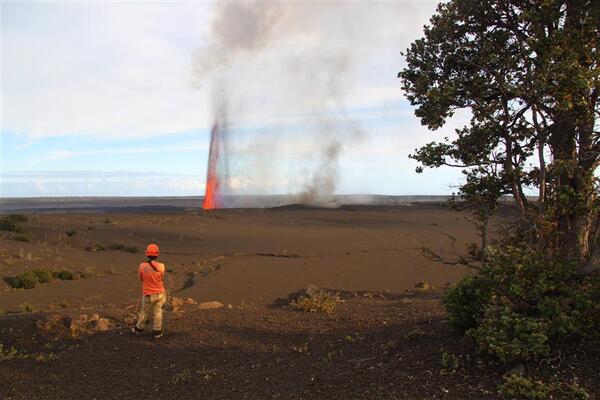
April 1, 2025 — View lava fountains above crater rim during episode 16 at Kīlauea's summitOn April 1, lava fountains from Kīlauea's ongoing summit eruption prevented geologists from accessing the rim of Halemaʻumaʻu crater within the closed portion of Hawaiʻi Volcanoes National Park. Instead, they hung back along the closed portion of Crater Rim Drive to collect samples of tephra that was intermittently blown in their direction.
April 1, 2025 — View lava fountains above crater rim during episode 16 at Kīlauea's summit
April 1, 2025 — View lava fountains above crater rim during episode 16 at Kīlauea's summitOn April 1, lava fountains from Kīlauea's ongoing summit eruption prevented geologists from accessing the rim of Halemaʻumaʻu crater within the closed portion of Hawaiʻi Volcanoes National Park. Instead, they hung back along the closed portion of Crater Rim Drive to collect samples of tephra that was intermittently blown in their direction.
April 1, 2025 — View of the lava fountain during episode 16 at Kīlauea's summit
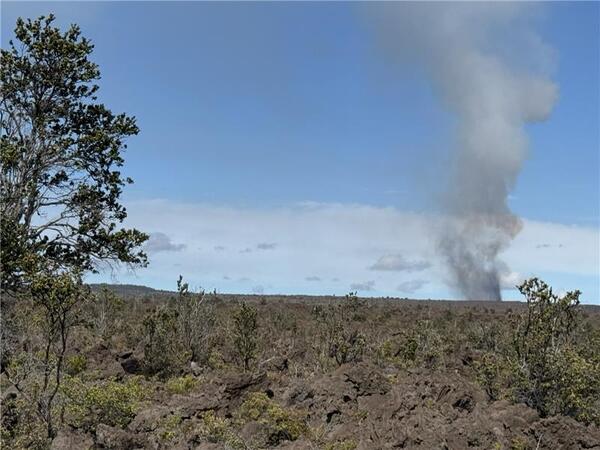
April 1, 2025 — View of the lava fountain during episode 16 at Kīlauea's summitEpisode 16 lava fountains were visible from Highway 11 in Kaʻū on April 1. In this view, the top of the lava fountain is just visible above Halemaʻumaʻu crater rim, and Uēkahuna (the highest part of the caldera rim) is visible to the left. USGS photo by K. Mulliken.
April 1, 2025 — View of the lava fountain during episode 16 at Kīlauea's summit
April 1, 2025 — View of the lava fountain during episode 16 at Kīlauea's summitEpisode 16 lava fountains were visible from Highway 11 in Kaʻū on April 1. In this view, the top of the lava fountain is just visible above Halemaʻumaʻu crater rim, and Uēkahuna (the highest part of the caldera rim) is visible to the left. USGS photo by K. Mulliken.
April 1, 2025 — Episode 16 of Kīlauea's summit eruption deposits tephra on Highway 11
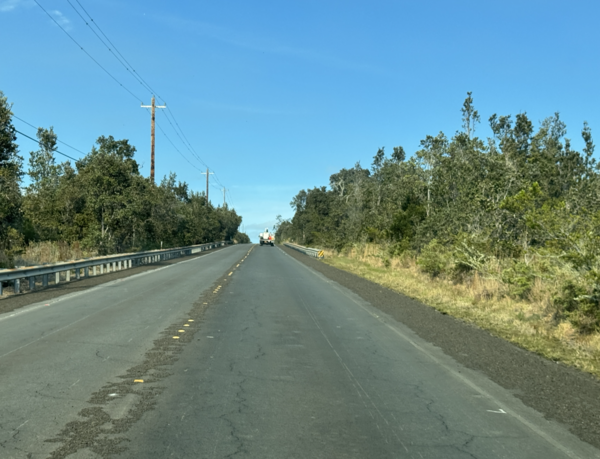
April 1, 2025 — Episode 16 of Kīlauea's summit eruption deposits tephra on Highway 11Episode 16 lava fountains deposited tephra and Pele's Hair on Highway 11 in Kaʻū on April 1. In this photo, taken around 3:30 p.m. HST, the tephra and Pele's Hair is visible along the centerline and on the shoulder of the highway. USGS photo by K. Mulliken.
April 1, 2025 — Episode 16 of Kīlauea's summit eruption deposits tephra on Highway 11
April 1, 2025 — Episode 16 of Kīlauea's summit eruption deposits tephra on Highway 11Episode 16 lava fountains deposited tephra and Pele's Hair on Highway 11 in Kaʻū on April 1. In this photo, taken around 3:30 p.m. HST, the tephra and Pele's Hair is visible along the centerline and on the shoulder of the highway. USGS photo by K. Mulliken.