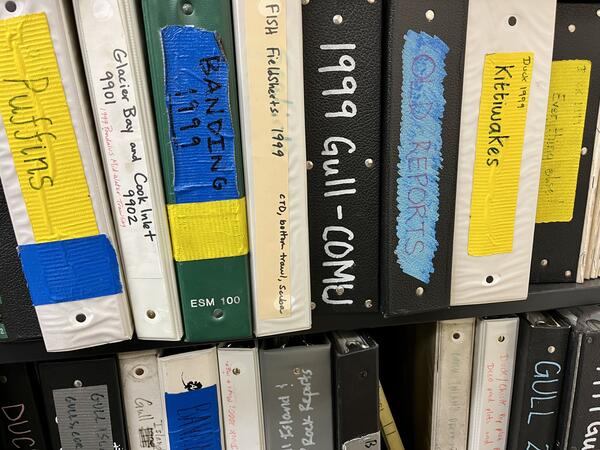
A shelf full of legacy data collected on seabirds in Cook Inlet and Glacier Bay, Alaska.
Images
Browse images from a wide range of science topics covered by USGS. All items in this gallery are considered public domain unless otherwise noted.
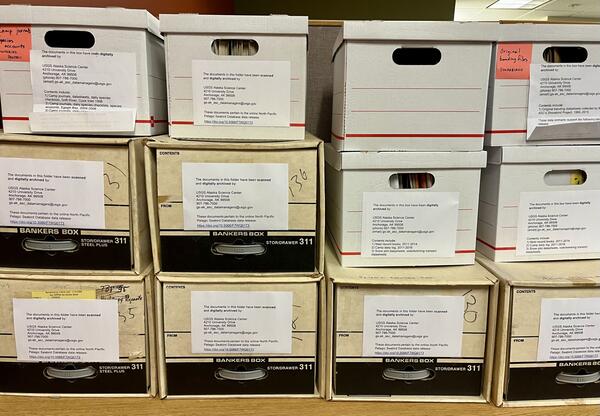
A shelf full of legacy data collected on seabirds in Cook Inlet and Glacier Bay, Alaska.
Alaska Science Center Data Management staff organize, scan, and digitally archive physical data. Once published as part of a data release, the physical data are organized and placed into banker boxes, labeled with pertinent information, such as the data release DOI, and moved to a secure location.
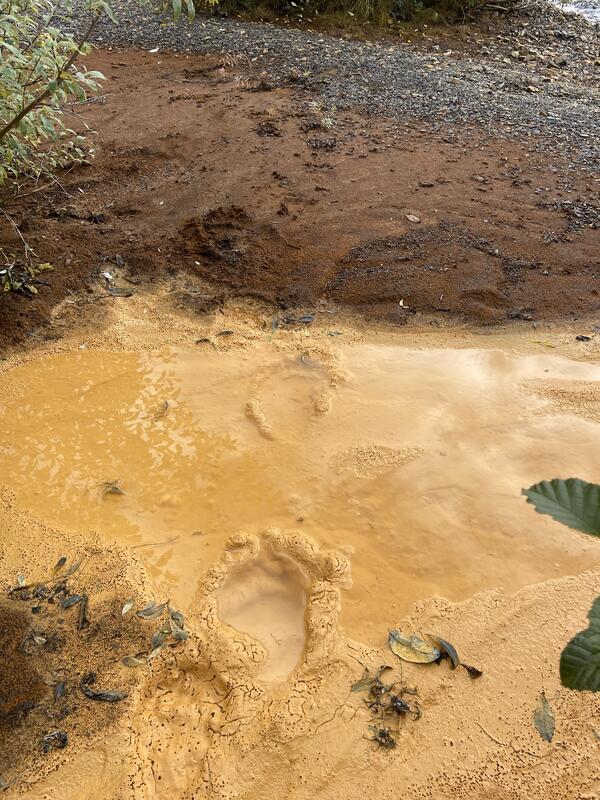
Bear tracks in an orange tributary of the Kugururok River, Noatak National Preserve, Alaska
Bear tracks in an orange tributary of the Kugururok River, Noatak National Preserve, AlaskaOrange streams are increasingly common in the Brooks Range of northern Alaska. The orange stream color reflects oxidized iron, but also often indicates elevated heavy metal concentrations. Our ongoing study aims to document these occurrences and the timing of their onset.
Bear tracks in an orange tributary of the Kugururok River, Noatak National Preserve, Alaska
Bear tracks in an orange tributary of the Kugururok River, Noatak National Preserve, AlaskaOrange streams are increasingly common in the Brooks Range of northern Alaska. The orange stream color reflects oxidized iron, but also often indicates elevated heavy metal concentrations. Our ongoing study aims to document these occurrences and the timing of their onset.
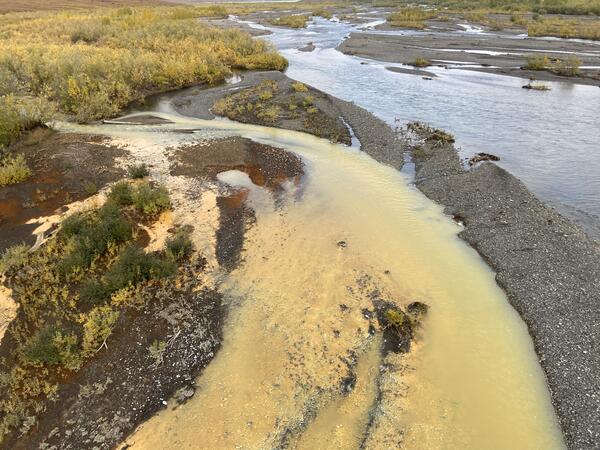
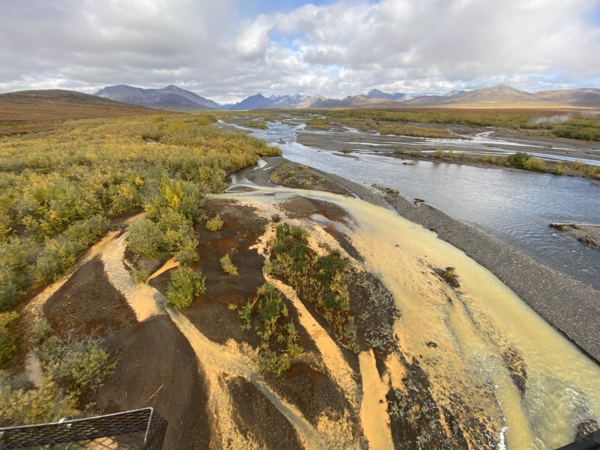
Orange waters mixing in to the mainstem of the Kugururok River
Orange waters mixing in to the mainstem of the Kugururok RiverOrange streams are increasingly common in the Brooks Range of northern Alaska. The orange stream color reflects oxidized iron, but also often indicates elevated heavy metal concentrations. Our ongoing study aims to document these occurrences and the timing of their onset.
Orange waters mixing in to the mainstem of the Kugururok River
Orange waters mixing in to the mainstem of the Kugururok RiverOrange streams are increasingly common in the Brooks Range of northern Alaska. The orange stream color reflects oxidized iron, but also often indicates elevated heavy metal concentrations. Our ongoing study aims to document these occurrences and the timing of their onset.
An orange tributary of the Kugururok River in Alaska's Noatak National Preserve
An orange tributary of the Kugururok River in Alaska's Noatak National PreserveOrange streams are increasingly common in the Brooks Range of northern Alaska. The orange stream color reflects oxidized iron, but also often indicates elevated heavy metal concentrations. Our ongoing study aims to document these occurrences and the timing of their onset.
An orange tributary of the Kugururok River in Alaska's Noatak National Preserve
An orange tributary of the Kugururok River in Alaska's Noatak National PreserveOrange streams are increasingly common in the Brooks Range of northern Alaska. The orange stream color reflects oxidized iron, but also often indicates elevated heavy metal concentrations. Our ongoing study aims to document these occurrences and the timing of their onset.
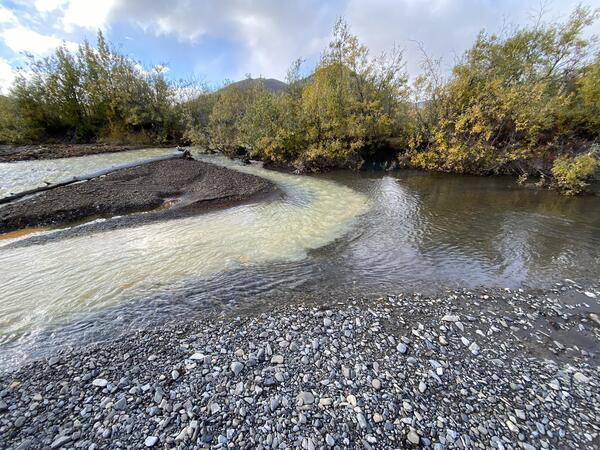
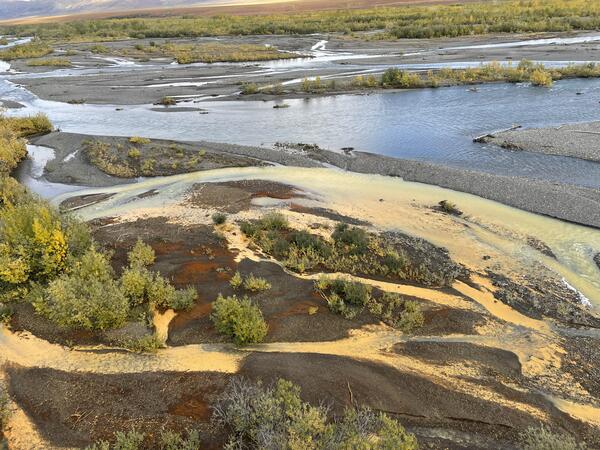
Mixing of an orange tributary and Kugururok River, Noatak National Preserve, Alaska
Mixing of an orange tributary and Kugururok River, Noatak National Preserve, AlaskaOrange streams are increasingly common in the Brooks Range of northern Alaska. The orange stream color reflects oxidized iron, but also often indicates elevated heavy metal concentrations. Our ongoing study aims to document these occurrences and the timing of their onset.
Mixing of an orange tributary and Kugururok River, Noatak National Preserve, Alaska
Mixing of an orange tributary and Kugururok River, Noatak National Preserve, AlaskaOrange streams are increasingly common in the Brooks Range of northern Alaska. The orange stream color reflects oxidized iron, but also often indicates elevated heavy metal concentrations. Our ongoing study aims to document these occurrences and the timing of their onset.
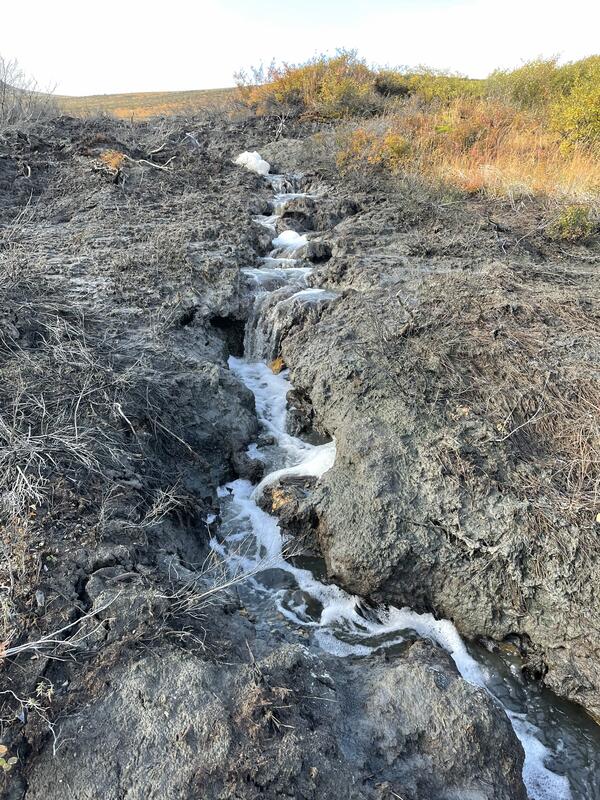
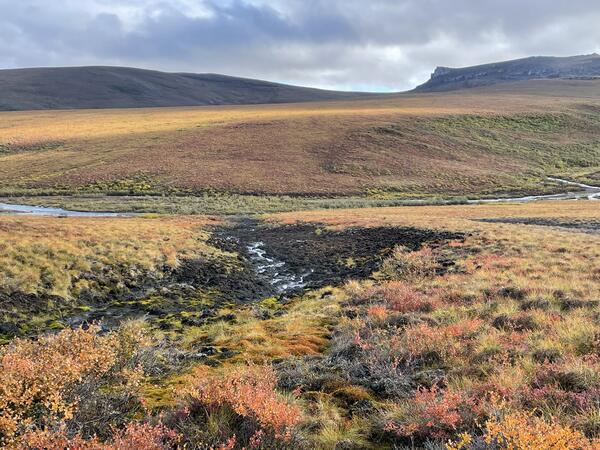
Acidic waters kill and blacken vegetation as they plunge downhill towards the Nakolikurok Creek
Acidic waters kill and blacken vegetation as they plunge downhill towards the Nakolikurok CreekOrange streams are increasingly common in the Brooks Range of northern Alaska. The orange stream color reflects oxidized iron, but also often indicates elevated heavy metal concentrations. Our ongoing study aims to document these occurrences and the timing of their onset.
Acidic waters kill and blacken vegetation as they plunge downhill towards the Nakolikurok Creek
Acidic waters kill and blacken vegetation as they plunge downhill towards the Nakolikurok CreekOrange streams are increasingly common in the Brooks Range of northern Alaska. The orange stream color reflects oxidized iron, but also often indicates elevated heavy metal concentrations. Our ongoing study aims to document these occurrences and the timing of their onset.
An orange tributary of the Kugururok River in Noatak National Preserve, Alaska
An orange tributary of the Kugururok River in Noatak National Preserve, AlaskaOrange streams are increasingly common in the Brooks Range of northern Alaska. The orange stream color reflects oxidized iron, but also often indicates elevated heavy metal concentrations. Our ongoing study aims to document these occurrences and the timing of their onset.
An orange tributary of the Kugururok River in Noatak National Preserve, Alaska
An orange tributary of the Kugururok River in Noatak National Preserve, AlaskaOrange streams are increasingly common in the Brooks Range of northern Alaska. The orange stream color reflects oxidized iron, but also often indicates elevated heavy metal concentrations. Our ongoing study aims to document these occurrences and the timing of their onset.
Orange streams are increasingly common in the Brooks Range of northern Alaska. The orange stream color reflects oxidized iron, but also often indicates elevated heavy metal concentrations. Our ongoing study aims to document these occurrences and the timing of their onset.
Drift net collecting samples in orange tributary of Anatok Creek, Kobuk Valley National Park, Alaska
Drift net collecting samples in orange tributary of Anatok Creek, Kobuk Valley National Park, AlaskaOrange streams are increasingly common in the Brooks Range of northern Alaska. The orange stream color reflects oxidized iron, but also often indicates elevated heavy metal concentrations. Our ongoing study aims to document these occurrences and the timing of their onset.
Drift net collecting samples in orange tributary of Anatok Creek, Kobuk Valley National Park, Alaska
Drift net collecting samples in orange tributary of Anatok Creek, Kobuk Valley National Park, AlaskaOrange streams are increasingly common in the Brooks Range of northern Alaska. The orange stream color reflects oxidized iron, but also often indicates elevated heavy metal concentrations. Our ongoing study aims to document these occurrences and the timing of their onset.
Alaska locations of USGS placer tailings sampling sites
Alaska locations of USGS placer tailings sampling sitesMap showing locations of placer mines in the Alaska Resource Data File (ARDF, red crosses), primary mineral districts that contain targeted critical minerals (black boxes) and locations that were sampled by the USGS in 2022 through 2024 (yellow stars).
Alaska locations of USGS placer tailings sampling sites
Alaska locations of USGS placer tailings sampling sitesMap showing locations of placer mines in the Alaska Resource Data File (ARDF, red crosses), primary mineral districts that contain targeted critical minerals (black boxes) and locations that were sampled by the USGS in 2022 through 2024 (yellow stars).
USGS scientists measure flooding on the Mendenhall River as water releases from Suicide Basin’s glacier-dammed lake on August 13, 2025.
Waiting for passengers at Katmai National Park and Preserve
Waiting for passengers at Katmai National Park and PreserveRidged hull inflatable skiffs are used by scientists to conduct rocky intertidal monitoring for the Nearshore Component of the Gulf Watch Alaska program. Data are collected to estimate percent cover and densities of intertidal invertebrates and algae to assess change in communities from sheltered rocky shorelines.
Waiting for passengers at Katmai National Park and Preserve
Waiting for passengers at Katmai National Park and PreserveRidged hull inflatable skiffs are used by scientists to conduct rocky intertidal monitoring for the Nearshore Component of the Gulf Watch Alaska program. Data are collected to estimate percent cover and densities of intertidal invertebrates and algae to assess change in communities from sheltered rocky shorelines.
The sun sets over Katmai National Park and Preserve. Katmai is one of four monitoring sites for the Nearshore Component of the Gulf Watch Alaska program.
A retrieved HOBO temperature logger at Katmai National Park and Preserve
A retrieved HOBO temperature logger at Katmai National Park and PreserveA scientist holds a HOBO temperature logger that was recently retrieved from a sampling site at Katmai National Park and Preserve. The sensor end of the HOBO was partially covered by a small sea star (Leptasterias spp.) when recovered from the site. The temperature loggers record the water temperature.
A retrieved HOBO temperature logger at Katmai National Park and Preserve
A retrieved HOBO temperature logger at Katmai National Park and PreserveA scientist holds a HOBO temperature logger that was recently retrieved from a sampling site at Katmai National Park and Preserve. The sensor end of the HOBO was partially covered by a small sea star (Leptasterias spp.) when recovered from the site. The temperature loggers record the water temperature.
A male Northern Sea Otter sleeps on his back after foraging for clams at Katmai National Park and Preserve.
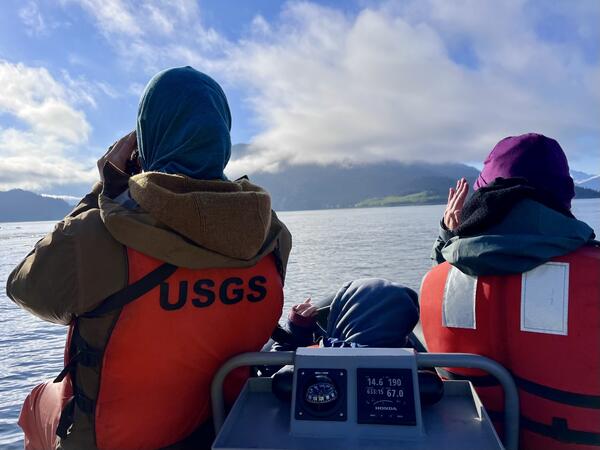
Scientists observing foraging sea otters through telescopes
Scientists observing foraging sea otters through telescopesA pair of scientists observe sea otter foraging behavior at Katmai National Park and Preserve. Questar telescopes are used to assist with prey identification.
Scientists observing foraging sea otters through telescopes
Scientists observing foraging sea otters through telescopesA pair of scientists observe sea otter foraging behavior at Katmai National Park and Preserve. Questar telescopes are used to assist with prey identification.
Bumble bee pollinating a wild celery (Angelica lucida) flower at Katmai National Park and Preserve
Bumble bee pollinating a wild celery (Angelica lucida) flower at Katmai National Park and PreserveA native bubble bee pollinates a wild celery. There are 22 species of bumblebees in Alaska and all are essential pollinators during the short growing season.
Bumble bee pollinating a wild celery (Angelica lucida) flower at Katmai National Park and Preserve
Bumble bee pollinating a wild celery (Angelica lucida) flower at Katmai National Park and PreserveA native bubble bee pollinates a wild celery. There are 22 species of bumblebees in Alaska and all are essential pollinators during the short growing season.
Black Oystercatcher and chick at Katmai National Park and Preserve
Black Oystercatcher and chick at Katmai National Park and PreserveA Black Oystercatcher watches over a few days-old chick at Katmai National Park and Preserve. These shorebirds are monitored on a yearly basis as part of the Gulf Watch Alaska (GWA) long-term monitoring program.
Black Oystercatcher and chick at Katmai National Park and Preserve
Black Oystercatcher and chick at Katmai National Park and PreserveA Black Oystercatcher watches over a few days-old chick at Katmai National Park and Preserve. These shorebirds are monitored on a yearly basis as part of the Gulf Watch Alaska (GWA) long-term monitoring program.
A scientist examines the teeth and skull of a sea otter
A scientist examines the teeth and skull of a sea otterA scientist examines the teeth from a sea otter skull found on a beach at Katmai Nation Park and Preserve. Teeth are collected in the field and each sea otter is aged using cementum annuli counts. Cementum annuli are the rings of collagen fibers in tooth roots.
A scientist examines the teeth and skull of a sea otter
A scientist examines the teeth and skull of a sea otterA scientist examines the teeth from a sea otter skull found on a beach at Katmai Nation Park and Preserve. Teeth are collected in the field and each sea otter is aged using cementum annuli counts. Cementum annuli are the rings of collagen fibers in tooth roots.