



Fish and Aquatic Species Conservation
Fish and Aquatic Species Conservation
At the Eastern Ecological Science Center (EESC), we strive to provide world-class science to inform natural resource decisions that preserve and enhance our quality of life.
Filter Total Items: 90

Trout with “blacktail” associated with whirling disease
Whirling disease, caused by the myxosporean parasite Myxobolus cerebralis was identified as an emerging pathogen of trout in the intermountain west region of the U.S. in the early 1990’s. Investigators here worked collaboratively with others to further our understanding of this disease and its impacts on trout and other salmonid fishes.

Health assessment of invasive northern snakehead
The image is an investigator performing venipuncture for blood collection for health analysis of a northern snakehead fish collected from a Potomac River tributary in northern Virginia.

Invasive pathogens
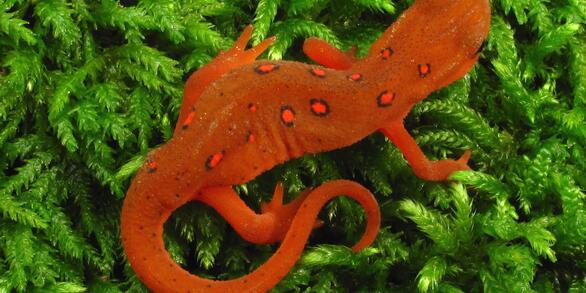
Streamside salamanders such as this one are susceptible to invasive fungal pathogens of the genus Batrachochytrium. Two types of emerging fungal agents, B. dendrobatidis and B. salamandrivorans have been identified as serious risks to our amphibian populations.

Rainbow trout with bacterial lesions
This rainbow trout is displaying clinical signs of enteric redmouth disease caused by a systemic bacterial infection.

Invasive northern snakehead fish
Invasive northern snakehead fish

Eastern Ecological Science Center's Living Stream Laboratory (video)
Welcome to the Experimental Stream Lab at the US Geological Survey Eastern Ecological Science Center's Leetown Research Laboratory in Kearneysville West Virginia.