



Environmental Toxicology
Environmental Toxicology
Filter Total Items: 7
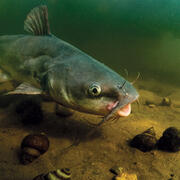
Contaminants in Blue Catfish: Implications for Human, Wildlife, and Environmental Health
As blue catfish become increasingly harvested, recent studies are showing signs that these fish may contain detectable levels of Per- and polyfluoroalkyl Substances (PFAS) and other contaminants. Measuring PFAS in their blood and heavy metals, Polychlorinated biphenyls (PCBs), and microplastics from filets will help determine potential health effects for people, animals, and the environment.

Key Values of a Century of EESC Science
The USGS Eastern Ecological Science Center (EESC) is rooted in a proud tradition of service to the nation—advancing science that informs the conservation and management of fish, wildlife, and habitats across the eastern United States and beyond. Our mission is clear: deliver reliable, partner-driven science that supports natural resource decisions today, while ensuring these resources remain...

EESC Makes an Impact: Preserving our Hunting Resources
Hunting is an economic engine for the U.S. and responsible management of these resources directly supports 45.2 billion dollars spent by hunters annually. Conservation and management of hunting resources also contributes substantially to the 394.8 billion dollars spent on all wildlife-related recreation. Hunting traditions are an integral component of our American heritage, with 14.4 million...

Hazard and Risk of Anticoagulant Rodenticides to Predatory and Scavenging Wildlife
Invasive mammalian predators are the most damaging group of animals affecting global biodiversity. When introduced on remote islands, alien rodent species can devastate local biota and have been linked to approximately 30% of all extinctions. In addition, rodents can also consume and spoil crops, and serve as disease vectors that affect humans. Starting in the 20th century, rodenticides were...

Immune System Changes and Susceptibility to Disease in Birds Exposed to Environmental Contaminants
Disease dynamics in wildlife are commonly related to changes or increases in environmental stressors that are placed upon an animal. Environmental pollutants are known to affect the immune system of wildlife, resulting in impaired resistance to infection and potential increases in disease outbreaks. In collaboration with: Jill Jenkins, Ph.D USGS Wetland and Aquatic Research Center; Julia Lankton...

Do pesticide coatings on agricultural seeds pose a threat to earthworms and to the birds that eat them?
Earthworms are a vital part of a healthy, functioning soil ecosystem and are also an important protein-rich food source for wildlife, including many species of birds and mammals. In an agricultural setting, the presence of earthworms can increase crop yields by 25%, but can also expose earthworms to pesticides. Seed treatment is the principal application method for neonicotinoid insecticides, one...

Identifying the Genetic Basis of Avian Susceptibility to Mercury
The Challenge: Mercury is a highly toxic element found throughout our environment. Although it occurs naturally in some environments, human industrial pollution has greatly increased the amount of mercury and the range of environments in which mercury is found. Recent studies have confirmed clear differences in the sensitivity of various bird species to methylmercury. Because the causes of these...