



Population Dynamics
Population Dynamics
Filter Total Items: 15

Evaluating the Design of the Waterfowl Breeding Population and Habitat Survey
The Waterfowl Breeding Population and Habitat Survey (WBPHS) is a primary source of waterfowl population status and trend information for management of ducks in North America. The survey has not been reviewed in several decades, and since the last review new analysis approaches and information needs have created a need to reassess the design, scope of inference, and analysis of the survey to...
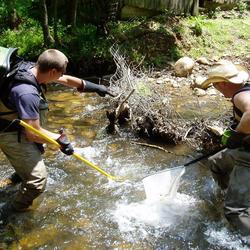
EESC Makes an Impact: Enhancing Recreational & Commercial Fishing
The USGS Eastern Ecological Science Center (EESC) provides world-class science to inform natural resource decisions on aquatic ecosystems, species populations and management, disease, and invasive species. Our scientific products represent critical contributions that enhance the ecological and economic sustainability of recreational and commercial fishing. In the United States, anglers contribute...

Key Values of a Century of EESC Science
The USGS Eastern Ecological Science Center (EESC) is rooted in a proud tradition of service to the nation—advancing science that informs the conservation and management of fish, wildlife, and habitats across the eastern United States and beyond. Our mission is clear: deliver reliable, partner-driven science that supports natural resource decisions today, while ensuring these resources remain...
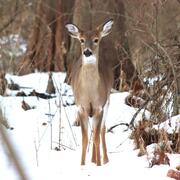
EESC Makes an Impact: Preserving our Hunting Resources
Hunting is an economic engine for the U.S. and responsible management of these resources directly supports 45.2 billion dollars spent by hunters annually. Conservation and management of hunting resources also contributes substantially to the 394.8 billion dollars spent on all wildlife-related recreation. Hunting traditions are an integral component of our American heritage, with 14.4 million...
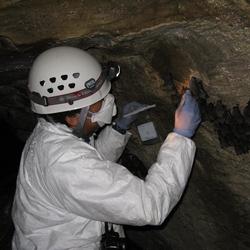
EESC Makes an Impact: Reducing Management Costs and Increasing Efficiency
Decision analysis is widely used in business applications to improve cost saving and increase efficiency under uncertainty. Scientists at the U.S. Geological Survey Eastern Ecological Science Center (EESC) include world-renowned experts who use data, mathematics, statistics, and computer science to help frame and solve decision problems to support U.S. national security, public health, wildlife...

Conservation Genetics of American Shad (Alosa sapidissima) and River Herring (Alosa aestivalis and Alosa pseudoharengus)
USGS scientists are studying American shad ( Alosa sapidissima), blueback herring ( Alosa aestivalis), and alewife ( Alosa pseudoharengus; collectively “alosines”) to develop robust genetic baselines that will inform management practices for individual species.

Production, Behavior, and Survival of Juvenile Shad and River Herring
USGS is conducting research to better understand biology, behavior, and survival of juvenile fishes that travel between fresh and saltwater to complete their lifecycles. Migratory fishes as such as herring and shad are vital components in riverine and coastal ecosystems, transporting food and nutrients between fresh rivers and the ocean. They are also an important forage fish for predators in...

Sustaining Horseshoe Crabs and Supporting Migratory Shorebirds in the Delaware Bay
USGS is developing predictive models to inform sustainable harvest of horseshoe crabs ( Limulus polyphemus) in Delaware Bay to help managers make decisions to support needs of people and shorebirds including rufa red knot ( Calidris canutus rufa).

Northeast Amphibian Research and Monitoring Initiative
The U.S. Geological Survey’s Eastern Ecological Science Center is home to the Northeast Amphibian Research and Monitoring Initiative (NEARMI), one of 7 ARMI regions across the United States. NEARMI works on public lands in thirteen states from Maine to Virginia, including many National Parks and National Wildlife Refuges.

Spatio-Temporal Statistical Models for Forecasting Climate Change Effects on Bird Distribution
Ecological indicators of climate change are needed to measure concurrent changes in ecological systems, inform management decisions, and forecast the consequences of climate change. We seek to develop robust bird-based, climate-change indicators using North American Breeding Bird Survey data.

Pre-listing Science Support in the Northeast
We are working closely with multiple partners to provide updated information, model potential outcomes, and identify key uncertainties relevant to amphibian and reptile species proposed for listing in the northeast US. We also provide timely science to partners to assist in recovery of listed species, which may involve field research, data analysis, or decision support.

Conservation of Rare Vegetation Communities of the Atlantic Coastal Barrier Islands
The Challenge: A synthesis of the role of disturbance, in all of its manifestations, on the establishment and development of the American Holly forest is required to guide future conservation measures. Because many forest fragments have already endured >30 years of chronic deer herbivory, a legitimate question of how much more impact by deer can be tolerated and still conserve the essential type...