



Shrubland, Alpine and Grassland Ecology (SAGE) Wildlife Research Group
The SAGE Wildlife Research Group consists of a large team of research scientists with an interest in conservation and management of wildlife and their ecosystems. Broadly, research involves understanding animal-habitat relationships, with an emphasis on conservation ecology and population demography, and a focus on shrubland, alpine, and grassland ecosystems. We are addressing the effects of energy development and land-use change on conserving wildlife populations, their habitats, and the ecosystems they inhabit, and work closely on these issues with state and federal partners, NGOs, conservation groups and industry.
Species we currently study include songbirds, mammals, snakes, lizards, and grouse, such as white-tailed ptarmigan and sage-grouse. We also work with plant communities and exotic invasive plants to understand how external drivers such as grazing and energy development affect plant communities and thus, wildlife. We work across spatial scales and use statistical and empirical modeling to answer research questions, many of which have direct applications for conservation and management of species, most notably sage-grouse, and their habitats.
Sagebrush Restoration and Recovery
Field of Sagebrush Dreams: Planting and Restoring Functional Sagebrush in Burned Landscapes
Prioritizing Restoration of Sagebrush Ecosystems Tool (PReSET)
Predicting recovery of sagebrush ecosystems
Soil-climate for managing sagebrush ecosystems
Invasive Annual Grasses
Economic assessment of addressing invasive annual grasses
Vegetation conditions and invasive plant species on mine lands
Assessing the Proliferation, Connectivity, and Consequences of Invasive Fine Fuels on the Sagebrush Biome
Assessing invasive annual grass treatment efficacy across the sagebrush biome
Effects of the herbicide, Indaziflam, on invasive annual grasses
Evaluating potential vectors of annual grass invasion
Invasive Annual Grass (IAG) Spatial Dataset Compilation and Synthesis
Sage-grouse Monitoring and Conservation
Hierarchical Population Monitoring Framework for Greater Sage-Grouse
Road Ecology
Development and application of genomic resources for the greater sage-grouse
Creating range-wide predictive maps of greater sage-grouse seasonal habitats
Wildlife Biology and Management
Predicting songbird population response to environmental change
Mapping Grassland Bird Community Distribution under a Changing Climate
Prioritizing conifer removal for multi-species outcomes
Wild horse and livestock influences on vegetation and wildlife in sagebrush ecosystems
Mapping wild horse densities across broad landscapes of the Western United States
Assessing vegetation and avian community response to juniper reduction treatments
Highlighted News from the SAGE Wildlife Research Group
-
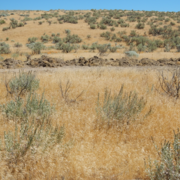
New tools for a growing threat: Co-developed science informs the fight against invasive grasses in the sagebrush biome New tools for a growing threat: Co-developed science informs the fight against invasive grasses in the sagebrush biome
In a new study, FORT scientists worked with resource managers to co-develop a strategic framework for invasive grass management across the sagebrush biome. The framework, implemented through computer simulation models, can help resource managers explore the efficacy of invasive grass management strategies and develop informed, economic conservation plans.
-
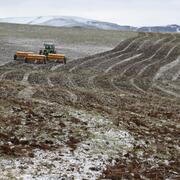
New study on the economics of public land treatments reveals treatment characteristics influence costs New study on the economics of public land treatments reveals treatment characteristics influence costs
Limited information exists on the costs of public land treatments, such as controlling flammable weeds and conducting prescribed burns, but managers can pair cost information with effectiveness data to improve decision making. In a new study, researchers used data from the BLM/USGS Land Treatment Digital Library to develop land treatment cost estimates.
-
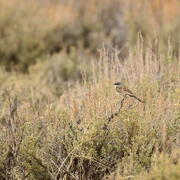
FORT scientists present research at the Society for Range Management 2025 Annual Meeting FORT scientists present research at the Society for Range Management 2025 Annual Meeting
A group of FORT scientists presented virtually and in-person at the Society for Range Management 2025 Annual Meeting in Spokane, Washington, from February 9–13.
-

Ecological benefits and risks of fuel breaks vary across the sagebrush biome Ecological benefits and risks of fuel breaks vary across the sagebrush biome
Fuel breaks – strips of land managed for reduced flammability – are designed to aid wildfire suppression and management. However, construction of fuel breaks may reduce wildlife habitat and introduce invasive species to ecosystems. In a new study published in Fire Ecology, USGS and Colorado State University researchers investigated these potential trade-offs of fuel breaks in sagebrush ecosystems.
-
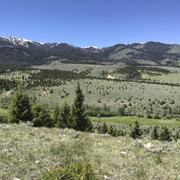
Considering current ecosystem condition in restoration planning Considering current ecosystem condition in restoration planning
Restoration planning requires managers to weigh the potential benefits and costs of restoration action at a site. Sometimes, managers use structured, mathematical algorithms to decide where to focus restoration efforts. However, these algorithms do not always consider the current condition of ecosystems, instead focusing on the potential value of the resulting (desired) ecosystem.
The SAGE Wildlife Research Group consists of a large team of research scientists with an interest in conservation and management of wildlife and their ecosystems. Broadly, research involves understanding animal-habitat relationships, with an emphasis on conservation ecology and population demography, and a focus on shrubland, alpine, and grassland ecosystems. We are addressing the effects of energy development and land-use change on conserving wildlife populations, their habitats, and the ecosystems they inhabit, and work closely on these issues with state and federal partners, NGOs, conservation groups and industry.
Species we currently study include songbirds, mammals, snakes, lizards, and grouse, such as white-tailed ptarmigan and sage-grouse. We also work with plant communities and exotic invasive plants to understand how external drivers such as grazing and energy development affect plant communities and thus, wildlife. We work across spatial scales and use statistical and empirical modeling to answer research questions, many of which have direct applications for conservation and management of species, most notably sage-grouse, and their habitats.
Sagebrush Restoration and Recovery
Field of Sagebrush Dreams: Planting and Restoring Functional Sagebrush in Burned Landscapes
Prioritizing Restoration of Sagebrush Ecosystems Tool (PReSET)
Predicting recovery of sagebrush ecosystems
Soil-climate for managing sagebrush ecosystems
Invasive Annual Grasses
Economic assessment of addressing invasive annual grasses
Vegetation conditions and invasive plant species on mine lands
Assessing the Proliferation, Connectivity, and Consequences of Invasive Fine Fuels on the Sagebrush Biome
Assessing invasive annual grass treatment efficacy across the sagebrush biome
Effects of the herbicide, Indaziflam, on invasive annual grasses
Evaluating potential vectors of annual grass invasion
Invasive Annual Grass (IAG) Spatial Dataset Compilation and Synthesis
Sage-grouse Monitoring and Conservation
Hierarchical Population Monitoring Framework for Greater Sage-Grouse
Road Ecology
Development and application of genomic resources for the greater sage-grouse
Creating range-wide predictive maps of greater sage-grouse seasonal habitats
Wildlife Biology and Management
Predicting songbird population response to environmental change
Mapping Grassland Bird Community Distribution under a Changing Climate
Prioritizing conifer removal for multi-species outcomes
Wild horse and livestock influences on vegetation and wildlife in sagebrush ecosystems
Mapping wild horse densities across broad landscapes of the Western United States
Assessing vegetation and avian community response to juniper reduction treatments
Highlighted News from the SAGE Wildlife Research Group
-
-
New tools for a growing threat: Co-developed science informs the fight against invasive grasses in the sagebrush biome New tools for a growing threat: Co-developed science informs the fight against invasive grasses in the sagebrush biome
In a new study, FORT scientists worked with resource managers to co-develop a strategic framework for invasive grass management across the sagebrush biome. The framework, implemented through computer simulation models, can help resource managers explore the efficacy of invasive grass management strategies and develop informed, economic conservation plans.
-
-
New study on the economics of public land treatments reveals treatment characteristics influence costs New study on the economics of public land treatments reveals treatment characteristics influence costs
Limited information exists on the costs of public land treatments, such as controlling flammable weeds and conducting prescribed burns, but managers can pair cost information with effectiveness data to improve decision making. In a new study, researchers used data from the BLM/USGS Land Treatment Digital Library to develop land treatment cost estimates.
-
-
FORT scientists present research at the Society for Range Management 2025 Annual Meeting FORT scientists present research at the Society for Range Management 2025 Annual Meeting
A group of FORT scientists presented virtually and in-person at the Society for Range Management 2025 Annual Meeting in Spokane, Washington, from February 9–13.
-
-
Ecological benefits and risks of fuel breaks vary across the sagebrush biome Ecological benefits and risks of fuel breaks vary across the sagebrush biome
Fuel breaks – strips of land managed for reduced flammability – are designed to aid wildfire suppression and management. However, construction of fuel breaks may reduce wildlife habitat and introduce invasive species to ecosystems. In a new study published in Fire Ecology, USGS and Colorado State University researchers investigated these potential trade-offs of fuel breaks in sagebrush ecosystems.
-
-
Considering current ecosystem condition in restoration planning Considering current ecosystem condition in restoration planning
Restoration planning requires managers to weigh the potential benefits and costs of restoration action at a site. Sometimes, managers use structured, mathematical algorithms to decide where to focus restoration efforts. However, these algorithms do not always consider the current condition of ecosystems, instead focusing on the potential value of the resulting (desired) ecosystem.