



A female grizzly with a cub. Adult females are considered the most important segment of the Greater Yellowstone grizzly population and consequently are a major focus of USGS research and monitoring.
Images
Images intro.
Filter Total Items: 461

Female Grizzly Bear with Cub
A female grizzly with a cub. Adult females are considered the most important segment of the Greater Yellowstone grizzly population and consequently are a major focus of USGS research and monitoring.

Thermal image of wolves howling
Thermal imagery detects heat loss in wolves to help assess presence or severity of disease, such as mange.
Thermal imagery detects heat loss in wolves to help assess presence or severity of disease, such as mange.

Dose response laboratory trials to assess the concentration of dissolved CO2 in water.
Dose response laboratory trials to assess the concentration of dissolved CO2 in water.Hyperbaric system used to house and expose larval bullfrogs to elevated dissolved CO2 in water for 24-hour exposure period. Experiments were conducted at USGS Leetown Science Center in Kearneysville, WV. NPS Biologist Dr.
Dose response laboratory trials to assess the concentration of dissolved CO2 in water.
Dose response laboratory trials to assess the concentration of dissolved CO2 in water.Hyperbaric system used to house and expose larval bullfrogs to elevated dissolved CO2 in water for 24-hour exposure period. Experiments were conducted at USGS Leetown Science Center in Kearneysville, WV. NPS Biologist Dr.

Bullfrog tadpoles captured with a seine net near Huntley, MT.
Bullfrog tadpoles captured with a seine net near Huntley, MT.Bullfrog tadpoles captured with a seine net near Huntley, MT.
Bullfrog tadpoles captured with a seine net near Huntley, MT.
Bullfrog tadpoles captured with a seine net near Huntley, MT.Bullfrog tadpoles captured with a seine net near Huntley, MT.

Elk in Beartooth Mountains, WY
Elk in the Beartooth Mountains, Wyoming. The USGS and partners study the effects of climate change on the Greater Yellowstone Ecosystem.
Elk in the Beartooth Mountains, Wyoming. The USGS and partners study the effects of climate change on the Greater Yellowstone Ecosystem.

USGS scientist holds a captured whooping crane.
USGS scientist Dave Brandt holds a captured whooping crane while Dr. Barry Hartup with the International Crane Foundation assesses the bird's health before marking.
USGS scientist Dave Brandt holds a captured whooping crane while Dr. Barry Hartup with the International Crane Foundation assesses the bird's health before marking.

Pit tagging a fish
USGS scientist Robert Al-Chokhachy places a pit tag in a trout to track movement.
USGS scientist Robert Al-Chokhachy places a pit tag in a trout to track movement.

Person next to avalanche debris
A skier stand next to avalanche debris in Glacier National Park, 5/5/2011.
A skier stand next to avalanche debris in Glacier National Park, 5/5/2011.
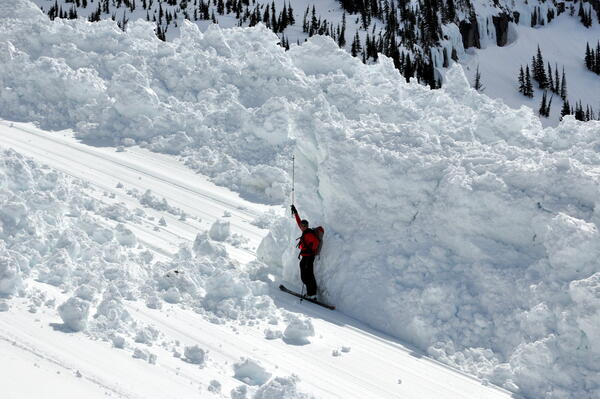
USGS researcher standing near avalanche debris
USGS avalanche researcher evaluates avalanche debris in Glacier National Park, Montana.
USGS avalanche researcher evaluates avalanche debris in Glacier National Park, Montana.

Fall River, Wyoming
A stretch of Fall River in Wyoming, surrounded by trees, outside of Yellowstone National Park.
A stretch of Fall River in Wyoming, surrounded by trees, outside of Yellowstone National Park.

Removal of avalanche debris on road in Glacier National Park
Removal of avalanche debris on road in Glacier National ParkSnow removal operators work carefully to remove a large accumulation of avalanche debris on Going-to-the-Sun Road in Glacier National Park, Montana.
Removal of avalanche debris on road in Glacier National Park
Removal of avalanche debris on road in Glacier National ParkSnow removal operators work carefully to remove a large accumulation of avalanche debris on Going-to-the-Sun Road in Glacier National Park, Montana.

Wet slab avalanche debris deposit in Glacier National Park, Montana
Wet slab avalanche debris deposit in Glacier National Park, MontanaA researcher stands in front of a large wet slab avalanche debris deposit in Glacier National Park, Montana. The start zone and fracture line can be seen near the top of the ridge in the upper middle part of the image.
Wet slab avalanche debris deposit in Glacier National Park, Montana
Wet slab avalanche debris deposit in Glacier National Park, MontanaA researcher stands in front of a large wet slab avalanche debris deposit in Glacier National Park, Montana. The start zone and fracture line can be seen near the top of the ridge in the upper middle part of the image.

Heavy equipment remove avalanche debris from Going-to-the-Sun Road
Heavy equipment remove avalanche debris from Going-to-the-Sun RoadIt requires skill and heavy machinery to remove avalanche debris along the Going-to-the-Sun Road in Glacier National Park, Montana. In this image, road crews are removing snow that was at least 20 feet deep from the Rim Rock area near Logan Pass along the Going-to-the-Sun Road.
Heavy equipment remove avalanche debris from Going-to-the-Sun Road
Heavy equipment remove avalanche debris from Going-to-the-Sun RoadIt requires skill and heavy machinery to remove avalanche debris along the Going-to-the-Sun Road in Glacier National Park, Montana. In this image, road crews are removing snow that was at least 20 feet deep from the Rim Rock area near Logan Pass along the Going-to-the-Sun Road.

Lamar Valley, Yellowstone National Park.
Lamar Valley, Yellowstone National Park.

Prairie Pothole Dragonfly
A dragonfly sits among prairie grasses at a USGS research site in the Williston Basin where scientists are looking at the impacts of oil well brine contamination on prairie pothole wetland communities.
A dragonfly sits among prairie grasses at a USGS research site in the Williston Basin where scientists are looking at the impacts of oil well brine contamination on prairie pothole wetland communities.
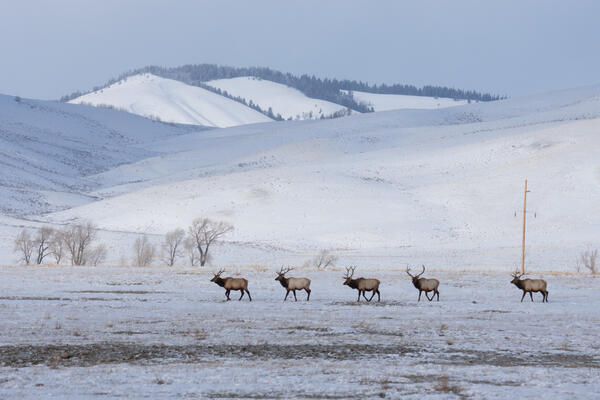
Bull elk group moving near snowy hills
Line of bull elk moving across field with snow-covered Wyoming hills in the background.
Line of bull elk moving across field with snow-covered Wyoming hills in the background.

Wolf eyes close up
Close up of wolf eyes

A meltwater stonefly larva (Lednia tumana)
A meltwater stonefly larva (Lednia tumana) sits on a cobbled snow fed stream in Glacier National Park. The species is threatened by climate warming induced glacier and snow loss and has been petitioned for protection under the U.S. Endangered Species Act due to climate-change-induced habitat loss.
A meltwater stonefly larva (Lednia tumana) sits on a cobbled snow fed stream in Glacier National Park. The species is threatened by climate warming induced glacier and snow loss and has been petitioned for protection under the U.S. Endangered Species Act due to climate-change-induced habitat loss.

Iceberg Lake
On Iceberg Lake in Glacier National Park, ice from the glacier is breaking up and melting at a rapid rate. Cold, glacier fed waters provide crucial habitat for native aquatic species such as trout, and as the ice is disappearing, so are the ideal habitats to sustain native ecosystems.
On Iceberg Lake in Glacier National Park, ice from the glacier is breaking up and melting at a rapid rate. Cold, glacier fed waters provide crucial habitat for native aquatic species such as trout, and as the ice is disappearing, so are the ideal habitats to sustain native ecosystems.

Blackfoot Glacier in Glacier National Park - 2009
Blackfoot Glacier in Glacier National Park - 2009

Blackfoot-Jackson 2009 color
Blackfoot-Jackson 2009 color