



Science Advisory Board
The Powell Center Science Advisory Board (SAB) reviews incoming proposals and makes recommendations to the Directors, who then make the final decisions about which proposals to support. SAB members may not be subject matter experts, so prospective proposals should be written in ways that are understandable and compelling to non-specialists.
2019 Powell Center Science Advisory Board

| Bios | Photos |
|---|---|
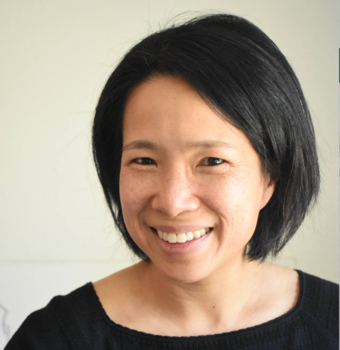
Leslie Hsu Dr. Hsu is physical scientist with the U.S. Geological Survey in the Science Analytics and Synthesis (SAS) Program. Her interests include geomorphology, active tectonics, sediment experiment data, geoinformatics and data science, and virtual communities of practice. She holds degrees from Harvard University, University of Arizona, and University of California, Berkeley. She is interim director of the John Wesley Powell Center for Earth System Science Analysis and Synthesis, and coordinator of the USGS Community for Data Integration. |
Media
Sources/Usage: Public Domain. View Media Details
|
Jill Baron Dr. Baron is an ecosystem ecologist with the U.S. Geological Survey, and a Senior Research Ecologist with the Natural Resource Ecology Laboratory at Colorado State University. Her interests include applying ecosystem concepts to management of human-dominated regions, and understanding the biogeochemical and ecological effects of climate change and atmospheric nitrogen deposition to mountain ecosystems. She is past director of the John Wesley Powell Center for Earth System Science Analysis and Synthesis.
|
Media

Sources/Usage: Public Domain. View Media Details
|
Kate Campbell Dr. Campbell is a research chemist at the USGS in the Geology, Geophysics, and Geochemistry Science Center in Denver, CO. She received her Ph.D. in Environmental Engineering with a focus in biogeochemistry from the California Institute of Technology, Pasadena, CA. Her research focuses on the geochemistry, mineralogy, and microbiology of metals during mineral resource activities, including (bio)remediation and novel methods for metal recovery from mine waste. She also builds geochemical reactive transport models that incorporate microbial processes relevant to active and legacy mine sites. |
Media

Sources/Usage: Public Domain. View Media Details
|
Jessica Driscoll Dr. Driscoll currently serves as a Program Officer within the Rocky Mountain Regional Director’s Office at the USGS in Denver, Colorado. She received her PhD in Hydrology from the University of Arizona and has contributed to several large interdisciplinary team science efforts in her twelve years at the Survey. Her research has focused on drought and Western water issues, including development of quantitative models and visualizations for landscape-scale hydrologic and ecologic network analysis in the Colorado River, Rio Grande, and Great Basins. | |
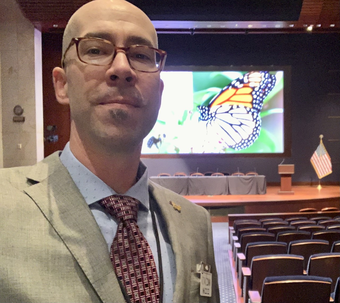
Ryan Drum Ryan Drum serves as the lead scientist for the U.S. Fish and Wildlife Service (USFWS) Center for Pollinator Conservation. He is also the U.S. chair of the Trinational Monarch Conservation Science Partnership. Beyond monarch and pollinators, his work focuses on the intersections of applied conservation, landscape ecology and design, innovation and organizational change. You'll find Ryan at the interface of environmental science and policy (or adventuring somewhere out in the wilderness). |
Media
Sources/Usage: Public Domain. View Media Details
|
Marty Goldhaber Dr. Goldhaber is geochemist and an Emeritus Senior Scientist at the USGS where he received the Department of the Interior Meritorious Service and Presidential Rank Awards. He has served a rotation as the Chief Scientist for Geology and has also served as co-chair of the USGS Science Strategy Team which was charged with defining key strategic directions for the USGS. His current research is on the evolution of the broad ‘geochemical landscapes’ resulting from the interplay of geologic, geomorphologic, hydrologic, and biologic processes. Geochemical landscape studies are underway in the Sacramento Valley of California, and the Prairie Pothole region of the north central U.S. and southern Canada. |
Media

Sources/Usage: Public Domain. View Media Details
|
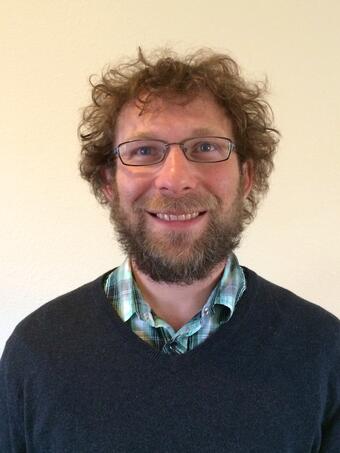
Burke Minsley Dr. Burke Minsley is a research geophysicist with the U.S. Geological Survey at the Geology, Geophysics, and Geochemistry Science Center in Denver, CO. His work involves the development and implementation of innovative ground-based and airborne geophysical methods as part of interdisciplinary studies to improve our understanding of Earth's geosphere, hydrosphere, and cryosphere, and their impact on society and the environment. His projects are interdisciplinary and geographically diverse, with applications to changing permafrost in Alaska, regional groundwater availability and salinity studies across multiple watersheds, and computational methods for uncertainty quantification in geophysical interpretations. He is also part of a team working to develop an open community standard for geophysical data to improve their usability and longevity. |
Media
Sources/Usage: Some content may have restrictions. View Media Details
|
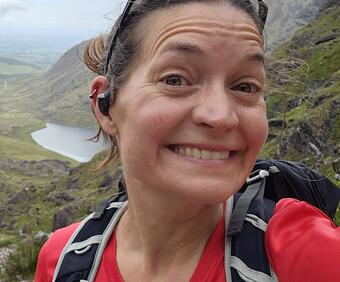
Toni Lyn Morelli Dr. Morelli is a Research Ecologist with the US Geological Survey, based at the Northeast Climate Adaptation Science Center. She earned her B.S. in Zoology at Michigan State University and her Ph.D. in Ecology & Evolution at Stony Brook University. She has been studying the impacts of global change in the U.S. and Africa for over 20 years. She is the co-founder and lead of the Refugia Research Coalition (climaterefugia.org) and the international Regional Invasive Species and Climate Change (RISCC) Management Network (risccnetwork.org), and is a pioneer in the field of Translational Ecology, which was developed to improve the impact of scientific research in addressing environmental problems. |
Media
Sources/Usage: Public Domain. View Media Details
|
Nedal Nassar Dr. Nedal Nassar is a senior research scientist leading the U.S. Geological Survey's Minerals Intelligence Research Section in quantifying the global stocks and flows of nonfuel mineral commodities at each stage of their life cycle, analyzing trends and examining concerns regarding foreign mineral dependencies, developing supply and demand scenarios, and assessing the mineral commodity supply risk to the U.S. economy and national security. Dr. Nassar received his Ph.D. from Yale University where he worked on the development and application of a methodology for assessing critical minerals. He also holds a bachelor’s degree in chemical engineering from the University of Minnesota, an MBA in sustainable global enterprise from Cornell University, as well as two master’s degrees from Yale University. | |
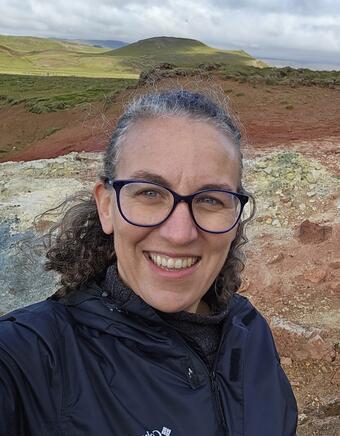
Robyn Smyth Dr. Smyth is a Program Director in the Directorate of Biological Sciences at the U.S. National Science Foundation (NSF) where she has worked on the Ecosystem Science, Long-Term Ecological Research (LTER), Dynamics of Integrated Socio-Environmental Systems (DISES) and other cross-disciplinary programs. Her expertise is in bio-physical coupling in lake ecosystems and the socio-environmental dynamics of water resource management. Prior to joining NSF, she was a professor of Environmental and Urban Studies at Bard College in New York. |
Media
Sources/Usage: Public Domain. View Media Details
|
Charles Yackulic Dr. Yackulic is a research statistician with the US Geological Survey’s Southwest Biological Science and Grand Canyon Monitoring and Research Centers in Flagstaff, AZ. His research primarily focuses on developing and fitting statistical models that integrate multiple data sources, link environmental drivers and management actions to population and ecosystem processes, and can be used to make near and long term forecasting of system dynamics under different management alternatives. Areas of particular interest include species distribution dynamics, population dynamics, interspecific interactions, animal movement, food web dynamics and river metabolism. |
Media

Sources/Usage: Public Domain. View Media Details
|