



Upper Midwest Environmental Sciences Center
Long Term Resource Monitoring
Ecological Status and Trends of the Upper Mississippi and Illinois Rivers
Ecological Status and Trends of the Upper Mississippi and Illinois Rivers
UMESC Activity Report for October 2025 – April 2026
Publications and Products
Publications and Products
Scientific Investigations Report
Breeding Birds of the Upper Mississippi River Floodplain Forest: One Community in a Changing Forest, 1994 to 1997
Breeding Birds of the Upper Mississippi River Floodplain Forest: One Community in a Changing Forest, 1994 to 1997
Bat Research
White-nose syndrome (WNS) caused by the fungal pathogen Pseudogymnoascus destructans (Pd)
White-nose syndrome (WNS) caused by the fungal pathogen Pseudogymnoascus destructans (Pd)
Conservation of Native Freshwater Mussels
Freshwater mussels are the most imperiled group of animals in North America, with 66% of species at risk.
Freshwater mussels are the most imperiled group of animals in North America, with 66% of species at risk.
UMRR Long Term Resource Monitoring
The LTRM is the Nation's largest river monitoring program with six remote state-operated field stations.
The LTRM is the Nation's largest river monitoring program with six remote state-operated field stations.
Upper Midwest Environmental Sciences Center
Welcome to the Upper Midwest Environmental Sciences Center (UMESC). We are proud to be one of the leading research centers conducting ecological research to support the Department of the Interior's and other local, state and federal resource agencies management of natural resources, fish, and wildlife.
News
A Tale of Two Islands and the Future of an Ocean Sentinel Seabird
A Tale of Two Islands and the Future of an Ocean Sentinel Seabird
EcoNews - Vol. 7 | Issue 2
EcoNews - Vol. 7 | Issue 2
Tackling Invasive Mussels with Science and Strategy
Tackling Invasive Mussels with Science and Strategy
Publications
Applying a metapopulation model to compare native and invasive fish passage scenarios in the Upper Mississippi River Applying a metapopulation model to compare native and invasive fish passage scenarios in the Upper Mississippi River
The U.S. Geological Survey assessed the ability of metapopulation models to evaluate population-level effects of fish passage projects in the Upper Mississippi River for six native species: Ictalurus furcatus (Valenciennes in Cuvier and Valenciennes, 1840; blue catfish), Ictiobus cyprinellus (Valenciennes in Cuvier and Valenciennes, 1844; bigmouth buffalo), Acipenser fulvescens...
Decision analysis of long-term research and monitoring investments for the Upper Mississippi River Restoration program Decision analysis of long-term research and monitoring investments for the Upper Mississippi River Restoration program
Congressional authorization of the Water Resource Development Act of 2020 increased funding for the Upper Mississippi River Restoration (UMRR) program and its Long Term Resource Monitoring (LTRM) element. With adequate resources there is an opportunity for LTRM to expand its understanding of the Upper Mississippi River System, address unmet partner information needs, and better inform...
Science
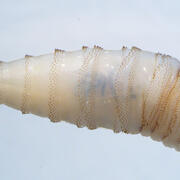
Rapid Genetic Testing to Identify New World Screwworm
Early detection and rapid response are critical to controlling the spread of New World Screwworm, a blowfly pest that has re-emerged in the U.S. As the USDA leads the federal response, USGS Ecosystems Mission Area scientists are developing and validating a rapid DNA field test that can be used onsite with simple materials and basic training to support surveillance and response efforts.
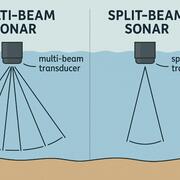
Improving hydroacoustic techniques to assess invasive carp populations in large rivers
Invasive carp, such as Bighead Carp and Silver Carp, are non-native fish that have been introduced throughout North American waterways, often through human activities. Their ability to rapidly reproduce, outcompeting native fish for food and habitat, can pose a significant threat to local ecosystems. Additionally, their large population numbers can harm commercial and recreational fishing, causing...
Riverine Acoustic Fish Telemetry (RAFT) Network
The Riverine Acoustic Fish Telemetry (RAFT™) Network is a node of the Ocean Tracking Network (OTN) and serves as a repository to access and archive acoustic fish telemetry data from projects occurring across the Mississippi River Basin. By sharing the locations of receivers and detections of member transmitters across all receivers in the Network, RAFT provides an avenue for collaboration and...