



Sunflowers grow in the Black Hills of South Dakota. Sunflowers are an important agricultural crop in the Dakotas, grown for birdseed and sunflower oil.
Images
Images
Filter Total Items: 9454

Sunflowers in the Black Hills
Sunflowers grow in the Black Hills of South Dakota. Sunflowers are an important agricultural crop in the Dakotas, grown for birdseed and sunflower oil.

Cave Formations in Wind Cave
Wind Cave is the first cave national park and currently, the 6th most extensive cave network in the world. It's most famous for its large concentration of a fairly rare cave formation known as boxwork. Boxwork is formed when dissolved calcium carbonate crystallized in cracks in surrounding rock.
Wind Cave is the first cave national park and currently, the 6th most extensive cave network in the world. It's most famous for its large concentration of a fairly rare cave formation known as boxwork. Boxwork is formed when dissolved calcium carbonate crystallized in cracks in surrounding rock.

Cave Formations in Wind Cave
Wind Cave is the first cave national park and currently, the 6th most extensive cave network in the world. It's most famous for its large concentration of a fairly rare cave formation known as boxwork. Boxwork is formed when dissolved calcium carbonate crystallized in cracks in surrounding rock.
Wind Cave is the first cave national park and currently, the 6th most extensive cave network in the world. It's most famous for its large concentration of a fairly rare cave formation known as boxwork. Boxwork is formed when dissolved calcium carbonate crystallized in cracks in surrounding rock.

Cave Formations in Wind Cave
Wind Cave is the first cave national park and currently, the 6th most extensive cave network in the world. It's most famous for its large concentration of a fairly rare cave formation known as boxwork. Boxwork is formed when dissolved calcium carbonate crystallized in cracks in surrounding rock.
Wind Cave is the first cave national park and currently, the 6th most extensive cave network in the world. It's most famous for its large concentration of a fairly rare cave formation known as boxwork. Boxwork is formed when dissolved calcium carbonate crystallized in cracks in surrounding rock.

Cave Popcorn in Wind Cave
Wind Cave is the first cave national park and currently, the 6th most extensive cave network in the world. It's most famous for its large concentration of a fairly rare cave formation known as boxwork. Boxwork is formed when dissolved calcium carbonate crystallized in cracks in surrounding rock.
Wind Cave is the first cave national park and currently, the 6th most extensive cave network in the world. It's most famous for its large concentration of a fairly rare cave formation known as boxwork. Boxwork is formed when dissolved calcium carbonate crystallized in cracks in surrounding rock.

Boxwork in Wind Cave
Wind Cave is the first cave national park and currently, the 6th most extensive cave network in the world. It's most famous for its large concentration of a fairly rare cave formation known as boxwork. Boxwork is formed when dissolved calcium carbonate crystallized in cracks in surrounding rock.
Wind Cave is the first cave national park and currently, the 6th most extensive cave network in the world. It's most famous for its large concentration of a fairly rare cave formation known as boxwork. Boxwork is formed when dissolved calcium carbonate crystallized in cracks in surrounding rock.

Boxwork in Wind Cave
Wind Cave is the first cave national park and currently, the 6th most extensive cave network in the world. It's most famous for its large concentration of a fairly rare cave formation known as boxwork. Boxwork is formed when dissolved calcium carbonate crystallized in cracks in surrounding rock.
Wind Cave is the first cave national park and currently, the 6th most extensive cave network in the world. It's most famous for its large concentration of a fairly rare cave formation known as boxwork. Boxwork is formed when dissolved calcium carbonate crystallized in cracks in surrounding rock.

Boxwork in Wind Cave
Wind Cave is the first cave national park and currently, the 6th most extensive cave network in the world. It's most famous for its large concentration of a fairly rare cave formation known as boxwork. Boxwork is formed when dissolved calcium carbonate crystallized in cracks in surrounding rock.
Wind Cave is the first cave national park and currently, the 6th most extensive cave network in the world. It's most famous for its large concentration of a fairly rare cave formation known as boxwork. Boxwork is formed when dissolved calcium carbonate crystallized in cracks in surrounding rock.

Boxwork in Wind Cave
Wind Cave is the first cave national park and currently, the 6th most extensive cave network in the world. It's most famous for its large concentration of a fairly rare cave formation known as boxwork. Boxwork is formed when dissolved calcium carbonate crystallized in cracks in surrounding rock.
Wind Cave is the first cave national park and currently, the 6th most extensive cave network in the world. It's most famous for its large concentration of a fairly rare cave formation known as boxwork. Boxwork is formed when dissolved calcium carbonate crystallized in cracks in surrounding rock.

Natural Entrance for Wind Cave
Wind Cave is the first cave national park and currently, the 6th most extensive cave network in the world. It's most famous for its large concentration of a fairly rare cave formation known as boxwork. Boxwork is formed when dissolved calcium carbonate crystallized in cracks in surrounding rock.
Wind Cave is the first cave national park and currently, the 6th most extensive cave network in the world. It's most famous for its large concentration of a fairly rare cave formation known as boxwork. Boxwork is formed when dissolved calcium carbonate crystallized in cracks in surrounding rock.

Boxwork in Wind Cave
Wind Cave is the first cave national park and currently, the 6th most extensive cave network in the world. It's most famous for its large concentration of a fairly rare cave formation known as boxwork. Boxwork is formed when dissolved calcium carbonate crystallized in cracks in surrounding rock.
Wind Cave is the first cave national park and currently, the 6th most extensive cave network in the world. It's most famous for its large concentration of a fairly rare cave formation known as boxwork. Boxwork is formed when dissolved calcium carbonate crystallized in cracks in surrounding rock.

Boxwork in Wind Cave
Wind Cave is the first cave national park and currently, the 6th most extensive cave network in the world. It's most famous for its large concentration of a fairly rare cave formation known as boxwork. Boxwork is formed when dissolved calcium carbonate crystallized in cracks in surrounding rock.
Wind Cave is the first cave national park and currently, the 6th most extensive cave network in the world. It's most famous for its large concentration of a fairly rare cave formation known as boxwork. Boxwork is formed when dissolved calcium carbonate crystallized in cracks in surrounding rock.

Cave Popcorn in Wind Cave
Wind Cave is the first cave national park and currently, the 6th most extensive cave network in the world. It's most famous for its large concentration of a fairly rare cave formation known as boxwork. Boxwork is formed when dissolved calcium carbonate crystallized in cracks in surrounding rock.
Wind Cave is the first cave national park and currently, the 6th most extensive cave network in the world. It's most famous for its large concentration of a fairly rare cave formation known as boxwork. Boxwork is formed when dissolved calcium carbonate crystallized in cracks in surrounding rock.

Cave Formations in Wind Cave
Wind Cave is the first cave national park and currently, the 6th most extensive cave network in the world. It's most famous for its large concentration of a fairly rare cave formation known as boxwork. Boxwork is formed when dissolved calcium carbonate crystallized in cracks in surrounding rock.
Wind Cave is the first cave national park and currently, the 6th most extensive cave network in the world. It's most famous for its large concentration of a fairly rare cave formation known as boxwork. Boxwork is formed when dissolved calcium carbonate crystallized in cracks in surrounding rock.

Flowstone Formations in Jewel Cave
Jewel Cave is currently the 3rd most extensive cave network in the world. It is believed to have formed completely underwater, thus leading to the extensive coating of calcite crystals.
Jewel Cave is currently the 3rd most extensive cave network in the world. It is believed to have formed completely underwater, thus leading to the extensive coating of calcite crystals.

Cave Bacon in Jewel Cave
Jewel Cave is currently the 3rd most extensive cave network in the world. It is believed to have formed completely underwater, thus leading to the extensive coating of calcite crystals.
In the center of the image, a formation known as cave bacon can be seen.
Jewel Cave is currently the 3rd most extensive cave network in the world. It is believed to have formed completely underwater, thus leading to the extensive coating of calcite crystals.
In the center of the image, a formation known as cave bacon can be seen.

Boxwork in Jewel Cave
Jewel Cave is currently the 3rd most extensive cave network in the world. It is believed to have formed completely underwater, thus leading to the extensive coating of calcite crystals.
Jewel Cave is currently the 3rd most extensive cave network in the world. It is believed to have formed completely underwater, thus leading to the extensive coating of calcite crystals.

Dogtooth and Nailhead Spar in Jewel Cave
Jewel Cave is currently the 3rd most extensive cave network in the world. It is believed to have formed completely underwater, thus leading to the extensive coating of calcite crystals.
On the righthand side of the image, some of this coating of calcite crystals can be seen. These crystals are made up of two primary types: dogtooth spar and nailhead spar.
Jewel Cave is currently the 3rd most extensive cave network in the world. It is believed to have formed completely underwater, thus leading to the extensive coating of calcite crystals.
On the righthand side of the image, some of this coating of calcite crystals can be seen. These crystals are made up of two primary types: dogtooth spar and nailhead spar.

Dogtooth and Nailhead Spar in Jewel Cave
Jewel Cave is currently the 3rd most extensive cave network in the world. It is believed to have formed completely underwater, thus leading to the extensive coating of calcite crystals.
In the center of the image, some of this coating of calcite crystals can be seen. These crystals are made up of two primary types: dogtooth spar and nailhead spar.
Jewel Cave is currently the 3rd most extensive cave network in the world. It is believed to have formed completely underwater, thus leading to the extensive coating of calcite crystals.
In the center of the image, some of this coating of calcite crystals can be seen. These crystals are made up of two primary types: dogtooth spar and nailhead spar.
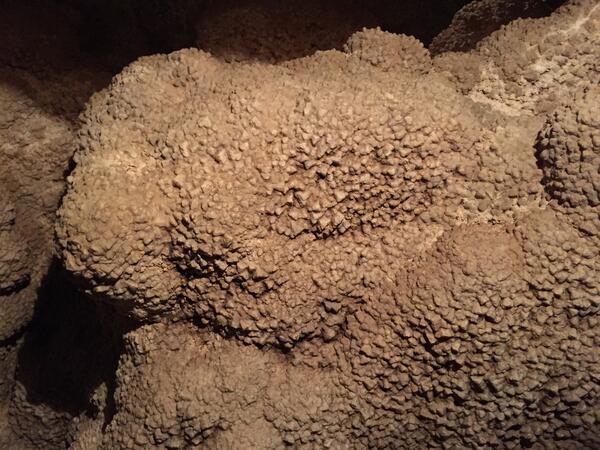
Dogtooth and Nailhead Spar in Jewel Cave
Jewel Cave is currently the 3rd most extensive cave network in the world. It is believed to have formed completely underwater, thus leading to the extensive coating of calcite crystals.
In the center of the image, some of this coating of calcite crystals can be seen. These crystals are made up of two primary types: dogtooth spar and nailhead spar.
Jewel Cave is currently the 3rd most extensive cave network in the world. It is believed to have formed completely underwater, thus leading to the extensive coating of calcite crystals.
In the center of the image, some of this coating of calcite crystals can be seen. These crystals are made up of two primary types: dogtooth spar and nailhead spar.

Cross-section of Calcite Crystal Covering in Jewel Cave
Cross-section of Calcite Crystal Covering in Jewel CaveJewel Cave is currently the 3rd most extensive cave network in the world. It is believed to have formed completely underwater, thus leading to the extensive coating of calcite crystals.
A cross-sectional view of the crystal coating can be seen in the center of the image, with the surface of the calcite crystals at the top of the image.
Cross-section of Calcite Crystal Covering in Jewel Cave
Cross-section of Calcite Crystal Covering in Jewel CaveJewel Cave is currently the 3rd most extensive cave network in the world. It is believed to have formed completely underwater, thus leading to the extensive coating of calcite crystals.
A cross-sectional view of the crystal coating can be seen in the center of the image, with the surface of the calcite crystals at the top of the image.