U.S. flag

An official website of the United States government

Images

If you are unable to access or download a product, email fresc_outreach@usgs.gov a request, including the full citation, or call (541) 750-1030.

Filter Total Items: 418
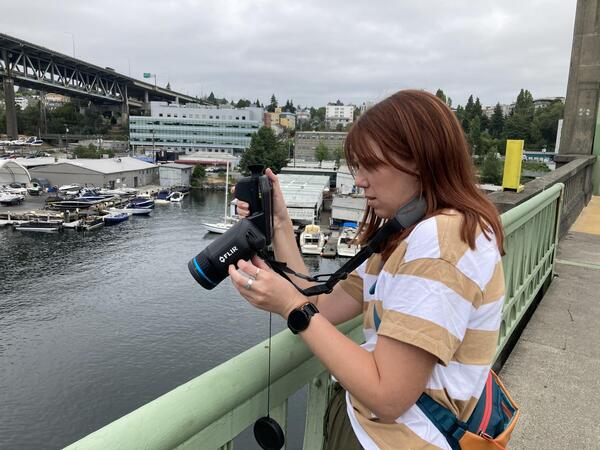
Image of EAE testing the forward-looking infrared (FLIR) Camera on a bridge
Testing a thermal infrared camera by capturing water surface temperature off the side of a bridge in Seattle, Washington
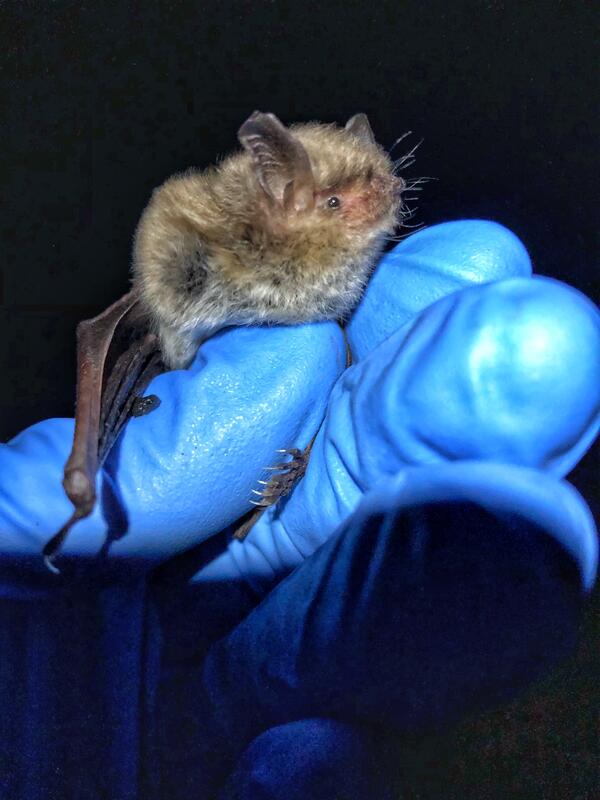
A small bat perches on a gloved hand, its wing folded and its mouth open
Perched Yuma myotis
Perched Yuma myotis
Perched Yuma myotis

Yuma myotis has a wide range throughout western North America, from the Southwestern regions of Canada into Mexico. 

Yuma myotis has a wide range throughout western North America, from the Southwestern regions of Canada into Mexico. 

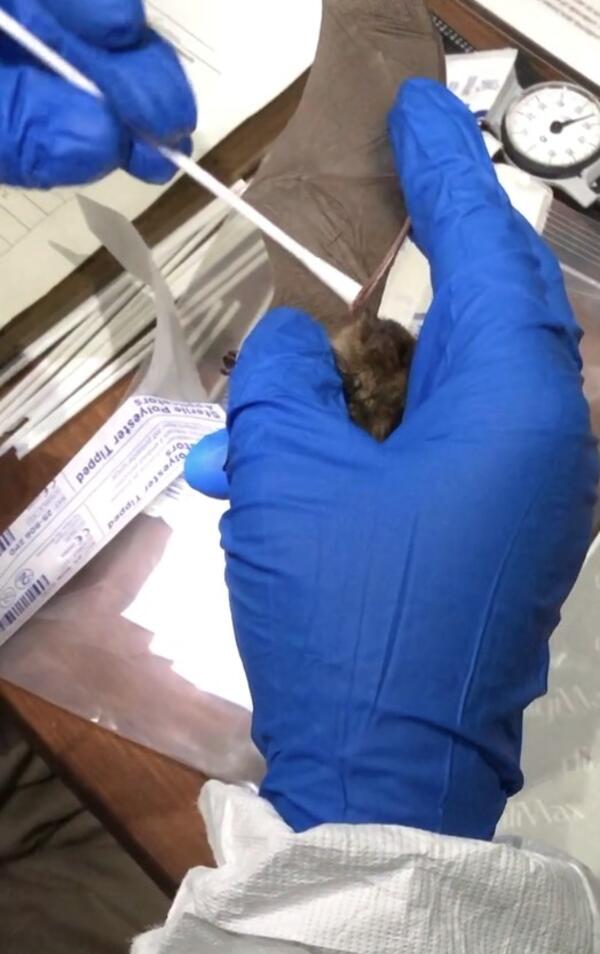
Gloved hands swab a bat's outstretched wing
Collecting fungal samples to test for Pseudogymnoascus destructans

Individual bats are tested for Pseudogymnoascus destructans, the fungus that causes white-nose syndrome, by wiping a sterile swab across the skin of a bat's outstretched wing and muzzle.

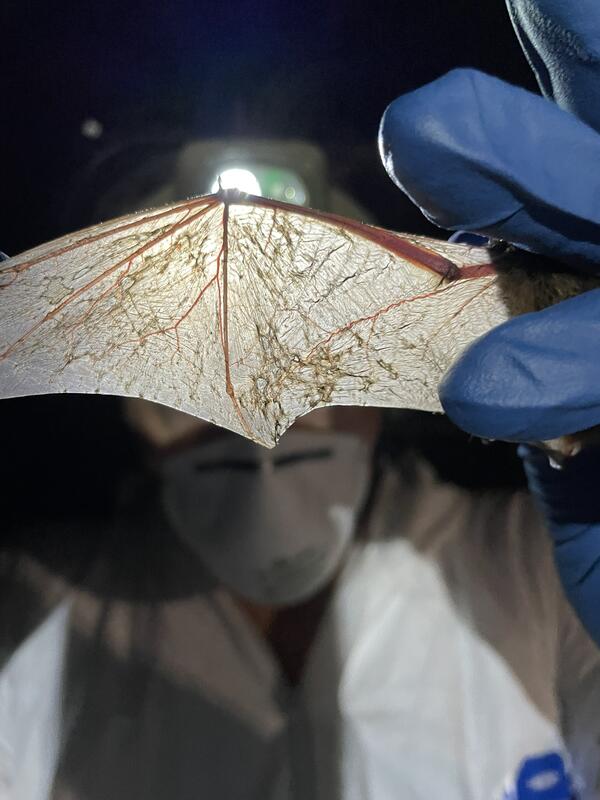
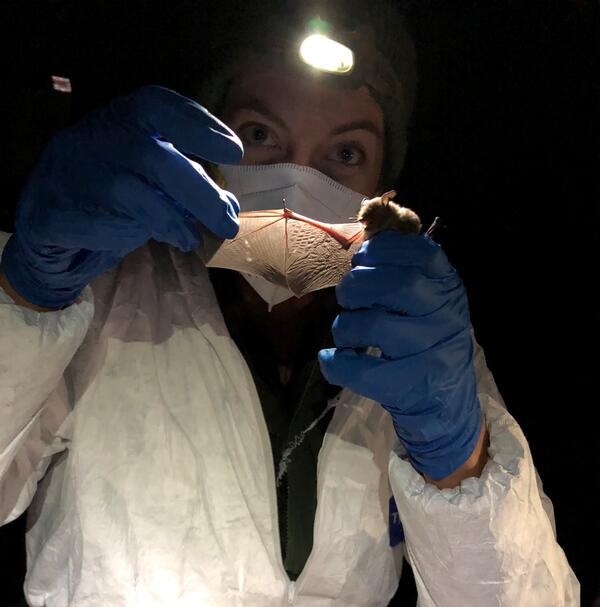
A person wearing a headlamp and protective gear holds a bat with its wing outstretched
Looking for wing damage

Scientists look for damage on the skin of a bat's wing as an indicator of white-nose syndrome infection. This bat has no wing damage.

Scientists look for damage on the skin of a bat's wing as an indicator of white-nose syndrome infection. This bat has no wing damage.

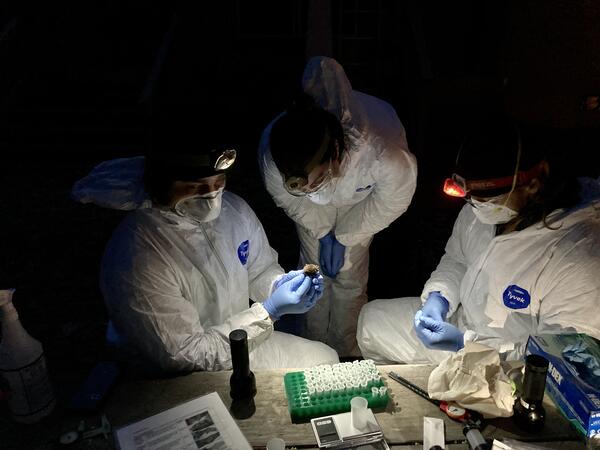
Three people wearing protective gear and headlamps light up a bat held in gloved hands.
Setting up to collect samples from a bat

Scientists get ready to collect samples from a bat to test for Pseudogymnoascus destructans, the fungus that causes white-nose syndrome.

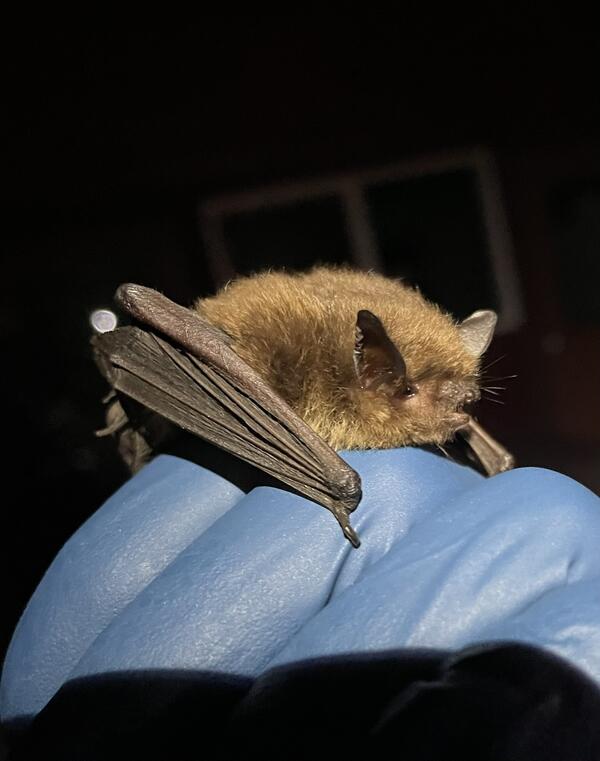
A gloved hand holds a small bat to show its head and body
Yuma myotis bat
Yuma myotis bat
Yuma myotis bat

The Yuma myotis bat, Myotis yumanensis, has a body length of only 1.5-1.9 inches and they weigh less than half an ounce.

The Yuma myotis bat, Myotis yumanensis, has a body length of only 1.5-1.9 inches and they weigh less than half an ounce.

Turtle sitting in plants and sunshine with its head up. It has black markings along its neck.
15 year old female turtle

Northwestern pond turtles are sexually dimorphic (females and males look different). One way to tell female and male turtles apart is that they often have different color patterns on their face and throats. Females have a more speckled throat, while males throats tend to be more solidly white/yellow.

Northwestern pond turtles are sexually dimorphic (females and males look different). One way to tell female and male turtles apart is that they often have different color patterns on their face and throats. Females have a more speckled throat, while males throats tend to be more solidly white/yellow.

Juvenile turtle sitting in vegetation with white flowers with yellow centers in from of it
8 year old juvenile northwestern pond turtle

These turtles are considered juveniles until they reach about 5 inches long. In this part of their range turtles remain juveniles and usually do not begin to reproduce until they are over ten years old.  


Photo taken at Lookout Point Reservoir, Oregon. 

These turtles are considered juveniles until they reach about 5 inches long. In this part of their range turtles remain juveniles and usually do not begin to reproduce until they are over ten years old.  


Photo taken at Lookout Point Reservoir, Oregon. 

Turtle covered in moss and leaf litter. It is still resting in its shell but looks like its waking up
Turtle coming out of brumation

Turtle found in the spring coming out of brumation. It is still covered in mud from being buried in the ground all winter.  They can brumate up to several months! 

Photo taken at Lookout Point Reservoir, Oregon. 

Turtle found in the spring coming out of brumation. It is still covered in mud from being buried in the ground all winter.  They can brumate up to several months! 

Photo taken at Lookout Point Reservoir, Oregon. 

up close of a juvenile turtle. It is peaking out of its shell with both eyes on the camera
Juvenile Northwestern pond turtle

This is a juvenile turtle. When they aren't in scared or in danger, northwestern turtles are very curious and will look towards movements and unusual sounds to figure out what is going on. They have excellent vision and hearing.  

Photo taken at Hills Creek Reservoir, Oregon. 


This is a juvenile turtle. When they aren't in scared or in danger, northwestern turtles are very curious and will look towards movements and unusual sounds to figure out what is going on. They have excellent vision and hearing.  

Photo taken at Hills Creek Reservoir, Oregon. 


Turtle with a small circular black transmitter on its shell. It is standing on top of leaf litter.
Turtle being released after receiving a new transmitter

We glue transmitters onto their upper shells (called their carapace) using non-permanent epoxy. We will track these turtles until the transmitter battery dies (about 2 years) and soon after that the epoxy degrades, and the transmitter will fall off the turtle without harming the turtle or it's shell. 

We glue transmitters onto their upper shells (called their carapace) using non-permanent epoxy. We will track these turtles until the transmitter battery dies (about 2 years) and soon after that the epoxy degrades, and the transmitter will fall off the turtle without harming the turtle or it's shell. 

Turtle moving through underbrush, the forest is full of ferns and dead litter matter
Return to overwintering spot

Northwestern pond turtles often return to the same area each winter for brumation. We tracked this turtle overwintering in almost the exact same area in the winters of 2023 and 2024. It's brumation location was only 11m apart between the two years.  


Photo taken at Fall Creek Reservoir, Oregon. 

Northwestern pond turtles often return to the same area each winter for brumation. We tracked this turtle overwintering in almost the exact same area in the winters of 2023 and 2024. It's brumation location was only 11m apart between the two years.  


Photo taken at Fall Creek Reservoir, Oregon. 

Ecologist taking notes on a tablet. Behind her is a reservoir surrounded by pine trees
Ecologist collecting information on turtle overwintering spot

This turtle crossed a road leaving the reservoir and will cross it again to return to the reservoir. Road crossings present high risk to turtles and are a large source of mortality.  


Photo taken at Lookout Point Reservoir, Oregon

This turtle crossed a road leaving the reservoir and will cross it again to return to the reservoir. Road crossings present high risk to turtles and are a large source of mortality.  


Photo taken at Lookout Point Reservoir, Oregon

RCMAP show higher R2 and lower performance compared to RAP values
RCMAP and RAP differences in performance

Rangeland Analysis Platform (RAP) and Rangeland Condition Monitoring Assessment and Projection (RCMAP) r2 values when compared to field observations. The variation between models and version was high. 

Rangeland Analysis Platform (RAP) and Rangeland Condition Monitoring Assessment and Projection (RCMAP) r2 values when compared to field observations. The variation between models and version was high. 

brown and orange baby newt in the palm of a person's hand
Baby rough-skinned newt in a defensive posture

A young rough-skinned newt in a defensive posture known as "unkenreflex." Several amphibian species curl up their bodies to display their brightly colored bellies as a warning to predators that they are poisonous.

A young rough-skinned newt in a defensive posture known as "unkenreflex." Several amphibian species curl up their bodies to display their brightly colored bellies as a warning to predators that they are poisonous.

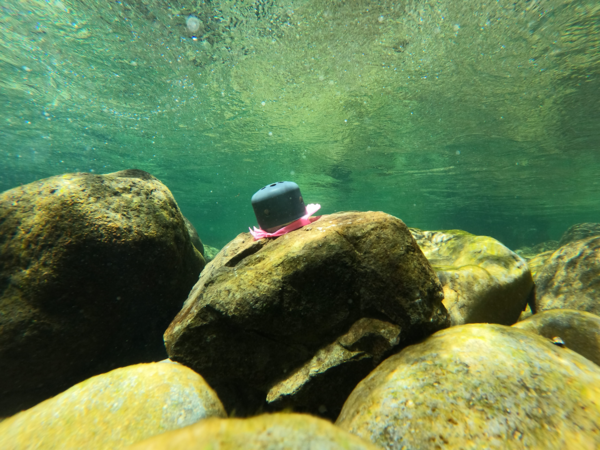
Submerged temperature logger mounted to cobble on riverbed.
Temperature logger in Santiam River basin, Oregon

Temperature logger attached to submerged cobble in Quartzville Creek, OR. This logger was placed as part of an ongoing effort to retrieve continuous temperature data from rivers and tributaries within the Willamette River basin, OR.

Temperature logger attached to submerged cobble in Quartzville Creek, OR. This logger was placed as part of an ongoing effort to retrieve continuous temperature data from rivers and tributaries within the Willamette River basin, OR.

Map of the Western US where darkened areas are those of Gunnison Sage Grouse restoration areas
CED Gunnison Sage-Grouse Module

Screenshot of the Conservation Efforts Gunnison Sage-Grouse Module. The interactive map shows different kinds of Gunnison Sage-Grouse restoration projects currently in the database and where they are.     

Screenshot of the Conservation Efforts Gunnison Sage-Grouse Module. The interactive map shows different kinds of Gunnison Sage-Grouse restoration projects currently in the database and where they are.     

Western US trends of sagebrush shown in blue and yellow colors with blue being higher sagebrush levels and yellow lower
CED Sagebrush Trends Tool

Screenshot of the Conservation Efforts Database Sagebrush Trends Module. The interactive map shows different kinds of sagebrush trends currently in the database and where they are.   

Screenshot of the Conservation Efforts Database Sagebrush Trends Module. The interactive map shows different kinds of sagebrush trends currently in the database and where they are.   

Diamonds are shown across a map of the Western US to show areas of cutthroat trout restoration
CED Cutthroat Trout Module

Screenshot of the Conservation Efforts Database Cutthroat Trout Module. The interactive map shows different kinds of cutthroat trout restoration projects currently in the database and where they are.  

Screenshot of the Conservation Efforts Database Cutthroat Trout Module. The interactive map shows different kinds of cutthroat trout restoration projects currently in the database and where they are.  

Was this page helpful?