



Mineral Resources
Mineral Resources
Filter Total Items: 41
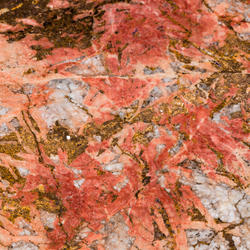
Controls on Critical Element Enrichment in Carbonatite-Alkaline Igneous Complexes
The project seeks to determine the processes responsible for critical element enrichment in carbonatites and to enhance our ability to identify and assess economic deposits. This project will work at various scales to meet this objective and will primarily focus on deposits within the US or our USGS collaborative Nations.

USMIN Mineral Deposit Database
The USMIN Mineral Deposit Database Project develops national-scale geospatial databases that provide authoritative information on the most significant mines, mineral deposits, and mining districts in the United States. These resources advance the understanding of domestic mineral resources and are available through the output of digital data products, journal articles, presentations, and other...

Large Magmatic Systems for Minerals
This project continues work on large magmatic systems in the U.S., where critical mineral commodities important to clean energy technologies can be concentrated. Modeling of large mafic intrusion extents will continue, and new geophysical methods will be applied to improve understanding of magmatic systems.

Source, transport and deposition of critical minerals using trace metal and isotope systematics: Denver High Resolution Laboratory
The project objective is to develop and apply solution and in situ isotopic and trace element methods to emerging research opportunities to gain a better understanding of the processes controlling critical mineral deposits, metal mobility, and other geological inquiries.

Argon Geochronology
This project supports the USGS argon geochronology laboratory in Denver. The USGS 40Ar/39Ar geochronology laboratory is a state-of-the-art research facility for determining absolute ages of minerals and rocks. The 40Ar/39Ar laboratory contributes critical geochronology to individual USGS research projects and to partners in academia and other Federal agencies. This laboratory develops methodology...

Isotope and Chemical Methods for Mineral and Geoenvironmental Assessments and Support of USGS Science Strategy
The Project objective is to facilitate the full potential of stable isotope (C,H,N,O,S), noble gas isotope (He, Ar, Ne, Ar, Kr, Xe), active gas geochemistry (CO2, H2S, SO2, CH4, HF, HCl, N2, H2, organics, light hydrocarbons), and solute geochemistry measurements of minerals and fluids (including single fluid inclusions) in multidisciplinary studies of fundamental processes that affect mineral...

Systems Approach to Critical Minerals Inventory, Research, and Assessment
This project supports the Earth Mapping Resources Initiative (EarthMRI) by developing a mineral systems approach for defining focus areas. This project is investigating domestic sources of critical minerals in three sequential stages: inventory, research, and assessment. 1) Inventory the abundance of critical minerals in ore, minerals, and processed materials from major deposits in each system...

GIS and Information Management - GGGSC
We support the geospatial component of Mineral Resources Program research and provide public access to research results and geospatial information. We facilitate all aspects of the data life cycle, including the publication and archiving of geospatial information and products. We also develop and steward national-scale data layers considered foundational to the Mineral Resources Program as well as...

Geophysical Mapping of Geologic Systems Host to Critical Mineral Deposits, Southern Midcontinent, US
The objective of this project is to use high-resolution state-of-the-art airborne and regional ground geophysical methods to map an underexplored region of the southern Midcontinent that is important to economic and critical mineral deposits.

Persistent Science Challenges in Legacy Mine Land Site Management
The objective of this project is to provide targeted research results to benefit cooperators managing legacy mine land sites in the western U.S. by addressing three persistent scientific challenges: (1) determining the contribution of mining-related metal sources to water quality degradation when substantial natural background metal sources are also present; (2) adequately characterizing key...

Porphyry Copper Systems of the Boulder batholith, Montana
The project seeks to better understand the mineral systems of the Boulder batholith and surrounding region in Montana using new airborne geophysical data in conjunction with geologic mapping.

From Outcrop to Ions: development and application of in-situ isotope ratio measurements to solve geologic problems
Project objectives are to (1) develop innovative analytical techniques for isotope geochemistry and U-Pb geochronology using laser ablation inductively coupled plasma mass spectrometry (LA-ICP-MS), and (2) apply these techniques to collaborative research projects of high priority to the Mineral Resources Program, including studies related to the formation of "critical mineral" deposits, and...