



David J Soucek, PhD (Former Employee)
Science and Products

Life Cycle of Critical Minerals: A Balanced Approach to Meeting Our Nation's Resource Demands
Critical minerals are essential to the Nation’s economy and security. Demand for critical minerals is increasing, and it is essential to balance the societal need for these minerals with efforts to understand the effects of mining on other natural resources and to develop techniques to minimize these effects. The USGS Minerals Resources Life Cycle Integrated Science Team (IST) focuses on the life...
By
Ecosystems Mission Area, Geology, Energy, and Minerals Mission Area, Contaminant Biology, Environmental Health Program, Mineral Resources Program, Toxic Substances Hydrology, Columbia Environmental Research Center, Geology, Energy & Minerals Science Center, Geology, Geophysics, and Geochemistry Science Center, Geology, Minerals, Energy, and Geophysics Science Center
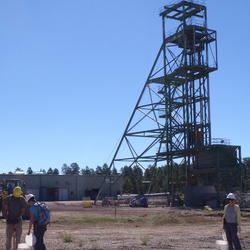
Minerals Resources Life Cycle Integrated Science Team
The Minerals Resources Life Cycle Integrated Science Team focuses on contaminant exposures in the environment that might originate from mineral resource activities including, transportation, storage, extraction and waste management. Perceived health risks to humans and other organisms will be distinguished from actual risks, if any. If actual risks are identified the science produced by this team...

6PPDQ
6PPD-quinone is a compound used to make tires more durable and is also linked to toxicity for Coho Salmon and other aquatic species.

6PPD Research at Columbia Environmental Research Center
CERC scientists are evaluating the exposure and effects of 6PPD.

Comprehensive Research on PFAS Exposomics and Risk Assessment
The Columbia Environmental Research Center (CERC) conducts cutting-edge research on per- and polyfluoroalkyl substances (PFAS) through the lens of the One Health Paradigm, emphasizing the interconnectedness of human, animal, and environmental health.
Filter Total Items: 13
Survival and bioaccumulation data for sensitive salmonids exposed to 6PPDQ with additional survival data for two bass species Survival and bioaccumulation data for sensitive salmonids exposed to 6PPDQ with additional survival data for two bass species
This data set includes survival data for five fish species [Coho Salmon (Oncorhynchus kisutch); Brook Trout (Salvelinus fontinalis); Rainbow Trout (Oncorhynchus mykiss); Smallmouth Bass (Micropterus dolomieu); Largemouth Bass (Micropterus nigricans)] exposed to various concentrations of 6PPD-quinone (6PPDQ) for up to 96 hours and then held in clean water for one week post exposure...
Preliminary data on survival of Neocloeon triangulifer in sodium chloride bioassays fed differently aged diatoms Preliminary data on survival of Neocloeon triangulifer in sodium chloride bioassays fed differently aged diatoms
This data set includes mortality data from acute toxicity tests with aquatic larvae of the mayfly, Neocloeon triangulifer, exposed to sodium chloride. Two separate tests were conducted and fed diatom diets that were either 7-days-old or 13-days-old.
Survival of early instar mayflies (Neocloeon triangulifer) exposed to mixtures of major ion salts Survival of early instar mayflies (Neocloeon triangulifer) exposed to mixtures of major ion salts
This data set consists of 96-hour survival of the mayfly Neocloeon triangulifer exposed to a variety of major ion (sodium, potassium, calcium, magnesium, chloride, sulfate, bicarbonate) single salts, binary, and trinary mixtures, gluconate salts, and the organic molecule D-mannitol. Mayflies were less than 24-hours old at the beginning of tests. Mixtures consisted of pairs with either...
Acute toxicity of nine critical elements to Hyalella azteca, Lampsilis siliquoidea, Lymnaea stagnalis, Neocloeon triangulifer, and Pimephales promelas with bioaccumulation data of three elements in Lymnaea stagnalis Acute toxicity of nine critical elements to Hyalella azteca, Lampsilis siliquoidea, Lymnaea stagnalis, Neocloeon triangulifer, and Pimephales promelas with bioaccumulation data of three elements in Lymnaea stagnalis
We conducted nineteen acute toxicity assays to address knowledge gaps associated with nine critical elements: cerium (Ce), cobalt (Co), indium (In), lanthanum (La), lithium (Li), neodymium (Nd), osmium (Os), platinum (Pt), and praseodymium (Pr). Acute aquatic exposures of these elements were conducted with five organisms: an amphipod (Hyalella azteca), a mussel (Lampsilis siliquoidea), a...
Survival of juvenile mussels (Lampsilis siliquoidea) exposed to 6PPD and transformation products Survival of juvenile mussels (Lampsilis siliquoidea) exposed to 6PPD and transformation products
This data set includes mortality data from acute toxicity tests with juveniles of the mussel, Lampsilis siliquoidea exposed to 6PPD and 6PPDQ. Concurrently collected analytical chemistry and general water quality measurements are included.
Survival of early life stages of Lampsilis siliquoidea exposed to Syngenta Crop Protection product SYN549522B Survival of early life stages of Lampsilis siliquoidea exposed to Syngenta Crop Protection product SYN549522B
This data set contains toxicity data from 24- and 96-hour water bioassays to assess the effects of a Syngenta Crop Protection product on early life stages of a freshwater mussel. We used ASTM International methods to conduct tests with juveniles and glochidia of the freshwater mussel Lampsilis siliquoidea. Analytical chemistry and water quality analysis results are included as well.
Concentration of PFOS (perfluorooctanesulfonic acid) in water and freshwater diatoms (Mayamaea atomus) in a bioaccumulation study conducted at U.S. Geological Survey, Columbia Environmental Research Center in July 2021 Concentration of PFOS (perfluorooctanesulfonic acid) in water and freshwater diatoms (Mayamaea atomus) in a bioaccumulation study conducted at U.S. Geological Survey, Columbia Environmental Research Center in July 2021
Two laboratory experiments were conducted to understand PFOS (perfluorooctanesulfonic acid) bioaccumulation in freshwater benthic diatoms (Mayamaea atomus). The first experiment tested bioconcentration at multiple PFOS concentrations (0, 0.01, 0.1, 1, 10, 100 micrograms per liter) after 7 days of exposure. The second explored uptake and depuration of 0.1 micrograms per liter PFOS at...
Stormwater concentrations of tire wear particle leachate compounds and survival of early instar mayflies (Neocloeon triangulifer) exposed to 6PPD and transformation products Stormwater concentrations of tire wear particle leachate compounds and survival of early instar mayflies (Neocloeon triangulifer) exposed to 6PPD and transformation products
This data set includes concentrations of selected transformation products (TPs) of the tire antioxidant, 6PPD, including 6PPD-quinone (6PPDQ) and 4-hydroxydiphenylamine (4-HDPA) in water samples collected during a rain event from two urban rivers in the Greater Toronto Area, Ontario, Canada. In addition, mortality data from acute toxicity tests with aquatic larvae of the mayfly...
Acute and chronic toxicity of two perfluoroalkyl substances to Neocloeon triangulifer Acute and chronic toxicity of two perfluoroalkyl substances to Neocloeon triangulifer
Dataset consists of 4-day, 14-day, and full life responses of laboratory cultured mayflies (Neocloeon triangulifer) to perfluorooctane sulfonate (PFOS) and perfluorooctanoic acid (PFOA). Responses were measured as survival at 4 days, 14 days, pre-emergent nymph (PEN) stage, and emergence; 14-day length; number of days to PEN stage, and imago live weight. Water quality and analytical...
Survival, and growth of Neocloeon triangulifer under different test conditions in effluent style evaluations Survival, and growth of Neocloeon triangulifer under different test conditions in effluent style evaluations
Dataset consists of 4, 7, 10, and 14-day responses of laboratory cultured mayflies (Neocloeon triangulifer) to sodium chloride exposure under different test condition scenarios. Responses were measured as mortality and growth (length). Water quality and analytical chemistry results associated with toxicity data are included. Experiments included 1) testing the influence of organism age...
Survival, reproduction, and weight of Neocloeon triangulifer after short and long-term exposures to nickel and zinc Survival, reproduction, and weight of Neocloeon triangulifer after short and long-term exposures to nickel and zinc
Dataset consists of 4-day, 14-day, and full life responses of laboratory cultured mayflies (Neocloeon triangulifer) to nickel and zinc exposure. Responses were measured as mortality, body weight, development time, and reproduction. Water quality and analytical chemistry results associated with toxicity data are included. Additional data included are results of experiments assessing...
Survival, growth and reproduction of C. dubia and N. triangulifer to nickel and zinc exposure in natural waters Survival, growth and reproduction of C. dubia and N. triangulifer to nickel and zinc exposure in natural waters
Survival, growth and reproduction of Ceriodaphnia dubia and Neocloeon triangulifer, metal concentrations and water quality parameters from nickel and zinc exposures in natural waters
Sensitivity of mayfly Neocloeon triangulifer to a reference toxicant is significantly impacted by the age of the diatom feed species Navicula pelliculosa Sensitivity of mayfly Neocloeon triangulifer to a reference toxicant is significantly impacted by the age of the diatom feed species Navicula pelliculosa
The development of standardized toxicity tests is critical for assessing pollutants in aquatic ecosystems. The mayfly Neocloeon triangulifer offers advantages as a test species due to its asexual reproduction, short life cycle, and high sensitivity to pollutants. However, we identified variability in response sensitivity to pollutants, which may stem from the nutritional composition and...
Authors
Moira M. Ijzerman, Melanie J. Gallant, David J. Soucek, Rebecca A. Consbrock, Heather Roshon, Jacob Gawronski, Paul K. Sibley, Ryan S. Prosser
Targeted quantitation of 6ppd-quinone in fish tissue samples with liquid chromatography-tandem mass spectrometry Targeted quantitation of 6ppd-quinone in fish tissue samples with liquid chromatography-tandem mass spectrometry
The tire additive transformation product N-(1,3-dimethylbutyl)-N’-phenyl-p-phenylenediamine-quinone (6PPD-quinone) has recently garnered global attention due to its acute toxicity to some salmonids, such as coho salmon (Oncorhynchus kisutch), and its ubiquitous presence in urban stormwater systems. In the present study, we developed and compared the extraction efficiency of two sample...
Authors
Adam H. Moody, David J. Soucek, David A. Alvarez
Concentration dependency of PFOS bioaccumulation by freshwater benthic algae Concentration dependency of PFOS bioaccumulation by freshwater benthic algae
Although perfluorooctanesulfonic acid (PFOS) has been voluntarily phased out, it remains the most abundant and frequently detected PFAS compound in biota worldwide. A deeper understanding of how PFOS enters the aquatic food web at the energetic base is needed to better characterize and predict the general patterns of PFAS trophic transfer. Research on bioaccumulation by primary producers...
Authors
Alison M. Zachritz, Jeffery A. Steevens, Daniele A. Miranda, Brittany G. Perrotta, Rebecca A. Dorman, Heather D. Whitehead, Erin L. Pulster, David Walters, David J. Soucek, Graham F. Peaslee, Gary A. Lamberti
Acute Toxicity of 4-hydroxydiphenylamine (4-HDPA) and N-(1,3-dimethylbutyl)-N'-phenyl-p-phenylenediamine-quinone (6PPDQ), transformation products of 6PPD, to early instars of the mayfly, Neocloeon triangulifer Acute Toxicity of 4-hydroxydiphenylamine (4-HDPA) and N-(1,3-dimethylbutyl)-N'-phenyl-p-phenylenediamine-quinone (6PPDQ), transformation products of 6PPD, to early instars of the mayfly, Neocloeon triangulifer
Our analysis of water samples collected during a rain event from two urban rivers in the Greater Toronto area, Ontario, Canada, indicated that selected transformation products (TPs) of the tire antioxidant, N-(1,3-dimethylbutyl)-N'-phenyl-p-phenylenediamine (6PPD), including 6PPD-quinone (6PPDQ) and 4-hydroxydiphenylamine (4-HDPA), were present at concentrations >1 µg/L. In acute (96-hr)...
Authors
David J. Soucek, Rebecca A. Dorman, Jeffery A. Steevens, Viviane Yargeau, Marco Pineda, Erin Bennett, Chris Metcalfe
Trace elements and consequent ecological risks in mining- influenced streams of Appalachia Trace elements and consequent ecological risks in mining- influenced streams of Appalachia
Appalachian coal surface mines fracture geologic materials, causing release of both major ions and trace elements to water via accelerated weathering. When elevated above natural background, trace elements in streams may produce adverse effects to biota via direct exposure from water and sediment and via dietary exposure in food sources. Other studies have found elevated water...
Authors
Elyse V. Clark, David J. Soucek, Stephen H. Schoenholtz, Keridwen M. Whitmore, Carl E. Zipper
Perfluorooctanesulfonate adversely affects a mayfly (Neocloeon triangulifer) at environmentally realistic concentrations Perfluorooctanesulfonate adversely affects a mayfly (Neocloeon triangulifer) at environmentally realistic concentrations
Of the emerging contaminant types thought to threaten freshwater biota, per- and polyfluoroalkyl substances appear to be particularly widespread, and limited studies conducted with these compounds thus far indicate insects may be particularly sensitive to them. This study investigated the short- and long-term effects of two commonly detected compounds on the laboratory-reared mayfly...
Authors
David J. Soucek, Rebecca A. Consbrock, Erin L. Pulster, Brittany G. Perrotta, David Walters, Jeffery A. Steevens
Guide for benthic invertebrate studies in support of Natural Resource Damage Assessment and Restoration Guide for benthic invertebrate studies in support of Natural Resource Damage Assessment and Restoration
This guide is intended to assist with characterizing injury to freshwater benthic macroinvertebrates (BMIs) in Natural Resource Damage Assessment and Restoration (NRDAR) cases. The contents are narrowly focused on insects, crustaceans, snails, and other invertebrate fauna that are typically considered part of BMI communities and are not intended to address studies of injury to larger...
Authors
David J. Soucek, Aida M. Farag, John M. Besser, Jeffery A. Steevens
Influence of test method variables on sensitivity of Neocloeon triangulifer to a reference toxicant in short-term, effluent style evaluations Influence of test method variables on sensitivity of Neocloeon triangulifer to a reference toxicant in short-term, effluent style evaluations
Recent literature has demonstrated the sensitivity of mayflies to environmental contaminants. However, to date, there are no methods approved by the US Environmental Protection Agency for using sensitive insects like mayflies in whole-effluent toxicity or receiving water toxicity tests. The parthenogenetic mayfly Neocloeon triangulifer has been shown to be amenable to continuous culture...
Authors
David J. Soucek, Amy Dickinson, Teresa J. Norberg-King
Modeling the bioavailability of nickel and zinc to Ceriodaphnia dubia and Neocloeon triangulifer in toxicity tests with Natural Waters Modeling the bioavailability of nickel and zinc to Ceriodaphnia dubia and Neocloeon triangulifer in toxicity tests with Natural Waters
We studied biotic ligand model (BLM) predictions of toxicity of nickel (Ni) and zinc (Zn) in natural waters from Illinois and Minnesota USA which had combinations of pH, hardness, and dissolved organic carbon (DOC) more extreme than 99.7% of waters in a nationwide database. We conducted 7-d chronic tests with Ceriodaphnia dubia, and 96-hr acute test and 14-d chronic tests with Neocloeon
Authors
John M. Besser, Chris D. Ivey, Jeffery A. Steevens, Danielle M. Cleveland, David J. Soucek, Amy Dickinson, Eric J. Van Genderen, Adam C. Ryan, Chris E. Schlekat, Emily R. Garman, Elizabeth Middleton, Robert C. Santore
Acute and chronic toxicity of nickel and zinc to a laboratory cultured mayfly (Neocloeon triangulifer) in aqueous but fed exposures Acute and chronic toxicity of nickel and zinc to a laboratory cultured mayfly (Neocloeon triangulifer) in aqueous but fed exposures
Aquatic insects are poorly represented in water quality criteria, and previous studies have suggested a lack of sensitivity in acute toxicity tests despite observational studies demonstrating the contrary. Our objectives were to determine the toxicity of nickel (Ni) and zinc (Zn) to the mayfly Neocloeon triangulifer in fed acute (96-h) and chronic exposures to estimate aqueous effect
Authors
David J. Soucek, Amy Dickinson, Christan E. Schlekat, Eric Van Genderen, Edward J. Hammer
Acute and chronic toxicity of sodium nitrate and sodium sulfate to several freshwater organisms in water-only exposures Acute and chronic toxicity of sodium nitrate and sodium sulfate to several freshwater organisms in water-only exposures
Elevated nitrate (NO3) and sulfate (SO4) in surface water are of global concern, and studies are needed to generate toxicity data to develop environmental guideline values for NO3 and SO4. The present study was designed to fill existing gaps in toxicity databases by determining the acute and/or chronic toxicity of NO3 (tested as NaNO3) to a unionid mussel (Lampsilis siliquoidea), a midge
Authors
Ning Wang, Rebecca A. Dorman, Chris D. Ivey, David J. Soucek, Amy Dickinson, Bethany K. Kunz, Jeffery A. Steevens, Edward J. Hammer, Candice R. Bauer
Using an interlaboratory study to revise methods for conducting 10-d to 42-d water or sediment toxicity tests with Hyalella azteca Using an interlaboratory study to revise methods for conducting 10-d to 42-d water or sediment toxicity tests with Hyalella azteca
Studies have been conducted to refine US Environmental Protection Agency, ASTM International, and Environment Canada standard methods for conducting 42-d reproduction tests with Hyalella azteca in water or in sediment. Modifications to the H. azteca method include better-defined ionic composition requirements for exposure water (i.e., >15 mg/L of chloride and >0.02 mg/L of bromide) and...
Authors
Chris D. Ivey, Christopher G. Ingersoll, William G. Brumbaugh, Edward J. Hammer, David R. Mount, J. Russell Hockett, Teresa J. Norberg-King, Dave Soucek, Lisa Taylor
Non-USGS Publications**
Cianciolo, T.R., McLaughlin, D.L., Zipper, C.E., Timpano, A.J., Soucek, D.J., and Schoenholtz, S.H., 2020, Impacts to water quality and biota persist in mining-influenced Appalachian streams: Science of The Total Environment, v. 717, p. 137216. https://doi.org/10.1016/j.scitotenv.2020.137216
Lepine, C., Christianson, L., Soucek, D., McIsaac, G., and Summerfelt, S., 2021, Metal leaching and toxicity of denitrifying woodchip bioreactor outflow—Potential reuse application: Aquacultural Engineering, v. 93, p. 102129. https://doi.org/10.1016/j.aquaeng.2020.102129.
Sibley, P., Lagadic, L., McCoole, M., Norberg-King, T., Roessink, I., Soucek, D., Watson-Leung, T., and Wirtz, J., 2020, Mayflies in ecotoxicity testing: Methodological needs and knowledge gaps: Integrated Environmental Assessment and Management, v. 16, no. 2, p. 292-293. https://doi.org/10.1002/ieam.4245.
Cianciolo, T.R., McLaughlin, D.L., Zipper, C.E., Timpano, A.J., Soucek, D.J., Whitmore, K.M., and Schoenholtz, S.H., 2020, Selenium Bioaccumulation Across Trophic Levels and Along a Longitudinal Gradient in Headwater Streams: Environmental Toxicology and Chemistry, v. 39, no. 3, p. 692-704. https://doi.org/10.1002/etc.4660.
Drover, D.R., Schoenholtz, S.H., Soucek, D.J., and Zipper, C.E., 2020, Multiple stressors influence benthic macroinvertebrate communities in central Appalachian coalfield streams: Hydrobiologia, v. 847, no. 1, p. 191-205. https://doi.org/10.1007/s10750-019-04081-4.
Drover, D.R., Zipper, C.E., Soucek, D.J., and Schoenholtz, S.H., 2019, Using density, dissimilarity, and taxonomic replacement to characterize mining-influenced benthic macroinvertebrate community alterations in central Appalachia: Ecological Indicators, v. 106, p. 105535. https://doi.org/10.1016/j.ecolind.2019.105535.
Buchwalter, D., Scheibener, S., Chou, H., Soucek, D., and Elphick, J., 2019, Are sulfate effects in the mayfly Neocloeon triangulifer driven by the cost of ion regulation?: Philosophical Transactions of the Royal Society B: Biological Sciences, v. 374, no. 1764, p. 20180013. https://doi.org/10.1098/rstb.2018.0013.
Whitmore, K.M., Schoenholtz, S.H., Soucek, D.J., Hopkins, W.A., and Zipper, C.E., 2018, Selenium dynamics in headwater streams of the central Appalachian coalfield: Environmental Toxicology and Chemistry, v. 37, no. 10, p. 2714-2726. https://doi.org/10.1002/etc.4245.
Timpano, A.J., Schoenholtz, S.H., Soucek, D.J., and Zipper, C.E., 2018, Benthic macroinvertebrate community response to salinization in headwater streams in Appalachia USA over multiple years: Ecological Indicators, v. 91, p. 645-656. https://doi.org/10.1016/j.ecolind.2018.04.031.
Timpano, A.J., Zipper, C.E., Soucek, D.J., and Schoenholtz, S.H., 2018, Seasonal pattern of anthropogenic salinization in temperate forested headwater streams: Water Research, v. 133, p. 8-18. https://doi.org/10.1016/j.watres.2018.01.012.
Soucek, D.J., Mount, D.R., Dickinson, A., and Hockett, J.R., 2018, Influence of dilution water ionic composition on acute major ion toxicity to the mayfly Neocloeon triangulifer: Environmental Toxicology and Chemistry, v. 37, no. 5, p. 1330-1339. https://doi.org/10.1002/etc.4072.
Soucek, D.J., and Dickinson, A., 2016, Influence of chloride on the chronic toxicity of sodium nitrate to Ceriodaphnia dubia and Hyalella azteca: Ecotoxicology, v. 25, no. 7, p. 1406-1416. https://doi.org/10.1007/s10646-016-1691-1.
Soucek, D.J., Dickinson, A., and Major, K.M., 2016, Selection of food combinations to optimize survival, growth, and reproduction of the amphipod Hyalella azteca in static-renewal, water-only laboratory exposures: Environmental Toxicology and Chemistry, v. 35, no. 10, p. 2407-2415. https://doi.org/10.1002/etc.3387.
Boehme, E.A., Zipper, C.E., Schoenholtz, S.H., Soucek, D.J., and Timpano, A.J., 2016, Temporal dynamics of benthic macroinvertebrate communities and their response to elevated specific conductance in Appalachian coalfield headwater streams: Ecological Indicators, v. 64, p. 171-180. https://doi.org/10.1016/j.ecolind.2015.12.020.
Soucek, D.J., Lazo-Wasem, E.A., Taylor, C.A., and Major, K.M., 2015, Description of Two New Species of Hyalella (Amphipoda: Hyalellidae) from Eastern North America with a Revised Key to North American Members of the Genus: Journal of Crustacean Biology, v. 35, no. 6, p. 814-829. https://doi.org/10.1163/1937240X-00002373.
Levengood, J,M., Soucek, D.J., Sass, G.G., and Epifanio, J.M., 2015, Interspecific and Spatial Comparisons of Perfluorinated Compounds in Bighead and Silver Carp in the Illinois River, Illinois, USA: Bulletin of Environmental Contamination and Toxicology, v. 95, no. 5, p. 561-566. https://doi.org/10.1007/s00128-015-1646-x.
Soucek, D.J., Mount, D.R., Dickinson, A., Hockett, J.R., and McEwen, A.R., 2015, Contrasting effects of chloride on growth, reproduction, and toxicant sensitivity in two genetically distinct strains of Hyalella azteca: Environmental Toxicology and Chemistry, v. 34, no. 10, p. 2354-2362. https://doi.org/10.1002/etc.3070
Ciparis, S., Phipps, A., Soucek, D.J., Zipper, C.E., and Jones, J.W., 2015, Effects of environmentally relevant mixtures of major ions on a freshwater mussel: Environmental Pollution, v. 207, p. 280-287. https://doi.org/10.1016/j.envpol.2015.09.023
Soucek, D.J., and Dickinson, A., 2015, Full-life chronic toxicity of sodium salts to the mayfly Neocloeon triangulifer in tests with laboratory cultured food: Environmental Toxicology and Chemistry, v. 34, no. 9, p. 2126-2137.
https://doi.org/10.1002/etc.3038
https://doi.org/10.1002/etc.3038
Timpano, A.J., Schoenholtz, S.H., Soucek, D.J., and Zipper, C.E., 2015, Salinity as a Limiting Factor for Biological Condition in Mining-Influenced Central Appalachian Headwater Streams: JAWRA Journal of the American Water Resources Association, v. 51, no. 1, p. 240-250. https://doi.org/10.1111/jawr.12247
Levengood, J.M., Soucek, D.J., Sass, G.G., Dickinson, A., and Epifanio, J.M., 2014, Elements of concern in fillets of bighead and silver carp from the Illinois River, Illinois: Chemosphere, v. 104, p. 63-68. https://doi.org/10.1016/j.chemosphere.2013.10.058
Matlaga, T.H., Phillips, C.A., and Soucek, D.J., 2014, Insensitivity to road salt: an advantage for the American bullfrog?: Hydrobiologia, v. 721, no. 1, p. 1-8. https://doi.org/10.1007/s10750-013-1626-2.
Ryan, T.A., Kohl, A.N., Soucek, D.J., Smith, T.S., Brandt, T.M., Bonner, T.H., and Cropek, D.M., 2013, Short-Term Effects of Military Fog Oil on the Fountain Darter (Etheostoma fonticola): Archives of Environmental Contamination and Toxicology, v. 65, no. 4, p. 790-797. https://doi.org/10.1007/s00244-013-9958-5.
Major, K., Soucek, D.J., Giordano, R., Wetzel, M.J., and Soto-Adames, F., 2013, The common ecotoxicology laboratory strain of Hyalella azteca is genetically distinct from most wild strains sampled in Eastern North America: Environmental Toxicology and Chemistry, v. 32, no. 11, p. 2637-2647. https://doi.org/10.1002/etc.2355
Soucek, D.J., Dickinson, A., Major, K.M., and McEwen, A.R., 2013, Effect of test duration and feeding on relative sensitivity of genetically distinct clades of Hyalella azteca: Ecotoxicology, v. 22, no. 9, p. 1359-1366. https://doi.org/10.1007/s10646-013-1122-5.
Levengood, J.M., Soucek, D.J., Dickinson, A., Sass, G.G., and Epifanio, J.M., 2013, Spatial and interspecific patterns in persistent contaminant loads in bighead and silver carp from the Illinois River: Ecotoxicology, v. 22, no. 7, p. 1174-1182. https://doi.org/10.1007/s10646-013-1105-6.
Levengood, J.M., Soucek, D.J., Taylor, C.A., and Gay, D.A., 2013, Mercury in small Illinois fishes: historical perspectives and current issues: Environmental Monitoring and Assessment, v. 185, no. 8, p. 6485-6494. https://doi.org/10.1007/s10661-012-3040-z.
Soucek, D.J., and Dickinson, A., 2012, Acute Toxicity of Nitrate and Nitrite to Sensitive Freshwater Insects, Mollusks, and a Crustacean: Archives of Environmental Contamination and Toxicology, v. 62, no. 2, p. 233-242. https://doi.org/10.1007/s00244-011-9705-8.
Soucek, D.J., Dickinson, A., and Koch, B.T., 2011, Acute and chronic toxicity of boron to a variety of freshwater organisms: Environmental Toxicology and Chemistry, v. 30, no. 8, p. 1906-1914. https://doi.org/10.1002/etc.578
Soucek, D.J., Linton, T.K., Tarr, C.D., Dickinson, A., Wickramanayake, N., Delos, C.G., and Cruz, L.A., 2011, Influence of water hardness and sulfate on the acute toxicity of chloride to sensitive freshwater invertebrates: Environmental Toxicology and Chemistry, v. 30, no. 4, p. 930-938. https://doi.org/10.1002/etc.454
Yi, S.A., Francis, B.M., Jarrell, W.M., and Soucek, D.J., 2011, Toxicological effects of the aquatic herbicide, fluridone, on male water mites (Hydrachnidiae: Arrenurus: Megaluracarus): Ecotoxicology, v. 20, no. 1, p. 81-87. https://doi.org/10.1007/s10646-010-0558-0.
Ward, M.P., Jablonski, C., Semel, B., and Soucek, D., 2010, The biological pathway and effect of PCBs on common terns in Lake Michigan: Ecotoxicology, v. 19, no. 8, p. 1513-1522. https://doi.org/10.1007/s10646-010-0536-6.
Soucek, D.J., Dickinson, A., and Cropek, D.M., 2010, Effects of millimeter wave carbon fibers on filter-feeding freshwater invertebrates: Ecotoxicology and Environmental Safety, v. 73, no. 4, p. 500-506. https://doi.org/10.1016/j.ecoenv.2009.10.015
Taylor, C.A., and Soucek, D.J., 2010, Re-examining the Importance of Fish in the Diets of Stream-dwelling Crayfishes: Implications for Food Web Analyses and Conservation: The American Midland Naturalist, v. 163, no. 2, p. 280-293, 214. https://doi.org/10.1674/0003-0031-163.2.280.
Rogowski, D.L., Soucek, D.J., Levengood, J.M., Johnson, S.R., Chick, J.H., Dettmers, J.M., Pegg, M.A., and Epifanio, J.M., 2009, Contaminant concentrations in Asian carps, invasive species in the Mississippi and Illinois Rivers: Environmental Monitoring and Assessment, v. 157, no. 1, p. 211-222. https://doi.org/10.1007/s10661-008-0529-6.
Esarey JC, Levengood JM, Soucek DJ, Hudson R, Halbrook R., 2008, Contaminants in unionid mussels from the Mississippi and Illinois Rivers confluence area: IL Natural History Survey Bulletin, v. 39, no. 5, p. 197-214.
Cropek, D.M., Esarey, J.C., Conner, C.L., Goran, J.M., Smith, T., and Soucek, D.J., 2008, Toxicological effects of military fog oil obscurant on Daphnia magna and Ceriodaphnia dubia in field and laboratory exposures: Ecotoxicology, v. 17, no. 6, p. 517-525. https://doi.org/10.1007/s10646-008-0207-z.
Soucek, D.J., 2007, Sodium sulfate impacts feeding, specific dynamic action, and growth rate in the freshwater bivalve Corbicula fluminea: Aquatic Toxicology, v. 83, no. 4, p. 315-322. https://doi.org/10.1016/j.aquatox.2007.05.006
Soucek, D.J., 2007, Bioenergetic effects of sodium sulfate on the freshwater crustacean, Ceriodaphnia dubia: Ecotoxicology, v. 16, no. 3, p. 317-325. https://doi.org/10.1007/s10646-007-0133-5.
Soucek, D.J., 2007, Comparison of hardness- and chloride-regulated acute effects of sodium sulfate on two freshwater crustaceans: Environmental Toxicology and Chemistry, v. 26, no. 4, p. 773-779. https://doi.org/10.1897/06-229R.1
Taylor, C.A., Soucek, D.J., and Organ, E.L., 2006, A new crayfish of the genus Cambarus Erichson, 1846 (Decapoda: Cambaridae) from an under-sampled habitat type in central Tennessee, USA: Zootaxa, v. 1200, no. 1, p. 29–41. https://doi.org/10.11646/zootaxa.1200.1.3
Soucek, D.J., 2006, Effects of Freshly Neutralized Aluminum on Oxygen Consumption by Freshwater Invertebrates: Archives of Environmental Contamination and Toxicology, v. 50, no. 3, p. 353-360. https://doi.org/10.1007/s00244-005-5053-x.
Soucek, D.J., and Kennedy, A.J., 2005, Effects of hardness, chloride, and acclimation on the acute toxicity of sulfate to freshwater invertebrates: Environmental Toxicology and Chemistry, v. 24, no. 5, p. 1204-1210. https://doi.org/10.1897/04-142.1
Soucek, D.J., Cherry, D.S., and Zipper, C.E., 2003, Impacts of Mine Drainage and Other Nonpoint Source Pollutants on Aquatic Biota in the Upper Powell River System, Virginia: Human and Ecological Risk Assessment: An International Journal, v. 9, no. 4, p. 1059-1073. https://doi.org/10.1080/713610023.
Hull, M.S., Cherry, D.S., Soucek, D.J., Currie, R.J., and Neves, R.J., 2002, Comparison of Asian clam field bioassays and benthic community surveys in quantifying effects of a coal-fired power plant effluent on Clinch River biota: Journal of Aquatic Ecosystem Stress and Recovery, v. 9, no. 4, p. 271-283. https://doi.org/10.1023/A:1024020216459.
Schmidt, T.S., Soucek, D.J., and Cherry, D.S., 2002, Integrative assessment of benthic macroinvertebrate community impairment from metal-contaminated waters in tributaries of the upper Powell River, Virginia, USA: Environmental Toxicology and Chemistry, v. 21, no. 10, p. 2233-2241. https://doi.org/10.1002/etc.5620211030.
Cherry, D.S., Van Hassel, J.H., Farris, J.L., Soucek, D.J., and Neves, R.J., 2002, Site-Specific Derivation of the Acute Copper Criteria for the Clinch River, Virginia: Human and Ecological Risk Assessment: An International Journal, v. 8, no. 3, p. 591-601. https://doi.org/10.1080/10807030290879844.
Soucek, D.J., Denson, B.C., Schmidt, T.S., Cherry, D.S., and Zipper, C.E., 2002, Impaired Acroneuria sp. (Plecoptera, Perlidae) Populations Associated with Aluminum Contamination in Neutral pH Surface Waters: Archives of Environmental Contamination and Toxicology, v. 42, no. 4, p. 416-422. https://doi.org/10.1007/s00244-001-0049-7.
Schmidt, T.S., Soucek, D.J., and Cherry, D.S., 2002, Modification of an ecotoxicological rating to bioassess small acid mine drainage-impacted watersheds exclusive of benthic macroinvertebrate analysis: Environmental Toxicology and Chemistry, v. 21, no. 5, p. 1091-1097. https://doi.org/10.1002/etc.5620210527.
Soucek, D.J., Cherry, D.S., and Zipper, C.E., 2001, Aluminum-dominated acute toxicity to the cladoceran Ceriodaphnia dubia in neutral waters downstream of an acid mine drainage discharge: Canadian Journal of Fisheries and Aquatic Sciences, v. 58, no. 12, p. 2396-2404. https://doi.org/10.1139/f01-185.
Soucek, D.J., Cherry, D.S., and Zipper, C.E., 2001, Aluminum-dominated acute toxicity to the cladoceran Ceriodaphnia dubia in neutral waters downstream of an acid mine drainage discharge: Canadian Journal of Fisheries and Aquatic Sciences, v. 58, no. 12, p. 2396-2404. https://doi.org/10.1139/f01-185.
Cherry, D.S., Currie, R.J., Soucek, D.J., Latimer, H.A., and Trent, G.C., 2001, An integrative assessment of a watershed impacted by abandoned mined land discharges: Environmental Pollution, v. 111, no. 3, p. 377-388. https://doi.org/10.1016/S0269-7491(00)00093-2.
Soucek, D.J., Cherry, D.S., Currie, R.J., Latimer, H.A., and Trent, G.C., 2000, Laboratory to field validation in an integrative assessment of an acid mine drainage–impacted watershed: Environmental Toxicology and Chemistry, v. 19, no. 4, p. 1036-1043.
https://doi.org/10.1002/etc.5620190433.
https://doi.org/10.1002/etc.5620190433.
Soucek, D.J., Cherry, D.S., and Trent, G.C., 2000, Relative Acute Toxicity of Acid Mine Drainage Water Column and Sediments to Daphnia magna in the Puckett's Creek Watershed, Virginia, USA: Archives of Environmental Contamination and Toxicology, v. 38, no. 3, p. 305-310. https://doi.org/10.1007/s002449910040.
Soucek, D.J., and Noblet, G.P., 1998, Copper toxicity to the endoparasitic trematode (Posthodiplostomum minimum) relative to physid snail and bluegill sunfish intermediate hosts: Environmental Toxicology and Chemistry, v. 17, no. 12, p. 2512-2516. https://doi.org/10.1002/etc.5620171219.
**Disclaimer: The views expressed in Non-USGS publications are those of the author and do not represent the views of the USGS, Department of the Interior, or the U.S. Government.
Science and Products
Life Cycle of Critical Minerals: A Balanced Approach to Meeting Our Nation's Resource Demands
Critical minerals are essential to the Nation’s economy and security. Demand for critical minerals is increasing, and it is essential to balance the societal need for these minerals with efforts to understand the effects of mining on other natural resources and to develop techniques to minimize these effects. The USGS Minerals Resources Life Cycle Integrated Science Team (IST) focuses on the life...
By
Ecosystems Mission Area, Geology, Energy, and Minerals Mission Area, Contaminant Biology, Environmental Health Program, Mineral Resources Program, Toxic Substances Hydrology, Columbia Environmental Research Center, Geology, Energy & Minerals Science Center, Geology, Geophysics, and Geochemistry Science Center, Geology, Minerals, Energy, and Geophysics Science Center
Minerals Resources Life Cycle Integrated Science Team
The Minerals Resources Life Cycle Integrated Science Team focuses on contaminant exposures in the environment that might originate from mineral resource activities including, transportation, storage, extraction and waste management. Perceived health risks to humans and other organisms will be distinguished from actual risks, if any. If actual risks are identified the science produced by this team...
6PPDQ
6PPD-quinone is a compound used to make tires more durable and is also linked to toxicity for Coho Salmon and other aquatic species.
6PPD Research at Columbia Environmental Research Center
CERC scientists are evaluating the exposure and effects of 6PPD.
Comprehensive Research on PFAS Exposomics and Risk Assessment
The Columbia Environmental Research Center (CERC) conducts cutting-edge research on per- and polyfluoroalkyl substances (PFAS) through the lens of the One Health Paradigm, emphasizing the interconnectedness of human, animal, and environmental health.
Filter Total Items: 13
Survival and bioaccumulation data for sensitive salmonids exposed to 6PPDQ with additional survival data for two bass species Survival and bioaccumulation data for sensitive salmonids exposed to 6PPDQ with additional survival data for two bass species
This data set includes survival data for five fish species [Coho Salmon (Oncorhynchus kisutch); Brook Trout (Salvelinus fontinalis); Rainbow Trout (Oncorhynchus mykiss); Smallmouth Bass (Micropterus dolomieu); Largemouth Bass (Micropterus nigricans)] exposed to various concentrations of 6PPD-quinone (6PPDQ) for up to 96 hours and then held in clean water for one week post exposure...
Preliminary data on survival of Neocloeon triangulifer in sodium chloride bioassays fed differently aged diatoms Preliminary data on survival of Neocloeon triangulifer in sodium chloride bioassays fed differently aged diatoms
This data set includes mortality data from acute toxicity tests with aquatic larvae of the mayfly, Neocloeon triangulifer, exposed to sodium chloride. Two separate tests were conducted and fed diatom diets that were either 7-days-old or 13-days-old.
Survival of early instar mayflies (Neocloeon triangulifer) exposed to mixtures of major ion salts Survival of early instar mayflies (Neocloeon triangulifer) exposed to mixtures of major ion salts
This data set consists of 96-hour survival of the mayfly Neocloeon triangulifer exposed to a variety of major ion (sodium, potassium, calcium, magnesium, chloride, sulfate, bicarbonate) single salts, binary, and trinary mixtures, gluconate salts, and the organic molecule D-mannitol. Mayflies were less than 24-hours old at the beginning of tests. Mixtures consisted of pairs with either...
Acute toxicity of nine critical elements to Hyalella azteca, Lampsilis siliquoidea, Lymnaea stagnalis, Neocloeon triangulifer, and Pimephales promelas with bioaccumulation data of three elements in Lymnaea stagnalis Acute toxicity of nine critical elements to Hyalella azteca, Lampsilis siliquoidea, Lymnaea stagnalis, Neocloeon triangulifer, and Pimephales promelas with bioaccumulation data of three elements in Lymnaea stagnalis
We conducted nineteen acute toxicity assays to address knowledge gaps associated with nine critical elements: cerium (Ce), cobalt (Co), indium (In), lanthanum (La), lithium (Li), neodymium (Nd), osmium (Os), platinum (Pt), and praseodymium (Pr). Acute aquatic exposures of these elements were conducted with five organisms: an amphipod (Hyalella azteca), a mussel (Lampsilis siliquoidea), a...
Survival of juvenile mussels (Lampsilis siliquoidea) exposed to 6PPD and transformation products Survival of juvenile mussels (Lampsilis siliquoidea) exposed to 6PPD and transformation products
This data set includes mortality data from acute toxicity tests with juveniles of the mussel, Lampsilis siliquoidea exposed to 6PPD and 6PPDQ. Concurrently collected analytical chemistry and general water quality measurements are included.
Survival of early life stages of Lampsilis siliquoidea exposed to Syngenta Crop Protection product SYN549522B Survival of early life stages of Lampsilis siliquoidea exposed to Syngenta Crop Protection product SYN549522B
This data set contains toxicity data from 24- and 96-hour water bioassays to assess the effects of a Syngenta Crop Protection product on early life stages of a freshwater mussel. We used ASTM International methods to conduct tests with juveniles and glochidia of the freshwater mussel Lampsilis siliquoidea. Analytical chemistry and water quality analysis results are included as well.
Concentration of PFOS (perfluorooctanesulfonic acid) in water and freshwater diatoms (Mayamaea atomus) in a bioaccumulation study conducted at U.S. Geological Survey, Columbia Environmental Research Center in July 2021 Concentration of PFOS (perfluorooctanesulfonic acid) in water and freshwater diatoms (Mayamaea atomus) in a bioaccumulation study conducted at U.S. Geological Survey, Columbia Environmental Research Center in July 2021
Two laboratory experiments were conducted to understand PFOS (perfluorooctanesulfonic acid) bioaccumulation in freshwater benthic diatoms (Mayamaea atomus). The first experiment tested bioconcentration at multiple PFOS concentrations (0, 0.01, 0.1, 1, 10, 100 micrograms per liter) after 7 days of exposure. The second explored uptake and depuration of 0.1 micrograms per liter PFOS at...
Stormwater concentrations of tire wear particle leachate compounds and survival of early instar mayflies (Neocloeon triangulifer) exposed to 6PPD and transformation products Stormwater concentrations of tire wear particle leachate compounds and survival of early instar mayflies (Neocloeon triangulifer) exposed to 6PPD and transformation products
This data set includes concentrations of selected transformation products (TPs) of the tire antioxidant, 6PPD, including 6PPD-quinone (6PPDQ) and 4-hydroxydiphenylamine (4-HDPA) in water samples collected during a rain event from two urban rivers in the Greater Toronto Area, Ontario, Canada. In addition, mortality data from acute toxicity tests with aquatic larvae of the mayfly...
Acute and chronic toxicity of two perfluoroalkyl substances to Neocloeon triangulifer Acute and chronic toxicity of two perfluoroalkyl substances to Neocloeon triangulifer
Dataset consists of 4-day, 14-day, and full life responses of laboratory cultured mayflies (Neocloeon triangulifer) to perfluorooctane sulfonate (PFOS) and perfluorooctanoic acid (PFOA). Responses were measured as survival at 4 days, 14 days, pre-emergent nymph (PEN) stage, and emergence; 14-day length; number of days to PEN stage, and imago live weight. Water quality and analytical...
Survival, and growth of Neocloeon triangulifer under different test conditions in effluent style evaluations Survival, and growth of Neocloeon triangulifer under different test conditions in effluent style evaluations
Dataset consists of 4, 7, 10, and 14-day responses of laboratory cultured mayflies (Neocloeon triangulifer) to sodium chloride exposure under different test condition scenarios. Responses were measured as mortality and growth (length). Water quality and analytical chemistry results associated with toxicity data are included. Experiments included 1) testing the influence of organism age...
Survival, reproduction, and weight of Neocloeon triangulifer after short and long-term exposures to nickel and zinc Survival, reproduction, and weight of Neocloeon triangulifer after short and long-term exposures to nickel and zinc
Dataset consists of 4-day, 14-day, and full life responses of laboratory cultured mayflies (Neocloeon triangulifer) to nickel and zinc exposure. Responses were measured as mortality, body weight, development time, and reproduction. Water quality and analytical chemistry results associated with toxicity data are included. Additional data included are results of experiments assessing...
Survival, growth and reproduction of C. dubia and N. triangulifer to nickel and zinc exposure in natural waters Survival, growth and reproduction of C. dubia and N. triangulifer to nickel and zinc exposure in natural waters
Survival, growth and reproduction of Ceriodaphnia dubia and Neocloeon triangulifer, metal concentrations and water quality parameters from nickel and zinc exposures in natural waters
Sensitivity of mayfly Neocloeon triangulifer to a reference toxicant is significantly impacted by the age of the diatom feed species Navicula pelliculosa Sensitivity of mayfly Neocloeon triangulifer to a reference toxicant is significantly impacted by the age of the diatom feed species Navicula pelliculosa
The development of standardized toxicity tests is critical for assessing pollutants in aquatic ecosystems. The mayfly Neocloeon triangulifer offers advantages as a test species due to its asexual reproduction, short life cycle, and high sensitivity to pollutants. However, we identified variability in response sensitivity to pollutants, which may stem from the nutritional composition and...
Authors
Moira M. Ijzerman, Melanie J. Gallant, David J. Soucek, Rebecca A. Consbrock, Heather Roshon, Jacob Gawronski, Paul K. Sibley, Ryan S. Prosser
Targeted quantitation of 6ppd-quinone in fish tissue samples with liquid chromatography-tandem mass spectrometry Targeted quantitation of 6ppd-quinone in fish tissue samples with liquid chromatography-tandem mass spectrometry
The tire additive transformation product N-(1,3-dimethylbutyl)-N’-phenyl-p-phenylenediamine-quinone (6PPD-quinone) has recently garnered global attention due to its acute toxicity to some salmonids, such as coho salmon (Oncorhynchus kisutch), and its ubiquitous presence in urban stormwater systems. In the present study, we developed and compared the extraction efficiency of two sample...
Authors
Adam H. Moody, David J. Soucek, David A. Alvarez
Concentration dependency of PFOS bioaccumulation by freshwater benthic algae Concentration dependency of PFOS bioaccumulation by freshwater benthic algae
Although perfluorooctanesulfonic acid (PFOS) has been voluntarily phased out, it remains the most abundant and frequently detected PFAS compound in biota worldwide. A deeper understanding of how PFOS enters the aquatic food web at the energetic base is needed to better characterize and predict the general patterns of PFAS trophic transfer. Research on bioaccumulation by primary producers...
Authors
Alison M. Zachritz, Jeffery A. Steevens, Daniele A. Miranda, Brittany G. Perrotta, Rebecca A. Dorman, Heather D. Whitehead, Erin L. Pulster, David Walters, David J. Soucek, Graham F. Peaslee, Gary A. Lamberti
Acute Toxicity of 4-hydroxydiphenylamine (4-HDPA) and N-(1,3-dimethylbutyl)-N'-phenyl-p-phenylenediamine-quinone (6PPDQ), transformation products of 6PPD, to early instars of the mayfly, Neocloeon triangulifer Acute Toxicity of 4-hydroxydiphenylamine (4-HDPA) and N-(1,3-dimethylbutyl)-N'-phenyl-p-phenylenediamine-quinone (6PPDQ), transformation products of 6PPD, to early instars of the mayfly, Neocloeon triangulifer
Our analysis of water samples collected during a rain event from two urban rivers in the Greater Toronto area, Ontario, Canada, indicated that selected transformation products (TPs) of the tire antioxidant, N-(1,3-dimethylbutyl)-N'-phenyl-p-phenylenediamine (6PPD), including 6PPD-quinone (6PPDQ) and 4-hydroxydiphenylamine (4-HDPA), were present at concentrations >1 µg/L. In acute (96-hr)...
Authors
David J. Soucek, Rebecca A. Dorman, Jeffery A. Steevens, Viviane Yargeau, Marco Pineda, Erin Bennett, Chris Metcalfe
Trace elements and consequent ecological risks in mining- influenced streams of Appalachia Trace elements and consequent ecological risks in mining- influenced streams of Appalachia
Appalachian coal surface mines fracture geologic materials, causing release of both major ions and trace elements to water via accelerated weathering. When elevated above natural background, trace elements in streams may produce adverse effects to biota via direct exposure from water and sediment and via dietary exposure in food sources. Other studies have found elevated water...
Authors
Elyse V. Clark, David J. Soucek, Stephen H. Schoenholtz, Keridwen M. Whitmore, Carl E. Zipper
Perfluorooctanesulfonate adversely affects a mayfly (Neocloeon triangulifer) at environmentally realistic concentrations Perfluorooctanesulfonate adversely affects a mayfly (Neocloeon triangulifer) at environmentally realistic concentrations
Of the emerging contaminant types thought to threaten freshwater biota, per- and polyfluoroalkyl substances appear to be particularly widespread, and limited studies conducted with these compounds thus far indicate insects may be particularly sensitive to them. This study investigated the short- and long-term effects of two commonly detected compounds on the laboratory-reared mayfly...
Authors
David J. Soucek, Rebecca A. Consbrock, Erin L. Pulster, Brittany G. Perrotta, David Walters, Jeffery A. Steevens
Guide for benthic invertebrate studies in support of Natural Resource Damage Assessment and Restoration Guide for benthic invertebrate studies in support of Natural Resource Damage Assessment and Restoration
This guide is intended to assist with characterizing injury to freshwater benthic macroinvertebrates (BMIs) in Natural Resource Damage Assessment and Restoration (NRDAR) cases. The contents are narrowly focused on insects, crustaceans, snails, and other invertebrate fauna that are typically considered part of BMI communities and are not intended to address studies of injury to larger...
Authors
David J. Soucek, Aida M. Farag, John M. Besser, Jeffery A. Steevens
Influence of test method variables on sensitivity of Neocloeon triangulifer to a reference toxicant in short-term, effluent style evaluations Influence of test method variables on sensitivity of Neocloeon triangulifer to a reference toxicant in short-term, effluent style evaluations
Recent literature has demonstrated the sensitivity of mayflies to environmental contaminants. However, to date, there are no methods approved by the US Environmental Protection Agency for using sensitive insects like mayflies in whole-effluent toxicity or receiving water toxicity tests. The parthenogenetic mayfly Neocloeon triangulifer has been shown to be amenable to continuous culture...
Authors
David J. Soucek, Amy Dickinson, Teresa J. Norberg-King
Modeling the bioavailability of nickel and zinc to Ceriodaphnia dubia and Neocloeon triangulifer in toxicity tests with Natural Waters Modeling the bioavailability of nickel and zinc to Ceriodaphnia dubia and Neocloeon triangulifer in toxicity tests with Natural Waters
We studied biotic ligand model (BLM) predictions of toxicity of nickel (Ni) and zinc (Zn) in natural waters from Illinois and Minnesota USA which had combinations of pH, hardness, and dissolved organic carbon (DOC) more extreme than 99.7% of waters in a nationwide database. We conducted 7-d chronic tests with Ceriodaphnia dubia, and 96-hr acute test and 14-d chronic tests with Neocloeon
Authors
John M. Besser, Chris D. Ivey, Jeffery A. Steevens, Danielle M. Cleveland, David J. Soucek, Amy Dickinson, Eric J. Van Genderen, Adam C. Ryan, Chris E. Schlekat, Emily R. Garman, Elizabeth Middleton, Robert C. Santore
Acute and chronic toxicity of nickel and zinc to a laboratory cultured mayfly (Neocloeon triangulifer) in aqueous but fed exposures Acute and chronic toxicity of nickel and zinc to a laboratory cultured mayfly (Neocloeon triangulifer) in aqueous but fed exposures
Aquatic insects are poorly represented in water quality criteria, and previous studies have suggested a lack of sensitivity in acute toxicity tests despite observational studies demonstrating the contrary. Our objectives were to determine the toxicity of nickel (Ni) and zinc (Zn) to the mayfly Neocloeon triangulifer in fed acute (96-h) and chronic exposures to estimate aqueous effect
Authors
David J. Soucek, Amy Dickinson, Christan E. Schlekat, Eric Van Genderen, Edward J. Hammer
Acute and chronic toxicity of sodium nitrate and sodium sulfate to several freshwater organisms in water-only exposures Acute and chronic toxicity of sodium nitrate and sodium sulfate to several freshwater organisms in water-only exposures
Elevated nitrate (NO3) and sulfate (SO4) in surface water are of global concern, and studies are needed to generate toxicity data to develop environmental guideline values for NO3 and SO4. The present study was designed to fill existing gaps in toxicity databases by determining the acute and/or chronic toxicity of NO3 (tested as NaNO3) to a unionid mussel (Lampsilis siliquoidea), a midge
Authors
Ning Wang, Rebecca A. Dorman, Chris D. Ivey, David J. Soucek, Amy Dickinson, Bethany K. Kunz, Jeffery A. Steevens, Edward J. Hammer, Candice R. Bauer
Using an interlaboratory study to revise methods for conducting 10-d to 42-d water or sediment toxicity tests with Hyalella azteca Using an interlaboratory study to revise methods for conducting 10-d to 42-d water or sediment toxicity tests with Hyalella azteca
Studies have been conducted to refine US Environmental Protection Agency, ASTM International, and Environment Canada standard methods for conducting 42-d reproduction tests with Hyalella azteca in water or in sediment. Modifications to the H. azteca method include better-defined ionic composition requirements for exposure water (i.e., >15 mg/L of chloride and >0.02 mg/L of bromide) and...
Authors
Chris D. Ivey, Christopher G. Ingersoll, William G. Brumbaugh, Edward J. Hammer, David R. Mount, J. Russell Hockett, Teresa J. Norberg-King, Dave Soucek, Lisa Taylor
Non-USGS Publications**
Cianciolo, T.R., McLaughlin, D.L., Zipper, C.E., Timpano, A.J., Soucek, D.J., and Schoenholtz, S.H., 2020, Impacts to water quality and biota persist in mining-influenced Appalachian streams: Science of The Total Environment, v. 717, p. 137216. https://doi.org/10.1016/j.scitotenv.2020.137216
Lepine, C., Christianson, L., Soucek, D., McIsaac, G., and Summerfelt, S., 2021, Metal leaching and toxicity of denitrifying woodchip bioreactor outflow—Potential reuse application: Aquacultural Engineering, v. 93, p. 102129. https://doi.org/10.1016/j.aquaeng.2020.102129.
Sibley, P., Lagadic, L., McCoole, M., Norberg-King, T., Roessink, I., Soucek, D., Watson-Leung, T., and Wirtz, J., 2020, Mayflies in ecotoxicity testing: Methodological needs and knowledge gaps: Integrated Environmental Assessment and Management, v. 16, no. 2, p. 292-293. https://doi.org/10.1002/ieam.4245.
Cianciolo, T.R., McLaughlin, D.L., Zipper, C.E., Timpano, A.J., Soucek, D.J., Whitmore, K.M., and Schoenholtz, S.H., 2020, Selenium Bioaccumulation Across Trophic Levels and Along a Longitudinal Gradient in Headwater Streams: Environmental Toxicology and Chemistry, v. 39, no. 3, p. 692-704. https://doi.org/10.1002/etc.4660.
Drover, D.R., Schoenholtz, S.H., Soucek, D.J., and Zipper, C.E., 2020, Multiple stressors influence benthic macroinvertebrate communities in central Appalachian coalfield streams: Hydrobiologia, v. 847, no. 1, p. 191-205. https://doi.org/10.1007/s10750-019-04081-4.
Drover, D.R., Zipper, C.E., Soucek, D.J., and Schoenholtz, S.H., 2019, Using density, dissimilarity, and taxonomic replacement to characterize mining-influenced benthic macroinvertebrate community alterations in central Appalachia: Ecological Indicators, v. 106, p. 105535. https://doi.org/10.1016/j.ecolind.2019.105535.
Buchwalter, D., Scheibener, S., Chou, H., Soucek, D., and Elphick, J., 2019, Are sulfate effects in the mayfly Neocloeon triangulifer driven by the cost of ion regulation?: Philosophical Transactions of the Royal Society B: Biological Sciences, v. 374, no. 1764, p. 20180013. https://doi.org/10.1098/rstb.2018.0013.
Whitmore, K.M., Schoenholtz, S.H., Soucek, D.J., Hopkins, W.A., and Zipper, C.E., 2018, Selenium dynamics in headwater streams of the central Appalachian coalfield: Environmental Toxicology and Chemistry, v. 37, no. 10, p. 2714-2726. https://doi.org/10.1002/etc.4245.
Timpano, A.J., Schoenholtz, S.H., Soucek, D.J., and Zipper, C.E., 2018, Benthic macroinvertebrate community response to salinization in headwater streams in Appalachia USA over multiple years: Ecological Indicators, v. 91, p. 645-656. https://doi.org/10.1016/j.ecolind.2018.04.031.
Timpano, A.J., Zipper, C.E., Soucek, D.J., and Schoenholtz, S.H., 2018, Seasonal pattern of anthropogenic salinization in temperate forested headwater streams: Water Research, v. 133, p. 8-18. https://doi.org/10.1016/j.watres.2018.01.012.
Soucek, D.J., Mount, D.R., Dickinson, A., and Hockett, J.R., 2018, Influence of dilution water ionic composition on acute major ion toxicity to the mayfly Neocloeon triangulifer: Environmental Toxicology and Chemistry, v. 37, no. 5, p. 1330-1339. https://doi.org/10.1002/etc.4072.
Soucek, D.J., and Dickinson, A., 2016, Influence of chloride on the chronic toxicity of sodium nitrate to Ceriodaphnia dubia and Hyalella azteca: Ecotoxicology, v. 25, no. 7, p. 1406-1416. https://doi.org/10.1007/s10646-016-1691-1.
Soucek, D.J., Dickinson, A., and Major, K.M., 2016, Selection of food combinations to optimize survival, growth, and reproduction of the amphipod Hyalella azteca in static-renewal, water-only laboratory exposures: Environmental Toxicology and Chemistry, v. 35, no. 10, p. 2407-2415. https://doi.org/10.1002/etc.3387.
Boehme, E.A., Zipper, C.E., Schoenholtz, S.H., Soucek, D.J., and Timpano, A.J., 2016, Temporal dynamics of benthic macroinvertebrate communities and their response to elevated specific conductance in Appalachian coalfield headwater streams: Ecological Indicators, v. 64, p. 171-180. https://doi.org/10.1016/j.ecolind.2015.12.020.
Soucek, D.J., Lazo-Wasem, E.A., Taylor, C.A., and Major, K.M., 2015, Description of Two New Species of Hyalella (Amphipoda: Hyalellidae) from Eastern North America with a Revised Key to North American Members of the Genus: Journal of Crustacean Biology, v. 35, no. 6, p. 814-829. https://doi.org/10.1163/1937240X-00002373.
Levengood, J,M., Soucek, D.J., Sass, G.G., and Epifanio, J.M., 2015, Interspecific and Spatial Comparisons of Perfluorinated Compounds in Bighead and Silver Carp in the Illinois River, Illinois, USA: Bulletin of Environmental Contamination and Toxicology, v. 95, no. 5, p. 561-566. https://doi.org/10.1007/s00128-015-1646-x.
Soucek, D.J., Mount, D.R., Dickinson, A., Hockett, J.R., and McEwen, A.R., 2015, Contrasting effects of chloride on growth, reproduction, and toxicant sensitivity in two genetically distinct strains of Hyalella azteca: Environmental Toxicology and Chemistry, v. 34, no. 10, p. 2354-2362. https://doi.org/10.1002/etc.3070
Ciparis, S., Phipps, A., Soucek, D.J., Zipper, C.E., and Jones, J.W., 2015, Effects of environmentally relevant mixtures of major ions on a freshwater mussel: Environmental Pollution, v. 207, p. 280-287. https://doi.org/10.1016/j.envpol.2015.09.023
Soucek, D.J., and Dickinson, A., 2015, Full-life chronic toxicity of sodium salts to the mayfly Neocloeon triangulifer in tests with laboratory cultured food: Environmental Toxicology and Chemistry, v. 34, no. 9, p. 2126-2137.
https://doi.org/10.1002/etc.3038
https://doi.org/10.1002/etc.3038
Timpano, A.J., Schoenholtz, S.H., Soucek, D.J., and Zipper, C.E., 2015, Salinity as a Limiting Factor for Biological Condition in Mining-Influenced Central Appalachian Headwater Streams: JAWRA Journal of the American Water Resources Association, v. 51, no. 1, p. 240-250. https://doi.org/10.1111/jawr.12247
Levengood, J.M., Soucek, D.J., Sass, G.G., Dickinson, A., and Epifanio, J.M., 2014, Elements of concern in fillets of bighead and silver carp from the Illinois River, Illinois: Chemosphere, v. 104, p. 63-68. https://doi.org/10.1016/j.chemosphere.2013.10.058
Matlaga, T.H., Phillips, C.A., and Soucek, D.J., 2014, Insensitivity to road salt: an advantage for the American bullfrog?: Hydrobiologia, v. 721, no. 1, p. 1-8. https://doi.org/10.1007/s10750-013-1626-2.
Ryan, T.A., Kohl, A.N., Soucek, D.J., Smith, T.S., Brandt, T.M., Bonner, T.H., and Cropek, D.M., 2013, Short-Term Effects of Military Fog Oil on the Fountain Darter (Etheostoma fonticola): Archives of Environmental Contamination and Toxicology, v. 65, no. 4, p. 790-797. https://doi.org/10.1007/s00244-013-9958-5.
Major, K., Soucek, D.J., Giordano, R., Wetzel, M.J., and Soto-Adames, F., 2013, The common ecotoxicology laboratory strain of Hyalella azteca is genetically distinct from most wild strains sampled in Eastern North America: Environmental Toxicology and Chemistry, v. 32, no. 11, p. 2637-2647. https://doi.org/10.1002/etc.2355
Soucek, D.J., Dickinson, A., Major, K.M., and McEwen, A.R., 2013, Effect of test duration and feeding on relative sensitivity of genetically distinct clades of Hyalella azteca: Ecotoxicology, v. 22, no. 9, p. 1359-1366. https://doi.org/10.1007/s10646-013-1122-5.
Levengood, J.M., Soucek, D.J., Dickinson, A., Sass, G.G., and Epifanio, J.M., 2013, Spatial and interspecific patterns in persistent contaminant loads in bighead and silver carp from the Illinois River: Ecotoxicology, v. 22, no. 7, p. 1174-1182. https://doi.org/10.1007/s10646-013-1105-6.
Levengood, J.M., Soucek, D.J., Taylor, C.A., and Gay, D.A., 2013, Mercury in small Illinois fishes: historical perspectives and current issues: Environmental Monitoring and Assessment, v. 185, no. 8, p. 6485-6494. https://doi.org/10.1007/s10661-012-3040-z.
Soucek, D.J., and Dickinson, A., 2012, Acute Toxicity of Nitrate and Nitrite to Sensitive Freshwater Insects, Mollusks, and a Crustacean: Archives of Environmental Contamination and Toxicology, v. 62, no. 2, p. 233-242. https://doi.org/10.1007/s00244-011-9705-8.
Soucek, D.J., Dickinson, A., and Koch, B.T., 2011, Acute and chronic toxicity of boron to a variety of freshwater organisms: Environmental Toxicology and Chemistry, v. 30, no. 8, p. 1906-1914. https://doi.org/10.1002/etc.578
Soucek, D.J., Linton, T.K., Tarr, C.D., Dickinson, A., Wickramanayake, N., Delos, C.G., and Cruz, L.A., 2011, Influence of water hardness and sulfate on the acute toxicity of chloride to sensitive freshwater invertebrates: Environmental Toxicology and Chemistry, v. 30, no. 4, p. 930-938. https://doi.org/10.1002/etc.454
Yi, S.A., Francis, B.M., Jarrell, W.M., and Soucek, D.J., 2011, Toxicological effects of the aquatic herbicide, fluridone, on male water mites (Hydrachnidiae: Arrenurus: Megaluracarus): Ecotoxicology, v. 20, no. 1, p. 81-87. https://doi.org/10.1007/s10646-010-0558-0.
Ward, M.P., Jablonski, C., Semel, B., and Soucek, D., 2010, The biological pathway and effect of PCBs on common terns in Lake Michigan: Ecotoxicology, v. 19, no. 8, p. 1513-1522. https://doi.org/10.1007/s10646-010-0536-6.
Soucek, D.J., Dickinson, A., and Cropek, D.M., 2010, Effects of millimeter wave carbon fibers on filter-feeding freshwater invertebrates: Ecotoxicology and Environmental Safety, v. 73, no. 4, p. 500-506. https://doi.org/10.1016/j.ecoenv.2009.10.015
Taylor, C.A., and Soucek, D.J., 2010, Re-examining the Importance of Fish in the Diets of Stream-dwelling Crayfishes: Implications for Food Web Analyses and Conservation: The American Midland Naturalist, v. 163, no. 2, p. 280-293, 214. https://doi.org/10.1674/0003-0031-163.2.280.
Rogowski, D.L., Soucek, D.J., Levengood, J.M., Johnson, S.R., Chick, J.H., Dettmers, J.M., Pegg, M.A., and Epifanio, J.M., 2009, Contaminant concentrations in Asian carps, invasive species in the Mississippi and Illinois Rivers: Environmental Monitoring and Assessment, v. 157, no. 1, p. 211-222. https://doi.org/10.1007/s10661-008-0529-6.
Esarey JC, Levengood JM, Soucek DJ, Hudson R, Halbrook R., 2008, Contaminants in unionid mussels from the Mississippi and Illinois Rivers confluence area: IL Natural History Survey Bulletin, v. 39, no. 5, p. 197-214.
Cropek, D.M., Esarey, J.C., Conner, C.L., Goran, J.M., Smith, T., and Soucek, D.J., 2008, Toxicological effects of military fog oil obscurant on Daphnia magna and Ceriodaphnia dubia in field and laboratory exposures: Ecotoxicology, v. 17, no. 6, p. 517-525. https://doi.org/10.1007/s10646-008-0207-z.
Soucek, D.J., 2007, Sodium sulfate impacts feeding, specific dynamic action, and growth rate in the freshwater bivalve Corbicula fluminea: Aquatic Toxicology, v. 83, no. 4, p. 315-322. https://doi.org/10.1016/j.aquatox.2007.05.006
Soucek, D.J., 2007, Bioenergetic effects of sodium sulfate on the freshwater crustacean, Ceriodaphnia dubia: Ecotoxicology, v. 16, no. 3, p. 317-325. https://doi.org/10.1007/s10646-007-0133-5.
Soucek, D.J., 2007, Comparison of hardness- and chloride-regulated acute effects of sodium sulfate on two freshwater crustaceans: Environmental Toxicology and Chemistry, v. 26, no. 4, p. 773-779. https://doi.org/10.1897/06-229R.1
Taylor, C.A., Soucek, D.J., and Organ, E.L., 2006, A new crayfish of the genus Cambarus Erichson, 1846 (Decapoda: Cambaridae) from an under-sampled habitat type in central Tennessee, USA: Zootaxa, v. 1200, no. 1, p. 29–41. https://doi.org/10.11646/zootaxa.1200.1.3
Soucek, D.J., 2006, Effects of Freshly Neutralized Aluminum on Oxygen Consumption by Freshwater Invertebrates: Archives of Environmental Contamination and Toxicology, v. 50, no. 3, p. 353-360. https://doi.org/10.1007/s00244-005-5053-x.
Soucek, D.J., and Kennedy, A.J., 2005, Effects of hardness, chloride, and acclimation on the acute toxicity of sulfate to freshwater invertebrates: Environmental Toxicology and Chemistry, v. 24, no. 5, p. 1204-1210. https://doi.org/10.1897/04-142.1
Soucek, D.J., Cherry, D.S., and Zipper, C.E., 2003, Impacts of Mine Drainage and Other Nonpoint Source Pollutants on Aquatic Biota in the Upper Powell River System, Virginia: Human and Ecological Risk Assessment: An International Journal, v. 9, no. 4, p. 1059-1073. https://doi.org/10.1080/713610023.
Hull, M.S., Cherry, D.S., Soucek, D.J., Currie, R.J., and Neves, R.J., 2002, Comparison of Asian clam field bioassays and benthic community surveys in quantifying effects of a coal-fired power plant effluent on Clinch River biota: Journal of Aquatic Ecosystem Stress and Recovery, v. 9, no. 4, p. 271-283. https://doi.org/10.1023/A:1024020216459.
Schmidt, T.S., Soucek, D.J., and Cherry, D.S., 2002, Integrative assessment of benthic macroinvertebrate community impairment from metal-contaminated waters in tributaries of the upper Powell River, Virginia, USA: Environmental Toxicology and Chemistry, v. 21, no. 10, p. 2233-2241. https://doi.org/10.1002/etc.5620211030.
Cherry, D.S., Van Hassel, J.H., Farris, J.L., Soucek, D.J., and Neves, R.J., 2002, Site-Specific Derivation of the Acute Copper Criteria for the Clinch River, Virginia: Human and Ecological Risk Assessment: An International Journal, v. 8, no. 3, p. 591-601. https://doi.org/10.1080/10807030290879844.
Soucek, D.J., Denson, B.C., Schmidt, T.S., Cherry, D.S., and Zipper, C.E., 2002, Impaired Acroneuria sp. (Plecoptera, Perlidae) Populations Associated with Aluminum Contamination in Neutral pH Surface Waters: Archives of Environmental Contamination and Toxicology, v. 42, no. 4, p. 416-422. https://doi.org/10.1007/s00244-001-0049-7.
Schmidt, T.S., Soucek, D.J., and Cherry, D.S., 2002, Modification of an ecotoxicological rating to bioassess small acid mine drainage-impacted watersheds exclusive of benthic macroinvertebrate analysis: Environmental Toxicology and Chemistry, v. 21, no. 5, p. 1091-1097. https://doi.org/10.1002/etc.5620210527.
Soucek, D.J., Cherry, D.S., and Zipper, C.E., 2001, Aluminum-dominated acute toxicity to the cladoceran Ceriodaphnia dubia in neutral waters downstream of an acid mine drainage discharge: Canadian Journal of Fisheries and Aquatic Sciences, v. 58, no. 12, p. 2396-2404. https://doi.org/10.1139/f01-185.
Soucek, D.J., Cherry, D.S., and Zipper, C.E., 2001, Aluminum-dominated acute toxicity to the cladoceran Ceriodaphnia dubia in neutral waters downstream of an acid mine drainage discharge: Canadian Journal of Fisheries and Aquatic Sciences, v. 58, no. 12, p. 2396-2404. https://doi.org/10.1139/f01-185.
Cherry, D.S., Currie, R.J., Soucek, D.J., Latimer, H.A., and Trent, G.C., 2001, An integrative assessment of a watershed impacted by abandoned mined land discharges: Environmental Pollution, v. 111, no. 3, p. 377-388. https://doi.org/10.1016/S0269-7491(00)00093-2.
Soucek, D.J., Cherry, D.S., Currie, R.J., Latimer, H.A., and Trent, G.C., 2000, Laboratory to field validation in an integrative assessment of an acid mine drainage–impacted watershed: Environmental Toxicology and Chemistry, v. 19, no. 4, p. 1036-1043.
https://doi.org/10.1002/etc.5620190433.
https://doi.org/10.1002/etc.5620190433.
Soucek, D.J., Cherry, D.S., and Trent, G.C., 2000, Relative Acute Toxicity of Acid Mine Drainage Water Column and Sediments to Daphnia magna in the Puckett's Creek Watershed, Virginia, USA: Archives of Environmental Contamination and Toxicology, v. 38, no. 3, p. 305-310. https://doi.org/10.1007/s002449910040.
Soucek, D.J., and Noblet, G.P., 1998, Copper toxicity to the endoparasitic trematode (Posthodiplostomum minimum) relative to physid snail and bluegill sunfish intermediate hosts: Environmental Toxicology and Chemistry, v. 17, no. 12, p. 2512-2516. https://doi.org/10.1002/etc.5620171219.
**Disclaimer: The views expressed in Non-USGS publications are those of the author and do not represent the views of the USGS, Department of the Interior, or the U.S. Government.
*Disclaimer: Listing outside positions with professional scientific organizations on this Staff Profile are for informational purposes only and do not constitute an endorsement of those professional scientific organizations or their activities by the USGS, Department of the Interior, or U.S. Government