



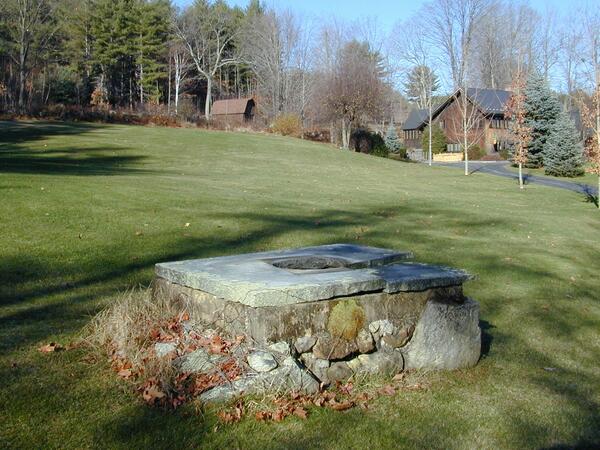
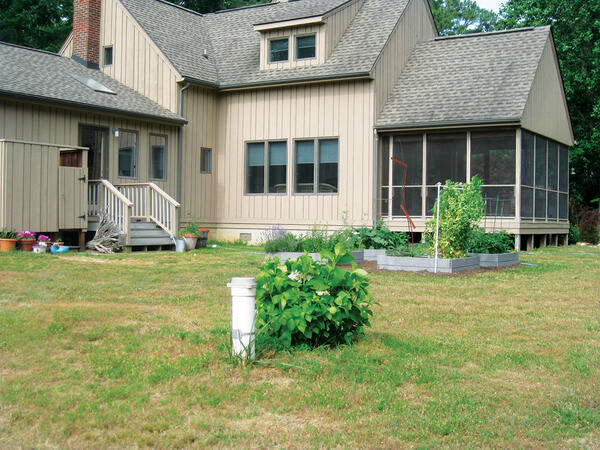
Domestic self-supplied water is water used at home that does not come from a public water utility. This can include potable and non-potable water. The most common source of self-supplied water is a well. Other self-supplied water sources include capturing rainwater in a cistern, private surface water diversions (intakes), piping spring water to a home or outdoor faucet, or hauling jugs of water from a store or spring to use in the home. Domestic self-supplied water is used for all home water uses such as watering gardens, drinking water, or household functions.
Domestic self-supplied water, typically from a private well, is used in areas outside of public water supply service areas. Self-supplied water is a common source of water for homes in rural areas. About 17% of households within the conterminous U.S. had self-supplied water sources in 2020 (Larsen et al., 2025). Although installation of rainwater collection systems and well drilling requires licensure and permits in most states, the quality and safety of self-supplied water is not directly regulated by federal or local laws. It is difficult to obtain accurate information on the use or quality of self-supplied water as domestic systems are managed by individual property owners.
Estimating 2020 Water Use
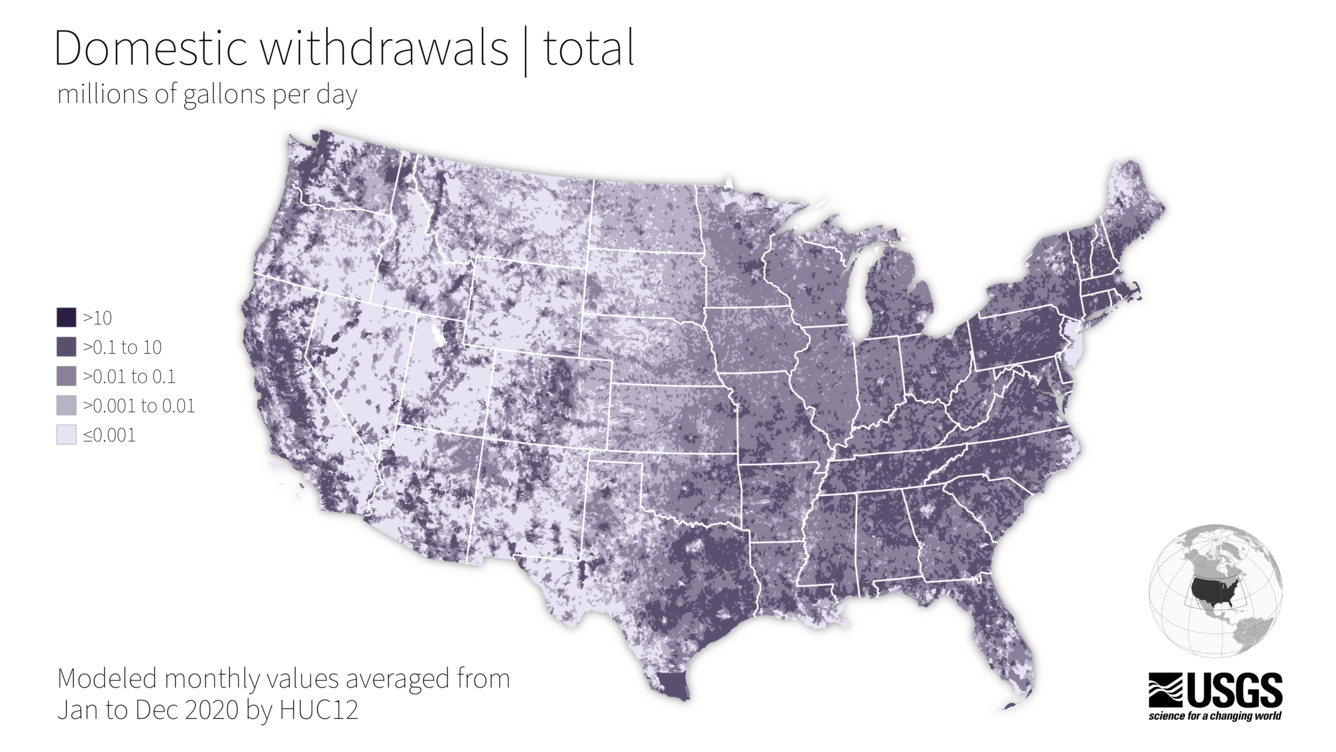
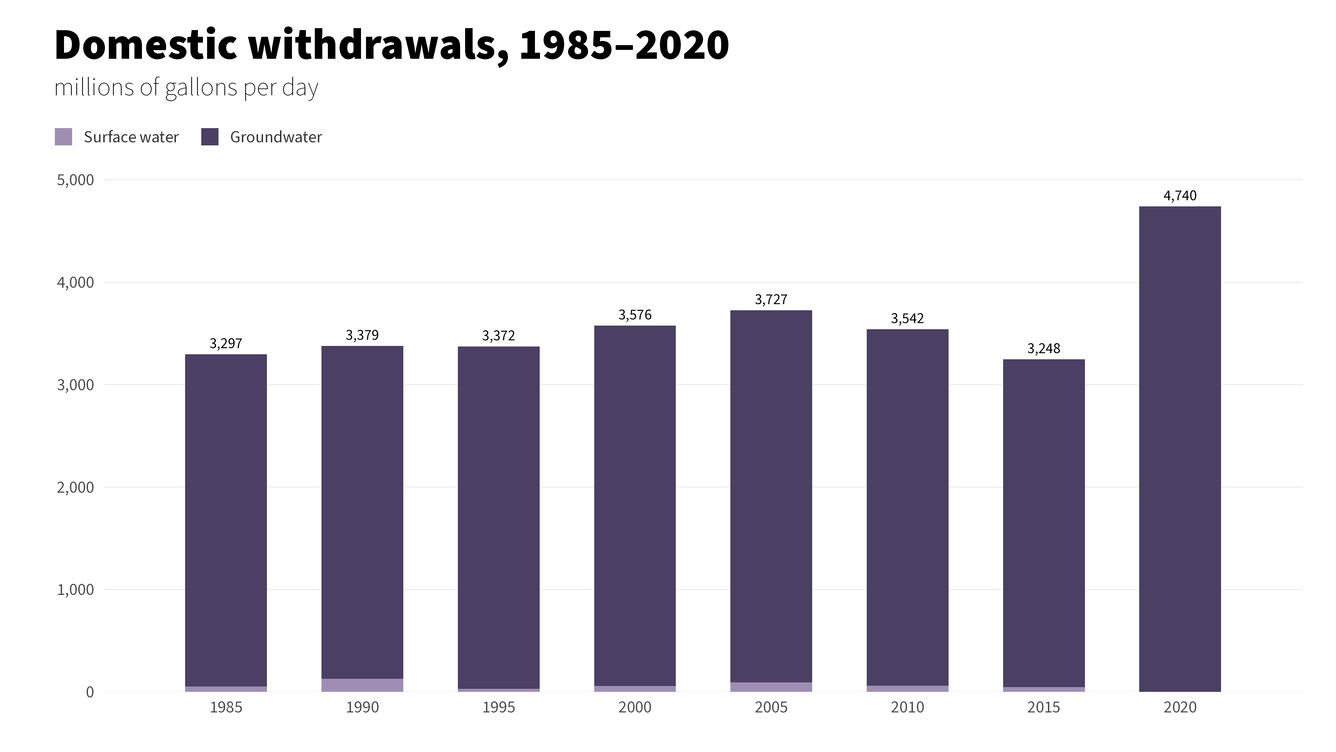
In 2020, about 4,740 million gallons per day (mgd) of water was withdrawn for self-supplied domestic use across the lower 48 United States (Larsen et al., 2025).
- The Northeast hydrologic region withdrew the most for domestic self-supply water use at about 20.2% (959 mgd), followed by Tennessee-Missouri at about 13.8% (656 mgd). The Northern High Plains region used the least, with about 0.5% (26 mgd).
- It was estimated that indoor withdrawals totaled about 4,073 mgd and outdoor withdrawals totaled about 667 mgd for the lower 48 United States.
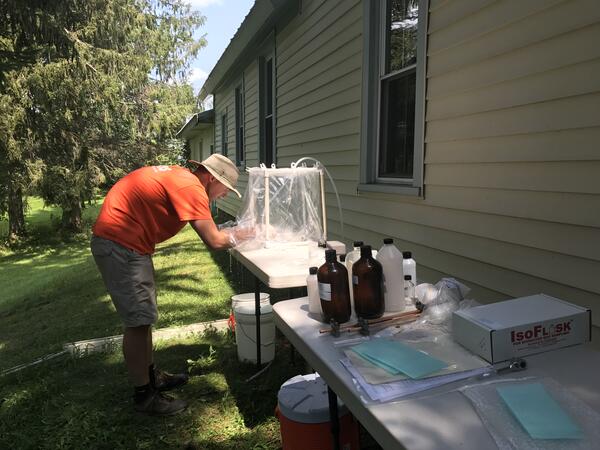
Estimating Domestic Self-Supplied Water Use
Self-supplied domestic withdrawals are rarely metered or reported; typically, this usage is calculated by multiplying an estimate of the population living outside of public supply service area boundaries by a coefficient for daily per capita use. For some States, these coefficients are county-specific averages derived from observed residential water use and population estimates in nearby areas served by public suppliers. Other States use the same coefficient for all counties, commonly one used by State regulatory or planning agencies.
The distribution of domestic self-supplied water users in 2020 was estimated with a machine learning model; this model estimates the counts and distribution of self-supplied households within the lower 48 United States (Larsen et al., 2025a). Water use estimates for 2020 were made using regional water use factors that were developed from domestic public supply water use rates and outdoor water use factors developed in previous water use studies by the USGS (Alzraiee et al., 2024; Larsen et al., 2025b). Continued development is underway to estimate self-supplied domestic water use and consumptive use for additional years.
Water Use in the United States
Accessing Water Use Data
Thermoelectric Power Water Use
Public Supply water use
Irrigation water use
Industrial water use
Mining water use
Livestock water use
Aquaculture water use

Water Use in the United States

Public Supply Water Use

Accessing Water Use Data

Thermoelectric Power Water Use

Irrigation Water Use

Industrial Water Use

Mining Water Use

Livestock Water Use

Aquaculture Water Use
Domestic self-supplied water is water used at home that does not come from a public water utility. This can include potable and non-potable water. The most common source of self-supplied water is a well. Other self-supplied water sources include capturing rainwater in a cistern, private surface water diversions (intakes), piping spring water to a home or outdoor faucet, or hauling jugs of water from a store or spring to use in the home. Domestic self-supplied water is used for all home water uses such as watering gardens, drinking water, or household functions.
Domestic self-supplied water, typically from a private well, is used in areas outside of public water supply service areas. Self-supplied water is a common source of water for homes in rural areas. About 17% of households within the conterminous U.S. had self-supplied water sources in 2020 (Larsen et al., 2025). Although installation of rainwater collection systems and well drilling requires licensure and permits in most states, the quality and safety of self-supplied water is not directly regulated by federal or local laws. It is difficult to obtain accurate information on the use or quality of self-supplied water as domestic systems are managed by individual property owners.
Estimating 2020 Water Use
In 2020, about 4,740 million gallons per day (mgd) of water was withdrawn for self-supplied domestic use across the lower 48 United States (Larsen et al., 2025).
- The Northeast hydrologic region withdrew the most for domestic self-supply water use at about 20.2% (959 mgd), followed by Tennessee-Missouri at about 13.8% (656 mgd). The Northern High Plains region used the least, with about 0.5% (26 mgd).
- It was estimated that indoor withdrawals totaled about 4,073 mgd and outdoor withdrawals totaled about 667 mgd for the lower 48 United States.
Estimating Domestic Self-Supplied Water Use
Self-supplied domestic withdrawals are rarely metered or reported; typically, this usage is calculated by multiplying an estimate of the population living outside of public supply service area boundaries by a coefficient for daily per capita use. For some States, these coefficients are county-specific averages derived from observed residential water use and population estimates in nearby areas served by public suppliers. Other States use the same coefficient for all counties, commonly one used by State regulatory or planning agencies.
The distribution of domestic self-supplied water users in 2020 was estimated with a machine learning model; this model estimates the counts and distribution of self-supplied households within the lower 48 United States (Larsen et al., 2025a). Water use estimates for 2020 were made using regional water use factors that were developed from domestic public supply water use rates and outdoor water use factors developed in previous water use studies by the USGS (Alzraiee et al., 2024; Larsen et al., 2025b). Continued development is underway to estimate self-supplied domestic water use and consumptive use for additional years.
Water Use in the United States
Accessing Water Use Data
Thermoelectric Power Water Use
Public Supply water use
Irrigation water use
Industrial water use
Mining water use
Livestock water use
Aquaculture water use
Water Use in the United States
Public Supply Water Use
Accessing Water Use Data
Thermoelectric Power Water Use
Irrigation Water Use
Industrial Water Use
Mining Water Use
Livestock Water Use