



Urban Water Concerns
Urban Water Concerns
Filter Total Items: 45
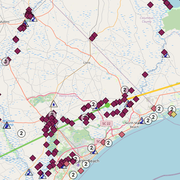
Providing Major Storm and Short-Term Flood Event Data
During major storms or other short-term events, the USGS collects streamflow and additional data to help document high-water events. This data is uploaded to the Short-Term Network (STN) for long-term archival and served out to the public through the Flood Event Viewer (FEV) which provides convenient, map-based access to downloadable event-based data.

Emerging Contaminants
Emerging contaminants, or contaminants of emerging concern, can refer to many different kinds of chemicals, including medicines, personal care or household cleaning products, lawn care and agricultural products, among others. These chemicals make it into our Nation's lakes and rivers and have a detrimental affect on fish and other aquatic species. That have also been shown to bioaccumulate up the...

Acid Rain
The USGS has been at the forefront of studying the impacts of acid rain for decades. How does acid rain form? What does it do to the landscape? Can it burn you like battery acid? Keep reading to find out more...

Coal-Tar-Based Pavement Sealcoat, PAHs, and Environmental Health
Sealcoat is the black, viscous liquid applied to many asphalt parking lots, driveways, and playgrounds in North America to protect and enhance the appearance of the underlying asphalt. Coal-tar-based pavement sealcoat is a potent source of polycyclic aromatic hydrocarbon (PAH) contamination in urban and suburban areas and a potential concern for human health and aquatic life.

Pesticides and Water Quality
Pesticides are chemicals designed to kill pests, including insects (insecticides), weeds (herbicides), and fungi (fungicides). The USGS assesses the occurrence and behavior of pesticides in streams, lakes, and groundwater and the potential for pesticides to contaminate our drinking-water supplies or harm aquatic ecosystems.

Corrosivity
Corrosivity describes how aggressive water is at corroding pipes and fixtures. Corrosive water can cause lead and copper in pipes to leach into drinking water and can eventually cause leaks in plumbing. Surface water and groundwater, both sources of drinking water, can potentially be corrosive.

Regional Groundwater Availability Studies
Regional groundwater availability studies enable information about groundwater to be integrated and consistent, so that this resource can be analyzed and understood on an aquifer–wide scale. These studies provide decision–makers with a better understanding of the status and trends in the Nation's groundwater availability.

Red River Focus Area Study
The USGS is undertaking a 3-year study of water use, availability, and change in the Red River basin, which covers more than 93,000 square miles in New Mexico, Texas, Oklahoma, Arkansas, and Louisiana. Water resources are being stressed by increasing water demands and increasingly severe droughts, and a comprehensive water-resource assessment of the basin is needed to enable sustainable water use.

Apalachicola-Chattahoochee-Flint River Basin Focus Area Study
As one of several National Focus Area Studies within the USGS National Water Census (NWC) the USGS completed a 3-year study of water availability and use in the Apalachicola-Chattahoochee-Flint (ACF) River Basin.

Upper Rio Grande Basin Focus Area Study
USGS is undertaking a 3-year study of water use, availability, and change in the Upper Rio Grande Basin. This study area runs 670 miles from its headwaters in Colorado through New Mexico and northern Mexico to Texas, and will compile existing information and add new scientific data and interpretation to help stakeholders face current and future water issues.

Surface-Water Quality and Ecology
Research by the USGS National Water Quality Assessment (NAWQA) Project on water quality of rivers and streams covers a broad range of topics, from nonpoint pollution issues to vulnerability of aquatic ecosystems. Dive in and find out more about current water-quality conditions, how and where water quality is changing, and the latest information on pesticides, nutrients, and other contaminants.

Water-Quality Trends From Lake Cores
Sediment cores let us look back in time at the contaminant history of a watershed. Learn about what lake and reservoir sediment cores tell us about trends in metals, organochlorine pesticides, polycyclic aromatic hydrocarbons, and other sediment-related contaminants.