U.S. flag

An official website of the United States government

Images

Hawaiian Volcano Observatory images of eruptive activity, field work, and more.

Filter Total Items: 3880
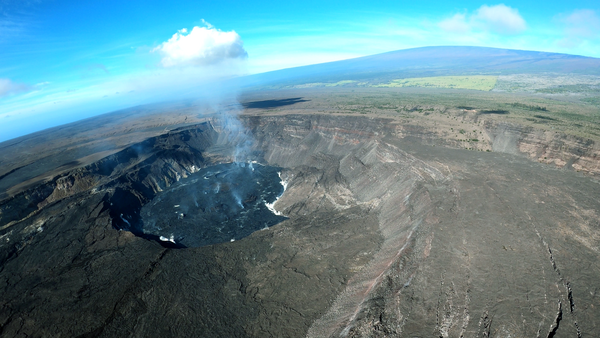
Image from the northwest rim of Halema'uma'u crater, Kīlauea summit

This image from the northwest rim of Halema'uma'u crater was taken in the late morning on September 29, 2021, just a few hours before the new Kīlauea summit eruption began. The solidified lava lake (center) was emplaced between December 2020 and May 2021. USGS photo taken by L. Gallant.

This image from the northwest rim of Halema'uma'u crater was taken in the late morning on September 29, 2021, just a few hours before the new Kīlauea summit eruption began. The solidified lava lake (center) was emplaced between December 2020 and May 2021. USGS photo taken by L. Gallant.

Color photograph of fissure eruption
Kīlauea summit eruption in Halemaʻumaʻu crater - September 29, 2021

At approximately 3:20 p.m. HST on September 29, 2021, an eruption began within Halemaʻumaʻu crater in Kīlauea’s summit caldera, within Hawai‘i Volcanoes National Park.

An image of the new Kīlauea summit fissure eruption within Halema'uma'u crater taken at approximately 4:15 p.m. HST on September
Fissure eruption in Halema‘uma‘u crater, Kīlauea summit -- 9/29/2021

An image of the new Kīlauea summit fissure eruption within Halema'uma'u crater taken at approximately 4:15 p.m. HST on September 29, 2021.

Color photograph of volcanic vents
Kīlauea summit eruption in Halemaʻumaʻu crater - September 29, 2021

At approximately 4:43 p.m. HST on September 29, 2021, another vent opened on the west wall of Halemaʻumaʻu crater, a little more than an hour after new fissure vents opened on the floor of Halemaʻumaʻu crater. By 5:09 p.m., when this photo was taken, the west wall vents had grown.

At approximately 4:43 p.m. HST on September 29, 2021, another vent opened on the west wall of Halemaʻumaʻu crater, a little more than an hour after new fissure vents opened on the floor of Halemaʻumaʻu crater. By 5:09 p.m., when this photo was taken, the west wall vents had grown.

A USGS Hawaiian Volcano Observatory geologist takes video of the eruption that started within Halema'uma'u crater Kīlauea summit
HVO scientist takes video of Kīlauea summit eruption

A USGS Hawaiian Volcano Observatory geologist takes video of the eruption that started within Halema'uma'u crater, Kīlauea summit, at about 3:20 p.m. on September 29, 2021. Scientists continue to monitor the eruption and hazards from within an area of Hawai'i Volcanoes National Park that remains closed to the public due to safety reasons.

A USGS Hawaiian Volcano Observatory geologist takes video of the eruption that started within Halema'uma'u crater, Kīlauea summit, at about 3:20 p.m. on September 29, 2021. Scientists continue to monitor the eruption and hazards from within an area of Hawai'i Volcanoes National Park that remains closed to the public due to safety reasons.

Color photograph of volcanic vent erupting
Kīlauea summit eruption in Halemaʻumaʻu crater - September 29, 2021

At approximately 4:43 p.m. HST on September 29, 2021, another vent opened on the west wall of Halemaʻumaʻu crater. This telephoto image shows the vent area and lava fountain through volcanic gas. USGS image. 

At approximately 4:43 p.m. HST on September 29, 2021, another vent opened on the west wall of Halemaʻumaʻu crater. This telephoto image shows the vent area and lava fountain through volcanic gas. USGS image. 

Color photograph of lava lake
Kīlauea summit eruption in Halemaʻumaʻu crater - September 29, 2021

An eruption began within Halemaʻumaʻu crater in Kīlauea’s summit caldera, within Hawai‘i Volcanoes National Park, on September 29, 2021. Vigorous lava fountains formed in the middle part of the lava lake that was active in Halemaʻumaʻu crater from December 2020 until May 2021.

An eruption began within Halemaʻumaʻu crater in Kīlauea’s summit caldera, within Hawai‘i Volcanoes National Park, on September 29, 2021. Vigorous lava fountains formed in the middle part of the lava lake that was active in Halemaʻumaʻu crater from December 2020 until May 2021.

The ongoing Kīlauea summit eruption within Halema'uma'u crater continues to feed low lava fountains in the center of the lava la
Kīlauea summit eruption fissures within Halema'uma'u crater lava lake

The ongoing Kīlauea summit eruption within Halema'uma'u crater continues to feed low lava fountains in the center of the lava lake (pictured) and along the western wall of Halema'uma'u. This telephoto image is looking east at the center of the rising lava lake.

The ongoing Kīlauea summit eruption within Halema'uma'u crater continues to feed low lava fountains in the center of the lava lake (pictured) and along the western wall of Halema'uma'u. This telephoto image is looking east at the center of the rising lava lake.

A telephoto image of fissures that opened on the western wall of Halema'uma'u crater during the ongoing eruption that began 9/29
Kīlauea summit eruption fissures on west wall of Halema'uma'u

A telephoto image of fissures that opened on the western wall of Halema'uma'u crater during the ongoing eruption that began yesterday, September 29, at approximately 3:21 p.m. HST. Lava from multiple fissures continues to slowly raise the level of the new active lava lake at the summit of Kīlauea. USGS image by M. Patrick.

A telephoto image of fissures that opened on the western wall of Halema'uma'u crater during the ongoing eruption that began yesterday, September 29, at approximately 3:21 p.m. HST. Lava from multiple fissures continues to slowly raise the level of the new active lava lake at the summit of Kīlauea. USGS image by M. Patrick.

Color photograph of tephra
Kīlauea summit eruption in Halemaʻumaʻu crater - September 29, 2021

The new eruption within Halema‘uma‘u crater at Kīlauea's summit is depositing tephra downwind of the erupting vents. Tephra is a term that describes products of an eruption that travel through the air before being deposited.

The new eruption within Halema‘uma‘u crater at Kīlauea's summit is depositing tephra downwind of the erupting vents. Tephra is a term that describes products of an eruption that travel through the air before being deposited.

Color photograph of scientist collecting sample
Kīlauea summit eruption in Halemaʻumaʻu crater - September 29, 2021

Hawaiian Volcano Observatory geologists collect tephra samples from the recent eruption within Halema'uma'u, at Kīlauea summit.  Geochemical analyses of these eruption products will provide information about magma storage prior to the eruption. USGS image by K. Lynn. 

Hawaiian Volcano Observatory geologists collect tephra samples from the recent eruption within Halema'uma'u, at Kīlauea summit.  Geochemical analyses of these eruption products will provide information about magma storage prior to the eruption. USGS image by K. Lynn. 

Color photograph of lava lake
September 28, 2021, KWcam image of Halemaʻumaʻu crater at Kīlauea's summit

KWcam image taken on September 28, 2021, before the eruption began in Halemaʻumaʻu on September 29, 2021.  Several islands, including the one in the center of the crater that formed on December 20, 2020, are surrounded by younger lava flows erupted during the December 2020-May 2021 Kīlauea summit eruption. USGS photo.

KWcam image taken on September 28, 2021, before the eruption began in Halemaʻumaʻu on September 29, 2021.  Several islands, including the one in the center of the crater that formed on December 20, 2020, are surrounded by younger lava flows erupted during the December 2020-May 2021 Kīlauea summit eruption. USGS photo.

Color photograph of inactive lava lake
View of Halema‘uma‘u at Kīlauea summit - September 24, 2021

A view looking north into Halema‘uma‘u, at Kīlauea's summit, on September 24, 2021, seen during a brief clear spell between passing rain clouds. There has been no significant change in the surface elevation of the solidified crust of the lava lake since the eruption paused in late May 2021.

A view looking north into Halema‘uma‘u, at Kīlauea's summit, on September 24, 2021, seen during a brief clear spell between passing rain clouds. There has been no significant change in the surface elevation of the solidified crust of the lava lake since the eruption paused in late May 2021.

Color photograph of scientist examining ash deposit
Kulanaokuaiki Tephra examined on Kīlauea's south flank

A paint brush is very useful to discern individual Kulanaokuaiki Tephra units by clearing away overlying younger ash and Pele's hair. At this field site on the south flank of Kīlauea, the Kulanaokuaiki Tephra is overlain by Observatory Shield lava flows and underlain by the Kīpuka Nēnē lava flows.

A paint brush is very useful to discern individual Kulanaokuaiki Tephra units by clearing away overlying younger ash and Pele's hair. At this field site on the south flank of Kīlauea, the Kulanaokuaiki Tephra is overlain by Observatory Shield lava flows and underlain by the Kīpuka Nēnē lava flows.

No changes were observed at Kīlauea's summit during a brief field visit on September 3, 2021
Kīlauea summit observations—September 3, 2021

No changes were observed at Kīlauea's summit during a brief field visit on September 3, 2021. Sunny weather made for spectacular views, though strong winds were blowing. The solidified crust of the lava lake within Halema‘uma‘u—which was active from December 2020 to May 2021—is visible in the lower center of this image. USGS photo by K. Mulliken.

No changes were observed at Kīlauea's summit during a brief field visit on September 3, 2021. Sunny weather made for spectacular views, though strong winds were blowing. The solidified crust of the lava lake within Halema‘uma‘u—which was active from December 2020 to May 2021—is visible in the lower center of this image. USGS photo by K. Mulliken.

Temporary webcam located just southwest of Kīlauea summit caldera
South of Kīlauea caldera towards 1982 flow

View from a temporary webcam, which is located just southwest of Kīlauea summit caldera, and looks south over the area of the August 2021 intrusion. The dark lava flow on the left of image (mid-ground) is where the 1982 lava flow spilled out of the south caldera.

View from a temporary webcam, which is located just southwest of Kīlauea summit caldera, and looks south over the area of the August 2021 intrusion. The dark lava flow on the left of image (mid-ground) is where the 1982 lava flow spilled out of the south caldera.

Color photograph of scientist cleaning solar panel
An HVO scientist clears tephra from a solar panel during the September 2021 Kīlauea summit eruption

An HVO scientist clears tephra from a solar panel during the September 2021 Kīlauea summit eruption. A glove is used to brush away the Pele’s hair and other fine volcanic glass fragments to avoid small cuts and splinters.

View to the southwest from HVO station HRPKE, showing Pu‘ukoa‘e on Kīlauea's Southwest Rift Zone in the background
View of Pu‘ukoa‘e on Kīlauea's Southwest Rift Zone

View to the southwest from HVO station HRPKE, showing Pu‘ukoa‘e on Kīlauea's Southwest Rift Zone in the background.

Station HRPKE located southwest of Kīlauea's summit, in the upper Southwest Rift Zone region
Station HRPKE maintenance

Station HRPKE is located southwest of Kīlauea's summit, in the upper Southwest Rift Zone region, within Hawai‘i Volcanoes National Park. The station measures sulfur dioxide (SO2) concentrations in the air, as well as local meteorological data such as wind speed, wind direction, and rainfall.

Station HRPKE is located southwest of Kīlauea's summit, in the upper Southwest Rift Zone region, within Hawai‘i Volcanoes National Park. The station measures sulfur dioxide (SO2) concentrations in the air, as well as local meteorological data such as wind speed, wind direction, and rainfall.

HVO technician Steven Fuke checks the solar panel at station HRPKE while conducting station maintenance on September 1
Station HRPKE maintenance

HVO technician Steven Fuke checks the solar panel at station HRPKE while conducting station maintenance on September 1. HVO remote monitoring stations are powered via solar panels and a suite of batteries.

HVO technician Steven Fuke checks the solar panel at station HRPKE while conducting station maintenance on September 1. HVO remote monitoring stations are powered via solar panels and a suite of batteries.

On August 31, the water level in Keller Well was measured at approximately 514.12 m (1686.75 ft) below the ground surface
Sampling Keller Well in Kīlauea’s south caldera region

On August 31, the water level in Keller Well was measured at approximately 514.12 m (1686.75 ft) below the ground surface. Though an intrusion of magma took place beneath the ground surface in Kīlauea's south caldera region from August 23–30, water level in Keller Well does not show significant changes as a result of this event. USGS image by P. Nadeau.

On August 31, the water level in Keller Well was measured at approximately 514.12 m (1686.75 ft) below the ground surface. Though an intrusion of magma took place beneath the ground surface in Kīlauea's south caldera region from August 23–30, water level in Keller Well does not show significant changes as a result of this event. USGS image by P. Nadeau.

Was this page helpful?