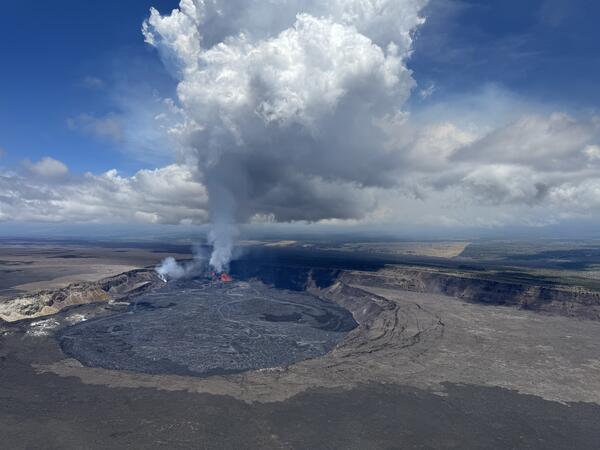
Hawaiian Volcano Observatory geologists captured this aerial view of Kīlauea summit on March 14, 2025, during a helicopter overflight. Three days after the end of episode 13 of the ongoing eruption, the north and south cones are degassing in the southwest corner of Halema‘uma‘u.
Images
Volcano Hazard Program images.
Hawaiian Volcano Observatory geologists captured this aerial view of Kīlauea summit on March 14, 2025, during a helicopter overflight. Three days after the end of episode 13 of the ongoing eruption, the north and south cones are degassing in the southwest corner of Halema‘uma‘u.
March 14, 2025 — Kīlauea eruption remains on pause during summit overflight
March 14, 2025 — Kīlauea eruption remains on pause during summit overflightOn the morning of March 14, USGS Hawaiian Volcano Observatory scientists conducted an overflight of Kīlauea summit to capture thermal and surficial imagery of the ongoing (paused) eruption. Three days after the end of episode 13, this telephoto aerial view shows the north cone degassing in the southwest corner of Halema‘uma‘u.
March 14, 2025 — Kīlauea eruption remains on pause during summit overflight
March 14, 2025 — Kīlauea eruption remains on pause during summit overflightOn the morning of March 14, USGS Hawaiian Volcano Observatory scientists conducted an overflight of Kīlauea summit to capture thermal and surficial imagery of the ongoing (paused) eruption. Three days after the end of episode 13, this telephoto aerial view shows the north cone degassing in the southwest corner of Halema‘uma‘u.
March 14, 2025 —Aerial view of Halema‘uma‘u crater
March 14, 2025 —Aerial view of Halema‘uma‘u craterA closer view of Halema‘uma‘u and the downdropped block, within the deepest portion of Kīlauea's summit caldera. Lava flows have crept eastward (towards bottom left in photo) as the crater floor rises with recent infilling. USGS photo taken on March 14, 2025, by M. Patrick.
March 14, 2025 —Aerial view of Halema‘uma‘u crater
March 14, 2025 —Aerial view of Halema‘uma‘u craterA closer view of Halema‘uma‘u and the downdropped block, within the deepest portion of Kīlauea's summit caldera. Lava flows have crept eastward (towards bottom left in photo) as the crater floor rises with recent infilling. USGS photo taken on March 14, 2025, by M. Patrick.
March 14, 2025 —Aerial view of September 2023 Kīlauea cones
March 14, 2025 —Aerial view of September 2023 Kīlauea conesOn the morning of March 14, USGS Hawaiian Volcano Observatory scientists conducted a monitoring overflight of Kīlauea. This aerial view shows cones formed during the September 2023 eruption, surrounded and partially buried by lava erupted within the past few weeks during the ongoing (and currently paused) eruption within Halema‘uma‘u. USGS photo by N. Deligne.
March 14, 2025 —Aerial view of September 2023 Kīlauea cones
March 14, 2025 —Aerial view of September 2023 Kīlauea conesOn the morning of March 14, USGS Hawaiian Volcano Observatory scientists conducted a monitoring overflight of Kīlauea. This aerial view shows cones formed during the September 2023 eruption, surrounded and partially buried by lava erupted within the past few weeks during the ongoing (and currently paused) eruption within Halema‘uma‘u. USGS photo by N. Deligne.
The section of Crater Rim Drive downwind of the recent fountaining, and in an area closed to the public due to volcanic hazards, has been covered by numerous layers of tephra in the past several months. The tire tracks are centered over the Crater Rim Drive roadway, where USGS scientists access critical volcano monitoring sites.
HVO geologist services webcam day after episode 13 at Kīlauea
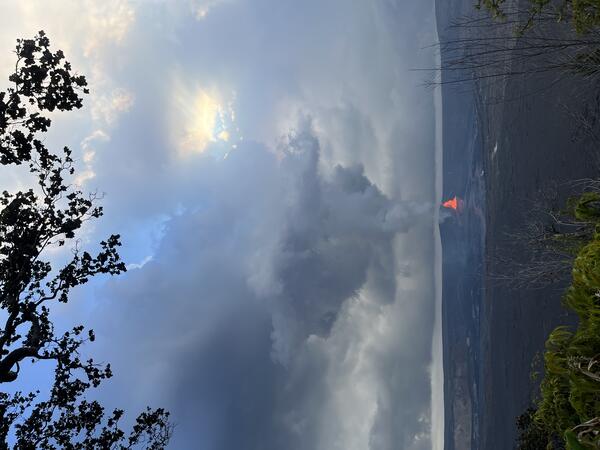
HVO geologist services webcam day after episode 13 at KīlaueaOn March 12, a USGS Hawaiian Volcano Observatory geologist on the southwest rim of Kaluapele (Kīlauea summit caldera) serviced the S2cam webcam. A plume of water vapor and volcanic gas rises from the two vents of the ongoing eruption within Halema‘uma‘u crater, one day after the 13th episode of the eruption. USGS photo by N. Deligne.
HVO geologist services webcam day after episode 13 at Kīlauea
HVO geologist services webcam day after episode 13 at KīlaueaOn March 12, a USGS Hawaiian Volcano Observatory geologist on the southwest rim of Kaluapele (Kīlauea summit caldera) serviced the S2cam webcam. A plume of water vapor and volcanic gas rises from the two vents of the ongoing eruption within Halema‘uma‘u crater, one day after the 13th episode of the eruption. USGS photo by N. Deligne.
A closeup view of the south cone at the summit of Kīlauea, showing the semi-molten nature of the cone flanks. During fountaining, lava accumulates on the cone's flanks at such a high rate that the material remains hot and semi-molten, despite the appearance of cooled, solid material on the surface.
Tephra blanket from Kīlauea summit fountaining episodes
Tephra blanket from Kīlauea summit fountaining episodesAn orange five-gallon plastic bucket, secured by heavy weights, was one of several used to collect tephra from the ongoing lava fountaining at the summit of Kīlauea. The episode 13 fountaining, however, cast large bombs (some of them molten) in this particular area, battering the ground.
Tephra blanket from Kīlauea summit fountaining episodes
Tephra blanket from Kīlauea summit fountaining episodesAn orange five-gallon plastic bucket, secured by heavy weights, was one of several used to collect tephra from the ongoing lava fountaining at the summit of Kīlauea. The episode 13 fountaining, however, cast large bombs (some of them molten) in this particular area, battering the ground.
Kīlauea summit tephra blanket from episodic fountaining
Kīlauea summit tephra blanket from episodic fountainingAn HVO geologist returns from a tephra collection bucket at the summit of Kīlauea, carrying a new sample. The outgassing plume from the vents is carried over the roadway, now covered by over 50 cm (20 inches) of tephra in places. All samples are collected in coordination with, and after receiving permission from, Hawai‘i Volcanoes National Park. USGS photo by M.
Kīlauea summit tephra blanket from episodic fountaining
Kīlauea summit tephra blanket from episodic fountainingAn HVO geologist returns from a tephra collection bucket at the summit of Kīlauea, carrying a new sample. The outgassing plume from the vents is carried over the roadway, now covered by over 50 cm (20 inches) of tephra in places. All samples are collected in coordination with, and after receiving permission from, Hawai‘i Volcanoes National Park. USGS photo by M.
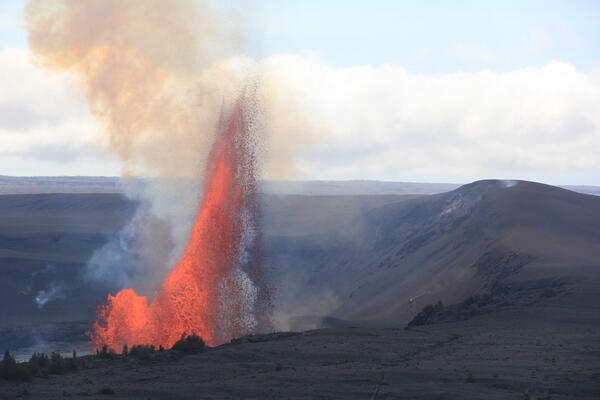
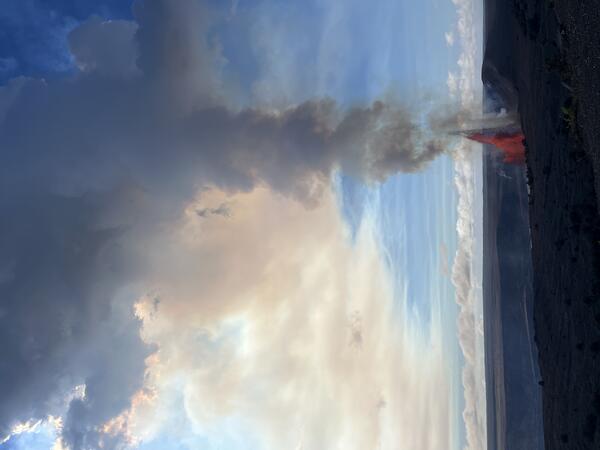
On the morning of March 11, the north vent was producing lava fountains about 50 meters (160 feet) high, with fountaining emerging from a small, sloshing pond held within the walls of the north vent cone. The pond can be seen in the lower left portion of the photo, as well as the lava spillway which exits through a notch in the cone that is obscured in this view.
Degassing cones a day after the end of episode 13 at Halema‘uma‘u, Kīlauea
Degassing cones a day after the end of episode 13 at Halema‘uma‘u, KīlaueaThe north and south cones on the western edge of Halema‘uma‘u continued degassing on March 12, a day after the end of episode 13 of the ongoing eruption at Kīlauea's summit. Most of the gas consists of water vapor (the primary volcanic gas), with sulfur dioxide (SO2) and other gases. Sulfur dioxide emissions are causing vog downwind of the summit area.
Degassing cones a day after the end of episode 13 at Halema‘uma‘u, Kīlauea
Degassing cones a day after the end of episode 13 at Halema‘uma‘u, KīlaueaThe north and south cones on the western edge of Halema‘uma‘u continued degassing on March 12, a day after the end of episode 13 of the ongoing eruption at Kīlauea's summit. Most of the gas consists of water vapor (the primary volcanic gas), with sulfur dioxide (SO2) and other gases. Sulfur dioxide emissions are causing vog downwind of the summit area.
A USGS Hawaiian Volcano Observatory geologist uses a handheld laser rangefinder on the southwest rim of Kaluapele (Kīlauea summit caldera) to measure the height of the recently active cones within Halema‘uma‘u. USGS photo taken on March 12, 2025, by M. Patrick.
On March 11, HVO geologists observed episode 13 of the ongoing Kīlauea summit eruption from the western caldera rim. Lava fountains from the north vent (left) and south vent (right) were feeding channelized flows across the floor of Halema‘uma‘u crater. USGS photo by M. Patrick.
Episode 13 fountaining began early on March 11 and continued through an HVO helicopter overflight of the Kīlauea summit region around 10:00 a.m. Visibility was slightly hampered by passing showers.
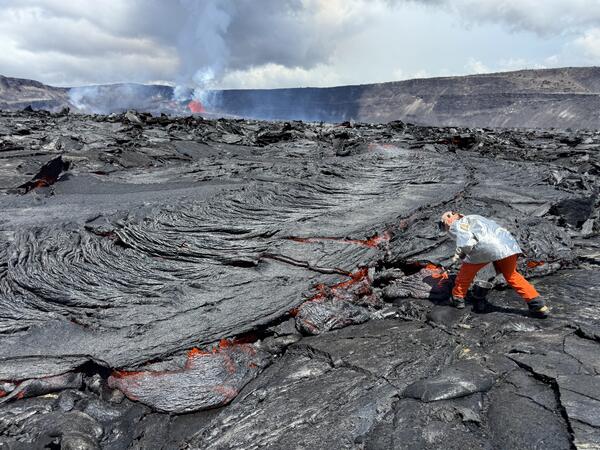
During a March 11 Hawaiian Volcano Observatory eruption monitoring flight at Kīlauea summit, scientists landed to make observations and collect samples. At the front of the channelized flow from the episode 13 north vent fountain in Halema‘uma‘u crater, a USGS geologist walks the flow margin to find a safe spot to collect a molten lava sample.
On the Halema‘uma‘u crater floor, the front of a fast-moving channelized lava flow from the north vent fountain was composed of slabby pāhoehoe. USGS photo taken on March 11, 2025, by M. Patrick.
A telephoto view of the northern vent fountain within Halema‘uma‘u crater. The steep septum separating the north and south fountains was under constant barrage today by molten lava falling from the fountains, with the steep walls on the inside of the cones in a state of constant dripping and flowing back into crater. USGS photo by M.
A USGS geologist uses a handheld laser rangefinder to measure eruption features during the 13th episode of the Kīlauea summit eruption. USGS photo taken on March 11 from the western rim of Halema‘uma‘u by M. Patrick.
Presentation: The Challenge of Volcano Monitoring, Eruption Forecasting, and Protecting Vulnerable Populations
Presentation: The Challenge of Volcano Monitoring, Eruption Forecasting, and Protecting Vulnerable PopulationsThis presentation was prepared for the AGU 2024-2025 Distinguished Lecture Series. This, and other lectures, provide a high-level synthesis of different topics for general science audiences.
This presentation discusses the challenge of volcano monitoring, eruption forecasting, and protecting vulnerable populations.
Presentation: The Challenge of Volcano Monitoring, Eruption Forecasting, and Protecting Vulnerable Populations
Presentation: The Challenge of Volcano Monitoring, Eruption Forecasting, and Protecting Vulnerable PopulationsThis presentation was prepared for the AGU 2024-2025 Distinguished Lecture Series. This, and other lectures, provide a high-level synthesis of different topics for general science audiences.
This presentation discusses the challenge of volcano monitoring, eruption forecasting, and protecting vulnerable populations.
Close-up view of lava flows within Halema‘uma‘u crater
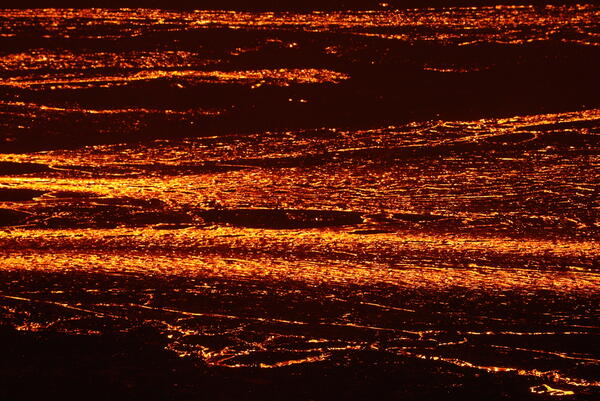
Close-up view of lava flows within Halema‘uma‘u craterPhoto of the lava flows in the western part of Halema‘uma‘u crater just before dawn on December 30, 2024. These lava flows are reaching about 2,300 ft (or 700 m) from their source at the lava fountains and covering the pre-existing topography. The flows currently cover about a quarter of the western part of the crater floor. Photo by U.S.
Close-up view of lava flows within Halema‘uma‘u crater
Close-up view of lava flows within Halema‘uma‘u craterPhoto of the lava flows in the western part of Halema‘uma‘u crater just before dawn on December 30, 2024. These lava flows are reaching about 2,300 ft (or 700 m) from their source at the lava fountains and covering the pre-existing topography. The flows currently cover about a quarter of the western part of the crater floor. Photo by U.S.
Active lava fountains and flows on December 30, 2024
Active lava fountains and flows on December 30, 2024Aerial view looking to the southwest of the active eruption in Halema‘uma‘u crater on December 30, 2024. The lava fountains are reaching up to 30 m (100 ft) high and feeding the incandescent lava in the foreground. The current activity is concentrated in the western quarter of the crater floor. Photo by U.S. Geological Survey geologist D. Downs.
Active lava fountains and flows on December 30, 2024
Active lava fountains and flows on December 30, 2024Aerial view looking to the southwest of the active eruption in Halema‘uma‘u crater on December 30, 2024. The lava fountains are reaching up to 30 m (100 ft) high and feeding the incandescent lava in the foreground. The current activity is concentrated in the western quarter of the crater floor. Photo by U.S. Geological Survey geologist D. Downs.