



Rare Earth Elements (REE)
Rare Earth Elements (REE)
Filter Total Items: 38
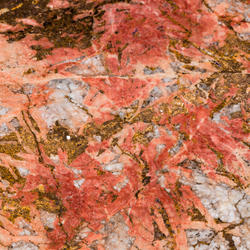
Controls on Critical Element Enrichment in Carbonatite-Alkaline Igneous Complexes
The project seeks to determine the processes responsible for critical element enrichment in carbonatites and to enhance our ability to identify and assess economic deposits. This project will work at various scales to meet this objective and will primarily focus on deposits within the US or our USGS collaborative Nations.

USMIN Mineral Deposit Database
The USMIN Mineral Deposit Database Project develops national-scale geospatial databases that provide authoritative information on the most significant mines, mineral deposits, and mining districts in the United States. These resources advance the understanding of domestic mineral resources and are available through the output of digital data products, journal articles, presentations, and other...

Source, transport and deposition of critical minerals using trace metal and isotope systematics: Denver High Resolution Laboratory
The project objective is to develop and apply solution and in situ isotopic and trace element methods to emerging research opportunities to gain a better understanding of the processes controlling critical mineral deposits, metal mobility, and other geological inquiries.

Argon Geochronology
This project supports the USGS argon geochronology laboratory in Denver. The USGS 40Ar/39Ar geochronology laboratory is a state-of-the-art research facility for determining absolute ages of minerals and rocks. The 40Ar/39Ar laboratory contributes critical geochronology to individual USGS research projects and to partners in academia and other Federal agencies. This laboratory develops methodology...

Isotope and Chemical Methods for Mineral and Geoenvironmental Assessments and Support of USGS Science Strategy
The Project objective is to facilitate the full potential of stable isotope (C,H,N,O,S), noble gas isotope (He, Ar, Ne, Ar, Kr, Xe), active gas geochemistry (CO2, H2S, SO2, CH4, HF, HCl, N2, H2, organics, light hydrocarbons), and solute geochemistry measurements of minerals and fluids (including single fluid inclusions) in multidisciplinary studies of fundamental processes that affect mineral...

Systems Approach to Critical Minerals Inventory, Research, and Assessment
This project supports the Earth Mapping Resources Initiative (EarthMRI) by developing a mineral systems approach for defining focus areas. This project is investigating domestic sources of critical minerals in three sequential stages: inventory, research, and assessment. 1) Inventory the abundance of critical minerals in ore, minerals, and processed materials from major deposits in each system...

GIS and Information Management - GGGSC
We support the geospatial component of Mineral Resources Program research and provide public access to research results and geospatial information. We facilitate all aspects of the data life cycle, including the publication and archiving of geospatial information and products. We also develop and steward national-scale data layers considered foundational to the Mineral Resources Program as well as...

GIS Prospectivity Analysis for Critical Minerals in Ore-Forming Systems in Alaska
Alaska is dominated by a history of tectonic events that foster mobilization and concentration of a wide variety of mineral commodities that are critical to the US economy and are vital to national defense, renewable-energy, and emerging electronics technologies.

Multidisciplinary Investigations of REE Mineralization at Mountain Pass and in the Southeast Mojave Desert, California
The rare earth elements (REEs) are a group of metals with unique physical and chemical properties that are critical to a variety of technological applications. For example, neodymium (Nd) is a REE used to manufacture high strength, lightweight magnets that power electric motors at all scales, from cell phones to airplanes. Reliance on REE imports puts the U.S. at high risk for supply disruption...

From Outcrop to Ions: development and application of in-situ isotope ratio measurements to solve geologic problems
Project objectives are to (1) develop innovative analytical techniques for isotope geochemistry and U-Pb geochronology using laser ablation inductively coupled plasma mass spectrometry (LA-ICP-MS), and (2) apply these techniques to collaborative research projects of high priority to the Mineral Resources Program, including studies related to the formation of "critical mineral" deposits, and...

Spectroscopy and Hyperspectral Imaging of Critical Mineral Resources
Our project will characterize the primary critical minerals (minerals that contain critical elements in their base structure) that are not yet in the USGS Spectral Library. We propose to increase understanding of the spectral indicators of critical minerals using lab-based studies of hand specimens and drill core, hyperspectral field scanning, and hyperspectral images collected from aircraft.

Integrated Hyperspectral, Geophysical and Geochemical Studies of Yellowstone National Park Hydrothermal Systems
We are researching the subsurface groundwater flow systems in Yellowstone and the relation of these systems to understanding the regional movement of water in a volcanic center. New geophysical data will be integrated with existing data sets from hyperspectral data from Yellowstone's thermal areas and thermal water geochemistry to help define regionally extensive mineral assemblages, the evolution...