



Wildlife Health
Wildlife Health
Filter Total Items: 57
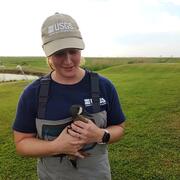
Science in Flight: Seven Ways Bird Science Serves Society
Explore seven case studies highlighting how USGS bird research informs real-world decisions.
EESC Makes an Impact: Empowering State-led Wildlife Management
Management of state natural resources is a collaborative effort between state governments, federal agencies, tribal governments, and local stakeholders. USGS Eastern Ecological Science Center (EESC) supports state-led wildlife management with research that clarifies complex issues, enhances scientific quality and communication, broadens solution options, and enables cost-sharing and mutual...

Key Values of a Century of EESC Science
The USGS Eastern Ecological Science Center (EESC) is rooted in a proud tradition of service to the nation—advancing science that informs the conservation and management of fish, wildlife, and habitats across the eastern United States and beyond. Our mission is clear: deliver reliable, partner-driven science that supports natural resource decisions today, while ensuring these resources remain...

EESC Makes an Impact: Protecting Ecosystems to Safeguard Food and Water
Research at the USGS Eastern Ecological Science Center (EESC) supports understanding of the connection between ecosystem health and the quality and availability of America's food and water. USGS studies help monitor and assess the health of terrestrial and aquatic ecosystems, species populations, water quality, and contaminants affecting health and habitats. Information gained through this...
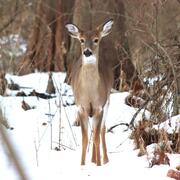
EESC Makes an Impact: Preserving our Hunting Resources
Hunting is an economic engine for the U.S. and responsible management of these resources directly supports 45.2 billion dollars spent by hunters annually. Conservation and management of hunting resources also contributes substantially to the 394.8 billion dollars spent on all wildlife-related recreation. Hunting traditions are an integral component of our American heritage, with 14.4 million...

Research to support conservation of America’s national mammal, the bison
Once numbering in the tens of millions, plains bison ( Bison bison bison) were nearly driven to extinction with only a few hundred individuals remaining by the late 19th century. Plains bison have since recovered to approximately 20,000 animals managed in conservation herds throughout North America, yet substantial challenges to their recovery remain. The Department of the Interior (DOI) stewards...

Pacific Island Bird Survey Design and Data Analysis
Abundance data are collected for bird populations throughout the Pacific Islands by numerous federal, state, university, and non-profit organizations. In order to ensure data are standardized and available to researchers throughout the region, interagency bird databases have been created and continue to be used. These databases contain more than a million compiled, proofed, and standardized...

Bison Conservation
USGS science in support of the Department of the Interior's Bison Conservation Initiative.

Tracking and Modeling the Population of the Louisiana Black Bear Using “BearTRAK”
"BearTrak" is an app that provides a central repository for Louisiana black bear tracking data, allowing managers to access information more quickly and reliably. USGS science was used in the decision to delist the species from the Endangered Species Act in 2016. Louisiana Department of Wildlife and Fisheries continues to monitor the Louisiana black bear population.

Manatee Health Assessment and Biomedical Studies
A multi-agency effort assesses the health of manatees and provides baseline information on their health, reproductive status, and nutritional condition.

Monitoring Bird and Rat Behavior to Improve Invasive Species Management
Introduced rats are notorious predators of birds and their nests worldwide, but especially on remote islands. Rats ( Rattus exulans) first arrived in Hawai‘i with Polynesian colonists about 1,000 years ago, resulting in deleterious consequences for native birds and ecosystems. Since Western contact in 1778, two additional rat species have become established in Hawai‘i, including the highly...

California Sea Otter Surveys and Research
WERC collaborates with other research scientists to conduct annual population surveys of the southern sea otter -- a federally listed threatened species. In coordination with the California Department of Fish and Wildlife and other institutions, ongoing surveys and research continues to inform the southern sea otter recovery plan for the U.S. Fish and Wildlife Service, and contributes to our...