



Wildlife and Terrestrial Species
Wildlife and Terrestrial Species
We provide rigorous and unbiased information on migratory birds, terrestrial and marine mammals, amphibians and reptiles, native plants, threatened and endangered species, wildlife disease, and on wildlife issues resulting from human activities. Our science contributes toward a more complete understanding of the Nation’s ecosystems and landscapes.
Species We Study
Species We Study

Healthy wildlife populations sustain communities across the Nation, and maintaining ecosystems thriving with biodiversity ensures these resources are available for generations to come.
Outstanding in the Field
Outstanding in the Field

In this episode we head to southern Florida to learn about one of North America’s most misunderstood - yet threatened - mammals: bats
Filter Total Items: 387
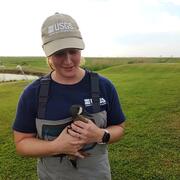
Science in Flight: Seven Ways Bird Science Serves Society
Explore seven case studies highlighting how USGS bird research informs real-world decisions.
EESC Makes an Impact: Empowering State-led Wildlife Management
Management of state natural resources is a collaborative effort between state governments, federal agencies, tribal governments, and local stakeholders. USGS Eastern Ecological Science Center (EESC) supports state-led wildlife management with research that clarifies complex issues, enhances scientific quality and communication, broadens solution options, and enables cost-sharing and mutual...

Key Values of a Century of EESC Science
The USGS Eastern Ecological Science Center (EESC) is rooted in a proud tradition of service to the nation—advancing science that informs the conservation and management of fish, wildlife, and habitats across the eastern United States and beyond. Our mission is clear: deliver reliable, partner-driven science that supports natural resource decisions today, while ensuring these resources remain...

EESC Makes an Impact: Protecting Ecosystems to Safeguard Food and Water
Research at the USGS Eastern Ecological Science Center (EESC) supports understanding of the connection between ecosystem health and the quality and availability of America's food and water. USGS studies help monitor and assess the health of terrestrial and aquatic ecosystems, species populations, water quality, and contaminants affecting health and habitats. Information gained through this...
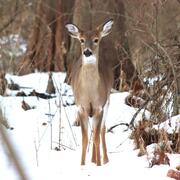
EESC Makes an Impact: Preserving our Hunting Resources
Hunting is an economic engine for the U.S. and responsible management of these resources directly supports 45.2 billion dollars spent by hunters annually. Conservation and management of hunting resources also contributes substantially to the 394.8 billion dollars spent on all wildlife-related recreation. Hunting traditions are an integral component of our American heritage, with 14.4 million...

USGS Alaska Science Center Wildlife Tracking Data Collection
Understanding the short- and long-distance movements of wildlife is critical for a wide variety of ecological research questions and management decisions. Since the mid-1980s, the USGS Alaska Science Center has used information from telemetry devices on wildlife species to determine locations of animals throughout their annual cycles, understand patterns of habitat use, quantify time spent on...

Research to support conservation of America’s national mammal, the bison
Once numbering in the tens of millions, plains bison ( Bison bison bison) were nearly driven to extinction with only a few hundred individuals remaining by the late 19th century. Plains bison have since recovered to approximately 20,000 animals managed in conservation herds throughout North America, yet substantial challenges to their recovery remain. The Department of the Interior (DOI) stewards...

Pacific Island Bird Survey Design and Data Analysis
Abundance data are collected for bird populations throughout the Pacific Islands by numerous federal, state, university, and non-profit organizations. In order to ensure data are standardized and available to researchers throughout the region, interagency bird databases have been created and continue to be used. These databases contain more than a million compiled, proofed, and standardized...


Species We Study: Amphibians
Across the country, USGS scientists research amphibians to help other agencies manage this historically underappreciated and now declining group. Our scientists have learned that no single threat explains global amphibian declines; instead, a variety of local and global factors are contributing. Habitat loss, disease, contaminants, and other threats are all part of the pattern.

Species We Study: Birds
To understand information needs and respond to the many challenges in bird conservation, USGS scientists participate in Flyway committees, on Joint Venture boards and working groups, in professional organizations, and in other conservation partnerships. These activities connect USGS scientists to conservation partners with whom they work to address substantial challenges. More than one hundred...