



Quality of groundwater used for public supply in the continental United States: A comprehensive assessment
The presence of contaminants in a source water can constrain its suitability for drinking. The quality of groundwater used for public supply was assessed in 25 principal aquifers (PAs) that account for 84% of groundwater pumped for public supply in the U.S. (89.6 million people on a proportional basis). Each PA was sampled across its lateral extent using an equal-area grid, typically with 60 wells per PA. Samples were analyzed for 502 constituents, of which 374 had either a regulatory or nonregulatory human health benchmark (HHB). Nationally, elevated concentrations (relative to HHBs) of geogenic constituents have a larger effect than anthropogenic constituents, as indicated by three metrics: detection frequency, 35% versus 8.1%; prevalence (based on area), 41% versus 6.4%; and population potentially affected, 31.2 million versus 7.1 million. Prevalence of any constituent at elevated concentrations was high─40 to 75%─in PAs comprising unconsolidated sediment (eight PAs) and sandstone or interbedded sandstones and carbonates (four PAs) in the West and Central Interior. Prevalence was lower─15 to 35%─in PAs comprising sediment and sedimentary rocks along the Gulf and Atlantic Coasts (four PAs), carbonates distributed across the continental U.S. (seven PAs), and hard rock (two PAs).
Citation Information
| Publication Year | 2022 |
|---|---|
| Title | Quality of groundwater used for public supply in the continental United States: A comprehensive assessment |
| DOI | 10.1021/acsestwater.2c00390 |
| Authors | Kenneth Belitz, Miranda S. Fram, Bruce D. Lindsey, Paul E. Stackelberg, Laura M. Bexfield, Tyler D. Johnson, Bryant C. Jurgens, James A. Kingsbury, Peter B. McMahon, Neil M. Dubrovsky |
| Publication Type | Article |
| Publication Subtype | Journal Article |
| Series Title | Environmental Science & Technology - Water |
| Index ID | 70237805 |
| Record Source | USGS Publications Warehouse |
| USGS Organization | California Water Science Center; Colorado Water Science Center; National Water Quality Assessment Program; New Mexico Water Science Center; WMA - Earth System Processes Division |
Related
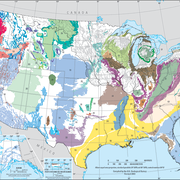
Principal Aquifers of the United States
Related