



Where we WERC
Our scientists conduct studies from the deserts of the Mojave to the diverse ecosystems of the Great Basin
Our scientists conduct studies from the deserts of the Mojave to the diverse ecosystems of the Great Basin
Our Scientists at WERC
Ecologists collecting field samples to detect contaminants in the environment
Ecologists collecting field samples to detect contaminants in the environment
Western Ecological Research Center (WERC)
The Western Ecological Research Center (WERC) is a USGS Ecosystems Mission Area operation serving primarily California and Nevada. WERC scientists work closely with Federal, State, academic, and other collaborators to address a diverse array of high-profile topics. Topics include research on effects of wildfire, sea level rise, drought, energy development and more on federal Trust species.

WERC Quick Links
WERC Quick Links
Check out our most up-to-date data, events and science.
News
USGS Scientists Share Their Research at the 2026 Bay-Delta Science Conference
USGS Scientists Share Their Research at the 2026 Bay-Delta Science Conference
A Tale of Two Islands and the Future of an Ocean Sentinel Seabird
A Tale of Two Islands and the Future of an Ocean Sentinel Seabird
EcoNews - Vol. 7 | Issue 2
EcoNews - Vol. 7 | Issue 2
Publications
Range-wide population trend analysis for greater sage-grouse (Centrocercus urophasianus)—Updated 1960–2025 Range-wide population trend analysis for greater sage-grouse (Centrocercus urophasianus)—Updated 1960–2025
Greater sage-grouse (Centrocercus urophasianus; hereafter sage-grouse) are at the center of State and national land-use policies largely because of their unique life-history traits as an ecological indicator for the health of sagebrush ecosystems. This updated population analysis provides State and Federal land and wildlife managers with the best available science to help guide...
Abundant ticks but limited Borrelia spp. pathogens in Mojave desert tortoise habitat Abundant ticks but limited Borrelia spp. pathogens in Mojave desert tortoise habitat
Ornithodoros ticks, a genus of soft ticks in the family Argasidae, occur worldwide including throughout deserts in the Southwestern United States. In the Mojave Desert, Ornithodoros parkeri and O. turicata are common ectoparasites of Mojave desert tortoises (Gopherus agassizii). These two tick species are vectors of Borrelia spp. that cause tick-borne relapsing fever (TBRF) in people...
Biomarkers of mortality risks in Yukon Chinook salmon Biomarkers of mortality risks in Yukon Chinook salmon
Premature mortality of spawning adult Pacific salmon (Oncorhynchus species) can strongly influence population dynamics and complicate escapement-based management. Heat stress and Ichthyophonus infections have been identified as probable drivers of premature mortality in Yukon River Chinook salmon (Oncorhynchus tshawytscha) and likely contributors to low spawning abundance. We leveraged a
Science

Data Harmonization for Greater Sage-Grouse Populations
Long-term wildlife monitoring is imperative for understanding population changes that can inform managers. However, working with population data collected by different organizations across multiple jurisdictions and over long time periods can be challenging due to varying data management approaches and organizational priorities. Through this project, we aimed to collaborate with eleven state...

Heat Stress in Alaska's Pacific Salmon
Alaska's freshwater spans a wide range of summer water temperatures, from ice-cold glacier water to warm rivers that routinely reach stressful levels for salmon, exceeding 18°C/64°F and even surpassing 21°C/70°F. Pacific salmon population trends are also varied and include declines in many Chinook salmon populations. Salmon declines are kitchen table issues because salmon fishing is key to the...
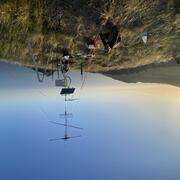
Movements and Migratory Stopovers Among Birds in the Western U.S. Using Networked Weather Radar and Motus Wildlife Tracking Data
USGS scientists from the Wetland and Aquatic Research Center and the Western Ecological Research Center are collaborating to synthesize data on migratory bird use of Bureau of Land Management lands in the western U.S. to support permitting decisions.