U.S. flag

An official website of the United States government

Images

Browse here for some of our available imagery. We may get permission to use some non-USGS images and these should be marked and are subject to copyright laws. USGS Astrogeology images can be freely downloaded.

Filter Total Items: 350
Flynn Creek Drill Core 67-01: Box 28
Flynn Creek Drill Core 67-01: Box 28 (FC67-1_Box_028)

Between 1967 and 1979, USGS scientist Dr. David Roddy conducted a drilling program at Flynn Creek crater. The drilling program produced more than 3.8 km of nearly continuous core from 18 separate drill holes. These samples are now contained in 2,261 standard core storage boxes at the USGS in Flagstaff, Arizona.

Between 1967 and 1979, USGS scientist Dr. David Roddy conducted a drilling program at Flynn Creek crater. The drilling program produced more than 3.8 km of nearly continuous core from 18 separate drill holes. These samples are now contained in 2,261 standard core storage boxes at the USGS in Flagstaff, Arizona.

Flynn Creek Drill Core 67-01: Box 30
Flynn Creek Drill Core 67-01: Box 30 (FC67-1_Box_030)

Between 1967 and 1979, USGS scientist Dr. David Roddy conducted a drilling program at Flynn Creek crater. The drilling program produced more than 3.8 km of nearly continuous core from 18 separate drill holes. These samples are now contained in 2,261 standard core storage boxes at the USGS in Flagstaff, Arizona.

Between 1967 and 1979, USGS scientist Dr. David Roddy conducted a drilling program at Flynn Creek crater. The drilling program produced more than 3.8 km of nearly continuous core from 18 separate drill holes. These samples are now contained in 2,261 standard core storage boxes at the USGS in Flagstaff, Arizona.

Flynn Creek Drill Core 67-01: Box 31
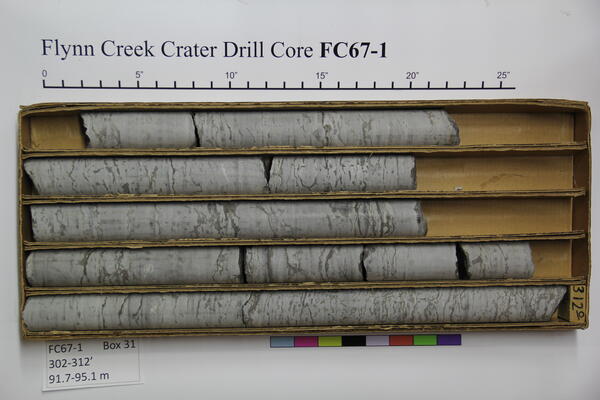
Flynn Creek Drill Core 67-01: Box 31 (FC67-1_Box_031)

Between 1967 and 1979, USGS scientist Dr. David Roddy conducted a drilling program at Flynn Creek crater. The drilling program produced more than 3.8 km of nearly continuous core from 18 separate drill holes. These samples are now contained in 2,261 standard core storage boxes at the USGS in Flagstaff, Arizona.

Between 1967 and 1979, USGS scientist Dr. David Roddy conducted a drilling program at Flynn Creek crater. The drilling program produced more than 3.8 km of nearly continuous core from 18 separate drill holes. These samples are now contained in 2,261 standard core storage boxes at the USGS in Flagstaff, Arizona.

Flynn Creek Drill Core 67-01: Box 33
Flynn Creek Drill Core 67-01: Box 33 (FC67-1_Box_033)

Between 1967 and 1979, USGS scientist Dr. David Roddy conducted a drilling program at Flynn Creek crater. The drilling program produced more than 3.8 km of nearly continuous core from 18 separate drill holes. These samples are now contained in 2,261 standard core storage boxes at the USGS in Flagstaff, Arizona.
Between 1967 and 1979, USGS scientist Dr. David Roddy conducted a drilling program at Flynn Creek crater. The drilling program produced more than 3.8 km of nearly continuous core from 18 separate drill holes. These samples are now contained in 2,261 standard core storage boxes at the USGS in Flagstaff, Arizona.
Flynn Creek Drill Core 67-01: Box 38 (FC67-1_Box_038)

Between 1967 and 1979, USGS scientist Dr. David Roddy conducted a drilling program at Flynn Creek crater. The drilling program produced more than 3.8 km of nearly continuous core from 18 separate drill holes. These samples are now contained in 2,261 standard core storage boxes at the USGS in Flagstaff, Arizona.
Between 1967 and 1979, USGS scientist Dr. David Roddy conducted a drilling program at Flynn Creek crater. The drilling program produced more than 3.8 km of nearly continuous core from 18 separate drill holes. These samples are now contained in 2,261 standard core storage boxes at the USGS in Flagstaff, Arizona.
Closeup of Gene Shoemaker smiling while wearing a prototype rocket jetpack in Hopi Buttes, AZ in 1966.
Gene Shoemaker
Gene Shoemaker
Gene Shoemaker

This photograph shows Gene Shoemaker wearing a prototype rocket jetpack during field testing in Hopi Buttes, AZ in 1966. The USGS Astrogeology Science Center, which Shoemaker founded, played an integral role in field testing equipment for the Apollo missions to the Moon.


This photograph shows Gene Shoemaker wearing a prototype rocket jetpack during field testing in Hopi Buttes, AZ in 1966. The USGS Astrogeology Science Center, which Shoemaker founded, played an integral role in field testing equipment for the Apollo missions to the Moon.


USGS IMAP 462: (LAC-40) Geologic map and section of the Timocharis region of the Moon

USGS IMAP 462: (LAC-40) Geologic map and section of the Timocharis region of the Moon

By: M.H. Carr

Map and associated documents are available from the USGS Publications Warehouse: https://doi.org/10.3133/i462

A man wearing a spacesuit and a cowboy hat instead of a helmet
Space Cowboy: Testing space suits for the Apollo program in 1965

Image of USGS staff member Joe O'Connor in a prototype Apollo space suit and cowboy hat. This image is Figure 31a in "The U.S. Geological Survey, Branch of Astrogeology—A Chronology of Activities from Conception through the End of Project Apollo (1960-

1973)". The original caption is:

Image of USGS staff member Joe O'Connor in a prototype Apollo space suit and cowboy hat. This image is Figure 31a in "The U.S. Geological Survey, Branch of Astrogeology—A Chronology of Activities from Conception through the End of Project Apollo (1960-

1973)". The original caption is:

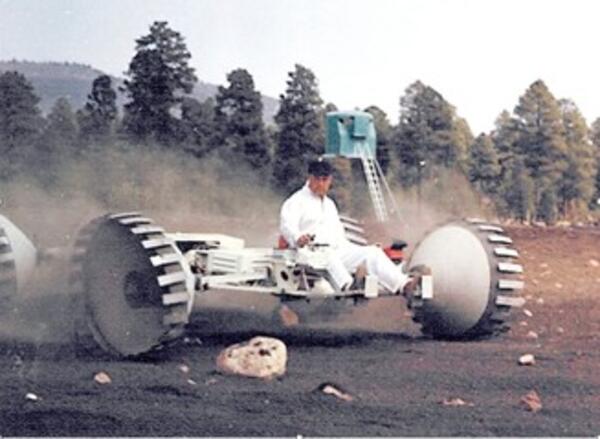
Early lunar roving vehicle prototype with large wheels and an open seat, being driven by a man in a white jumpsuit
Early lunar rover prototypes were tested in northern Arizona with Astrogeology, and many were built by USGS Astrogeologists

It had long been decided that the astronauts on the Moon would be equipped with a vehicle that would enable them to explore farther than the few feet that would be reachable in their cumbersome space suites, so NASA called for examples of suitable vehicles.

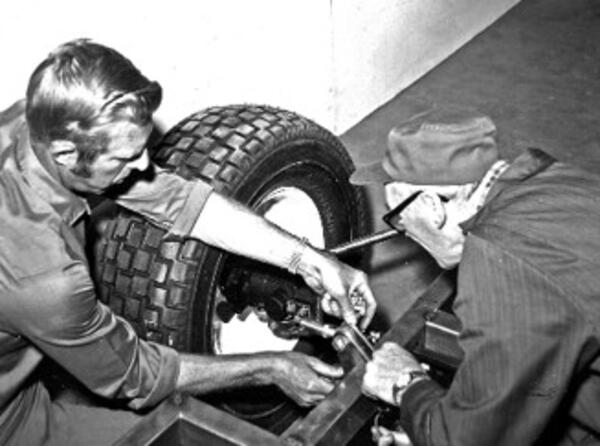
A black and white photo of two men working on the suspension of an open chassis vehicle
Working on Grover the Geologic Rover, an Earth training rover based on the blueprints of the Lunar Roving Vehicle

USGS Astrogeology had a vehicle section in the 1960s, aided by a well-equipped machine shop. We set to work and in a remarkably short time produced a very workable vehicle, Grover, for the princely sum of \$2,000, using salvaged parts.

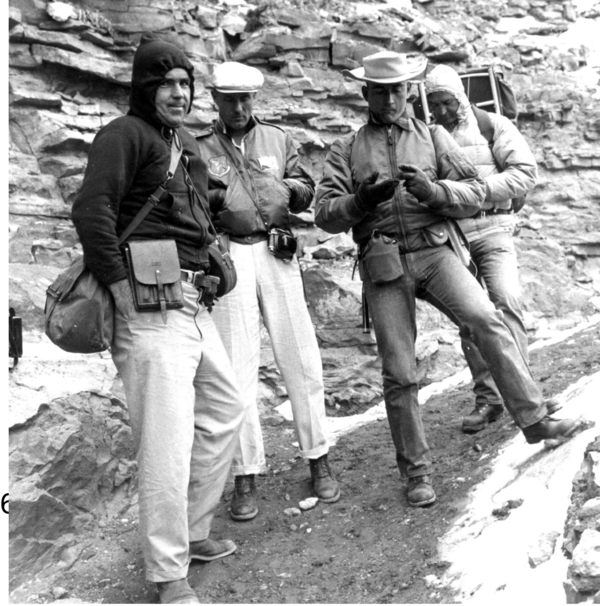
Four men in cold gear standing in front of a rock outcrop
Astronaut training in the Grand Canyon: A turning point in training when the astronauts started disliking geology less and learned about how to extract the mysteries from the rocks

The Apollo astronauts were not especially enthused about the geology training; they were test pilots, aeronautical engineers, military people, and they had enough on their plate in preparation for their missions that they did not need additional tasks.

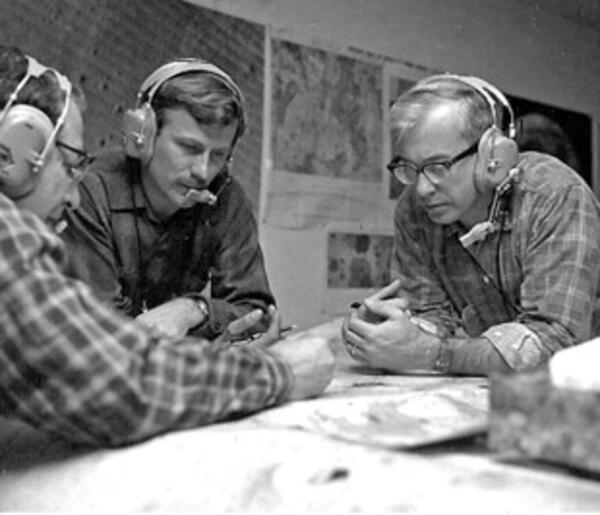
Three men with headsets are hovering over maps and appearing to discuss observations
Mappers of the Astrogeologic Studies (Astro), and Surface Planetary Exploration (SPE) during Apollo mapping campaign

Members of the Astrogeologic Studies (Astro), and Surface Planetary Exploration (SPE) branches of the early USGS Astrogeology Science Center. Astro determined what should be studied, and SPE created the procedures, tools, protocols and communication methods needed to do the learning.

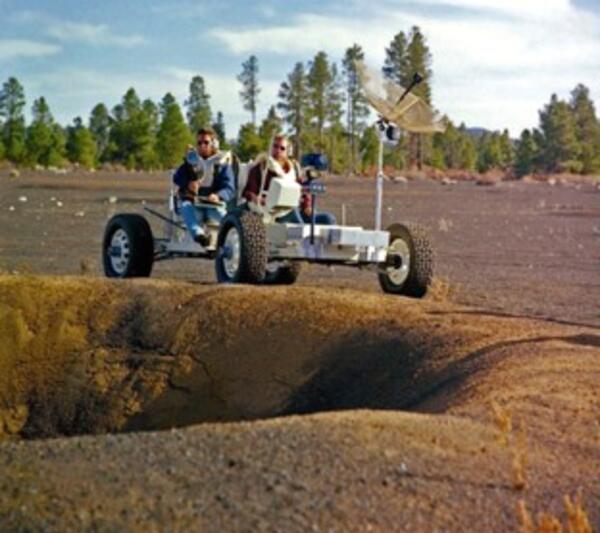
Photo of astronauts driving a lunar rover in the Cinder Lake Crater Field
Astronauts driving Grover the Geologic Rover in the crater field constructed by USGS Astrogeology, Cinder Lake Crater Field
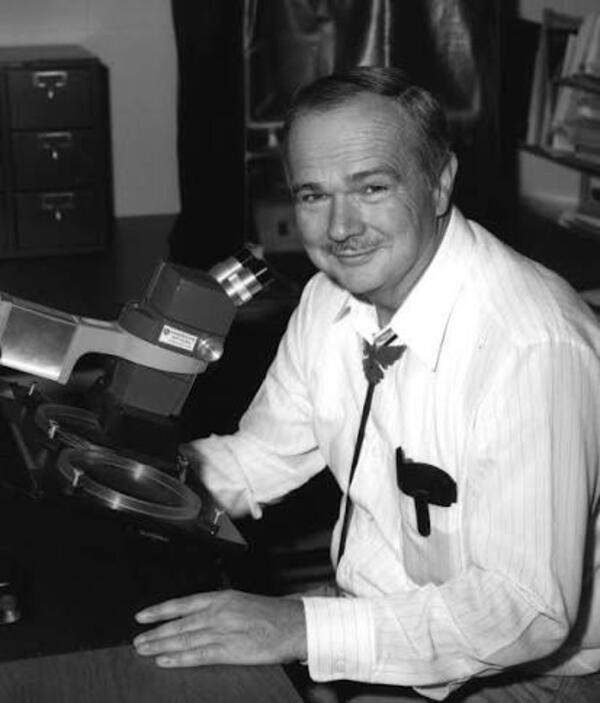
Gene Shoemaker wearing a white button-up shirt and a bolo tie, sitting at a microscope and looking at the camera
Gene Shoemaker, Founder of USGS Astrogeology

Gene Shoemaker working on Apollo data, in his characteristic bolo tie. Gene was one of the founders of USGS Astrogeology and an early pioneer of planetary science.

Gene Shoemaker working on Apollo data, in his characteristic bolo tie. Gene was one of the founders of USGS Astrogeology and an early pioneer of planetary science.

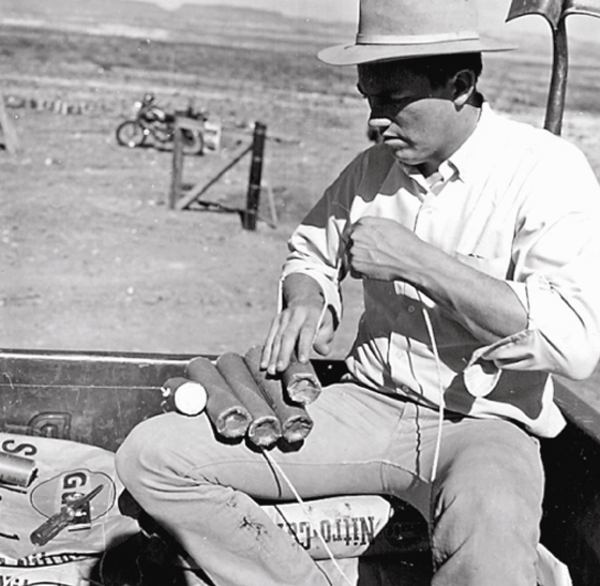
Man in white button-down shirt sitting on bags of explosives, assembling dynamite sticks used as detonator
Bobby Philpott sitting on bags of explosives as he assembled the dynamite sticks being used as detonator

Bobby Philpott sitting on bags of explosives as he assembled the dynamite sticks used as detonator has been a popular image used to represent the creation of the Cinder Lake Crater Fields. In the photos of the explosions we can see ejection of material skyward, from explosive charge instead of asteroid impact, yet the result remains the same – craters. 

Bobby Philpott sitting on bags of explosives as he assembled the dynamite sticks used as detonator has been a popular image used to represent the creation of the Cinder Lake Crater Fields. In the photos of the explosions we can see ejection of material skyward, from explosive charge instead of asteroid impact, yet the result remains the same – craters. 

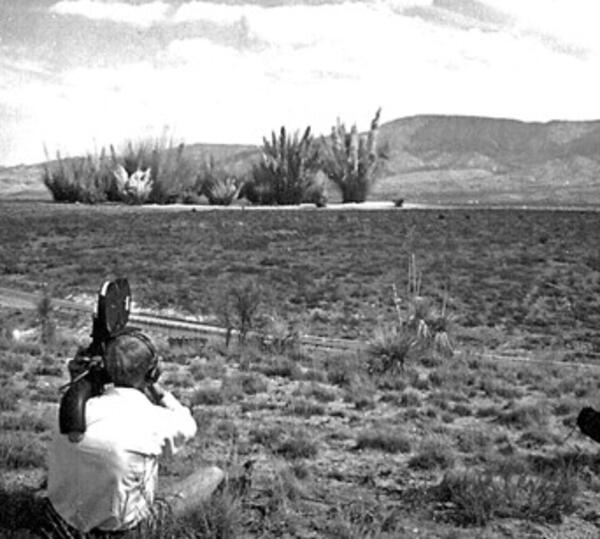
A cameraman (foreground) films small explosions in the distance, which are part of the creation of a crater field
A cameraman records explosions where we can see ejection of material skyward, from explosive charge instead of asteroid impact, yet the result remains the same – craters!

In this photo during the creation of Cinder Lake Crater Field, a cameraman records explosions in the distance. We can see ejection of material skyward, from explosive charge instead of asteroid impact, yet the result remains the same – craters!

Two men wearing jackets and headsets pulling a piece of equpment up a moderate slope in the desert southwest
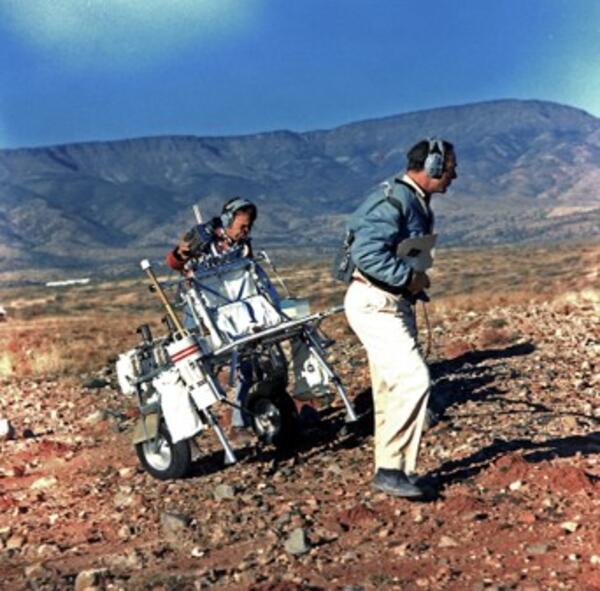
Testing the "Tool Cart" in the Verde Valley testing site: a hand cart with the equipment the astronauts would use on the Moon.

The very cumbersome tool cart being tested in the Verde Valley training exercises. The tool cart was later replaced by the tool rack, affixed to the Lunar Roving Vehicle and not pulled by the astronauts directly.

A man in a white jumpsuit works a machine in a machine shop
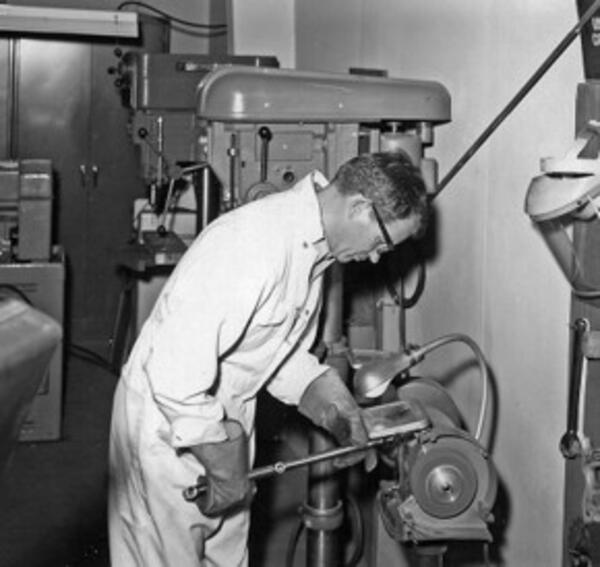
Astrogeology ran a machine shop throughout Apollo for a variety of custom fabrication needs

In the early days of Apollo and immediately after, USGS Astrogeology had a vehicle section in Flagstaff; it was composed of Dick Weiser, Billy Tinnin and boss, Putty Mills, aided by a well-equipped machine shop run by Walt Fahey.

USGS IMAP 385: (LAC-75) Geologic map and sections of the Letronne region of the moon

USGS IMAP 385: (LAC-75) Geologic map and sections of the Letronne region of the moon

By: C.H. Marshall

Map and associated data are available from the USGS Publication Warehouse: https://doi.org/10.3133/i385

Image: Stillwater Mine
Stillwater Mine
Stillwater Mine
Stillwater Mine

View of the Stullwater Mine, where rocks are collected for making lunar regolith simulant.
__________
The USGS has created man-made moon dirt, or regolith, to help NASA prepare for upcoming moon explorations. Four tons of the simulant is expected to be made by this summer of 2009 and turned over to the scientific community involved in lunar exploration.

Was this page helpful?