
Avian Influenza
Explore our science related to: Avian Influenza
-
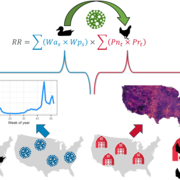
Advancing Risk Modeling for Highly Pathogenic Avian Influenza
Ongoing global outbreaks demonstrate the capacity of highly pathogenic avian influenza virus (HPAIV) to impact poultry, wild birds, and even human health. USGS research is advancing the understanding of the spatial and temporal interface between wild and domestic bird populations from which these viruses emerge to aid biosecurity planning and outbreak response.Deriving Spatial and Temporal Waterfowl Inputs for Disease Risk Modeling
USGS is creating spatially and temporally explicit inputs to improve avian influenza transmission risk modeling. This project places special emphasis on wild bird distribution and abundance models as well as avian influenza prevalence models.
Related
Filter Total Items: 15
Influenza A viruses remain infectious for more than seven months in northern wetlands of North America Influenza A viruses remain infectious for more than seven months in northern wetlands of North America
In this investigation, we used a combination of field- and laboratory-based approaches to assess if influenza A viruses (IAVs) shed by ducks could remain viable for extended periods in surface water within three wetland complexes of North America. In a field experiment, replicate filtered surface water samples inoculated with duck swabs were tested for IAVs upon collection and again...
Authors
Andrew M. Ramey, Andrew B. Reeves, Judith Z. Drexler, Josh T. Ackerman, Susan E.W. De La Cruz, Andrew S. Lang, Christina Leyson, Paul T. Link, Diann Prosser, Gregory J. Robertson, Jordan Wight, Sungsu Youk, Erica Spackman, Mary Pantin-Jackwood, Rebecca L. Poulson, David E. Stallknecht
Waterfowl occurrence and residence time as indicators of H5 and H7 avian influenza in North American Poultry Waterfowl occurrence and residence time as indicators of H5 and H7 avian influenza in North American Poultry
Avian influenza (AI) affects wild aquatic birds and poses hazards to human health, food security, and wildlife conservation globally. Accordingly, there is a recognized need for new methods and tools to help quantify the dynamic interaction between wild bird hosts and commercial poultry. Using satellite-marked waterfowl, we applied Bayesian joint hierarchical modeling to concurrently...
Authors
John M. Humphreys, Andy Ramey, David C. Douglas, Jennifer M. Mullinax, Catherine Soos, Paul T. Link, Patrick Walther, Diann J. Prosser
Limited detection of antibodies to clade 2.3.4.4 A/Goose/Guangdong/1/1996 lineage highly pathogenic H5 avian influenza virus in North American waterfowl Limited detection of antibodies to clade 2.3.4.4 A/Goose/Guangdong/1/1996 lineage highly pathogenic H5 avian influenza virus in North American waterfowl
During 2014, highly pathogenic (HP) influenza A viruses (IAVs) of the A/Goose/Guangdong/1/1996 lineage (GsGD-HP-H5), originating from Asia, were detected in domestic poultry and wild birds in Canada and the US. These clade 2.3.4.4 GsGD-HP-H5 viruses included reassortants possessing North American lineage gene segments; were detected in wild birds in the Pacific, Central, and Mississippi...
Authors
David E. Stallknecht, Clara Kienzle-Dean, Nick Davis-Fields, Christopher S. Jennelle, Andrew S. Bowman, Jacqueline M. Nolting, Walter Boyce, James Crum, Jefferson Santos, Justin D. Brown, Diann Prosser, Susan E.W. De La Cruz, Joshua T. Ackerman, Michael L. Casazza, Scott Krauss, Daniel Perez, Andrew M. Ramey, Rebecca L. Poulson
Related
Filter Total Items: 15
Influenza A viruses remain infectious for more than seven months in northern wetlands of North America Influenza A viruses remain infectious for more than seven months in northern wetlands of North America
In this investigation, we used a combination of field- and laboratory-based approaches to assess if influenza A viruses (IAVs) shed by ducks could remain viable for extended periods in surface water within three wetland complexes of North America. In a field experiment, replicate filtered surface water samples inoculated with duck swabs were tested for IAVs upon collection and again...
Authors
Andrew M. Ramey, Andrew B. Reeves, Judith Z. Drexler, Josh T. Ackerman, Susan E.W. De La Cruz, Andrew S. Lang, Christina Leyson, Paul T. Link, Diann Prosser, Gregory J. Robertson, Jordan Wight, Sungsu Youk, Erica Spackman, Mary Pantin-Jackwood, Rebecca L. Poulson, David E. Stallknecht
Waterfowl occurrence and residence time as indicators of H5 and H7 avian influenza in North American Poultry Waterfowl occurrence and residence time as indicators of H5 and H7 avian influenza in North American Poultry
Avian influenza (AI) affects wild aquatic birds and poses hazards to human health, food security, and wildlife conservation globally. Accordingly, there is a recognized need for new methods and tools to help quantify the dynamic interaction between wild bird hosts and commercial poultry. Using satellite-marked waterfowl, we applied Bayesian joint hierarchical modeling to concurrently...
Authors
John M. Humphreys, Andy Ramey, David C. Douglas, Jennifer M. Mullinax, Catherine Soos, Paul T. Link, Patrick Walther, Diann J. Prosser
Limited detection of antibodies to clade 2.3.4.4 A/Goose/Guangdong/1/1996 lineage highly pathogenic H5 avian influenza virus in North American waterfowl Limited detection of antibodies to clade 2.3.4.4 A/Goose/Guangdong/1/1996 lineage highly pathogenic H5 avian influenza virus in North American waterfowl
During 2014, highly pathogenic (HP) influenza A viruses (IAVs) of the A/Goose/Guangdong/1/1996 lineage (GsGD-HP-H5), originating from Asia, were detected in domestic poultry and wild birds in Canada and the US. These clade 2.3.4.4 GsGD-HP-H5 viruses included reassortants possessing North American lineage gene segments; were detected in wild birds in the Pacific, Central, and Mississippi...
Authors
David E. Stallknecht, Clara Kienzle-Dean, Nick Davis-Fields, Christopher S. Jennelle, Andrew S. Bowman, Jacqueline M. Nolting, Walter Boyce, James Crum, Jefferson Santos, Justin D. Brown, Diann Prosser, Susan E.W. De La Cruz, Joshua T. Ackerman, Michael L. Casazza, Scott Krauss, Daniel Perez, Andrew M. Ramey, Rebecca L. Poulson