



U.S. Geological Survey-U.S. Department of Energy Cooperative Studies
Lake Tahoe Hydro Mapper
Science in the Truckee River Basin
Science in the Carson River Basin
Nevada Water Science Center
The Nevada Water Science Center is committed to providing reliable and unbiased information on Nevada's water resources to the public, partners, and stakeholders. Our broad data collection network and research provide timely, useful information to keep the public informed, protect life and property, and improve our understanding of water supply and availability across Nevada and adjacent states.
National Water Dashboard
National Water Dashboard

See current streamflow, groundwater, and water-quality conditions with this new map interface to USGS data.
Featured Science
Featured Science
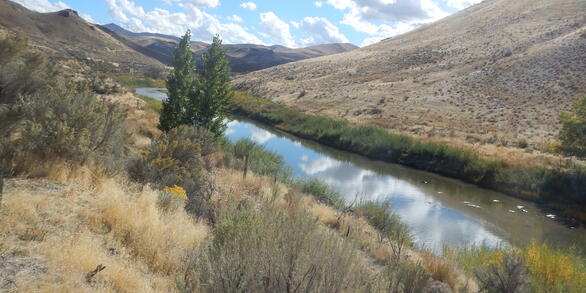
Learn about the latest USGS research in the Humboldt River Basin.
Quick Links
Quick Links
Get our most popular data:
News
Nevada and California Water Science Centers Join Forces at 2026 Tahoe Summit
Nevada and California Water Science Centers Join Forces at 2026 Tahoe Summit
Humboldt River Basin Capture Query Tool
Humboldt River Basin Capture Query Tool
2025 in Review: The Saline Lake Ecosystems Integrated Water Availability Assessment
2025 in Review: The Saline Lake Ecosystems Integrated Water Availability Assessment
Publications
Methods for the computation of streamflow statistics for selected streamgages in or near Nevada through water year 2021 Methods for the computation of streamflow statistics for selected streamgages in or near Nevada through water year 2021
Streamflow statistics are used by Federal, State, and local agencies to protect and manage the water resources of Nevada. Peak-streamflow, low-streamflow, streamflow-duration, mean, minimum, and maximum streamflow statistics were computed for 310 streamgages in Nevada and surrounding States through water year 2021 (the period from October 1, 2020, to September 30, 2021) by the U.S...
Water depth fluctuations and water chemistry in five ephemeral rock pools (tinajas), Clark County, Nevada, 2021–23 Water depth fluctuations and water chemistry in five ephemeral rock pools (tinajas), Clark County, Nevada, 2021–23
Southern Nevada is characterized by an arid climate with limited perennial water resources. In this environment, rock pools (tinajas) are both a habitat and drinking water source for wildlife. In this reconnaissance-level project, the U.S. Geological Survey studied the water depth and water chemistry at five tinajas in Clark County, Nevada. The tinaja sites in this study are...
Flood-inundation extents and hydraulic characteristics of Carson Slough, Ash Meadows National Wildlife Refuge, Nevada Flood-inundation extents and hydraulic characteristics of Carson Slough, Ash Meadows National Wildlife Refuge, Nevada
Mud Lake Dam, a rock and earth embankment structure, crosses an ephemeral stream that once flowed naturally into Carson Slough, the largest wetland complex in southern Nevada and a critical habitat for several threatened and endangered species. The dam was breached in the 1990s, rerouting stormwater into a new channel. The Bureau of Land Management and U.S. Fish and Wildlife Service are
Science

Nevada StreamStats
The USGS Nevada Water Science Center (NVWSC), in partnership with the Bureau of Land Management (BLM) and the Nevada Division of Water Resources (NDWR), is updating streamflow statistics for Nevada. Additionally, the project includes launching StreamStats, a web-based Geographic Information Systems (GIS) tool that provides streamflow statistics and information about drainage basins. Work on this...
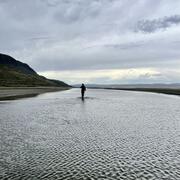
Water Quantity in the Great Basin
The Saline Lake Ecosystems Integrated Water Availability Assessment studied long-term changes in water levels across the Great Basin’s terminal lake systems and how variability in water supply and demand affect the water available to support critical bird habitat.
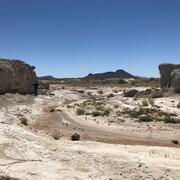
Streamflow Modeling Studies in Nevada
The USGS Nevada Water Science Center (NVWSC), in partnership with the Bureau of Land Management (BLM), is conducting hydrologic and hydraulic modeling studies to support stream restoration.