



Scientists at the USGS National Wildlife Health Center have been working on vaccines to protect bats from diseases like such as rabies and white-nose syndrome. The most promising method is called orotopical vaccination. By applying the vaccine to the bat’s muzzle, the gel-based vaccine is spread to others in the colony through grooming.
Multimedia
Search here for some of our available field imagery and videos.
Images
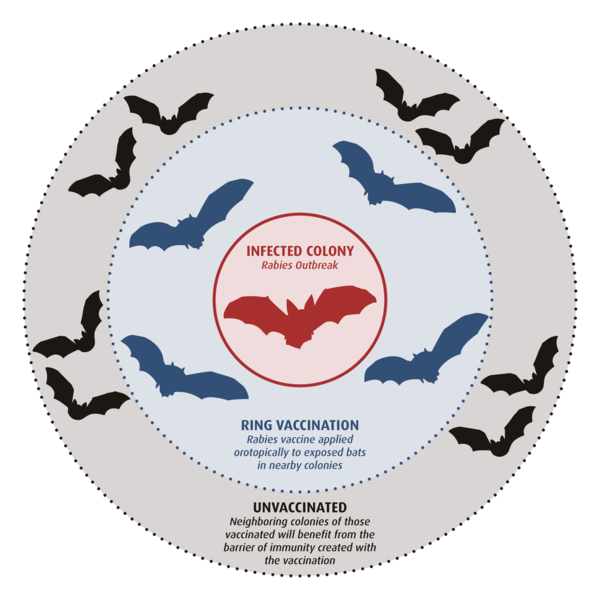
Ring Vaccination - Rabies and Vampire Bats
Scientists at the USGS National Wildlife Health Center have been working on vaccines to protect bats from diseases like such as rabies and white-nose syndrome. The most promising method is called orotopical vaccination. By applying the vaccine to the bat’s muzzle, the gel-based vaccine is spread to others in the colony through grooming.
photograph by Anna Pink Snowy owl
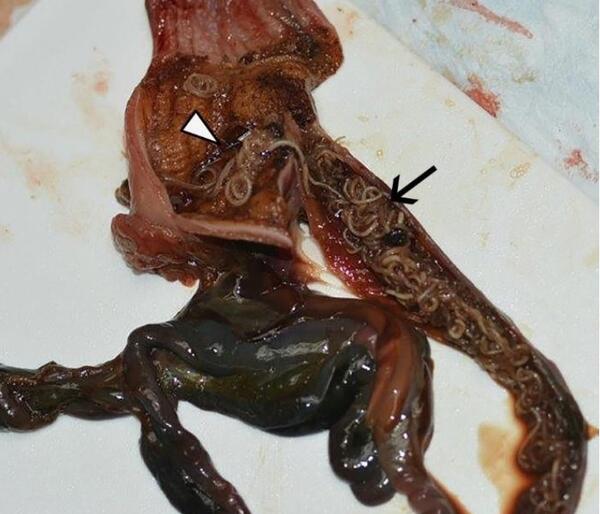
Photograph from a Snowy Owl (Bubo scandiacus) found dead in Wisconsin, USA. Numerous nematodes are present in the ventriculus (white arrowhead) and duodenum (black arrow).
Photograph from a Snowy Owl (Bubo scandiacus) found dead in Wisconsin, USA. Numerous nematodes are present in the ventriculus (white arrowhead) and duodenum (black arrow).
Scientists investigate pathogens in salamanders
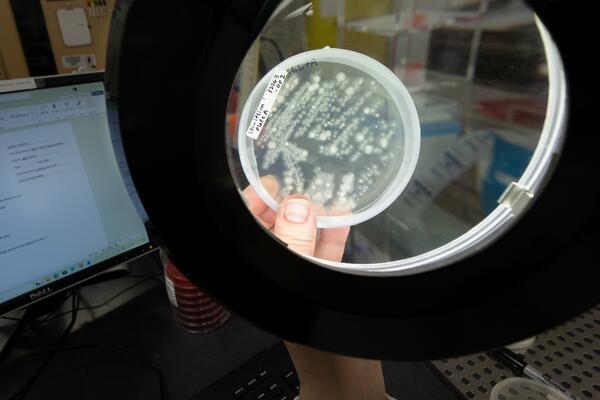
A USGS scientist examines microorganisms from salamander skin to investigate for potential pathogens.
A USGS scientist examines microorganisms from salamander skin to investigate for potential pathogens.
Scientists investigate pathogens in salamanders
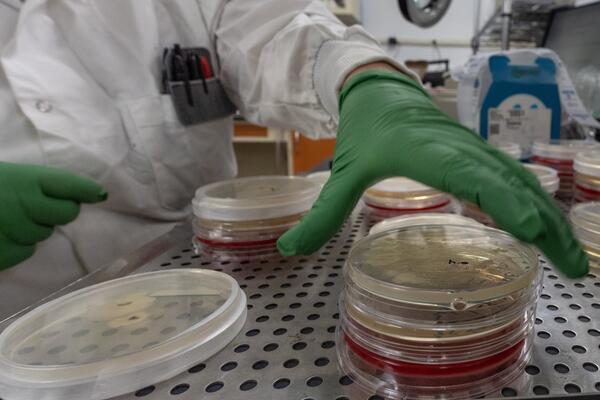
A USGS scientist reaches for a microbiological plate with cultures from salamander skin to investigate for potential pathogens.
A USGS scientist reaches for a microbiological plate with cultures from salamander skin to investigate for potential pathogens.
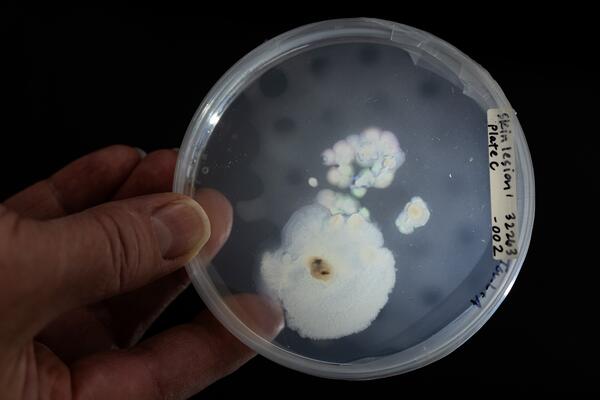
Scientists investigate pathogens in salamanders
A USGS scientist examines a skin sample from a salamander as part of a study to investigate for potential pathogens.
A USGS scientist examines a skin sample from a salamander as part of a study to investigate for potential pathogens.
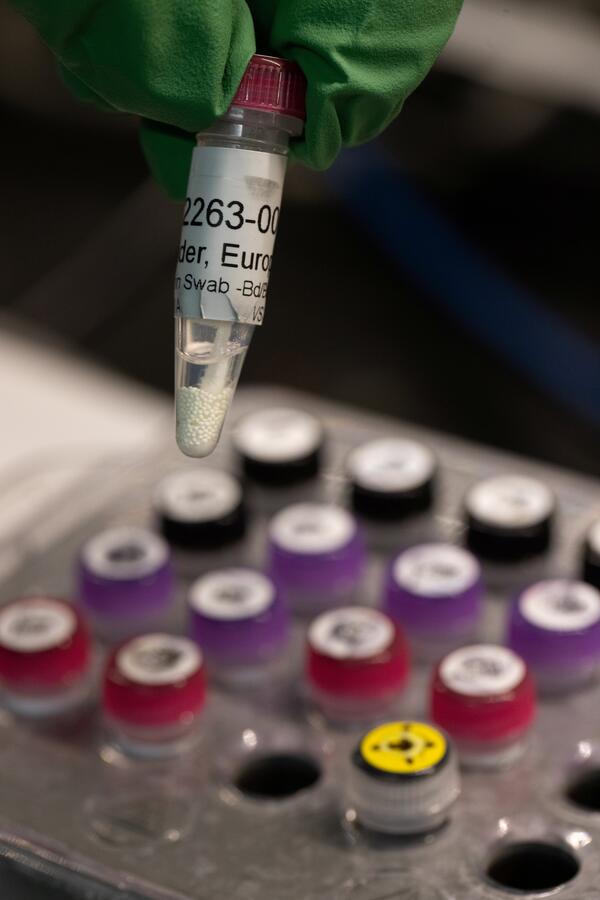
Scientists investigate pathogens in salamanders
A USGS scientist prepares to analyze a skin swab from a salamander to investigate for potential pathogens.
A USGS scientist prepares to analyze a skin swab from a salamander to investigate for potential pathogens.
Videos

UV Screening for Bat White-Nose Syndrome Surveillance —Audio-Described
UV Screening for Bat White-Nose Syndrome Surveillance —Audio-DescribedLong-wave ultraviolet (UV) light can be used to detect orange fluorescence associated with white-nose syndrome (https://www.usgs.gov/centers/nwhc/science/white-nose-syndrome-surveillance) on bat skin.
UV Screening for Bat White-Nose Syndrome Surveillance —Audio-Described
UV Screening for Bat White-Nose Syndrome Surveillance —Audio-DescribedLong-wave ultraviolet (UV) light can be used to detect orange fluorescence associated with white-nose syndrome (https://www.usgs.gov/centers/nwhc/science/white-nose-syndrome-surveillance) on bat skin.

Environmental Sampling for White-Nose Syndrome Surveillance
Environmental Sampling for White-Nose Syndrome SurveillanceEnvironmental samples collected in or near bat roosting locations can be used to supplement samples collected from bats for surveillance for white-nose syndrome (WNS) (https://www.usgs.gov/centers/nwhc/science/white-nose-syndrome).
Environmental Sampling for White-Nose Syndrome Surveillance
Environmental Sampling for White-Nose Syndrome SurveillanceEnvironmental samples collected in or near bat roosting locations can be used to supplement samples collected from bats for surveillance for white-nose syndrome (WNS) (https://www.usgs.gov/centers/nwhc/science/white-nose-syndrome).

Environmental Sampling for White-Nose Syndrome Surveillance —AD
Environmental Sampling for White-Nose Syndrome Surveillance —ADAudio-described version

Collecting a bat skin biopsy for white-nose syndrome surveillance (AD)
Collecting a bat skin biopsy for white-nose syndrome surveillance (AD)This video demonstrates the proper procedure for collecting a skin biopsy from a bat when conducting white-nose syndrome surveillance.
Collecting a bat skin biopsy for white-nose syndrome surveillance (AD)
Collecting a bat skin biopsy for white-nose syndrome surveillance (AD)This video demonstrates the proper procedure for collecting a skin biopsy from a bat when conducting white-nose syndrome surveillance.

Collecting a skin swab for white-nose syndrome surveillance
Collecting a skin swab for white-nose syndrome surveillanceThis video shows the proper technique for collecting a skin swab from a bat that is either roosting in place or is manually restrained for white-nose syndrome surveillance.
Collecting a skin swab for white-nose syndrome surveillance
Collecting a skin swab for white-nose syndrome surveillanceThis video shows the proper technique for collecting a skin swab from a bat that is either roosting in place or is manually restrained for white-nose syndrome surveillance.

UV Screening for Bat White-Nose Syndrome Surveillance
UV Screening for Bat White-Nose Syndrome SurveillanceLong-wave ultraviolet (UV) light can be used to detect orange fluorescence associated with white-nose syndrome (https://www.usgs.gov/centers/nwhc/science/white-nose-syndrome-surveillance) on bat skin.
UV Screening for Bat White-Nose Syndrome Surveillance
UV Screening for Bat White-Nose Syndrome SurveillanceLong-wave ultraviolet (UV) light can be used to detect orange fluorescence associated with white-nose syndrome (https://www.usgs.gov/centers/nwhc/science/white-nose-syndrome-surveillance) on bat skin.
Audio

Outstanding in the Field (Ep 3): Chronic Wasting Disease - Oh, Deer
Outstanding in the Field (Ep 3): Chronic Wasting Disease - Oh, DeerThe USGS Ecosystems Mission Area brings you Outstanding in the Field, a series of stories about our science, our adventures, and our efforts to better understand our fish and wildlife and the ecosystems that support them.
Outstanding in the Field (Ep 3): Chronic Wasting Disease - Oh, Deer
Outstanding in the Field (Ep 3): Chronic Wasting Disease - Oh, DeerThe USGS Ecosystems Mission Area brings you Outstanding in the Field, a series of stories about our science, our adventures, and our efforts to better understand our fish and wildlife and the ecosystems that support them.